Google Android G1 Reviews Flood Market: Mixed, But Mostly Positive
If the G1 vs. iPhone comparison were a presidential debate, the iPhone would have won — but not decisively. That’s according to a flurry of reviews out today in advance of official delivery of the first Android phone on October 22. As with the iPhone, there are many likes as well as dislikes among the […]
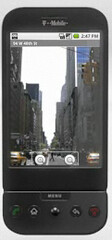 If the G1 vs. iPhone comparison were a presidential debate, the iPhone would have won — but not decisively. That’s according to a flurry of reviews out today in advance of official delivery of the first Android phone on October 22. As with the iPhone, there are many likes as well as dislikes among the pundits grading the G1.
The Wall Street Journal’s Walt Mossberg, in a review entitled “Google Answers the iPhone,” said the following:
In general, I like it and consider it a worthy competitor to the iPhone. . . But the two devices have different strengths and weaknesses, and are likely to attract different types of users.
If you’ve been lusting after the iPhone’s functionality, but didn’t like its virtual keyboard or its user interface or its U.S. carrier, AT&T, the G1 may be just the ticket for you. But it does have some significant downsides.
(Those include battery life, the keyboard in some respects and the T-Mobile network.)
Overall, the G1 is a very good first effort, and a godsend for people who prefer physical keyboards or T-Mobile but want to be part of the new world of powerful pocket computers.
Gizmodo says:
After spending a week using the G1, I can say it’s a good start, and a clear indication of good Android developments to come. But the phone itself has some serious problems with accessibility and usability, issues that no number of third-party apps are going to be able to solve . . .
The G1 phone and the Android operating system are not finished products. There are only three working Google Apps here—Gmail, Maps and Calendar—while Google Docs, Google News, Google Reader, Google Shopping, Google Images, Google Video, Blogger and Picasa are nowhere to be found. What’s the deal?
We have high hopes for third-party coders to fill in gaps Google intentionally or unintentionally left in this OS . . . But your question is not whether the phone will be great down the line, it’s whether or not it’s good enough for you to buy it now.
The answer depends most on who you are. Despite all the UI quirks and bad design decisions, it’s still better than other smartphone OSes out there. It’s not perfect, but for people who like tinkering, its cons are outweighed by its pros such as Gmail and the Marketplace.
The NY Times David Pogue argues:
The G1 is quite obviously intended to be an iPhone killer. Assessing its success, however, is tricky, because it’s the sum of three parts. Google wrote the software, HTC made the phone and T-Mobile provides the network. What you really need is separate reviews of each.
The Android software looks, feels and works a lot like the iPhone’s. Not as consistent or as attractive, but smartly designed and, for version 1.0, surprisingly complete. In any case, it’s polished enough to give Windows Mobile an inferiority complex the size of Australia; let’s hope Microsoft has a good therapist . . .
The G1 has Wi-Fi, GPS (but no turn-by-turn directions) and a mediocre camera (for stills — no video recording). The dedicated Send, End and Back buttons, and the tiny trackball for scrolling, make the G1 more flexible than the iPhone, but also more complicated.
The big news is the physical keyboard . . . It’s not pure joy, though.
T-Mobile also has one of the weakest networks. You iPhoners complain about AT&T’s high-speed 3G Internet network? T-Mobile’s fledgling 3G network covers only 19 metropolitan areas so far, compared with AT&T’s 280. And outside of those areas, Web surfing on the G1 is excruciatingly slow — we’re talking minutes a page.
Even so, Android itself is very successful. Clearly, there’s a sizable audience for phones that have the touchy, easy-to-navigate fun of an iPhone, without such an extreme philosophy of feature minimalism. If that’s you, then you should welcome the Android era with open eyes and ears.
Om Malik (GigaOM) opines:
This isn’t an iPhone competitor. If you look at it, you can very quickly see that the G-1 is a Honda to iPhone’s BMW. After a few days of usage I have become increasingly convinced that people who like the Apple iPhone will find Google-based G-1 aesthetically lacking.
The device is very easy to use overall. It took me less than an hour to figure out how to use the phone — most of its features including touch-screen abilities, surfing and setting up the network — without as much as referring to the accompanying handbook even once. Most people who use Windows XP or Vista for their daily computing will find the Google Android user interface remarkably familiar and find comfort using this device. In other words, it will sell a lot of units. And yes it is going to become a thorn in Windows Mobile’s side.
Will I recommend this phone to anyone out there looking for a smartphone? The answer is yes, especially if you don’t much care for either Windows Mobile or Apple’s iPhone device.
Malik offers two extended, bulleted lists: “what I like,” and “what I hate.” For those that haven’t gotten enough from these excerpts, you can find still more reviews and opinions on Techmeme.
I have not had my hands on the G1 but I’ll weigh in with some general observations.
Android co-founders Andy Rubin and Rich Miner started developing their OS/platform before their startup was acquired in 2005 by Google and before the iPhone was out. The device isn’t a response to the iPhone. However it turns out to be similar to the iPhone in some significant respects.
Had Android and the G1 come out before the iPhone, the reviews would certainly have been almost entirely positive. It would have been much more groundbreaking than it is in the wake of the iPhone (now it has to sell “openness” of the Android software marketplace and the keyboard).
Had the reviews used Windows Mobile 6.1 and/or Nokia’s Symbian OS (now going open-source) as the comparative frame of reference, Android would have been the hands-down winner (as Malik suggests). The G1 and subsequent Android devices — probably now being fast tracked in the wake of the G1’s pre-order sales success — may compete most aggressively against the rest of the market (i.e., Palm, WinMo, Symbian/Nokia, feature phones) than it does the iPhone. That dynamic will emerge and play out over time.
Smartphones represent the future of the market; three of the top five selling phones in the US are smartphones, including two BlackBerry phones and the iPhone. According to NPD Group, smartphones now represent 19% of all new handset sales in the US. We should see that number climb even higher over the next 12-18 months.
According to recent data from TMP Directional Marketing and comScore, more than 50 percent of smartphone users have conducted searches using their devices (vs. 16 percent of feature phone users). Google clearly understands that getting more smartphones — more usable devices — in people’s hands will mean more mobile search. That’s what Android is ultimately about.
Opinions expressed in this article are those of the guest author and not necessarily Search Engine Land. Staff authors are listed here.

Related stories
New on Search Engine Land
About the author