SEO
Search Engine Land is your source for SEO news and content. You’ll find a variety of up-to-date and authoritative resources, including the latest news, tactic-rich tutorials, and the latest data to help you work smarter and make better decisions.
What you read here is written by our experienced in-house team, and subject matter experts from leading brands and agencies.
Don’t miss out! Get Search Engine Land newsletter delivered daily to your inbox. Subscribe for free!


Make 2024 the year you take home the highest honor in search
Boost company morale, attract new business, and take home the highest honor in search.
5 alternatives to the missing Page Timings report in GA4
Google Analytics 4 doesn’t have a Page Timings report, so how can you monitor which pages are slow on your site?

Dominate search results with your SEO dream team
Discover how a well-structured team can overcome and outperform unpredictable algorithm updates.

Brave Search unveils AI answer engine
Brave's new Answer with AI features uses large language models to generate answers to queries directly in the search results.
How to survive the search results when you’re using AI tools for content
Avoid the pitfalls and enjoy the benefits of AI content creation. Adopt a collaborative approach that blends technology and human expertise.

U.S. search ad revenues hit record $88.8 billion in 2023
Search continues to account for the largest share of digital ad spending. Search revenue grew 5.2% year on year.

Google Discover optimization: A complete guide
Improve your visibility on this powerful recommendation platform through content quality, relevance and technical enhancements.
Why the shift from ‘conversions’ to ‘key events’ in GA4 is a game-changer
Learn how this GA4 change lets you maximize marketing opportunities to measure and report on what matters most to your business.
Google Search Console security update improves management of ownership tokens
You can now more easily see and remove which have access to your Search Console profiles.

Exclusive keynotes, expert-level sessions, live Q&A and more: Preview the SMX Advanced agenda
Don't miss your once-a-year opportunity to attend the only conference designed for advanced search marketers.

Oh, Brother: The Verge games Google again for ‘best printer 2024’
The tech rag used Google Gemini to produce the majority of a satirical product review, pointing out that it shouldn't rank. Yet it does.

4 under-utilized SEO research approaches to tackle in 2024
Explore four essential SEO research initiatives to prioritize in 2024 for sustainable, data-driven performance.
What to do when Google changes your GBP information
Learn how to effectively manage and protect your Google Business Profile from unexpected updates by Google.

How to harness the power of brand mentions across the search universe
Tips to strategically engage with and foster organic brand mentions across various channels to boost your visibility and share of search.

Writing people-first content: A process and template
A guide to writing helpful, reliable, people-first content that helps promote your business while ranking highly on search engines.

The latest jobs in search marketing
Land your next job in SEO or PPC. These brands and agencies are hiring to fill open search marketing positions right now.
How the Google-Reddit partnership impacts brand management
Dive into the impact of the Google-Reddit content licensing deal on brand perception and engagement, plus tips for managing reputation risks.

Google structured data carousels (beta) clarified for summary pages
Google also added the feature availability for this carousel beta.
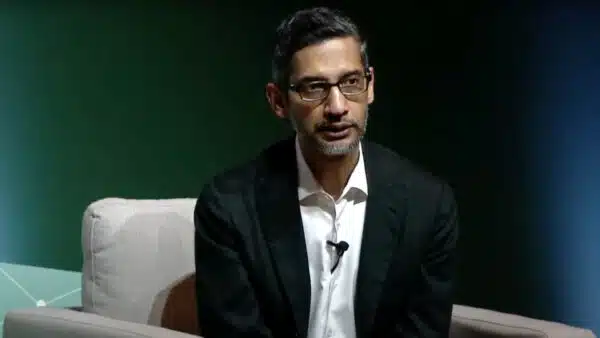
Google CEO on the evolution of Search and SGE
Sundar Pichai believes Google can provide AI-generated answers while also helping users navigate to websites for information.
How to maximize your local business’ Google Maps presence
Practical tips for optimizing your Google Maps presence to boost local visibility and drive more in-store customers.
Best of SearchBot: Create a strategy to build high-quality backlinks
We asked Search Engine Land's SearchBot to create a backlink strategy to boost SEO and brand awareness for a financial advisory firm.

ROI-driven content marketing: Aligning strategies with revenue goals
Maximize your content marketing ROI with proven strategies tailored to aligning your efforts with revenue goals and driving tangible results.

Ensuring quality in your SEO services: A checklist
From ensuring top-notch deliverables to demonstrating empathy with clients, use this checklist to improve the quality of your SEO services.

Bing Search tests removing cache link
This comes after Google Search officially dropped its cache link a couple of months go.

6 reasons why SEO audits seem like a waste and how to fix them
SEO audits are only a waste of time if you do them the wrong way. Get more SEO recommendations implemented by solving these six problems.

10 non-marketing books every SEO should read
Transform your SEO approach with diverse knowledge. Explore these non-marketing books that offer invaluable lessons.

Google AI overviews launch in UK
Google is also reportedly considering making some of its AI-powered search features only available to subscribers.

How to build a future-ready SEO strategy
Prepare your business for tomorrow's SEO challenges with insights on adapting to emerging trends, overcoming measurement hurdles and more.
Flex your content management for scalability and hyper-personalization
Learn how AI has changed content strategy and how you can integrate it with your CMS for maximum impact.

13 questions to diagnose and resolve declining organic traffic
Is your site's organic traffic taking a nosedive? Use these questions to investigate and fix issues impacting your SEO performance.

60% of Perplexity citations overlap with top 10 Google organic results
With Perplexity referrals growing 40% month-over-month, new research looks at how SGE and Perplexity differ.

7 steps to scale your content creation process in the world of AI
Drive engagement and growth by crafting high-quality, AI-enhanced content that resonates with your audience.

5 underrated skills you need to be a good digital PR – and how to master them
Want to excel in digital PR? Learn the often-overlooked skills that separate exceptional digital PR practitioners from the rest.

Manual link building is more important than ever in 2024
Google is coming for sites that engage in spammy practices. Learn how manual link building could be the answer to reclaiming the SERPs.

How to use Google Gemini to improve SEO operational efficiency
From creating SOPs to managing cross-functional teams, find out how Gemini can help drive efficiency in your digital advertising endeavors.

How to improve your SaaS onboarding experience to retain more customers
Tips to optimize user experience, increase trial-to-paid conversions and maximize customer lifetime value.

ChatGPT makes links more prominent
But it remains to be seen whether people will actually click on those links. Links are only available in the paid versions of ChatGPT.

Bulk product optimization: Tips and tools for ecommerce SEO
Optimize your ecommerce product pages' title tags, product copy and meta descriptions with the help of Excel, ChatGPT and Grammarly.
16 reasons why your page isn’t ranking on Google
Struggling to rank on Google? Dive into 16 possible reasons why your page isn't making the cut and how to address them systematically.
Advanced tactics to maximize the SEO value of user-generated content
Learn how to authentically engage audiences, gather insights and repurpose UGC to boost visibility and search performance.