Google Analytics Update To Organic Reports
As many of you know, organic traffic is auto-populated in Google Analytics reports using a default search engine list curated by Google. It is also possible to add smaller search engines manually into the tracking code snippet, using the _addOrganic method; but it’s nicer when Google does it for us. Every once in a while, the […]
 As many of you know, organic traffic is auto-populated in Google Analytics reports using a default search engine list curated by Google. It is also possible to add smaller search engines manually into the tracking code snippet, using the _addOrganic method; but it’s nicer when Google does it for us.
Every once in a while, the Google Analytics team updates the list to reflect new or more popular search engines. We have confirmed that, starting from February 1st, a few search engines have been added to the list mentioned above. Below is the list of new search engines that are now part of the default list:
Change In The Way Google Analytics Recognizes Search Engines
In addition to the update above, Google has also fixed a long-running issue with the way search engines are recognized.
Before this change, if a URL contained the word “search” and a query parameter “q”, Google would attribute it to the search engine search.com, which led to inaccurate reports, especially as a consequence of big customized search engines, such as Conduit, Babylon and others.
Below we can see the Google Analytics organic data for a large website, and it is clear that search.com is heavily over counted.
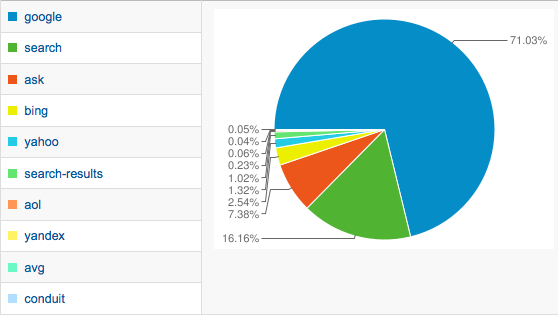
As of February 1st, this logic has been changed, in a way that customized search engines (as the ones shown in the list below) will not be shown as search.com.

The Google Analytics team are also explicitly adding known large customized search engines with “search” in them to their default list of known search engines:
- https://search.conduit.com
- https://search.babylon.com
- https://search-results.com
- https://isearch.avg.com
- https://search.comcast.net
- https://search.incredimail.com
How Does It Affect Your Data?
Opinions expressed in this article are those of the guest author and not necessarily Search Engine Land. Staff authors are listed here.

Related stories
New on Search Engine Land
About the author
