Google Ads is showing advertisers how their spending compares with peers
Google Ads’ new Spend Benchmarks report shows advertisers how their budgets and clicks compare with similar businesses

Google Ads’ new Spend Benchmarks report shows advertisers how their budgets and clicks compare with similar businesses

Google Ads’s AI Dashboards let advertisers turn simple text prompts into visual reports with AI-generated summaries.
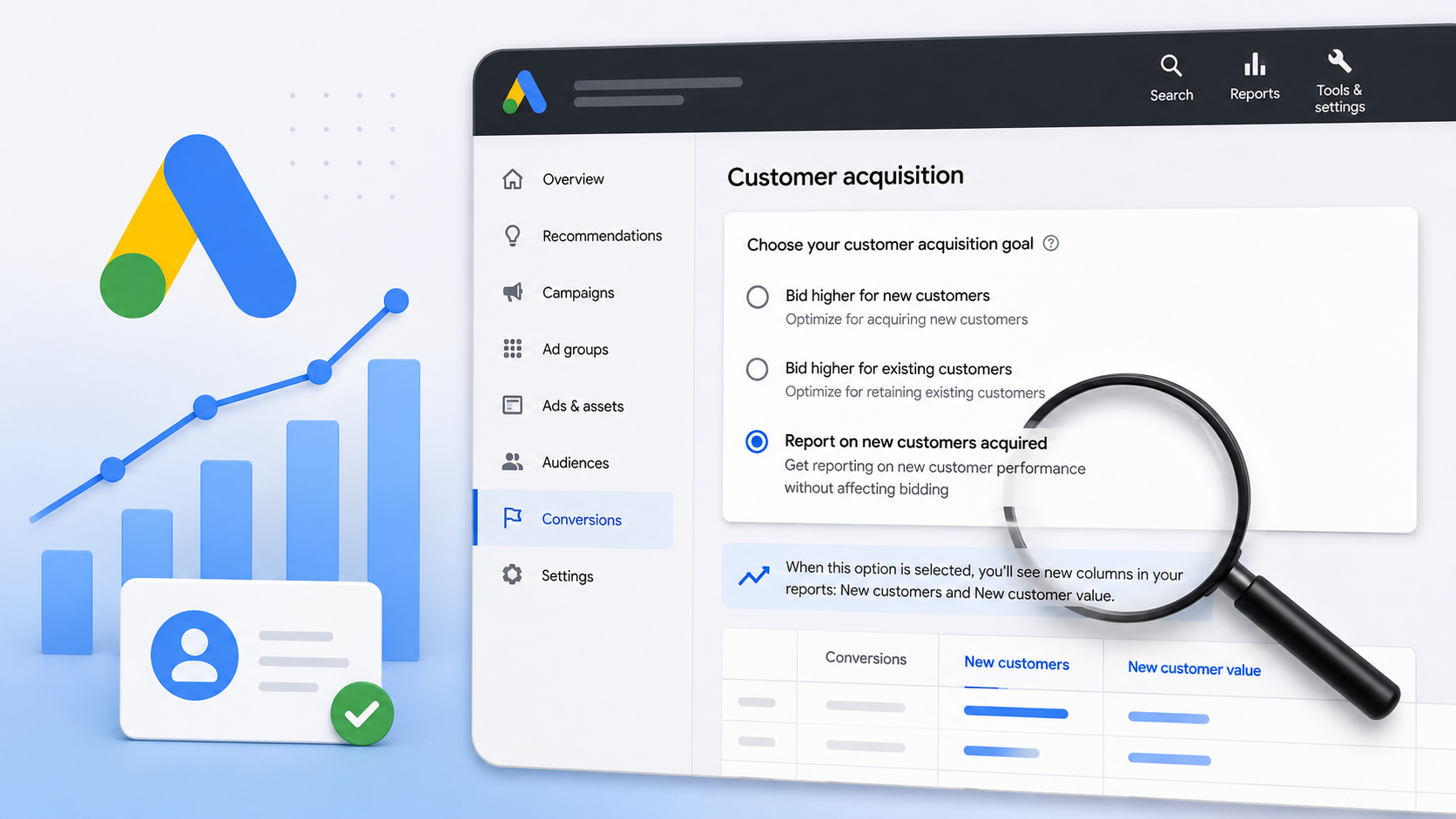
Google now lets advertisers measure new customer acquisition without affecting bidding, replacing a reporting workaround.

Advertisers can now exclude specific household income segments at the campaign level while keeping PMax's automated optimization.

Google Ads' new beta estimates the clicks, conversions, and revenue you may be missing due to limited budgets and low bids.
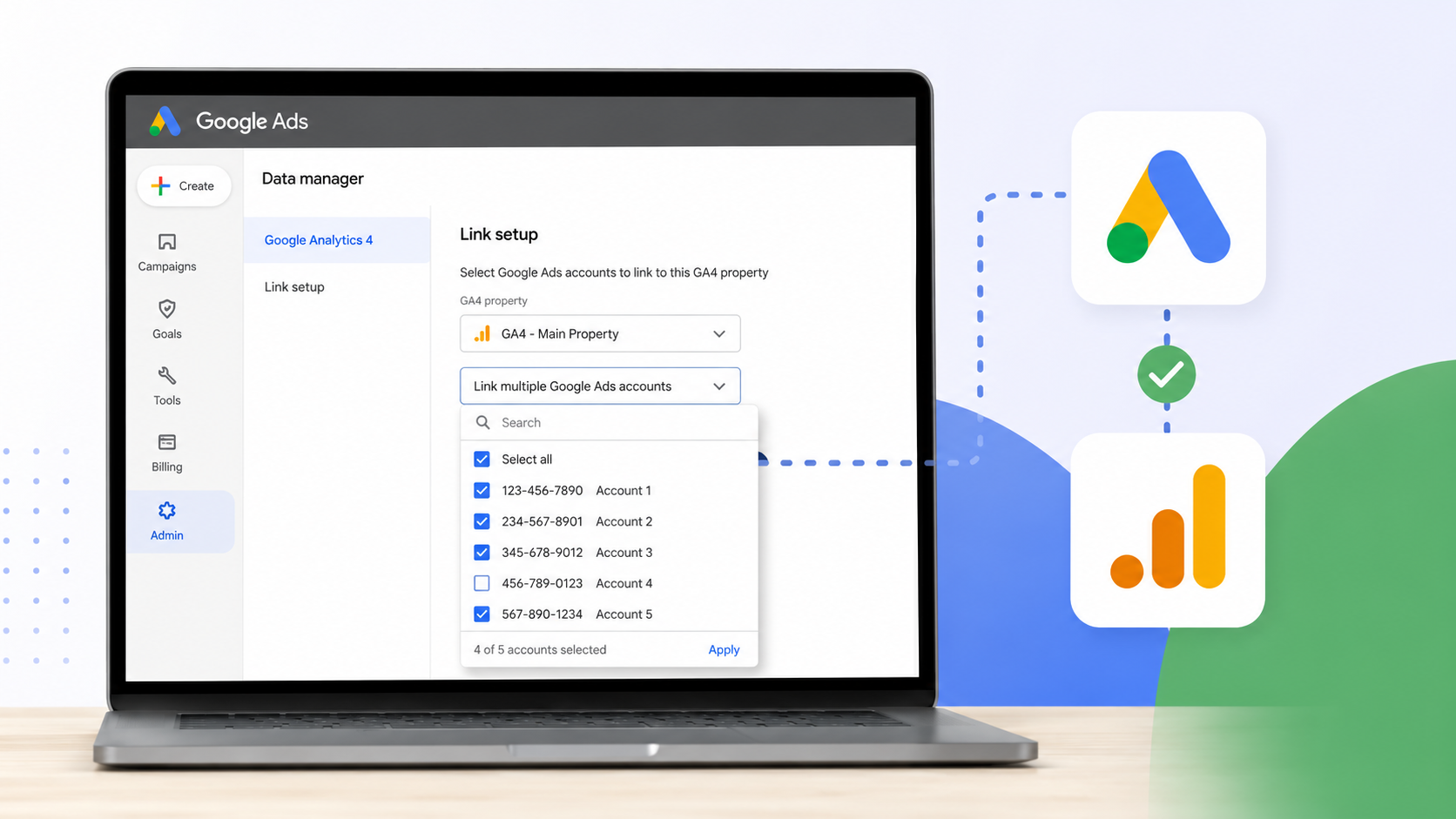
Google Ads now lets advertisers bulk link multiple accounts to a single GA4 property reducing manual account management.

Advertisers can now choose between standard and enhanced Brand Lift Studies, trading a higher budget for more sensitive campaign measurement.

Google Ads is showing AI Max branded search controls that could help advertisers separate branded/non-branded traffic more effectively.

Google Ads’ new Association metric shows how consumers link brands to key attributes, bridging awareness and consideration.

Google tests App Labs in Google Ads, giving advertisers early access to experimental app campaign features.

Google adds App Consent Insights to Google Ads, giving advertisers clearer visibility into how consent impacts app campaign performance.
Meta’s new Google Tag Manager template simplifies Pixel setup, making cross-platform tracking faster and more consistent for advertisers.
Google Ads now gives advertisers clearer visibility into how Landing Page Images may be automatically turned into creatives in PMax campaigns.

Google Ads now shows where Performance Max campaigns run, giving advertisers clear insights to optimize performance.

Google’s new data transmission controls let advertisers fine-tune how ad and analytics data flows when user consent is limited.
Google added click-to-call to Vehicle Ads, giving high-intent car shoppers a faster path from search to a live conversation with dealers.

New Google Ads tools include search filters and a management hub, streamlining how brands find, contact, and scale creator deals.

Advertisers now have the option to run Demand Gen ads on Google Maps, either alongside other channels or as a standalone placement.

Google’s new “Original Conversion Value” metric gives advertisers long-needed clarity by revealing the true, unadjusted revenue their campaigns generate.
Google is rolling out total campaign budgets to PMax globally, giving advertisers tighter, flight-friendly control without the hassle of daily budget math.

Google’s new Sources column in AI Max reports shows where traffic comes from, giving advertisers clearer insight into AI-driven matches.
Vertical image ads in PMax help brands blend naturally into mobile-first spaces like YouTube Shorts.
You can now improve upper-funnel results by letting Google Ads optimize for conversions driven by ad views, not just clicks.

These simple checkboxes should make it much easier to filter and manage your campaigns.

Advertisers can now spot cross-campaign trends and performance patterns in PMax with a single account-level view.
The new tool positions Google Ads as a built-in creative hub, streamlining how advertisers produce and scale ad assets with AI.
The new toggle reveals exactly how PMax budgets are split across channels, unlocking scaling opportunities for advertisers.

Google Ads now lets you A/B test creative in Demand Gen to get insights into what drives clicks, engagement, and conversions.

AI Max advertisers can now view search terms, ad headlines, and landing pages together — unlocking a new level of campaign visibility.
Google is expanding its AI Max beta with ad group-level controls that push search further into a keyword-optional future.
Google's new Gmail ad format brings product listings directly into the Promotions tab, creating fresh ecommerce advertising opportunities.

This new feature acts like a privacy compliance scorecard, giving at best Excellent and at worst Urgent scores of your Consent Mode setup.
You can now use Promoted Pins in Demand Gen campaigns to boost visibility on Maps and drive more foot traffic to physical store locations.
The new device targeting for PMax campaigns in Google Ads will let you optimize spend across computers, phones, tablets, and TVs.
Google’s AI now auto-optimizes images in PMax campaigns, including pulling visuals from landing pages by default.

Google has expanded the Search themes limit in PMax campaigns to 50, giving advertisers greater control over campaign targeting while maintaining automation.
Google Ads' new Tree Table Views transform data tables into hierarchical layouts to visualize relationships between campaign elements.
The addition of landing page previews to Demand Gen campaigns could boost engagement by giving users a visual preview before clicking.
Google Ads' new barcode and QR code promotion formats streamline how customers redeem offers across digital and physical touchpoints.
Google Ads now offers a "segment" option for Pmax Asset Group performance, enhancing optimization potential for campaign performance.