Technical optimization
Search Engine Land is your source for technical SEO news and content. You’ll find a variety of up-to-date and authoritative resources, including the latest news, tactic-rich tutorials, and the latest data to help you work smarter and make better decisions.
What you read here is written by our experienced in-house team, and subject matter experts from leading brands and agencies.
Our coverage spans essential technical elements, including core web vitals, structured data implementation, and Google Search Console tips.
Whether you’re focused on optimizing page speed, improving page experience signals, or perfecting your XML sitemap, you’ll find the authoritative insights you need to succeed.
We dive deep into critical technical factors like robots meta tag configuration, internal linking strategies, and comprehensive site audits to ensure search engines can effectively crawl your site.

Our experts regularly share proven methods for managing duplicate content, optimizing page load performance, and implementing proper head section markup for maximum search visibility.
From basic technical foundations to advanced optimization techniques, we provide the knowledge you need to build and maintain high-performing websites.
Don’t miss out! Get the Search Engine Land newsletter delivered daily to your inbox. Subscribe for free. Subscribe for free and stay ahead in the ever-changing landscape of technical SEO!





Why the order of technical SEO fixes matters
A post-migration SEO case study shows how technical fixes and metadata updates preceded a 121% month-over-month increase in organic traffic.

Content pruning case study: Cutting 33% of pages that drove just 3% of clicks
Organic traffic climbed after the cleanup, but the data told a more complicated story. Here's what actually drove growth and what went wrong.

Canonicalization and SEO: A guide for 2027
Google doesn't always choose your preferred URL. Find out why, fix conflicting canonical signals, and keep your content visible in search.

How to create SEO-friendly URLs
How do you make sure that your URLs are SEO friendly? This detailed guide has you covered.

Subdomain vs subdirectory: Which is better for SEO?
Should you use a subdomain or subdirectory? Learn how each impacts SEO and get expert-backed guidance to choose the best structure for your site.

URL parameters: What they are and how to use them properly
Master URL parameters to ensure they boost—not block—your SEO and marketing efforts. Learn top strategies to avoid common pitfalls.

Crawl budget: What you need to know in 2027
Faceted navigation, URL sprawl, server errors, and AI crawlers can all affect crawl budget. Here’s how to spot issues and keep bots focused.

Pagination and SEO: What you need to know in 2027
Pagination can open paths to deeper content — or quietly cut them off. See what matters for crawling, indexing, and canonicalization.

Caught by Google’s spam update? Don’t make recovery harder
Rushed fixes can make recovery harder after a Google spam update or manual action. Here’s what to investigate, address, and avoid.

10 technical SEO audit mistakes that lead to bad recommendations
Your crawler can find the symptom. Your audit needs to explain the cause, why it matters, and what should happen next.

Do meta descriptions matter? The latest research
Do meta descriptions have value today? See what case studies say about AI Overviews, ChatGPT snippets, CTR, and when writing them is a waste.

JavaScript links can make your pages invisible to AI search
A 41-day experiment reveals how JavaScript-only navigation limits AI crawler discovery and why fixing it later can be harder.
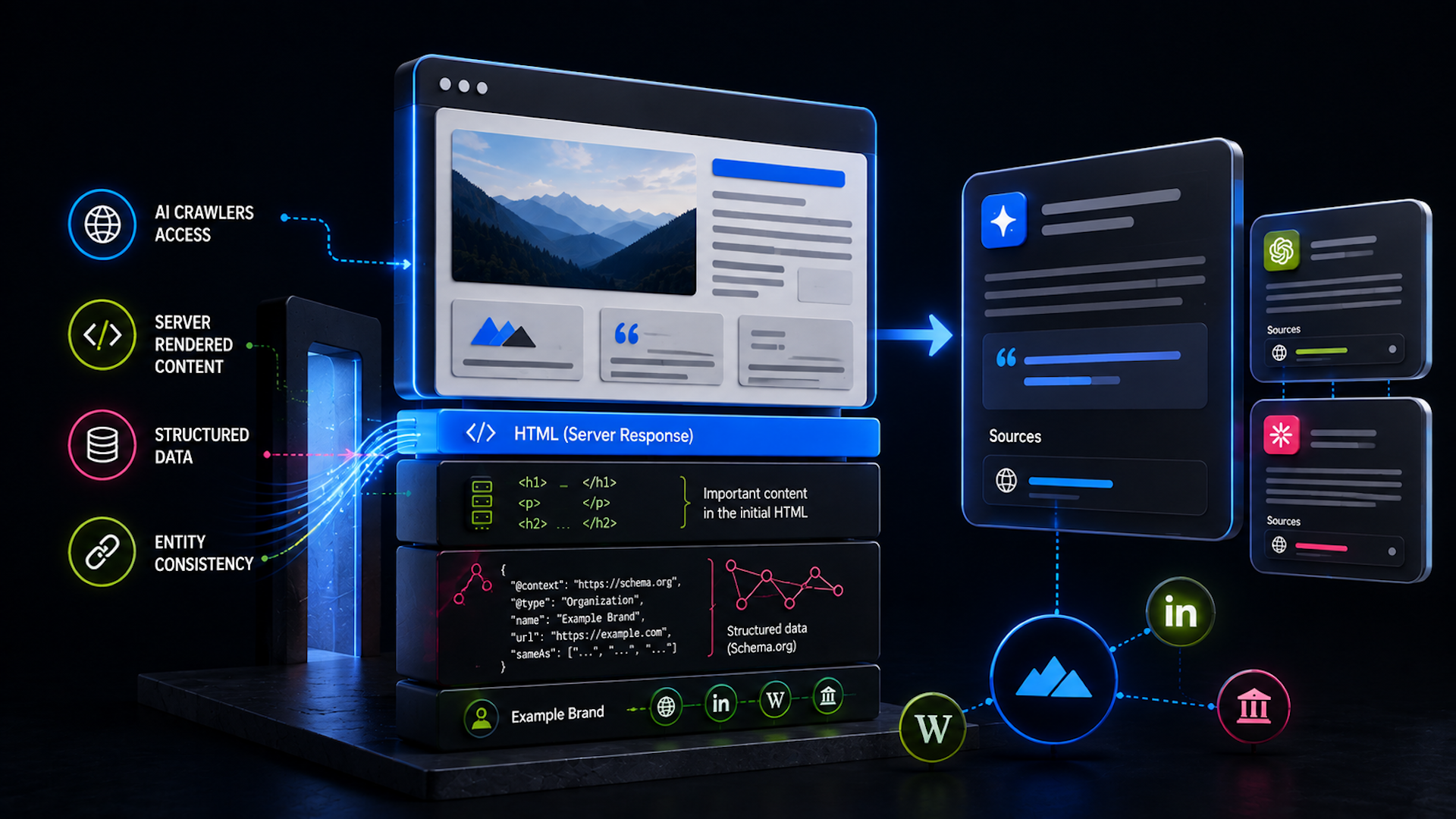
Technical SEO for AI search: 4 fundamentals that matter
AI systems can miss content that search engines handle well. Learn what to check so your pages can be crawled, understood, and cited.

The missing step in vibe coding: Verify what actually shipped
AI can build fast, but speed doesn’t prove the work is correct. Here’s how to verify AI-assisted development and technical SEO work.

Most AI visibility gains are just technical debt repayment
AI search may be making long-standing problems with site architecture, content, internal linking, and rendering more costly.

Technical SEO testing: How to build a stronger experiment
The hardest part of an SEO test is knowing what caused the result. Choose comparisons and metrics that make your findings easier to defend.

10 SEO use cases for auditing your accessibility tree for AI search
Go beyond HTML with practical workflows to uncover rendering issues, weak site structure, and other obstacles to AI understanding.

How to build a keyword clustering tool with Python
Automate the process of grouping thousands of search queries into coherent topics for faster, more scalable content planning.

Schema for AI search: How to identify and prioritize entity gaps
Schema markup does more than power rich results. Build a knowledge graph, assess entity coverage, and find gaps in AI understanding.

The biggest technical SEO time-wasters to avoid
Some technical SEO tasks deliver measurable value. Others can wait. Here's how to tell the difference before investing developer time.

Hydration and SEO: How it works and why it matters
From server-rendered HTML to interactive pages, understand where hydration fits and when it can affect search visibility.

Why proving technical SEO ROI is so difficult
Technical SEO creates value by preventing losses, not just driving gains. Learn how to measure and communicate its impact.
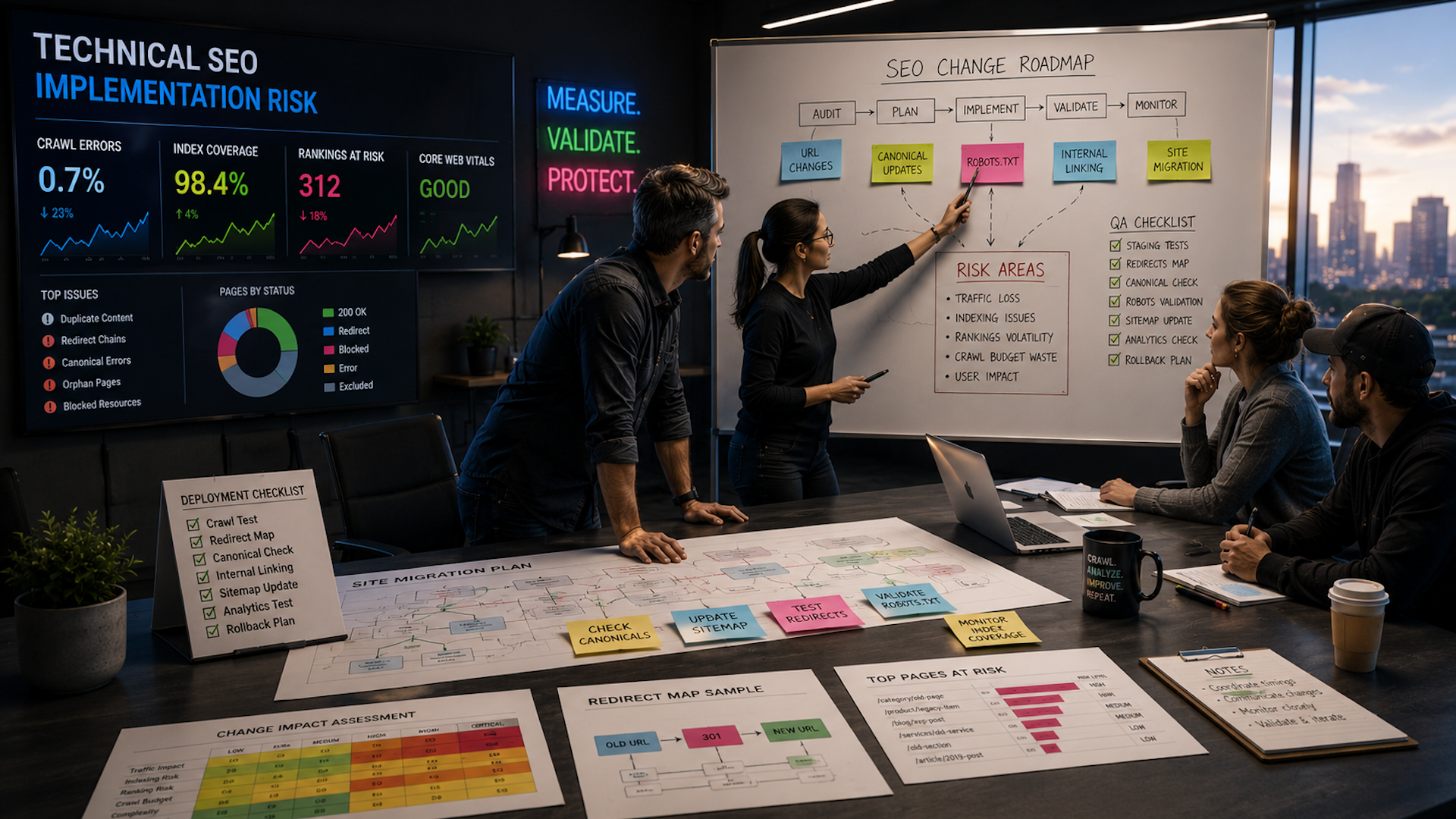
How to safely implement high-impact technical SEO changes
Evaluate technical SEO recommendations, prioritize resources, and avoid costly mistakes before they reach production.

What server logs reveal that SEO tools miss
Search engines leave behind a detailed record of every visit. Here's how that data helps uncover hidden SEO issues at scale.

How to use schema markup to optimize for the agentic web
AI agents rely on structured data to understand and act on your content. Learn how schema markup supports the emerging agentic web.

Google adds llms.txt check to Chrome Lighthouse
Google says llms.txt is not needed for AI search visibility, but Lighthouse now flags whether sites have one.

4 ways to strengthen buy-in for technical SEO work
Technical SEO projects gain traction faster when you communicate their value in terms executives and developers understand.

Why now is the time to prepare for WebMCP
AI agents are becoming a new discovery layer, and WebMCP could become the schema markup that helps them understand and use your site.

How to model non-linear SEO seasonality with Prophet
Traditional SEO forecasts often miss seasonality and volatility. Learn how to model non-stationary search behavior with Prophet and Python.

How to prioritize technical SEO fixes by business impact
Not every critical error deserves immediate attention. Focus your resources on the fixes that actually improve visibility and performance.

How soft 404s and indexing issues caused a 90% traffic collapse
When Google stops indexing your pages, traffic can vanish fast. Here’s how one publisher reversed the decline after a migration went wrong.

Why vibe coding is becoming an SEO advantage
The biggest SEO gains increasingly come from interactive experiences that remove friction and answer intent immediately.

Why intent alignment matters more than perfect technical SEO
Technical fixes alone won’t resolve weak relevance signals. Here’s how to identify and correct intent mismatches across your site.

Tools and software to manage AI crawlers accessing your site
Learn how to use AI crawler tools and software to optimize for AI crawlability, allow, block, or limit AI bots, audit crawling behavior, and implement controls.

How to optimize a website for AI crawlers and AI agents
Learn how to optimize your site for AI crawlers with technical SEO best practices — and control access by blocking or allowing crawlers with directives.

What are AI crawlers and bots?
What are AI crawlers? Learn about the different types of AI crawlers, their purposes, what they can see, and if you should allow them to crawl your site.
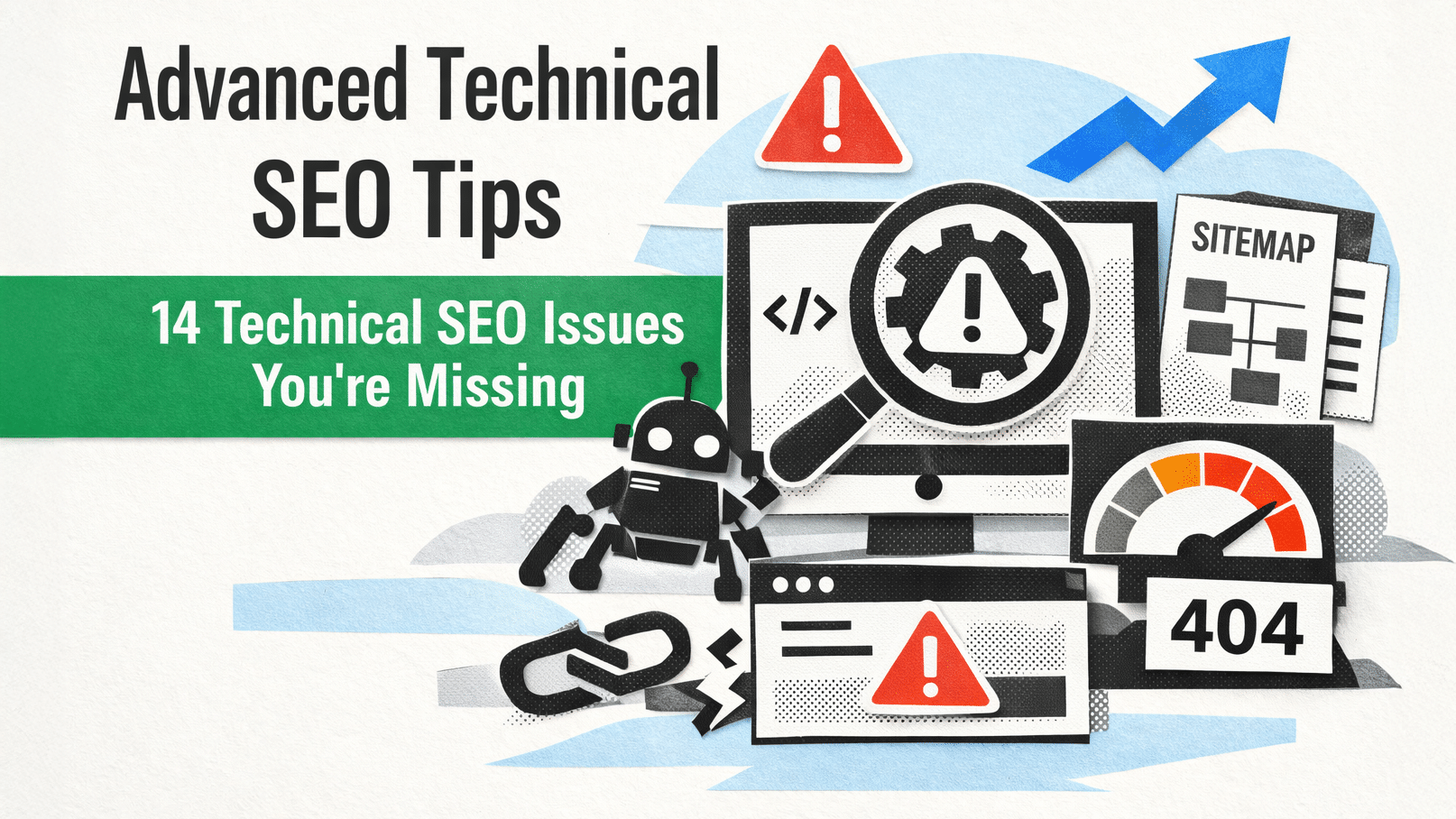
Advanced technical SEO tips: 14 technical SEO issues you’re missing
Think you've got your technical SEO buttoned up? Think again! Find out what you may have overlooked with our guide that's full of advanced SEO tips.

Why tracking parameters in internal links hurt your SEO and how to fix them
Parameterized URLs bloat crawl paths, fragment attribution, and dilute link equity. Here’s a cleaner, scalable tracking approach.

No-JavaScript fallbacks in 2026: Less critical, still necessary
Rendering isn’t always immediate or complete. Learn where no-JavaScript fallbacks still protect critical content, links, and indexing.

Why log file analysis matters for AI crawlers and search visibility
Track how AI crawlers access your site, identify crawl gaps, and understand what content gets missed using log file data.