Microsoft opens Excluded Content Terms to all advertisers
Advertisers can now block up to 1,000 unwanted page-title terms, adding another layer of control over where their ads appear.
Advertisers can now block up to 1,000 unwanted page-title terms, adding another layer of control over where their ads appear.

TikTok rejected Meta ads urging it and YouTube to join Meta’s multibillion-dollar child safety settlement with U.S. states.

Confused by the AI watermark debate? Cut through the noise with a clear look at what Claude changed, why it matters, and what's being missed.

From LinkedIn’s anti-slop systems to AI watermarking, platforms are building new ways to identify low-value content. Here’s what survives.

A fraudulent DMCA notice can cost you search visibility. Here’s what to document, how to file a counter-notice, and when to escalate.
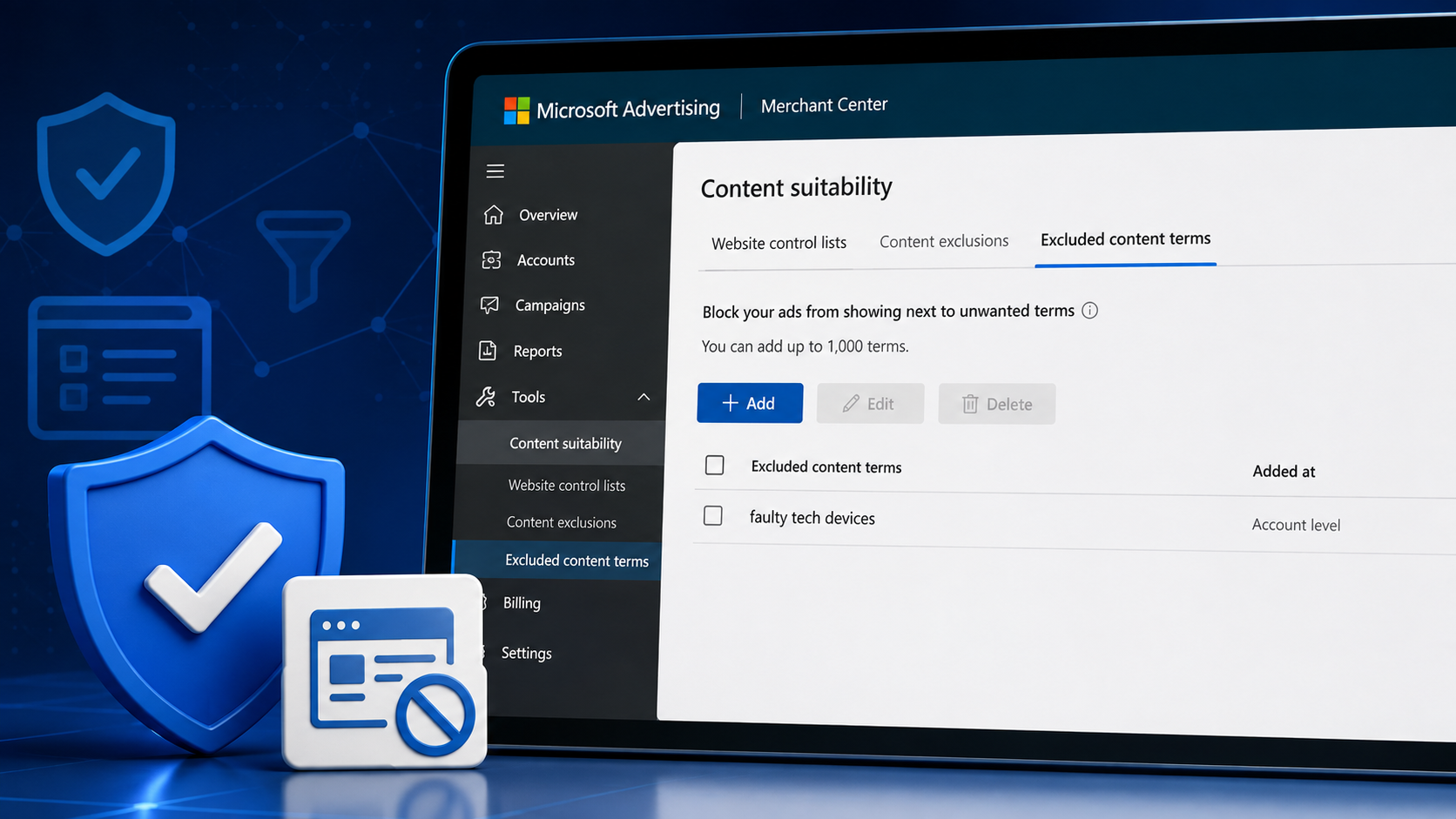
Microsoft now lets advertisers block Audience Ads from appearing next to specific page titles, for more control over ad placement.
A ruling against Google signals a broader shift: companies may be responsible for AI-generated errors, even when humans didn't write them.

AI moderation, stricter security signals, and platform scale are increasing false positives — often without meaningful human review.

A practitioner’s guide to deindexing, removal requests, and managing client search results.

Google will soon require merchants running Shopping ads featuring certain political content to verify their accounts as election advertisers.

Google can suspend your account after three policy strikes in 90 days. Here’s how the warning system works and how to keep your ads running.
Majority U.S. ownership, Oracle-hosted data, and independent governance aim to end ban fears and give brands and creators a steadier outlook.

Reviews are disappearing faster as moderation systems, industry risk, and geography shape which reviews stay visible.

Google will now allow limited non-promotional use of prescription drug terms in ads, while keeping keyword certification rules the same.

The return of banned YouTube creators could reshape ad reach and placements – and pose risks for brands and marketers.

The explosive rise of Shorts and AI fueled a flood of duplicate content – leading YouTube to enforce its inauthentic content policy.

Microsoft aggressively dealt with AI scams and policy abuse, removing a record number of ads and upgrading its enforcement tools.

Google has released new best practices, video bytes and what to do if your site was flagged incorrectly, as well.
Google's annual Ads Safety Report highlights how AI is reshaping ad enforcement, with a record number of account suspensions.

Bluesky's rapid growth is gaining attention — but with no ads yet, what does it mean for PPC? Learn how to prepare for future opportunities.
Google's ad review clarification reveals its dual approach of AI and human evaluation for detecting policy violations, empowering advertisers with some transparency.

A TikTok acquisition by Elon Musk would create opportunities and risks for advertisers, as well as price concerns after his X track record.

Google removed the adult-theme and artificial freshening sections and added a number of deceptive practices sections.

Meta's 2023 implementation of 'guardrails' for high-spending advertisers raises concerns about fairness and transparency.

Google is deleting 5-star reviews at an alarming rate. Learn what it means for your business and how to safeguard your online reputation.
Advertisers will need to secure certification as Google enforces stricter rules for dating and companionship ads starting March 2025.
This policy is still enforced with manual actions but Google confirmed there are algorithms that detect similar issues.

These restrictions now apply to Shopping ads and will be enforced across all types of ads after May 30.

Dive into the impact of the Google-Reddit content licensing deal on brand perception and engagement, plus tips for managing reputation risks.
The platform warns that relying too heavily on engagement signals to rank content can result in a poor user experience.

The number of advertisers who were blocked or removed due to policy violations nearly doubled compared to the previous year.
Here are ways to remove webpages and online posts harmful to your brand – from privacy claims and copyright notices to legal measures.

Google is implementing a new policy to enhance its capability to provide high-quality, relevant information during "Sensitive Events."

Marketers claim the update has been implemented through automated checks that are excessively "overarching."

Advertisers are advised to review the updated policy to ensure your ads or listings do not violate the new rules.

Content that references controversial topics but does not go into graphic detail will now be eligible for monetization.

The platform also plans to start automatically labelling content it detects may have been created or edited using AI.

Political campaigns must clearly state when AI-generated images and audio have been used from November.

A week after X introduced new brand safety measures, ads for at least 19 brands appeared alongside content promoting fascism.
Targeted advertising capabilities are being significantly reduced, while ads that violate its policies will be removed globally.