The New York Times, Demand Media Edition

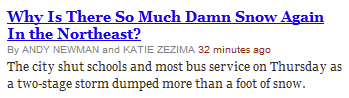 Demand Media — widely described as a “content farm” — went public yesterday and quickly racked up a valuation higher than the New York Times. I figured the news might cause some at the New York Times to wonder if they needed to be more Demand Media-like. Would every story be turned into a question? How might that look? So I did a mockup.
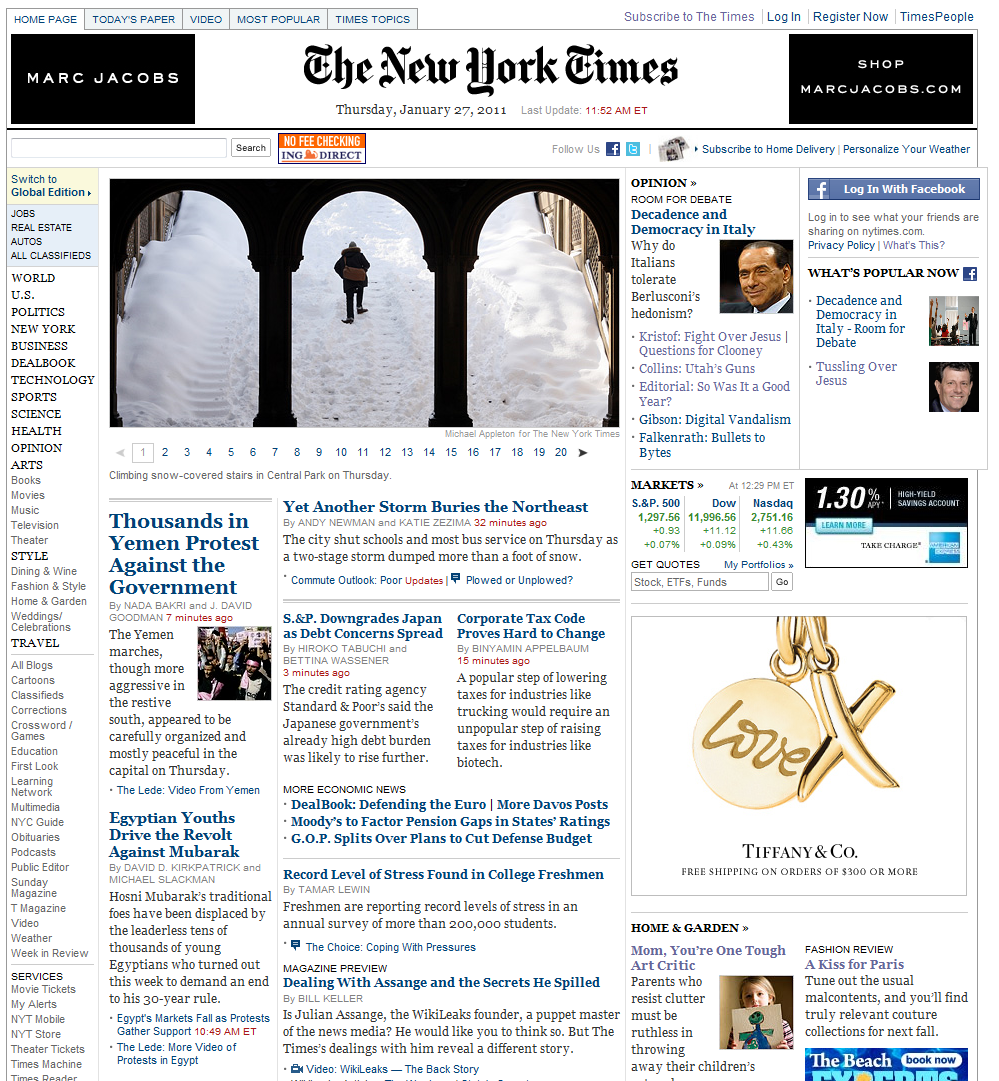
Here’s what I started out with, the real New York Times home page, from just before noon Eastern Time. Click on the image to enlarge it:
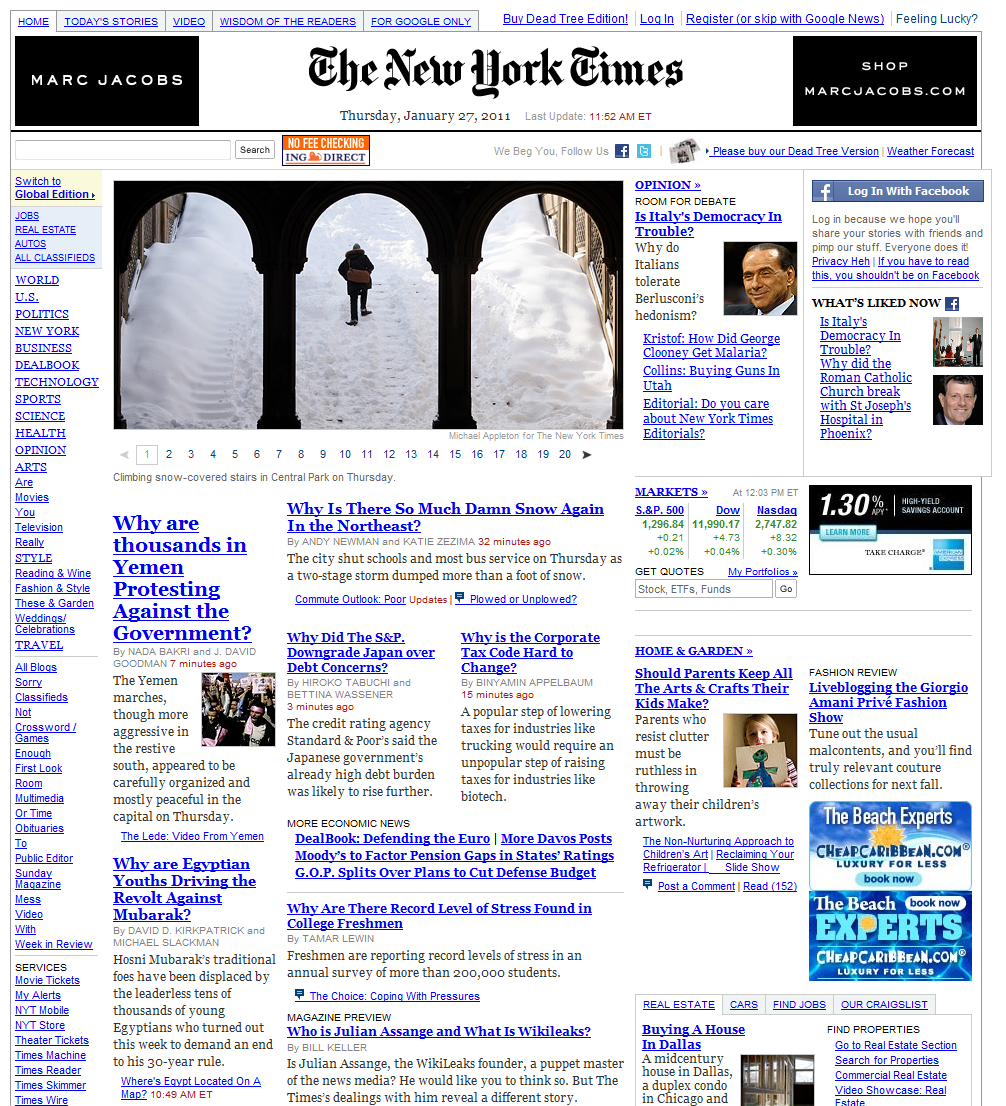
And here’s what I call the “Demandified” version, which you can also click on to enlarge:
In Seriousness…
One of the secrets to Demand Media’s success is paying close attention to what people are searching for and then writing articles to serve to order, especially articles it think will generate lots of ad revenue.
A real New York Times “Demand Media” edition probably wouldn’t have stories about Italy’s government or the Roman Catholic Church’s dispute with a Phoenix hospital. But the stories would probably be slanted toward answering questions, certainly. Indeed, the stories might largely be generated from what people are searching for, rather than what’s happening. Let the queries dictate what news to report!
The Future Is Already Here
Of course, that’s not a future I’d like to see. It’s something that gives many people chills, even if it’s already in practice in places like Yahoo News, which closely watches search traffic to determine what to write.
In reality, a smart news publication would be doing both news coverage and “answers coverage,” repurposing its existing content into the type of high quality answers that people are really seeking.
Dealing With Backlash
To me, that’s part of the blacklash that’s currently hitting content farms (which are trying desperately to distance themselves from that name). There’s been an explosion of them, especially Q&A sites, that have suddenly appeared in our search results purporting to offer answers but often not delivering.
Don’t get me wrong. Some content farms do provide good answers. Demand Media has some issues, but it also has some great content. And the New York Times, of course, owns its own content farm in the form of About.com — which also has both great content and bad content.
Content farms, good and bad, were part of the discussion yesterday on This Week In Google, which I took part in yesterday. Check it out below, along with some links to related material.
- This Week In Google: Episode 79
- Yahoo Using Search To Help Determine News Coverage
- Of Living URLs, Newspaper Rankings & California Fires
- Search Engines + Newspapers: Perfect Market’s Delivery System Aims To Please Both
- Newspapers, Google And The “Devaluation” Of Content
- Josh Cohen Of Google News On Paywalls, Partnerships & Working With Publishers
- Google’s News Experiments & The Quest To Solve The “Read State” Issue
- Under The Hood: Google News & Ranking Stories
- Q & A With Brent D. Payne, In-House SEO Director, Tribune Company
- New York Times’ Marshall Simmonds: Poster Child Of SEO Success
- Q&A with Marshall Simmonds, In-House SEM: About.com, NYT.com
- Demand Media’s IPO: The Google & SEO Aspects
- Google Sets Sights On Content Farms In 2011
Explore more on
Editorial disclosure
Contributing authors are chosen for their expertise and work under the oversight of the editorial staff. Search Engine Land is owned by Semrush. The contributor was not asked to mention Semrush; the opinions expressed are their own.
About the author


