What Happened To Google’s ‘Commitment To Transparency’?

It’s no secret that Google — and other search engines — uses a variety of factors to customize search results: your search history, your location, and so forth. If you misspell a word, search engines often guess what you intended to type and show auto-corrected results. But on Google’s search results pages, it’s becoming a secret when these changes are happening.
Google Blogoscoped writes about Google ignoring some search terms altogether (as if it knows better than you what you meant to search for). The example in that post is a search for “dictionary cleaning up suddenly,” in which Google ignored the word “suddenly”:

But worse than ignoring part of the query is the fact that Google’s explanation is buried at the bottom of the search results where only a small percentage of eyes will ever see it. Why so secretive, Google? If you’re going to rewrite the query for me, wouldn’t it be more transparent to tell me right away? Wouldn’t it be more user-friendly to give me that “show results”/override link at the top so I can run the search I actually typed in?
It’s the same story with the personalization messages that show up when Google adjusts its results based on your web history or location. Those notices used to appear in the upper right of the search results page, above the blue bar, like you see in this image from a Google blog post with the ironic title, “More transparency in customized search results.”
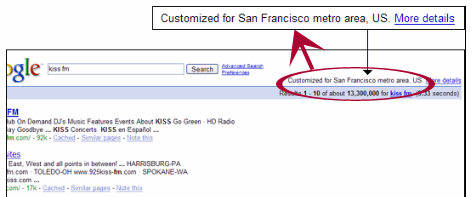
That blog post, written almost a year ago, talks about Google’s “commitment to transparency.” But just try to get one of the customization messages to show up today at the top of the search results. They don’t. Sometime within the last couple months (or more), Google started tucking them away at the bottom of the page, again where few eyes will ever see them.
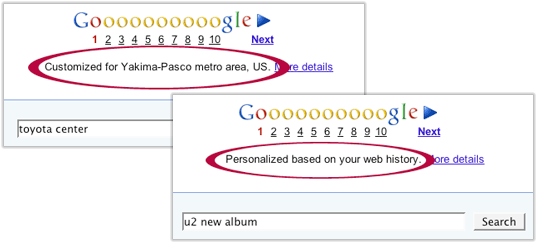
Danny Sullivan said it well when Google announced this move to transparency last year:
“It’s a nice move to help searchers know what exactly is going on ‘under the hood’ at Google and override it if the wrong choices are being made. I’d like to see more of it.”
Instead, it seems we’re seeing less of it. Auto-corrected misspellings are no longer identified; correct spellings are used instead of what you searched, with no notice that your query was changed. Here’s a search for “bellweather credit union” in which the results are changed to “bellwether.”
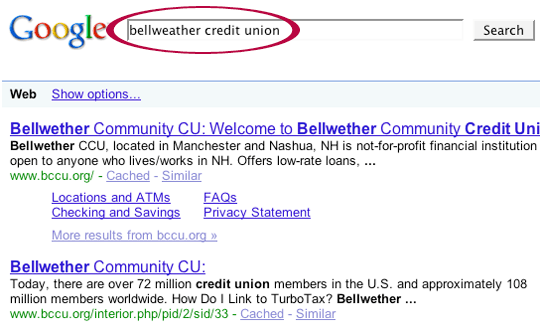
No doubt, fixing the spelling is the right thing to do in this case. And there’s nothing inherently wrong with customizing results based on my location or previous searches. But Google had it right a year ago with its talk about transparency: Any changes or adjustments to the search results should be indicated clearly and immediately at the top of the page, not buried below the search results (or removed altogether). If you ignore one of the words in a user’s query, tell him right away. If you’re showing a user certain results based on her previous searches, tell her right away.
Google’s privacy policy is summed up in one sentence that appears at the top of the page in extremely large text:
“At Google, we’re committed to transparency and choice.”
Maybe it’s time turn the clock back a year and make that commitment all over again.
Explore more on
Editorial disclosure
Contributing authors are chosen for their expertise and work under the oversight of the editorial staff. Search Engine Land is owned by Semrush. The contributor was not asked to mention Semrush; the opinions expressed are their own.
About the author