Google Ads adds Search terms and ad combinations report for AI Max

Google Ads is rolling out a new Search terms and ad combinations report, giving advertisers more visibility into how search queries, ad creatives and landing pages work together in AI Max for Search campaigns.
What’s new. The report has started appearing in some Google Ads accounts, offering a more detailed view of the combinations used to serve Search ads.
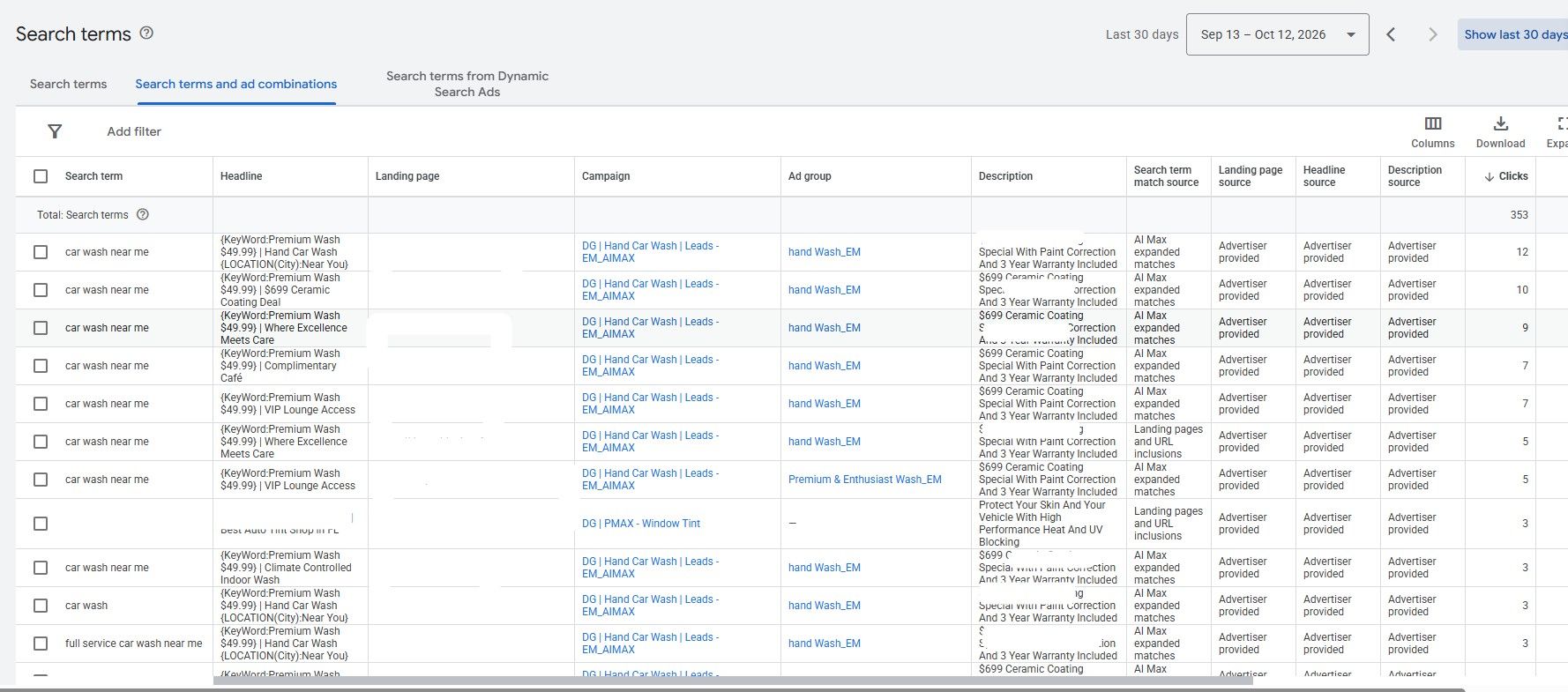
Advertisers can now review several elements together:
- Search terms: The actual queries that triggered ads.
- Headlines and descriptions: The ad copy shown alongside those searches.
- Landing pages: The destinations users were directed to.
- Match sources: Whether traffic came from AI Max expanded matches or landing page and URL inclusions.
- Asset sources: Whether the ad assets were provided by the advertiser.
Why we care. As Google expands AI-powered automation, advertisers have had limited insight into how its systems match searches with ad messaging and landing pages. The new report could help close that visibility gap.
How it helps. Previously, understanding how these elements interacted could require reviewing information across different reports.
Bringing them together makes it easier to identify situations where Google’s automation may have matched a relevant search with the wrong message or landing page.
The opportunity. Advertisers can use the report to investigate high-spend search terms, compare different AI Max matching sources and identify creative mismatches.
For example, someone searching for a basic car wash might be shown an ad promoting a $699 ceramic coating package. The report could help advertisers spot that disconnect and adjust their campaign accordingly.
What advertisers should do. Review search terms alongside their associated headlines, descriptions and landing pages. Use the findings to refine negative keywords, ad assets and campaign settings where necessary.
The catch. More visibility doesn’t automatically mean better optimization. Advertisers should avoid making decisions based on clicks alone and consider conversion performance, cost per qualified lead and actual customer quality.
Availability. The report has been spotted in at least one Google Ads account, but broader availability and rollout timing have not been confirmed.
The bottom line. The Search terms and ad combinations report gives advertisers a clearer view of how AI Max assembles Search ads, helping them identify mismatches and make more informed optimization decisions without sacrificing accountability to automation.
First spotted. This update was spotted by Google Ads specialist Natasha Kaurra who shared the update on LinkedIn.
Explore more on
Add Search Engine Land as a preferred source on GoogleEditorial disclosure
Search Engine Land is owned by Semrush. We remain committed to providing high-quality coverage of marketing topics. Unless otherwise noted, this page’s content was written by either an employee or a paid contractor of Semrush Inc.
About the author