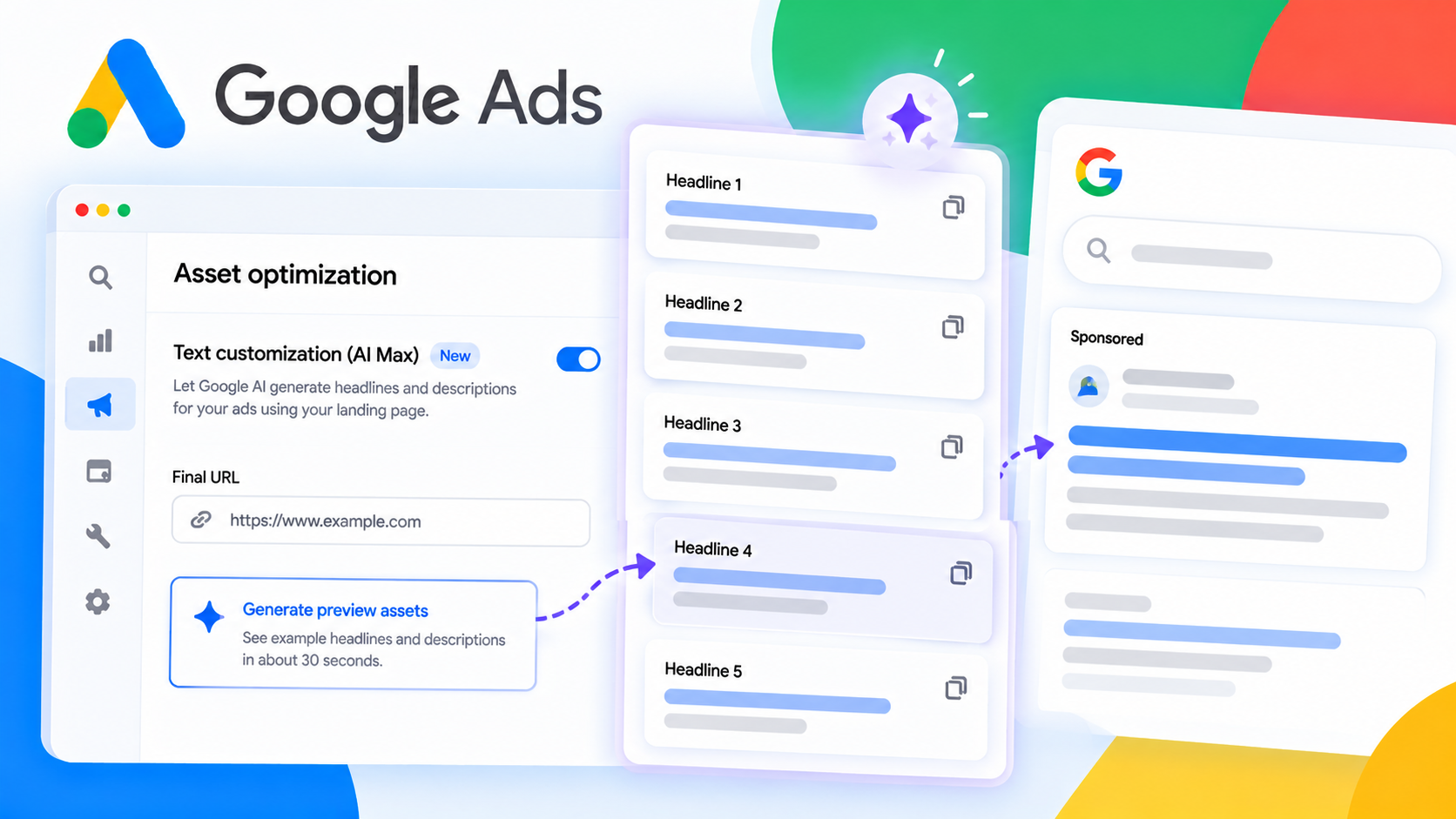
Google unveils asset testing for Performance Max retail campaigns
Google released a new help page detailing Asset testing for retailers, a specialized experiment type for Performance Max campaigns that lets you measure the effectiveness of your creative assets.
What’s new. The new experimental feature tests asset impact within a single PMax campaign:
- A control group (feed-only) is compared against a treatment group (with added assets).
- The results are viewable in the Experiment report.
Split testing without duplicate campaigns. Unlike traditional A/B testing that requires running parallel campaigns, this new feature splits traffic within a single Performance Max campaign:
- Control group: Shows product feed-only ads.
- Treatment group: Shows product feed plus additional creative assets.
This approach eliminates the need to manage duplicate campaigns while providing clear performance comparisons.
How it works. The experiment divides traffic between the two variations, allowing you to determine whether adding creative assets (like images, videos, and text) improves performance beyond what the product feed alone can deliver.
You can review results in the dedicated Experiment report section, measuring key metrics like conversions, click-through rates, and return on ad spend between the two groups.
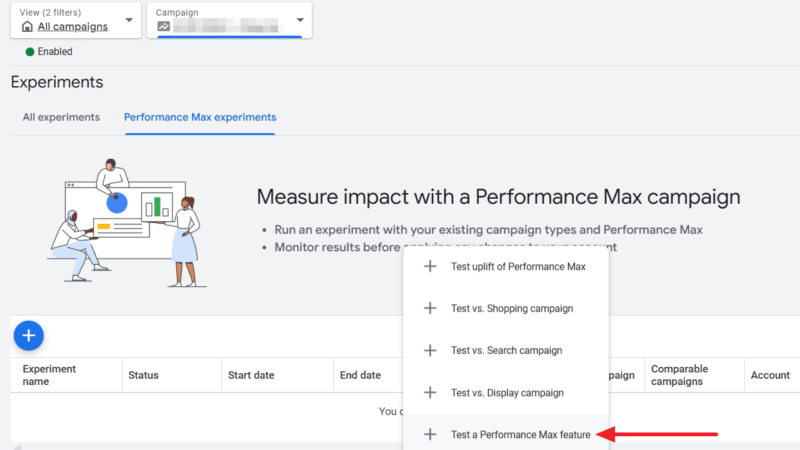
Why we care. Performance Max campaigns have become central to Google’s advertising ecosystem, particularly for retailers. However, many advertisers struggle to understand how much value their creative assets add beyond automated feed-based ads.
This experiment feature addresses that uncertainty, giving retailers data-driven insights into whether investing in additional creative assets delivers meaningful performance improvements.
Go deeper. This launch is part of Google’s broader effort to provide more transparency and control within its automated campaign types, addressing advertiser concerns about the “black box” nature of Performance Max campaigns.
Google’s new help documentation page. About Performance Max optimization experiments: Asset testing.
Explore more on
Add Search Engine Land as a preferred source on GoogleEditorial disclosure
Search Engine Land is owned by Semrush. We remain committed to providing high-quality coverage of marketing topics. Unless otherwise noted, this page’s content was written by either an employee or a paid contractor of Semrush Inc.
About the author