Ecommerce marketing strategies to boost sales

According to Datanyze, there are over 4.9 million ecommerce businesses in the world. That’s a lot of competition! How can you stand out, drive consistent revenue, and grow?
The answer: Smart, modern ecommerce strategies that are proven to work now and on the cutting edge of techniques for the future.
We’ll show you 21 ecommerce marketing strategies that vary in difficulty and resource needs from foundational to advanced. These strategies will help you stand out, attract new customers, build customer loyalty, accurately track your performance, and more.
Go slowly—pick a few you can work on right away, then add more later as you’re able.
What is ecommerce marketing?
Ecommerce marketing is the use of digital strategies to promote and drive traffic to online stores, convert those visitors into customers, and retain those customers post-purchase. It includes tactics like email marketing, search engine optimization (SEO), generative engine optimization (GEO), content marketing, social media, paid advertising, and more.
Ecommerce marketing and general digital marketing have a lot of overlap in the tactics they use, but their end goals are a little bit different.
The main difference between ecommerce marketing and general digital marketing is that ecommerce marketing focuses specifically on driving online sales and transactions, while general digital marketing tends to include broader goals like brand awareness, lead generation, or offline conversions.
The SEO toolkit you know, plus the AI visibility data you need.

Ecommerce marketing and the changing buyer journey

A few years ago, we could have pretty easily predicted a buyer’s journey. It would go something like this:
- Customer discovers a need
- Customer does some general (top-of-funnel) research
- Customer gets more specific with product-specific queries, i.e. “the best (type of product) for (situation or type of person)”
- Customer looks at reviews and prices
- Customer purchases
Today, well, it’s not quite so easy. For example:
- Customer sees a cool product on TikTok
- Thinking about the cool product, customer asks a favorite AI tool about it
- AI gives the customer the brand name
- Customer searches for the brand’s website
- Customer purchases
Or, here’s another possibility:
- Customer sees a cool product in a BuzzFeed article but doesn’t take any action
- Customer comes across the same product in an influencer post on Instagram and thinks “hmm, maybe that’s a cool product I should look into more”
- Customer searches for product reviews, reads one and clicks the affiliate link
- Customer purchases
And there are many more possible ecommerce funnels like those two but with different channels such as social media, affiliate reviews, branded organic, and so on.
In that second example, the customer’s first interaction with the brand’s website was searching for it by name and purchasing immediately. In the mind of that store owner, the customer converted via the direct channel. But, as we can see with our bird’s eye view, that’s not how it happened at all.
In short, ecommerce marketing is evolving quickly in a way that’s making it harder to track and more chaotic to plan.
Let’s take a look at the tactics you can use right now to take advantage of these new channels and new funnel types and embrace all of the newest ecommerce marketing technology.
Foundational ecommerce marketing tactics

If you’re in the early growth stage, this is where you’ll want to start for some foundational ecommerce marketing tactics. Not in the early stages? Go ahead and jump to the intermediate tactics.
These early stage tactics are the kinds of strategies that successful ecommerce brands start with to create scalable marketing systems. They’re your marketing foundation—without them, everything else becomes much harder.
Of course, don’t try to implement them all right away. Start with one or two that align with your current resources and customer needs, then gradually add in other tactics as you grow! The goal at this stage isn’t to be revolutionary, but, rather, to build solid systems that will support your marketing efforts and power growth now and in the future.
Here are the seven tactics to jumpstart your marketing plan:
1. Set up growth-minded email marketing
Email marketing is the number one, must-do ecommerce marketing tactic to get started with. According to a study by Digital Commerce 360, 61% of retailers say email is their most profitable marketing channel!
Try to put a plan in place from the beginning so that you’re collecting the right user data to drive super successful campaigns.
Already starting with pre-existing campaigns? That’s okay, too! Change it up to make it more successful with the tips below.
First of all, it’s important to know what not to do. When many ecommerce companies begin email marketing, they often make these three critical mistakes:
- They send generic newsletters instead of behavior-triggered sequences.
- They’re focused on selling rather than providing value.
- They’re not segmenting their email lists based on customer behavior and preferences.
If any of those sound like you, don’t worry! You’re here to learn and improve.
Instead, foundational email marketing for ecommerce should include:
- Welcome sequences for new subscribers
- Abandoned cart recovery flows
- Post-purchase follow-ups
- Win-back campaigns for inactive customers
- Replenishment reminders for consumable products
- Messaging and storytelling that provides value and hits on your customer’s “why”
- Personalization based on customer behavior and preferences
The goal isn’t just to send emails. You want to create automated systems that work without your constant input and nurture customers based on their actions and interests. If you can achieve that, the sales will follow!
2. Collect zero-party data
Zero-party data is data a customer intentionally and proactively shares with a brand, such as preferences, purchase intentions, and other personal details. Since zero-party data is voluntarily given through surveys, forms, or direct interactions, it’s highly accurate, reliable, and useful for personalization and trust-building.
What’s the easiest way to collect zero-party data from your target audience?
The answer might surprise you. Interactive quizzes!
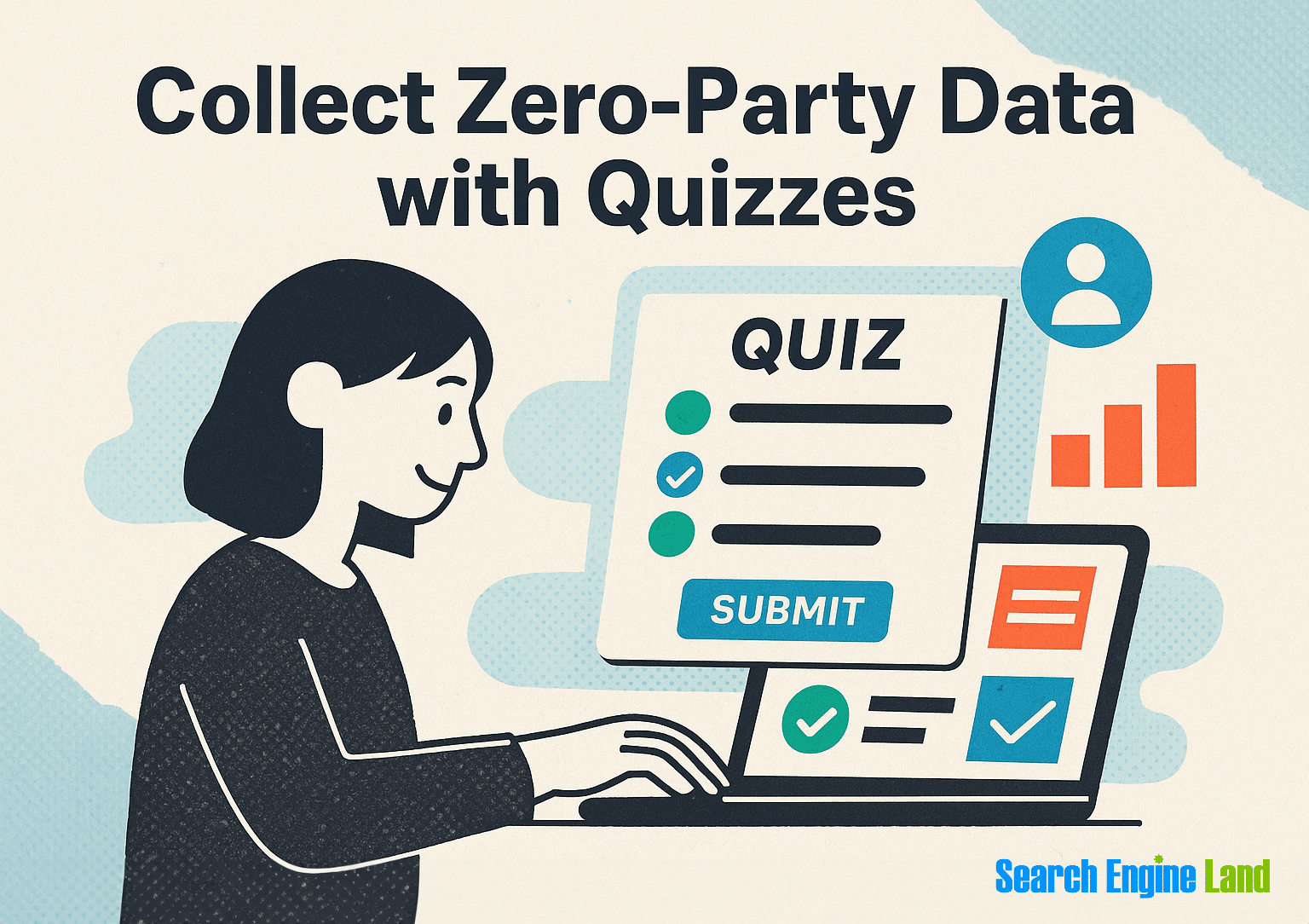
You might remember the heyday of Buzzfeed quizzes, when a large number of people enjoyed taking semi-ridiculous quizzes like “What Dog Breed Are You?” or “This Chocolate Quiz Will Reveal Your Exact Age.”
Those aren’t the quizzes we’re talking about here.
Instead, the quizzes you create should be highly relevant to your product and actually present the user with useful information.
For example, a skincare brand might create a “Find Your Perfect Routine” quiz that asks about skin type, concerns, and lifestyle. A pet food company could offer a “What’s the Best Food for Your Dog?” quiz.
Here’s why quizzes work so well:
They feel helpful rather than intrusive, and they’re so much more enticing than just taking a survey. Plus, customers get personalized recommendations in exchange for their information. It’s a fair trade that builds trust from the start.
Now, you can segment emails, SMS campaigns, product suggestions, and even website experiences based on actual, helpful customer data. Your ecommerce site can serve up the right solutions at the right time for your target audience.
If you’re that skincare brand, your emails can now say something direct and actionable like “Here are the sensitive skin products perfect for your routine” instead of “Check out our skincare products.”
Pro tip: Use quiz results to segment your email list automatically. For example, someone who indicates they have dry skin gets grouped with a “dry skin” tag, for example, and that segment gets different emails with different product suggestions and messaging than those tagged with “oily skin.”
3. Incorporate user-generated content
User-generated content (UGC) is any content created and published by your customers, such as text, images, videos, reviews, or social media posts. UGC builds community trust, increases engagement, and often serves as authentic social proof in marketing strategies.
In fact, Research by Yotpo shows that product pages with UGC can have conversion rates up to 161% higher than those without it.
Some brands just collect UGC and hope for the best because they’re not sure how to use it to their advantage.
Instead, you should integrate it strategically into your product pages and marketing campaigns.
For example, take a look at how Target adds photos of real people wearing their clothing right into the description:
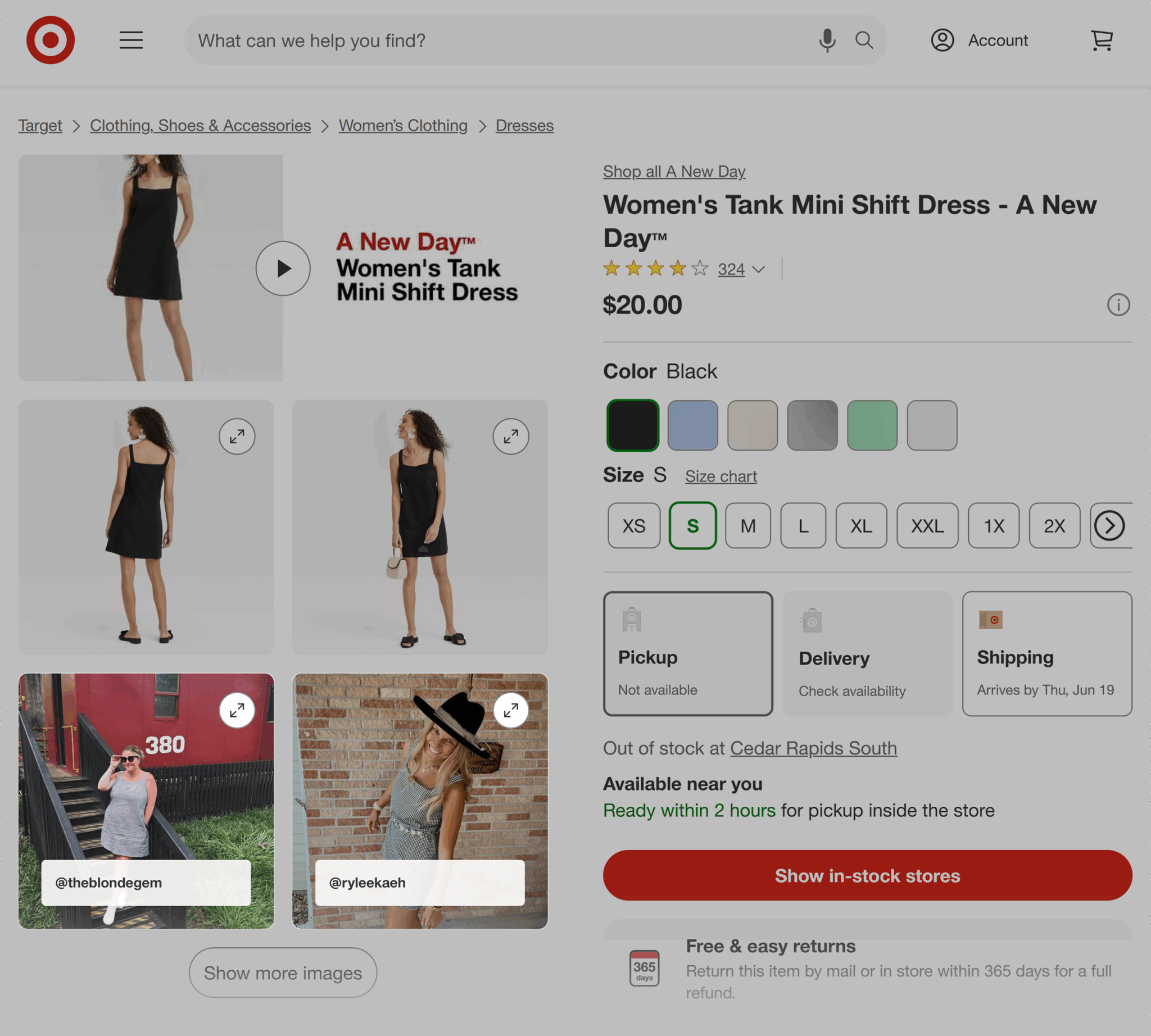
Platforms like Okendo or Yotpo make this integration seamless. They can automatically pull customer photos and reviews from social media and display them right on your product pages.
Why does this matter?
Because seeing real customers using your products removes doubt in your products or services for other potential customers. When someone’s on the fence about a purchase, seeing photos of real people wearing that dress or using that gadget can be the push they need to buy.
Dig deeper: What Is User-Generated Content? How to Get and Use It
4. Introduce individual product performance modeling
One mistake that ecommerce store owners often make is evaluating the entire ecommerce sales report as a whole rather than breaking it down product by product.
Instead, you’ll want to analyze individual product performance using unique stock keeping units (SKUs) so that you can figure out where and how your marketing ad budget is best spent. Tracking individual product metrics like sales, profit margins, and inventory turnover can really help you figure out which products are actually driving the most revenue.
With that knowledge in mind, you can hone your ad spend to get the best return on investment (ROI). Instead of spreading your ad budget across everything whether it’s profitable or not, you can concentrate on what actually makes money.
When analyzing the profitability of individual products, look at factors like:
- Cost of goods sold
- Advertising spend per unit
- Return rates
- Customer lifetime value from that specific product
- Product review sentiment
- Fulfillment and shipping costs
- Customer acquisition cost
Pro tip: Try creating well-crafted bundles that take advantage of those money-making products. For example, if you run an electronics shop, you could create and sell a bundle of your top money-making laptop with your top-performing external hard drive and mouse.
5. Try AI-driven product recommendations
An emerging-yet-already-foundational marketing tactic you should try is implementing predictive product recommendations.
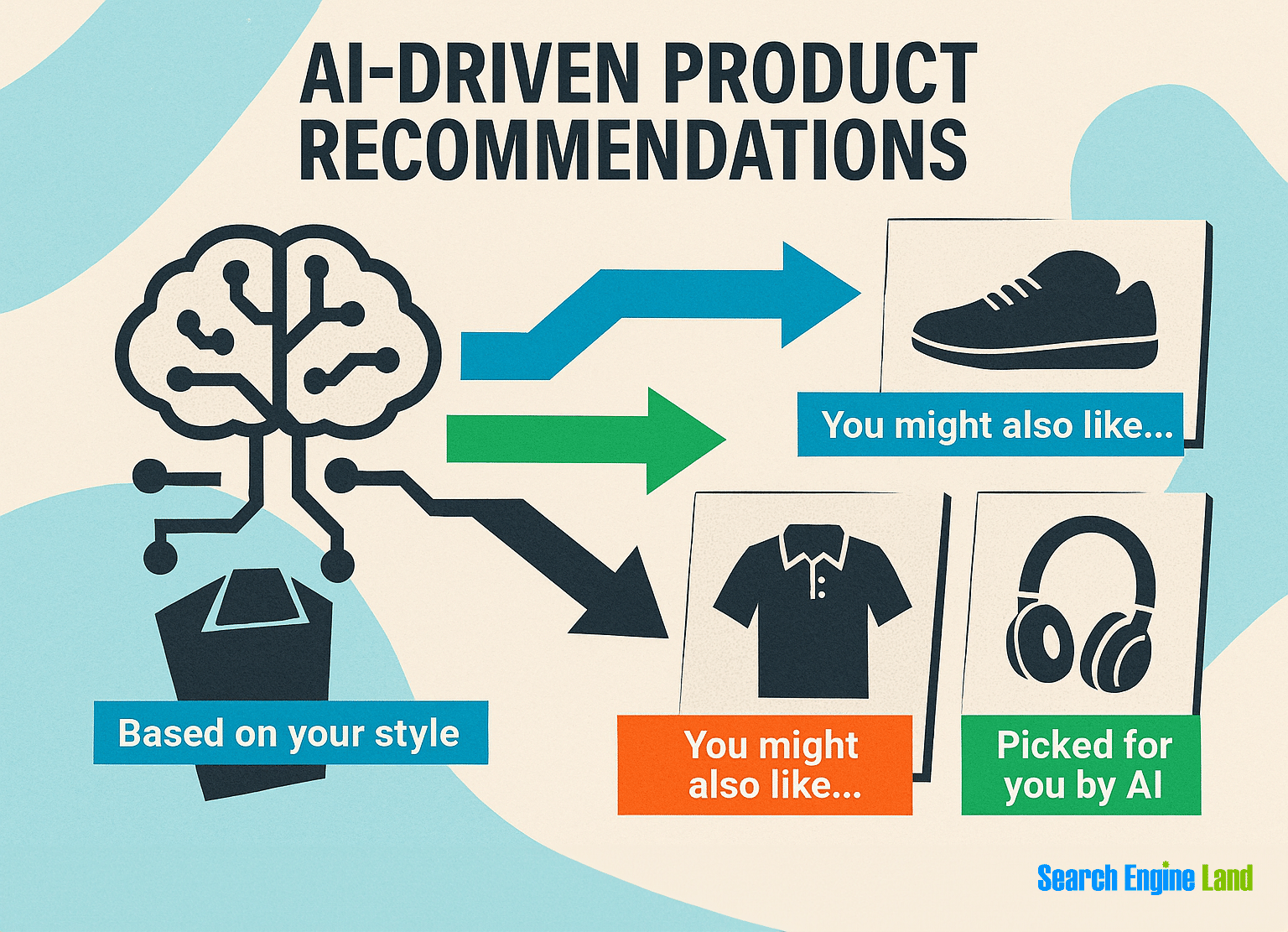
Predictive product recommendations use machine learning to analyze customer behavior, purchase history, and browsing patterns to suggest items a user is likely to buy. These systems increase sales and engagement by offering highly relevant products before the customer searches for them.
This isn’t just “customers who bought this also bought that” anymore. Modern recommendation engines consider dozens of factors that online retailers can easily track, such as browsing behavior, time spent on pages, cart additions, seasonal trends, and more.
When you take all of those factors into consideration, you can more accurately pinpoint what your shoppers might need to buy next, show it to them during their visit, and drive up the revenue you’re making with every sale.
Tools like Klaviyo or dedicated recommendation platforms like Dynamic Yield can help you implement these systems.
6. Use post-purchase upsell flows
The moment right after someone makes a purchase is an ideal time to upsell. Think about it. They’re already in buying mode, they trust your brand enough to complete a transaction, and they’re engaged.
Post-purchase upsell flows capitalize on this moment by automatically suggesting products right on the thank-you page based on what the customer just purchased.
For example:
- If someone buys a camera, suggest a memory card and carrying case
- If someone orders a dress, recommend matching accessories
- If someone purchases a supplement, offer a discounted subscription on scheduled orders
The key is making these suggestions relevant and valuable, not pushy. Frame them as ways to upgrade or more effectively use their original purchase rather than just trying to get more money out of them.
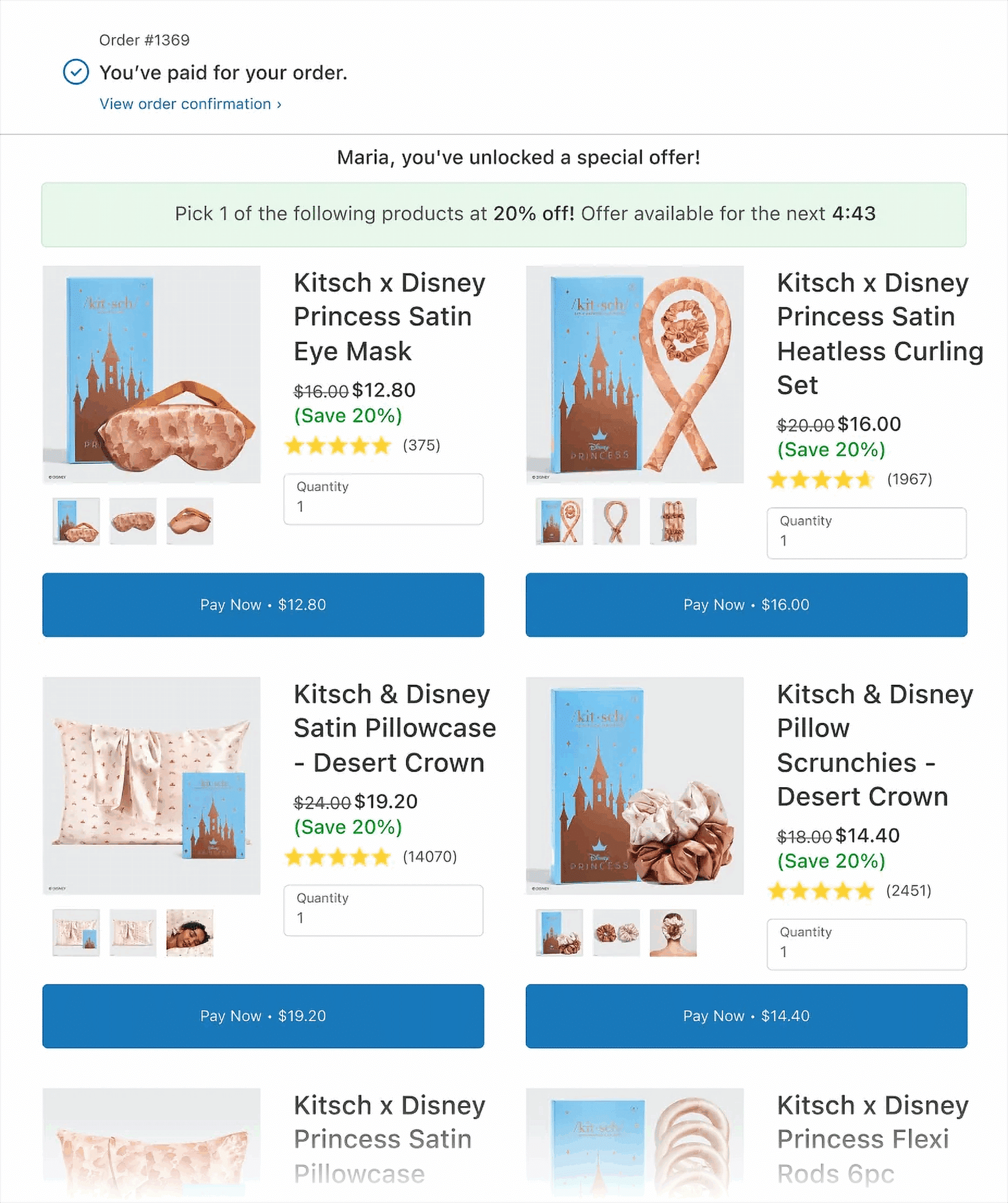
Here’s a post-purchase example from AfterSell on the Kitsch store’s thank-you page. Notice how there’s an offer for 20% off just one of the items if the purchase happens in the next 5 minutes, creating scarcity:
7. Try localized advertising with geofenced offers
Not every customer is the same, and one of the big differences between your customers is their location. Localized advertising lets you customize your marketing messages based on where your customers are.
With localized advertising, you can tailor your ads to local culture, language, preferences, or even events and capture local organic traffic.
Geofenced offers take this a step further. Geofenced offers are location-based promotions triggered when a user’s mobile device enters a predefined geographic boundary.
This means you can create location-based promotions in real time which allows you to try tactics like:
- Offering free shipping to customers in areas where you have fast fulfillment
- Highlighting store-specific inventory or in-stock items based on nearby locations
- Promoting loyalty perks or special discounts to customers near a brick-and-mortar store
- Creating region-specific sales around local events or holidays
- Customizing ad creative with landmarks or cultural references familiar to a local audience
This level of personalization can make your marketing feel more personally relevant to customers which can, in turn, significantly improve conversion rates.
The platforms you’re probably already using like Facebook Ads, Google Ads, and many email marketing tools such as Drip and Mailchimp, support location-based targeting. The trick is using this capability strategically rather than just setting it and forgetting it.
Intermediate ecommerce marketing tactics
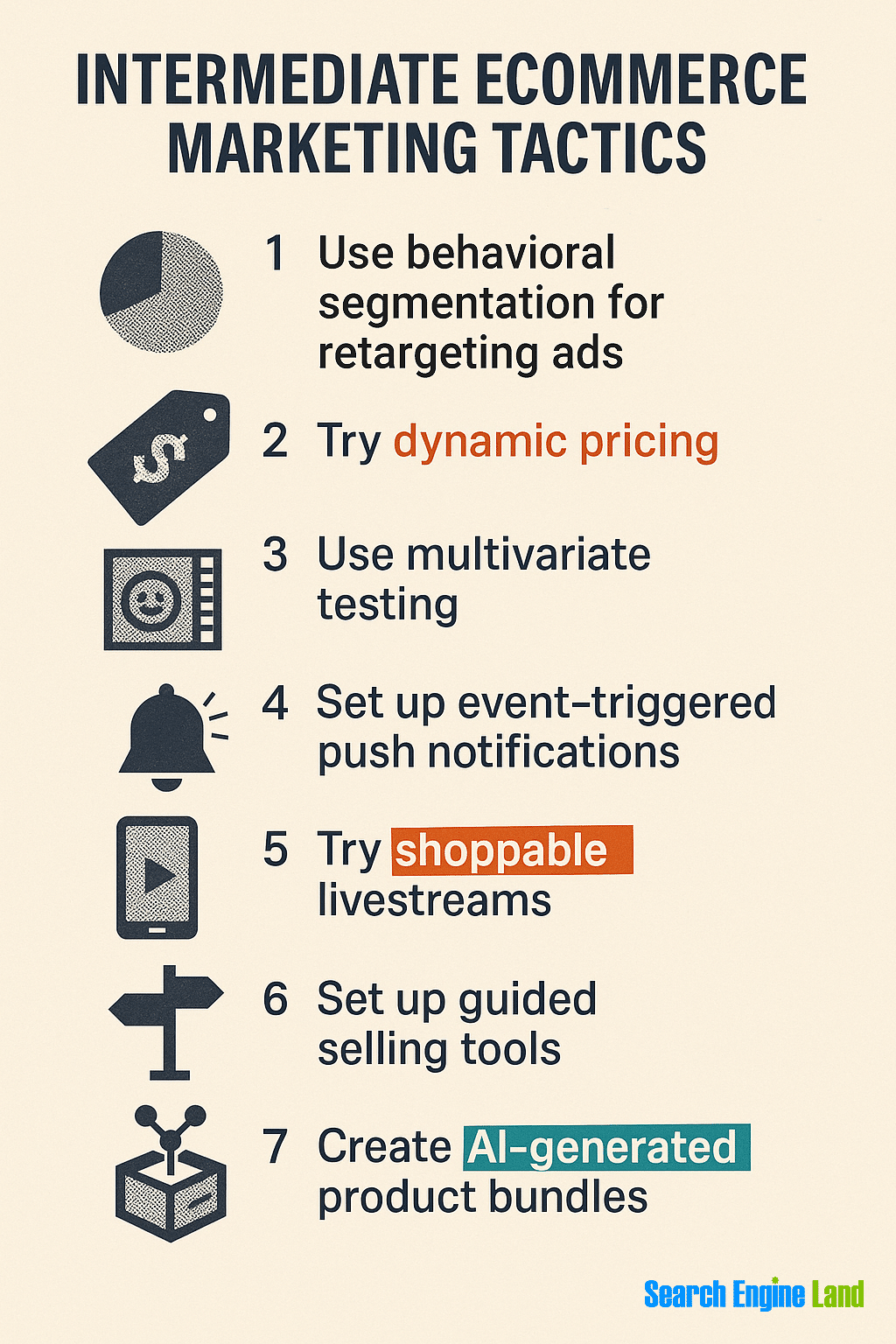
Once you’ve got your foundational systems set up and working well, it’s time to get a little more sophisticated. These intermediate tactics are all about cross-channel optimization, squeezing more ROI out of your existing channels and using data insights you’ve gathered to make decisions that’ll grow your business.
At this stage, you’re not just trying to drive traffic and conversions anymore. Instead, you’re working to maximize the value of every customer interaction, create seamless experiences across all of your touchpoints, and use cross-platform insights to get to know your customers even better.
The brands that master these types of tactics set themselves up for sustainable growth.
1. Use behavioral segmentation for retargeting ads
Remember when retargeting only meant showing ads to users who previously visited your website? You could advertise the exact product they were looking at.

At the time, that felt very of-the-future. But guess what? Now you can do even more to customize each potential customer’s ad experience.
Today’s successful ecommerce brands use behavioral segmentation to create highly specific retargeting campaigns based on real-time customer activity and where someone sits in your funnel.
Instead of showing the same ad to everyone who visits your site or just simply the product they looked at, you can actually create different campaigns for different behaviors.
For example, if someone abandoned your site without purchasing, you might show them ads featuring the specific products they looked at plus related items.
At the same time, you might show ads to previous buyers that feature complementary products or new arrivals in categories they’ve purchased from before.
But hang on, because there’s even more we could do here. We haven’t layered in funnel stage data yet.
Let’s say someone has visited your site 10 times and added items to their cart multiple times, but hasn’t purchased. This shopper is much closer to purchasing than someone who looked at one product then bounced after 30 seconds.
You can tailor your retargeting ads to reflect those differences.
For example, the person who has visited your site multiple times and added items to their cart is in the “Consideration” funnel stage and is close to converting, so they could be served an ad offering free shipping. A person who looked at one product then bounced after 30 seconds is in the “Awareness” funnel stage and probably isn’t going to care as much about free shipping, but might be intrigued by a special offer.
Use those different funnel stages to show more tailored ads to your different audiences.
Dig deeper: 7 ways to put behavioral marketing to work—starting now
2. Try dynamic pricing
Only using fixed pricing could be leaving money on the table. Use dynamic pricing instead to increase your conversion rate.
Why? Dynamic pricing algorithms automatically adjust your prices based on factors like demand, inventory levels, competitor pricing, and individual customer lifetime value. They can “read the room,” so to speak, to determine where your prices should be in order to bring in the most revenue.
This doesn’t mean constantly changing prices and confusing customers. It means being strategic about when and how you optimize pricing.
For example:
- Inventory-based adjustments: Slightly increase prices when stock is low to manage demand and protect margins
- LTV-based pricing: Offer better deals to high-value customers or those likely to become repeat buyers
- Seasonal optimization: Automatically adjust pricing during peak demand periods
- Competitive response: Monitor competitor pricing and adjust accordingly (within your margin constraints)
Platforms like Prisync, Competera, or even Shopify’s built-in dynamic pricing apps can handle this automatically. The goal isn’t really to maximize every single transaction (although that does happen sometimes), it’s to optimize for long-term profitability and customer relationships.
Dig deeper: Dynamic Pricing: What It Is & Why It’s Important
3. Use multivariate testing

Multivariate testing is a method of experimentation that tests multiple variables at the same time to determine which combination performs best. Unlike A/B testing, multivariate testing evaluates several changes at once—such as headlines, images, and buttons—to optimize the most effective version of a webpage or campaign.
For ecommerce, this might mean testing:
- Different pricing strategies (MSRP vs. discount vs. bundle pricing)
- Various creative approaches (lifestyle photography vs. product shots vs. UGC)
- Bundle configurations (2-item vs. 3-item vs. mix-and-match)
- Checkout flows (single-page checkout vs. multi-step vs. express checkout options)
With multivariate testing you could test those across all audience segments at the same time.
The insights you get from multivariate testing are more detailed than traditional A/B tests. You might discover that discount pricing works better with lifestyle photos in your design, but bundle pricing performs best with product shots.
Pro tip: Try not to get lost in the minute details of tiny performance or design differences that don’t make a significant statistical difference. Focus on testing changes that could realistically impact your bottom line, like pricing strategies or major checkout flow improvements, rather than spending time debating whether a blue button performs 0.3% better than a green one.
4.Set up event-triggered push notifications
Both web and app push notifications can be incredibly effective when they’re timely and relevant. Event-triggered notifications take this to the next level by automatically sending messages based on specific customer actions or other events such as loyalty programs or personalized recommendations.
You probably already know about using push notifications for cart abandonment, but have you thought about:
- Price drop alerts for items on someone’s wishlist or previously viewed products
- Personalized recommendations triggered by recent purchases or browsing behavior
- Back-in-stock notifications for products that were unavailable when someone last looked
- Shipping updates that keep customers engaged throughout the fulfillment process
- Replenishment reminders based on typical usage patterns for consumable products
- Loyalty or reward program milestones like earning points or reaching a new tier to foster loyal customers
The key is making these notifications feel helpful rather than pushy. For example, someone who added a high-ticket item to their cart but didn’t buy might appreciate knowing when it goes on sale. Someone who bought coffee pods three months ago might be ready to reorder.
On the other hand, sending a push notification every day just to keep your store in front of your customers’ eyeballs is too much.
Remember, success with push notifications depends on getting the timing and messaging right!
Dig deeper: Push notifications: The secret weapon for SEO and revenue growth
5. Try shoppable livestreams
Live shopping is exploding in popularity, especially among younger demographics. Shoppable livestreams combine the engagement and excitement of live video with the convenience of instant purchasing.
Depending on the social media platform, there are even extra features that you can sometimes add to shoppable livestreams to increase engagement even further, like polls, quizzes, and real-time chat.
You can also introduce limited-time offers during your stream to increase urgency.
6. Set up guided selling tools
Online shopping can feel a little bit risky. When you walk into your local electronics store, there’s someone there to answer your questions. You can see, feel, and try out the product you’re purchasing. Online, you don’t get that personal touch. Instead, customers have to look up answers to questions themselves, which might lead them off of your website before they complete their transaction.
Guided selling tools such as Bloomreach Clarity and Zoovu can help to bridge this gap by mimicking the customer experience of talking to a knowledgeable salesperson.
Guided selling in ecommerce is a strategy that uses quizzes, digital product advisors, or AI-driven recommendations to help customers find the right product based on their needs. It can help reduce decision fatigue, increase conversion rates, and improve user experience by simplifying complex purchasing decisions.
These digital decision trees ask customers questions about their needs, preferences, and constraints, then guide them to the most suitable products.
For example:
- A mattress company might ask about sleeping position, firmness preference, and any back issues
- A skincare brand could inquire about skin type, concerns, and current routine
- A tech retailer might ask about use cases, budget, and technical requirements
The output isn’t just a generic product recommendation. Instead, it’s a personalized explanation of why specific products fit their needs.
7. Create AI-generated product bundles
Static product bundles (groups of similar products sold together) you compile yourself can be great, but AI-generated bundles based on actual purchase patterns and cohort data can be even more effective.
Instead of manually creating bundles based on a gut feeling, AI analyzes data like bought-together purchase patterns, seasonal trends, customer lifetime value (CLV), and inventory levels.
Then, it creates dynamic bundles for your ecommerce website that can change based on real-time data.
For instance, let’s say you sell apparel. During summer, your AI might automatically create beach-themed bundles. During back-to-school season, it might shift to kids’ outfits and uniforms.
Pro tip: The key to making AI-generated product bundles work is having enough transaction data for the AI to learn meaningful patterns. If you haven’t made a lot of sales yet, you might need to wait.
Advanced ecommerce marketing tactics

Alright, feel like you’re fully optimized with the earlier recommendations and you’re ready for the advanced tactics? These are what enterprise brands, direct-to-consumer (DTC) leaders, and those who are ahead of the marketing game are doing right now to keep up exponential growth and maximize website traffic.
The key to using these tactics, though, is choosing the ones that align with your technical capabilities and business objectives. You don’t need to implement everything, but having a roadmap for advanced marketing infrastructure will keep you stay ahead of the curve and possibly give you a competitive advantage. And remember: wherever you can leverage marketing automation, your marketing efforts will get an added boost.
Let’s check out the list so that you can get started now on taking advantage of emerging trends.
1. Implement server-side tracking
Third-party cookies are dying, iOS updates keep breaking attribution, and privacy regulations are only getting stricter. This all makes tracking your visitors and their activity so much harder!
Server-side tracking is your insurance policy against so many changes.
Instead of relying on browser-based tracking (which can get blocked by ad blockers, privacy settings, and platform changes), server-side tracking processes data on your own servers before sending it to analytics and advertising platforms.
What does that mean, exactly?
It means that using server-side tracking can give you more accurate attribution (attributing sales to the correct channels) even when customers block tracking pixels. Collecting first-party data directly can help you future-proof your traffic tracking and measurement.
Setting up server-side tracking requires technical expertise, so you’ll need developers to help you set it up. But the payoff is big—you’ll have reliable data even as the web continues to change.
Using Google Tag Manager? Check out An introduction to server-side tagging.
2. Identity resolution platforms
Like we discussed at the beginning of this guide, your customers don’t shop in neat, linear paths anymore. They browse on mobile, research on desktop, abandon their cart on tablet, then purchase on their phone three days later, often without logging in until the final step.
Want to track all of that? Identity resolution platforms like Wunderkind and Tilores can help.
Identity resolution platforms are tools that match and merge customer data across devices, channels, and databases to create a single unified customer profile. These platforms help marketers deliver personalized experiences, improve targeting accuracy, and ensure consistent messaging across all touchpoints.
They stitch together fragmented customer journeys by connecting anonymous browsing behavior with known customer data (such as transactions, order history, email address, etc.) across devices and sessions.
How?
They use techniques like probabilistic matching (based on behavior patterns) and deterministic matching (based on login data) to create unified customer profiles.
So, using an identity resolution platform, you can see that the anonymous visitor who spent 20 minutes browsing your product pages last Tuesday is the same person who just signed up for your email list, even if they used different devices.
That means you can spend your marketing budget on channels and campaigns that you can see are performing the best, even if the user journey wasn’t straightforward at all.
Dig deeper: What is identity resolution and how are platforms adapting to privacy changes?
3. Set up blockchain-based loyalty programs
Traditional loyalty programs can be a little bit boring. You buy stuff, you earn a few points, you get a few dollars in return. Blockchain-based loyalty programs, though, create transparent, tradeable rewards that customers actually own.
Instead of generic “points,” customers earn branded tokens that:
- Have transparent, real value recorded on the blockchain
- Can be traded or transferred between customers
- Unlock exclusive experiences or products
- Appreciate in value as your brand grows
Brands like Starbucks (with their Odyssey program), Nike, and American Express have already experimented with blockchain loyalty programs.
The gamification potential is big because customers become invested in your brand’s success when their rewards literally become more valuable as you grow.
Dig deeper: Case Study: How Boba Guys Revamped Its Rewards Program With Solana
4. Try generative AI creative campaigns

Creating fresh ads at scale has always been expensive and time-consuming. Generative AI is changing that by automatically producing and optimizing creative assets based on performance data.
Utilizing AI, you could generate new product photography in different settings and styles, write personalized ad copy based on behavior data you’ve provided the AI with, or even produce video content showcasing your products.
Then, you can have AI optimize and update your creative elements in real-time on the fly based on how your campaign is performing.
Imagine all the time you can save!
To get started, try AdCreative.ai or Pencil.
5. Implement headless CMS architecture
This one is a little difficult to explain to anyone who isn’t a developer, so bear with us.
Think of traditional ecommerce platforms like a house where the kitchen, living room, and bathroom are all permanently connected. If you want to renovate the kitchen, you might have to tear down walls in the living room or rework the plumbing in the bathroom because it’s all interconnected.
Traditional ecommerce platforms work the same way. The frontend (what customers see) and backend (where you manage products and orders) are built as one integrated system. Want to change how your product pages look? You’re limited by what your platform allows. Need to create a custom checkout flow? You might have to rebuild everything.
Headless CMS architecture is like having a house where each room is completely separate but connected by smart technology. You can completely redesign your living room without touching the kitchen. You can even have multiple living rooms for different occasions.
In ecommerce terms, “headless” means the frontend (the “head”) is separated from the backend body. Your product catalog, inventory management, and order processing stay in one system, but you can build completely custom frontends that pull data from that backend.
Here’s what this means practically:
Traditional setup: Want to create a special landing page for a holiday sale? You’re stuck with your platform’s page builder and design limitations. Timeline: 2-3 weeks.
Headless setup: You can build a completely custom landing page with any design, functionality, or personalization you want, pulling product data from your existing backend. Timeline: 2-3 days.
The backend still handles all the complex ecommerce stuff like inventory tracking, payment processing, and order fulfillment. But the frontend becomes infinitely flexible.
You could even have multiple frontends for the same backend. So you could have a mobile app, a desktop website, a voice commerce interface, and custom microsites for different campaigns, all pulling from the same product and order data.
Obviously this one takes quite a bit of time and budget to implement, not to mention buy-in from other teams, but it could really open up a world of possibilities for you.
6. Create micro-influencer ambassador programs
Influencer marketing is evolving beyond one-off sponsored posts toward long-term ambassador partnerships.
Advanced ambassador programs create custom content hubs where micro-influencers (with between 1K-100K followers) become authentic brand advocates. These content hubs offer perks like:
- Performance-based compensation tied to actual sales, not just reach, like an affiliate program
- Custom landing pages featuring the ambassadors’ content and unique discount codes
- Product collaboration opportunities giving the ambassadors a stake in product development
- Community building tools to connect ambassadors and share best practices
To use these programs the most efficiently, make sure to identify influencers whose audiences genuinely align with your customer base and whose content style matches your brand.
Unlike traditional influencer marketing where you might interact with an influencer once or twice, ambassador programs create ongoing relationships that deepen over time, leading to more authentic endorsements and better conversion rates.
7. Benchmark your long-term customer lifetime value (LTV)
You might be used to optimizing for short-term metrics like cost per acquisition (CPA) or return on ad spend (ROAS). However, it’s time to also benchmark and optimize for lifetime value (LTV) using cohort analysis.
Track, optimize, and win in Google and AI search from one platform.
What does that mean?
LTV cohort benchmarking measures the LTV of customer groups (cohorts) over time. It compares how different cohorts generate revenue after they become customers. Businesses use it to evaluate customer retention, predict revenue growth, and improve marketing strategies by analyzing trends.
LTV cohort benchmarking involves:
- Tracking customer value over 12, 24, or 36-month periods by acquisition source
- Identifying which channels bring customers who spend more over time
- Adjusting your acquisition strategy based on long-term value, not just initial purchase behavior
- Rebalancing customer acquisition cost (CAC) targets to account for customers who start small but grow in value
It’s easy to open your analytics platform and see which channel is sending you the most sales. But how about a year from now? Those customers that came to you through those channels–how does their spend compare? That’s what LTV cohort benchmarking is all about.
For example, you might discover that customers acquired through content marketing have lower initial order values but 3x higher lifetime value than those from paid social.
Or, customers who converted thanks to an emailed coupon end up spending more, at first, but have a lower lifetime value.
These insights could completely change how you allocate your marketing budget.
To get started, try Peel Analytics or Triple Whale.
Start with strategy, scale with advanced tactics
Don’t pick random tactics from our list and hope they work. Instead, make sure to start with the fundamentals in the first section, then layer in the more advanced tactics while you grow.
Focus on the tactics that make the most sense for your unique brand, customer base, website, and current tech stack.
Scale mindfully, tactic by tactic, and measure, measure, measure.
That’s the secret to long-term ecommerce marketing success.
Feel like you’ve got your ecommerce marketing down to a science? Check out Ecommerce advertising: Strategies to drive online sales to drive your ecommerce advertising skills to the same level.
Explore more on
Editorial disclosure
Search Engine Land is owned by Semrush. We remain committed to providing high-quality coverage of marketing topics. Unless otherwise noted, this page’s content was written by either an employee or a paid contractor of Semrush Inc.
About the author