Search Engine Land Stats: 2007, In Review

As promised, now
that a full calendar year has gone by, it’s time to look at some key stats about
how Search Engine Land has grown in various ways over the year. Let’s dive in!
First, how about a chart:

That’s the number of visits to the site over the past year. I’ll do another
version of that chart further below and call out what caused some of those
spikes. But some key takeaways:
- Visits: 3,250,000
- Pageviews: 5,200,000
- Average Time On Site: 1 minute, 23 seconds
- Percent Of New Visitors: 71
How are people getting to us? Another chart:
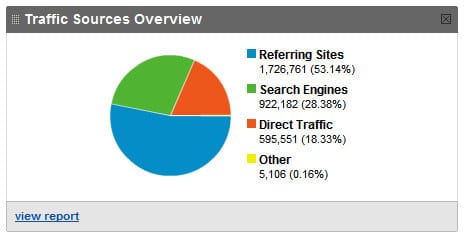
To recap those for the picture challenged:
- Referring Sites: 53%
- Search Engines: 28%
- Direct Visits: 18%
Time to drill down. I’ll give you a table, which I’m going to resort later in
various ways:
|
Source |
Visits |
Pages |
Seconds |
% New Visits |
|
571,037 |
1.15 |
18.60 |
90% |
|
|
153,987 |
1.70 |
127.01 |
33% |
|
|
101,668 |
1.73 |
81.55 |
91% |
|
|
52,742 |
1.41 |
77.66 |
52% |
|
|
33,833 |
1.71 |
135.39 |
29% |
|
|
21,315 |
1.98 |
180.38 |
18% |
|
|
19,623 |
1.89 |
137.47 |
43% |
|
|
19,197 |
1.77 |
132.39 |
32% |
|
|
17,095 |
1.85 |
140.49 |
46% |
|
|
16,423 |
1.44 |
77.79 |
71% |
|
|
15,391 |
1.11 |
15.71 |
97% |
|
|
14,066 |
1.37 |
63.13 |
83% |
|
|
13,862 |
1.81 |
114.34 |
13% |
|
|
12,704 |
1.72 |
117.72 |
48% |
|
|
11,968 |
2.15 |
180.77 |
29% |
|
|
10,848 |
1.12 |
15.36 |
95% |
|
|
8,894 |
2.01 |
161.11 |
29% |
|
|
7,959 |
1.84 |
116.01 |
40% |
|
|
7,039 |
1.94 |
150.57 |
20% |
|
|
6,938 |
1.77 |
123.35 |
18% |
|
|
6,681 |
2.05 |
153.41 |
38% |
|
|
6,425 |
1.89 |
190.32 |
21% |
|
|
6,108 |
1.26 |
28.45 |
98% |
|
|
6,103 |
2.06 |
159.26 |
48% |
|
|
6,085 |
1.16 |
26.99 |
88% |
|
|
6,079 |
2.21 |
172.94 |
37% |
|
|
6,056 |
1.81 |
155.09 |
36% |
|
|
5,951 |
1.77 |
121.10 |
78% |
|
|
5,612 |
1.54 |
90.91 |
70% |
|
|
5,523 |
1.71 |
79.50 |
68% |
|
|
5,482 |
1.94 |
167.16 |
40% |
|
|
5,391 |
1.90 |
129.12 |
91% |
|
|
5,050 |
1.85 |
107.10 |
20% |
|
|
4,991 |
2.61 |
157.67 |
76% |
|
|
4,978 |
2.83 |
238.08 |
29% |
|
|
4,574 |
1.07 |
7.93 |
97% |
|
|
4,525 |
2.23 |
272.65 |
23% |
|
|
4,164 |
1.17 |
29.47 |
93% |
|
|
4,042 |
1.88 |
115.06 |
88% |
|
|
3,654 |
1.31 |
51.68 |
80% |
|
|
3,183 |
1.84 |
127.38 |
45% |
|
|
3,028 |
2.88 |
273.62 |
42% |
|
|
2,984 |
1.69 |
127.86 |
42% |
|
|
2,960 |
1.80 |
133.54 |
46% |
|
|
2,937 |
2.04 |
179.59 |
27% |
|
|
2,914 |
1.87 |
133.32 |
39% |
|
|
2,842 |
1.70 |
89.02 |
70% |
|
|
2,791 |
1.53 |
113.43 |
44% |
|
|
2,774 |
1.85 |
197.18 |
16% |
|
|
2,626 |
1.15 |
28.15 |
85% |
Digg by far leaves all the other referring sites in the dust. But how do all
those Digg visitors measure up, in terms of engagement? I’ve bolded in each
column the three sites that lead for that particular metric. In terms of pages
viewed, most from Digg only read a single page. In comparison, those from
Eric Ward, our own
Search Marketing
Expo blog, and the New York
Times read nearly
three pages during a visit to Search Engine Land.
Pages viewed aren’t the entire story, of course. A page view means someone
loaded a page, but did they spend much time actually reading it? The stats say
most Digg visitors did not, which doesn’t surprise me given the comments you
often see on Digg, where it seems like people are only reacting to a story as summarized, rather than properly reading it. Digg visitors were fourth for spending the least amount of time on the site. In contrast, visitors from Eric Ward led by spending over 4 1/2 minutes here, on average. Visitors from my
Daily SearchCast podcast site spend nearly as long, with those from our Search
Marketing Expo site spending nearly 4 minutes.
I’m especially proud to note that visitors from our own social media site —
Sphinn — spent nearly
three minutes when they came to an article at Search Engine Land. Three minutes,
versus about 18 seconds for a Digg visitor. Search marketers have taken plenty a
bad rap by some at Digg. At least the stats give some indication that
search marketers are a thoughtful, considerate bunch that actually take the time to read articles
before commenting.
Digg is NOT the site with the most newest visitors to Search Engine Land, though it is fairly high.
Instead, those are two political blogs, no doubt having people come to view
our
story about George W. Bush no longer being a miserable failure on Google.
Now some problems with the chart above. Mainly, it’s that it considers all
"referring" sites to be the same. In reality, there are these general classes of
sites:
- Social Media: You get traffic from people sharing your content with
others.
- Feed readers: These are generally your existing readers who see
that you’ve posted something through a feed on their personalized home page or
start page and click through.
- News Sites: Places where you generally go to find news.
- Topic Sites: These are web sites about particular topics. For
us, generally sites about search.
How do they break down in terms of our traffic? Social media:
|
Source |
Visits |
|
571,037 |
|
|
101,668 |
|
|
21,315 |
|
|
16,423 |
|
|
10,848 |
|
|
6,085 |
|
|
2,626 |
|
|
Total |
730,002 |
The feed reading sites:
|
Source |
Visits |
|
153,987 |
|
|
33,833 |
|
|
19,197 |
|
|
13,862 |
|
|
12,704 |
|
|
6,938 |
|
|
6,103 |
|
|
5,050 |
|
|
2,774 |
|
|
Total |
251,674 |
The news sites:
|
Source |
Visits |
|
52,742 |
|
|
14,066 |
|
|
4,042 |
|
|
Total |
70,850 |
The topic sites:
|
Source |
Visits |
|
19,623 |
|
|
17,095 |
|
|
15,391 |
|
|
11,968 |
|
|
8,894 |
|
|
7,959 |
|
|
7,039 |
|
|
6,681 |
|
|
6,425 |
|
|
6,108 |
|
|
6,079 |
|
|
6,056 |
|
|
5,951 |
|
|
5,612 |
|
|
5,523 |
|
|
5,482 |
|
|
5,391 |
|
|
4,991 |
|
|
4,978 |
|
|
4,574 |
|
|
4,525 |
|
|
4,164 |
|
|
3,654 |
|
|
3,183 |
|
|
3,028 |
|
|
2,984 |
|
|
2,960 |
|
|
2,937 |
|
|
2,914 |
|
|
2,842 |
|
|
2,791 |
|
|
Total |
124,831 |
Now to summarize, I’m leaving off the feed reading sites. As I explained,
these are pretty much people who already know about new content on our site
through feeds or email we send them. That’s super important, but it’s not quite
the same thing as a referral from another sites. The percentage breakdown of
referrals:
- Social media: 79 percent
- Topic sites: 13 percent
- News sites: 8 percent
Short story? There’s a lot of gold in those social media sites. Sure, we
might joke about making top 9 lists to please the audiences there or consider
carefully the headlines we put on stories to appeal to the social media crowd. And we can say the audience isn’t as
engaged. But the sheer amount of traffic they can send can’t be ignored. For
more on that, I’ll give you this short reading list:
- Categorizing
Social Media Sites - Social Media
Marketing: The New SEO? - Beyond Google:
Social Media Engines First, Other Search Engines Second
Also see Search Engine Land’s
Social
Media Marketing category and
Let’s Get Social
column and for past articles. Don’t forget — our
SMX Social Media show also
returns in April 2008 to help people get up to speed on social media
marketing.
How about search engines, what this entire site is about? As I blogged early
on last year, the biggest struggle Search Engine Land has had with search engines is being
a new "untrusted" site. As someone who ran a "trusted" domain with a 10 year history, I know that virtually anything I posted about a topic at that site could do well
over other sites, similar to what we just
posted about today hitting Google. But a new site? Sadly, the authority of
authorship from an old site doesn’t get passed along to your new domain.
Here’s what I
said about the
challenge back in January 2007:
Wait a minute! Did I say miserable failure! Wasn’t there something in the
news about that again recently? Oh, yeah — in fact, it was our top story last
month, as you might recall. And so what happens on Google if I do that search?Our story isn’t in the first results. WebProNews, which mentions the story,
makes it to the second page. Search Engine Guide and Search Engine Lowdown,
with really short fresh stories on the subject, also make it to that page. But
our comprehensive piece? Nah — we’re invisible.Keep going through the results, and you’ll find other pages that mention
our article, including Boing Boing or our listing on Digg:But us? Not in the top 100 listings.
Sigh. It’s stuff like this that makes Google sound like a mockery when they
suggest there is no "sandbox" or "sandbox-like effect" that holds new sites back. Clearly from our experience, there is. It’s easy to find many searches
like the ones above, where other sites that reference our own content outrank
that content. It makes no sense, nor is it particularly relevant.I know it will change, and I’ll patiently wait while we build up our trust
— though c’mon, just how many trusted links do they want? We’ve got plenty so
far! I’m also increasing our domain registration from the initial year I did
to 10 years, which just might possibly make Google think we’re going to be
around and are a tiny bit more trustworthy.
It has gotten better since then:

That’s a chart of all our search-related traffic over the past year, and you
can see it has climbed. We probably get around 2,000 to 4,000 visits per day
from search now, versus the 500 to 800 per day back last January. Those two big
spikes, by the way, are due to traffic from searches on fires in Southern
California and people looking for how to track Santa Claus. I’ll come back to
those in a bit.
Who sends the traffic? Here you go:
| Search Engine | Visits | Percent Of Visits |
|
837,173 |
91.0% |
|
|
53,287 |
5.8% |
|
|
7,689 |
0.8% |
|
|
6,278 |
0.7% |
|
|
5,735 |
0.6% |
|
|
2,385 |
0.3% |
|
|
Other |
7,248 |
0.8% |
|
Total |
919,795 |
100.0% |
I look at those stats, with Google being so far beyond everyone else, and all
the things I said
last January seem still perfectly applicable:
Why’s TechCrunch doing so well on Google and not the other major search
engines? It could be that TechCrunch is optimized best for Google and missing
out on the other major search players. But c’mon. search marketers know that the
major search engines don’t have that many differences in how they rank pages.
Yes, maybe if you load your URLs up with keywords, you might do a bit better at
Microsoft Live.com. Perhaps if you do paid inclusion, you might see more traffic
flowing from Yahoo. But a page that does well with Google generally should have
as good a chance at doing well with the others.Another caveat is that TechCrunch is probably getting Google News and
Google Blog Search traffic mixed in with the overall "organic" figures (see
this recent stats
post I did about Search Engine Land traffic sources to understand this more).
Sure, including those sources as part of Google searches overall could help
make Google seem an even bigger resource. But the reality is that many sites
constantly report that Google is by far the search traffic leader.Rich Skrenta’s post
Google’s true search market share is 70% back in December was a great call
to renew attention about this fact. My own post after his,
Google By Far The
Leader, If You Look At Site Owner Traffic Stats, provides some further
perspective. Overall, it’s hard not to feel that the other major search
engines aren’t major traffic drivers, despite the shares of searches they
generate. Certainly the stats I’ve been doing for Search Engine Land keep
reflecting this.
Search Engine Land is a Google News & Yahoo News source (for the record, we had to request inclusion in both places like everyone else — it wasn’t automatically done, and
we got in at both places after about a month). I know that keyword-based
searches from Google News are no doubt fueling the Google pool. But it’s still
amazing to see someone like Yahoo —
with supposedly around
half the share of Google in terms of search activity — still so far behind.
Top terms?
|
Keyword |
Visits |
Percent |
|
failure |
49,085 |
5.3% |
|
miserable failure |
23,982 |
2.6% |
|
search engine land |
22,226 |
2.4% |
|
gphone |
14,761 |
1.6% |
|
igoogle |
10,720 |
1.2% |
|
froogle |
9,721 |
1.1% |
|
tudou.com |
7,622 |
0.8% |
|
|
7,285 |
0.8% |
|
google universal search |
6,698 |
0.7% |
|
universal search |
6,307 |
0.7% |
|
searchengineland |
5,673 |
0.6% |
|
most visited websites |
3,969 |
0.4% |
|
danny sullivan |
3,633 |
0.4% |
|
california fires map |
3,584 |
0.4% |
|
tracking santa |
3,174 |
0.3% |
|
Other |
741,355 |
80.6% |
|
Total |
919,795 |
100.0% |
That’s nearly 1 million visits to the site through search. Absolutely —
social media is a traffic driver that can’t be ignored. But so is search. Just a
little care of basic things — title tags, ensuring you can be crawled, and so on
— and there’s a continual stream of traffic that can flow your way.
In particular, note the "Other" line at the bottom. In 2007, there were
nearly 300,000 different search terms that sent traffic. Over 80 percent of
search related traffic was NOT from the top 15 terms. That’s search’s long tail
in action (see Screaming
About The Search Tail for more about this).
Leaving behind web visits, how are things on the feed front? Here’s the
chart:

We currently stand at 18,333 subscribers as of January 1, 2008. That’s down
due to the holidays. Our high about two weeks ago was 19,948 — just shy of
hitting the 20,000 mark.
Some readers may recall I had a
goal to hit 15,000
by the end of the year. I made it with lots to spare! Actually, I have to
revise that goal to around 18,000. See that big spike on the chart? That was
when Google Reader stats started getting reported to FeedBurner for the first
time for all sites across the web. For us, it immediately gave us about 3,000
more subscribers. I did make the goal in the end, and even with a bit to
spare. For 2008? I’d like to hit 40,000 or more.
By the way, some will recall that Google Reader and iGoogle themselves are
reporting direct stats, plus you can get them from places like Bloglines. More
about this can be found in the articles below:
Figures for us, as of January 2, 2008:
- Bloglines subscribers: 1,814
- iGoogle subscribers: 1,629
- Google Reader subscribers: 6,180
And the feed reader breakdown from FeedBurner for the last month:

As always, we appreciate those who subscribe to our feeds. You’ll find a full
list of our feeds here, and
here are the buttons for our main feed, to help you along:
Get Our Search Feed:


You can also
can get special pages or tabs for many internet start pages that list headlines
from us and other search news sources. Check them out below:
-
iGoogle Search News Tab - My Yahoo
Search News Page -
Windows Live Search News Page - Netvibes
Search News Tab -
Pageflakes Search News Page
If you want yet more ways to keep up with us, try these options:
-
Facebook: Our Search News App -
Facebook: Search Engine Land Page -
Facebook: Search Engine Land Group
Twitter: Search Engine Land Feed
What about good old email?
- 5,250 readers take our
SearchCap newsletter via email. My goal was to be at 17,500 at this point,
so I have some revising to do. I’ll aim for hitting 15,000 by the end of this
year. Honestly, we think there’s no better way
to get a full recap of everything that happened in search than to take SearchCap. Check it out, via
email or feed.
- 2,800 readers take our
Search Month
newsletter.
- 100% Organic
is our most popular column in terms of email subscriptions, with about 600
readers. Many more read it through visits to the site directly.
Link Week is at
450, and all but one of our
columns has more than 200 email subscribers.
What are people reading when they get here?
Search Engine Land’s
Most Popular Stories Of 2007 has our top read stories of the past year with
descriptions, and here they are in summary:
- Google Kills
Bush’s Miserable Failure Search & Other Google Bombs - Google 2.0: Google
Universal Search - Mapping The
Southern California Fires - Google Universal
Search Means Looking For Raccoons Is No Longer Family Friendly - Billboard
Showdown: Google 411 Takes On Ask’s Algorithm - Google Declares
Stephen Colbert As Greatest Living American - George W. Bush: A
Failure Once Again, According To Google - Google Maps Causes
US Navy To Change Its Swastika Building - Goodbye Froogle,
Hello Google Product Search! - Google Birthday
Logo: Nine Years Old - Google Maps Adds
Terrain View, Replaces Hybrid View - Ask Relaunches:
Now "Ask 3D" - Larryos, Raisin
Brin, Porn Flakes & Other Google Cereals - Google Search
History Expands, Becomes Web History - Gphone? The Google
Phone Timeline - The Right Way To
Fix Inaccurate Wikipedia Articles - Google’s New
Navigational Links: An Illustrated Guide - Official: Selling
Paid Links Can Hurt Your PageRank Or Rankings On Google - iGoogle,
Personalized Search And You - Google Releases
New Link Reporting Tools - Google Says
Stephen Colbert Is No Longer The Greatest Living American - Instructions On
Tracking Santa With NORAD & Google: The 2007 Edition - What Is Google
PageRank? A Guide For Searchers & Webmasters - Wikipedia Enters
Top Ten Most Visited Sites - How To Win Friends
And Influence People In Social News Networks
That brings me back to the traffic chart. How’s it look in terms of the
spikes? Let’s see:

- 14 "Is Google
Evil?" Tipping Points Since 2001 (hit Digg and Reddit) - Google Kills
Bush’s Miserable Failure Search & Other Google Bombs (hit Digg, though
over time, Google has sent seven times more traffic) - Google Releases
New Link Reporting Tools (hit Digg, delicious) - Netvibes: Will
Google Remain ‘The Start Page For The Internet’? (hit Digg) - Squeezing The
Search Loaf: Finding Search Engine Freshness & Crawl Dates (hit Digg) - George W. Bush: A
Failure Once Again, According To Google (hit Digg, Reddit, Stumbleupon,
Netscape) - Google Declares
Stephen Colbert As Greatest Living American (hit Digg, Crooks and Liars,
Stumbleupon) - Goodbye Froogle,
Hello Google Product Search! (hit Digg, also high traffic from TechCrunch) - Google Says
Stephen Colbert Is No Longer The Greatest Living American (hit Digg) - Google 2.0: Google
Universal Search (hit Digg, and over time, Google’s sent nearly half as
much traffic) - Ask Relaunches:
Now "Ask 3D" (hit Digg) - Google Bad On
Privacy? Maybe It’s Privacy International’s Report That Sucks (hit Digg) - Google Universal
Search Means Looking For Raccoons Is No Longer Family Friendly (hit Digg) - The Right Way To
Fix Inaccurate Wikipedia Articles (hit Digg) - How To Win Friends
And Influence People In Social News Networks (hit Digg) - Larryos, Raisin
Brin, Porn Flakes & Other Google Cereals (hit Digg) - Google Birthday
Logo: Nine Years Old (hit Digg – and number 18 below was on same day) - Google Maps Causes
US Navy To Change Its Swastika Building (Yahoo Tech, Clicked, then
StumbleUpon has sent Digg-level traffic over several months) - Billboard
Showdown: Google 411 Takes On Ask’s Algorithm (hit Digg, StumbleUpon) - Mapping The
Southern California Fires (Google News,
Planet Chiropractic) - The Social Media
Manual: Read Before You Play (hit Digg) - Google Maps Adds
Terrain View, Replaces Hybrid View (hit Digg) - Instructions On
Tracking Santa With NORAD & Google: The 2007 Edition (Google News) - Keeping It Private
On Google Reader (hit Digg) - Deconstructing
Google: Chapter 4, After The Google Breakup (hit Digg)
Sometimes I look at the list of top stories and sort of want to sigh. You
pour your heart, soul, and energy into a long write-up on some important subject
that perhaps few will notice. Then a reader emails you about an image of a dog
and a raccoon apparently getting it on — which shows up in regular Google
search results — and that’s one of the top stories of the year?
Mostly, I don’t worry or try to measure if a story did well based on
immediate views (or total views at all). Especially over time, some stories pick
up legs. In fact, I wanted to somehow make a list of the top articles that were
NOT driven by social media traffic, but that proved too hard to do quickly. But
from the top 25 for the entire year, here are ones that did well without social
media love:
- Google Search
History Expands, Becomes Web History - Gphone? The Google
Phone Timeline - Google’s New
Navigational Links: An Illustrated Guide - Official: Selling
Paid Links Can Hurt Your PageRank Or Rankings On Google - iGoogle,
Personalized Search And You - Google Releases
New Link Reporting Tools - What Is Google
PageRank? A Guide For Searchers & Webmasters - Wikipedia Enters
Top Ten Most Visited Sites
Finally, I’ll wrap up our year with some of the recognitions we’ve earned.
These are also listed in the
bragroll on the site:
- Wall
Street Journal Recommended Reading - Ad Age Power 150 Blog (currently
fourth, though on a points shown basis, we’re tied with four others for first) - Technorati Top 100 Blog
(currently 37th) -
TopRank Top 10 -
Self Made Minds Top 100
Larry Chase Top Pick-
SEJ’s Top 2 & 3 SEO Bloggers (and
fingers crossed
for this year’s awards) -
Best SEM Newsletter - eBizMBA Top
Tech Site,
Blog &
SEO
Blog - Daily Blog Tips
Top 25 SEO Blogs -
Top 50 Marketing Blog To Watch In 2008 - Techmeme Leaderboard Source
Thank you everyone for your support of Search Engine Land over the past year,
from our dedicated writers, to our editors, to our sales and technical staff, to
our readers that we love to serve!
Explore more on
Editorial disclosure
Contributing authors are chosen for their expertise and work under the oversight of the editorial staff. Search Engine Land is owned by Semrush. The contributor was not asked to mention Semrush; the opinions expressed are their own.
About the author


