Timeline: The long, slow death of Exact Match in Google Ads

You might think that with a name like “Exact Match,” the functionality of this PPC match type would be easy to understand. Well, you’d be wrong.
Follow along on our timeline to see how the search giant has evolved its offering over time. On each item, click on the title to get the details of that development.
2012
AdWords To Automatically Match For Misspellings, Other Variants
April 17, 2012 – With this 2012 update to the functionality of Exact Match, Google began to lay the foundation for the changes that would come. Though at this point, marketers could opt out.
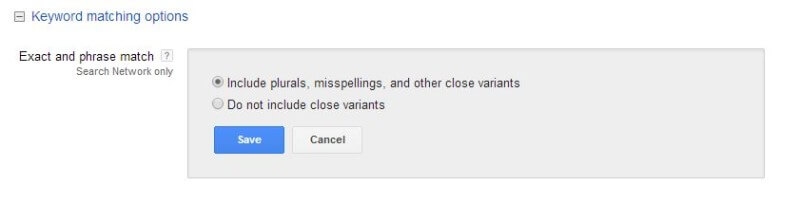
This option to exclude close variants disappeared in 2014
2014
Farewell ‘Pure’ Exact Match, AdWords Will Soon Require All Campaigns To Use Close Variants
August 14, 2014 – Today Google has announced that in late September, AdWords advertisers will no longer have the ability to de-select close variants. All campaigns will now include these variants, something that advertisers could previously opt out of.
Search Marketers Tear Into Google Over AdWords Exact Match Change
August 15, 2014 – Marketers voiced their anger over the planned change via Twitter, blog posts and even a Change.org petition.
2017
Google to further dilute exact match in AdWords; will ignore word order & function words
March 27, 2017 – Not just for plurals anymore, close variants will extend to include word ordering and function words in inexact match keywords.

What the data tells us about the death of exact match and its impact
April 6, 2017 – Following Google’s recent changes to exact match in AdWords, many search marketers were concerned about the impact on their accounts. Columnist Aaron Levy dug through his client data to see whether advertisers’ fears came to pass.

2018
Google’s exact match close variants expand again: Now include same meaning variations
September 6, 2018 – The latest machine learning-powered update to close variants means exact match will match to the intent of the query.

How keyword match types work after the new close match variants change
September 12, 2018 – This free script shows the metrics for both the keyword and the search term on one line. This makes it easy to compare the performance of the query to that of the keyword. While it’s easy to judge a query on its own, you may actually miss the fact that the query is outperforming the underlying keyword. This is Google’s point… you may actually want these close variants because they perform well.

The impact of ‘close variants’ in exact match types
October 31, 2018 – A look at 4 ways Google Ads Scripts can help restore control for some advertisers.
When exact match isn’t exact anymore: A script to regain control
November 12, 2018 – This script looks through all search queries that have been triggered by exact match keywords and determines which of these queries are dissimilar enough to your keywords. For those, it creates a negative keyword with the text of the search query.
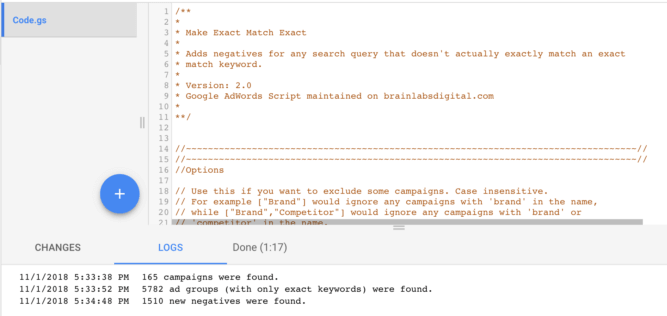
With Google’s exact match change rolled out, here’s what advertisers are seeing
November 13, 2018 – Not everyone sees eye-to-eye on the fallout or next steps, but all agree it’s a sign of dramatic change and cause for giving campaign structure, set up and management fresh looks.
Explore more on
Add Search Engine Land as a preferred source on GoogleEditorial disclosure
Search Engine Land is owned by Semrush. We remain committed to providing high-quality coverage of marketing topics. Unless otherwise noted, this page’s content was written by either an employee or a paid contractor of Semrush Inc.
About the author