Google adds vacation rentals to Hotel Search
Increased competition between hotels and vacation rentals should increase visibility for rental providers -- and boost Google Hotel Ads revenue.
Google recently redesigned and added features to its hotel search interface to make it more intuitive and useful for both desktop and mobile users. On Tuesday, it launched vacation rentals in the mobile UI.
How does it work? In addition to standard hotel accommodations, users will be able to filter and browse through short-term rentals via Google Hotel Search. The feature is already available on mobile and will be coming to desktop over the next month.
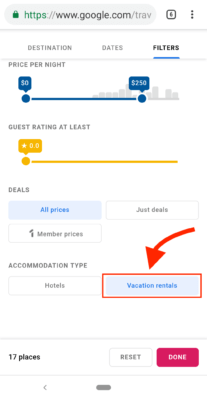
Participating providers include TripAdvisor, Expedia, VRBO, and Hotels.com. It’s not clear if rental industry juggernaut Airbnb has signed on. In some cases, users can book hotels directly through Google and pay via Google Pay. The hotel or booking partner receives the reservation and payment details and the partner is responsible for sending confirmations to users.
Google actually first began testing vacation rental filters in hotel search in 2017.
Why you should care. Google’s travel search services now include flights, hotels, and vacation rentals. The ability to switch between comparing hotels and vacation rentals in the same interface means vacation rentals will compete head-on with hotels. For short-term rental providers, the inclusion in the updated Google Hotels interface should mean more visibility. It also widens Google’s prospective base of takers for Hotel Ads.
Search Engine Land is owned by Semrush. We remain committed to providing high-quality coverage of marketing topics. Unless otherwise noted, this page’s content was written by either an employee or a paid contractor of Semrush Inc.
About the Author