SMX Advanced Session: SEO For Bing Vs. Google

SMX Advanced kicked off this morning in sunny Seattle (yes, seriously) with a packed house for the opening session of the SEO/Social Media track, “SEO for Google vs. Bing: How Different are They?” I won’t be recapping all of the sessions I attend today and tomorrow, but will do my best to share any interesting info that comes out of SMX Advanced. (Oh, and I will be live-blogging the two keynotes.)
Janet Miller of Search Mojo opened the session with what she described as a “big picture” look at the differences between the two engines. She explained that, for some of her company’s clients, Bing outperforms Google for various key metrics like page views per visit, time on site, etc.
She outlined some of the differences in how Google and Bing display search results, ending with a look at Bing’s unique “Document Preview” — the tool that shows content from web pages in the right side of Bing’s search results. Janet says Bing gets its preview content in three ways:
- uses the H1 tag if different from the title tag
- first paragraphs of info from the page
- uses contact info if available on page
Rand Fishkin of SEOmoz spoke second and shared the results of a study of 11,351 SERPs via Google AdWords Suggest, using only the first page. He added a strong disclaimer to review and question the data.
Some of the study’s findings:
- Exact-match domains are a strong factor in both engines, slightly higher in Google.
- Exact-match hyphenated domains appear to do better in Google, but are more frequent in Bing.
- Exact-match dot-com domains have the strongest correlation as a positive ranking factor.
- Links appear to be a stronger factor for Bing results, particularly having links from a variety of different domains. “Bing might be a little more naive in how it credits links because it hasn’t been around for 10-12 years like Google has,” he suggested.
- Another strong factor that affects rankings in both engines is having exact-match anchor text links from a variety of domains.
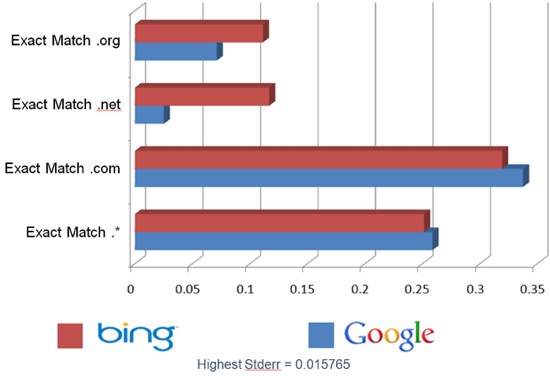
What does all the data suggest? “Google and Bing are quite similar,” Rand says. You can, and should, see this data for yourself (in case I missed some details) by checking out this blog post just published on SEOmoz: Google vs. Bing: Correlation Analysis of Ranking Elements.
The Q&A discussion began with this quote from Google’s Matt Cutts: “Rather than chasing search engines, chase the user experience. Because that’s what search engines are chasing.” Bing’s Sasi Parthasarathy echoed that sentiment: “It’s not about if Bing is like Google, or Google is like Bing. It’s about what’s right for the user. Don’t do stuff specifically for either search engine.”
Other random comments from the Q&A:
Sasi Parthasarathy says there’s still no decision on the future of Yahoo Search Explorer after Bing starts powering Yahoo’s search results.
Matt Cutts says Google will soon start looking more at the video sitemaps that users submit. Google wants to rely more on those to index videos.
Explore more on
Editorial disclosure
Contributing authors are chosen for their expertise and work under the oversight of the editorial staff. Search Engine Land is owned by Semrush. The contributor was not asked to mention Semrush; the opinions expressed are their own.
About the author