Google Ads’ Smart Bidding update appears to have ended bid suppression
Google’s Aug. 17 Smart Bidding update fundamentally changed how budget-limited campaigns compete in auctions, according to new analysis from Smarter Ecommerce’s Head of Ecommerce Insights Mike Ryan.
Why it matters. Google updated its bidding systems on Aug. 17 to make budget-limited campaigns using target-based bidding perform more consistently toward their stated targets. New post-update data suggests one consequence may be the end of the bid suppression that previously helped those campaigns secure cheaper clicks and outperform their ROAS targets.
What changed. Before the update, budget constraints could effectively cause Smart Bidding to bid more conservatively, allowing some campaigns to stretch their budgets and substantially outperform their targets. Google’s new system instead aims to deliver performance closer to the target an advertiser actually sets.
By the numbers. Smarter Ecommerce’s analysis found median CPCs for budget-limited tROAS campaigns increased 15.8% after Aug. 17, while CPCs for campaigns that were never budget-limited fell 13% over the same period.
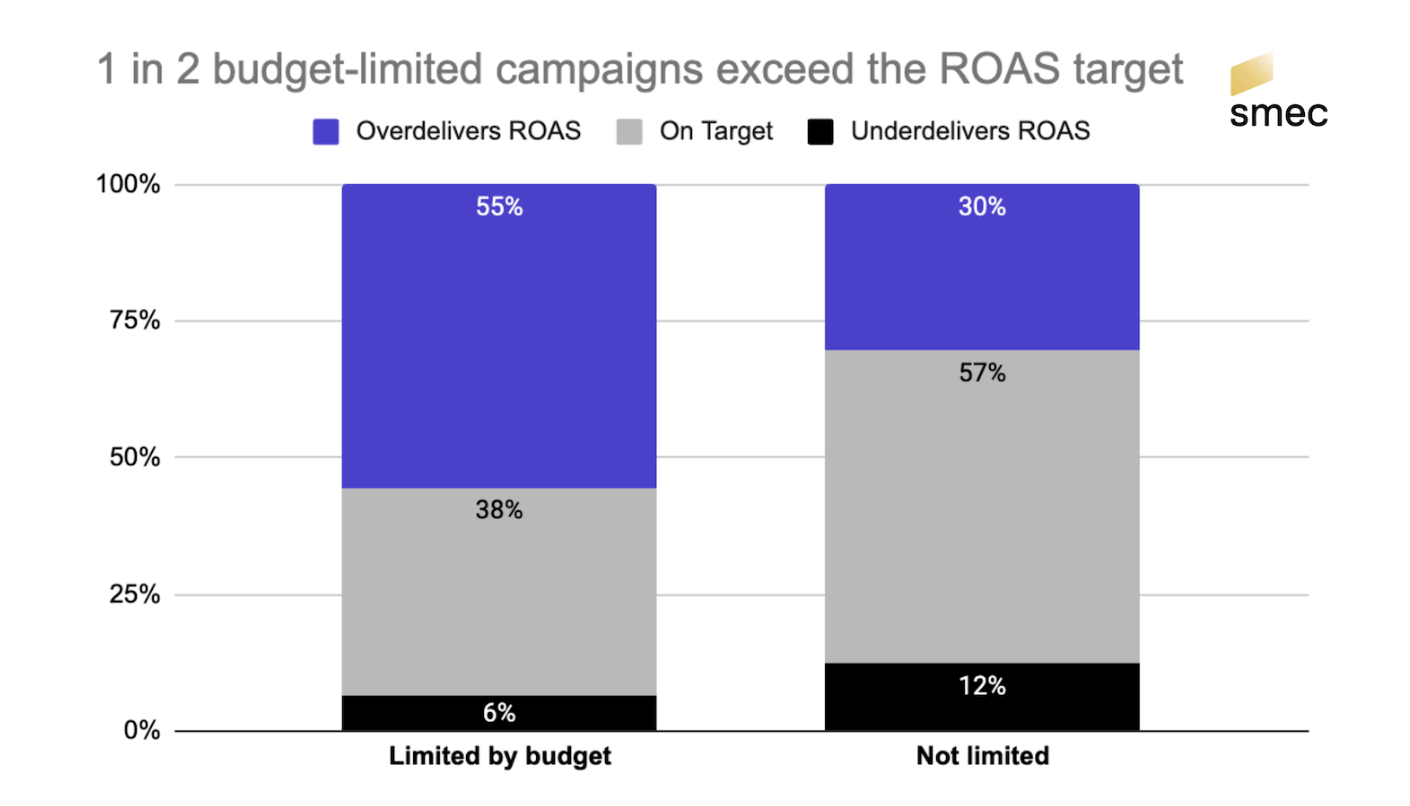
The evidence. Before Aug. 17, more than half of the budget-limited campaigns analyzed were exceeding their ROAS targets. Among campaigns that weren’t budget-limited, only 30% overdelivered, while 57% landed on target.
Then came Aug. 17. That’s the date Google began rolling out its Smart Bidding change for budget-limited campaigns using target-based strategies. Google said the goal was more predictable performance around advertisers’ stated targets, particularly when budgets change. The global rollout was completed Aug. 27.
What happened next. Smarter Ecommerce found a sharp change in impression-share dynamics. Before Aug. 17, the median budget-limited campaign lost roughly 45% of impression share because of rank and just 4% because of budget. Afterward, rank losses fell to around 30%, while losses caused by budget jumped to roughly 33%.
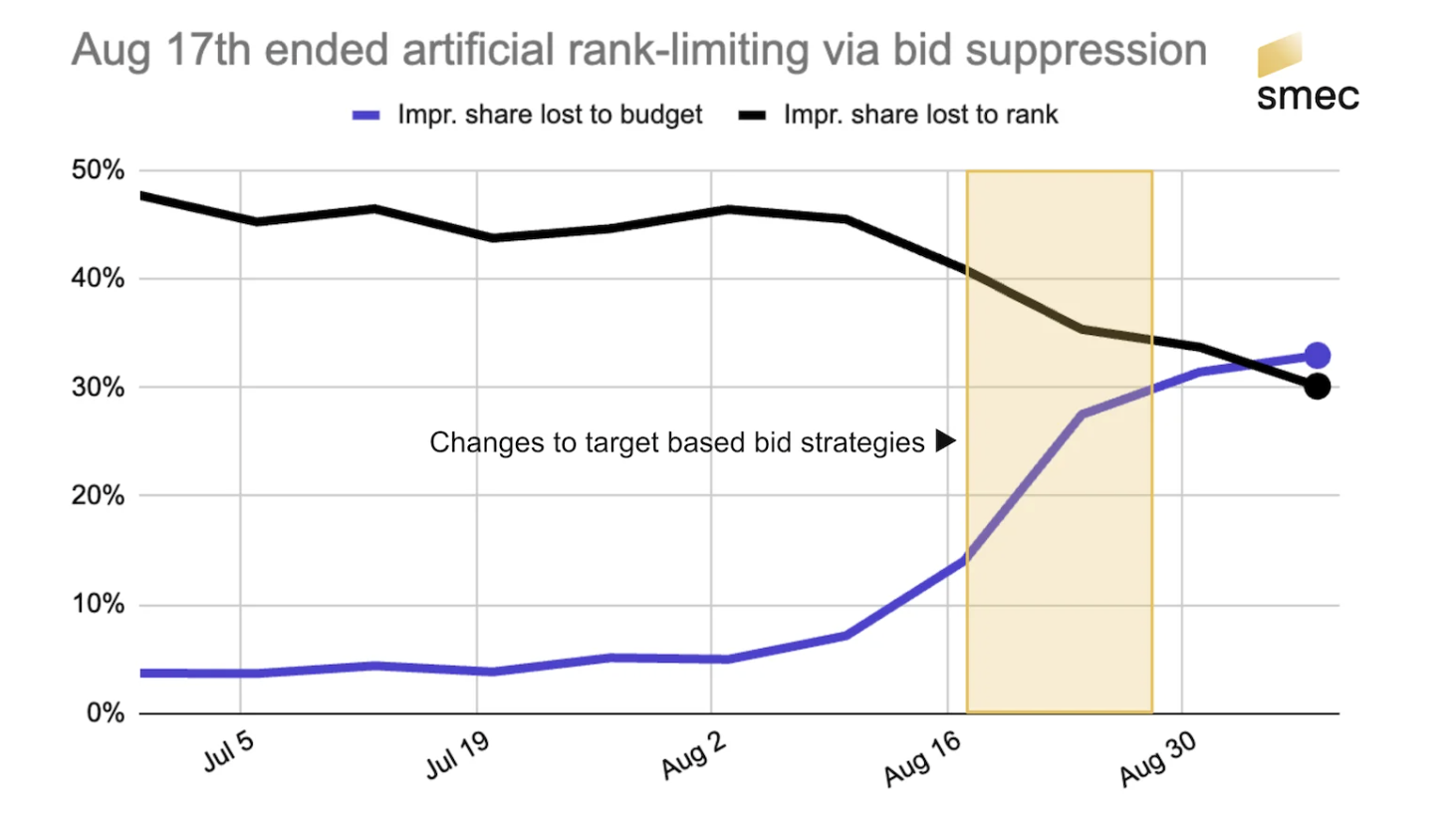
Overall median impression share for budget-limited campaigns fell from 40% to 31%, suggesting campaigns are now hitting their budget constraints more directly instead of stretching those budgets through lower bids.
The CPC effect. Median CPCs for budget-limited campaigns rose from €0.38 to €0.44, while CPCs for non-limited campaigns fell to €0.33. Ryan’s analysis suggests cheaper auction opportunities previously captured by constrained campaigns may now be shifting toward advertisers without those budget limitations.

Why we care. Campaigns that previously looked exceptionally efficient may have benefited partly from the way Smart Bidding responded to budget constraints. Google’s Aug. 17 update means advertisers may now see those campaigns move closer to their stated ROAS or CPA targets — exactly the behavior Google said the update was designed to produce.
For example Google says a budget-limited campaign with a $10 target CPA that had actually been delivering a $5 CPA could now move closer to the $10 target unless the advertiser changes that target. The same principle applies to Target ROAS campaigns.
What advertisers can do. Ryan points to several options, including accepting reduced reach, moving tROAS targets closer to historically delivered ROAS, increasing budgets where the economics support it, or reconsidering the bidding strategy altogether. Google similarly recommends reviewing historically overperforming budget-limited campaigns and deciding whether their current targets still represent their actual business goals.
Yes, but. The longer-term ROAS impact still needs more data. Conversion attribution takes time, so it’s too early to know exactly where performance will settle following the update.
The bigger picture. What Google described as a change designed to make Smart Bidding more predictable may also have changed the economics of budget-constrained advertising. Smarter Ecommerce’s analysis provides an early look at how that change is playing out in actual auctions.
The bottom line. Aug. 17 isn’t just an arbitrary breakpoint in the data. It’s when Google began changing Smart Bidding for budget-limited campaigns and the resulting shifts in CPCs, impression share and target attainment suggest advertisers should reassess campaigns that previously benefited from unusually strong ROAS.
Dig deeper. Google ends its bid suppression era: What it means for your ROAS
Explore more on
Editorial disclosure
Search Engine Land is owned by Semrush. We remain committed to providing high-quality coverage of marketing topics. Unless otherwise noted, this page’s content was written by either an employee or a paid contractor of Semrush Inc.
About the author