Google gives Responsive Search Ads more flexibility
Google's update enhances ad flexibility, optimizing asset combinations dynamically to improve engagement, relevance, and performance.
Google is enhancing Search ads with AI-powered changes that aim to increase asset flexibility, improve performance, and deliver more relevant ad experiences.
Driving the news. Here’s what’s changing:
- Greater flexibility in RSAs:
- Google’s AI now assembles and serves headlines, descriptions, and assets dynamically to improve performance.
- In some cases, Google may omit certain content, like descriptions, if doing so leads to better engagement.
- New ways to use existing assets:
- Headlines that weren’t used in RSAs can now appear as sitelinks if they’re predicted to boost performance.
- Up to two RSA headlines may serve in the space previously reserved for sitelinks, linking to the final URL.
- This allows advertisers to maximize the impact of their creative assets while improving user experience.
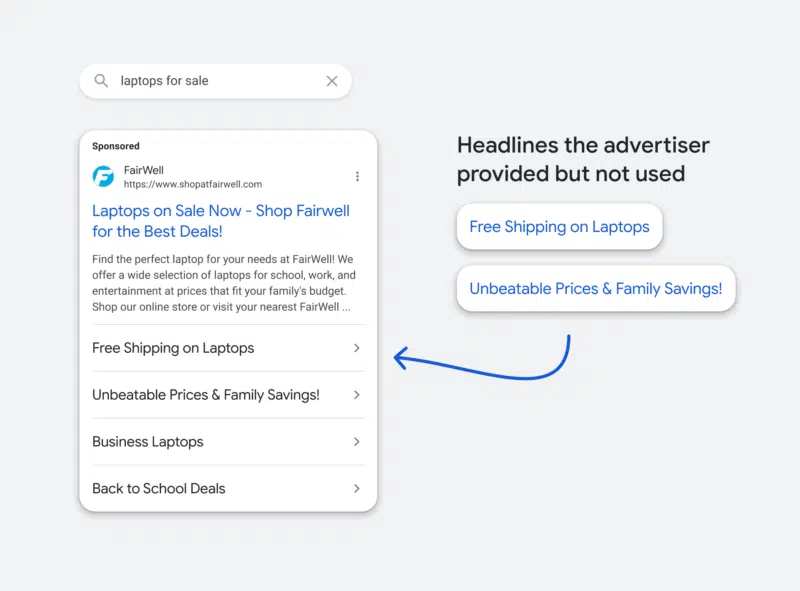
Why we care. Google’s AI is now optimizing responsive search ads (RSAs) by finding the best combination of assets to maximize engagement and conversions. Leveraging unused headlines as sitelinks and refining ad combinations in real time should help maximize the impact of your creative assets without extra effort.
This update works toward ads remaining relevant to search queries, improving visibility and performance while maintaining control over key messaging elements. Ultimately, it should help advertisers drive more meaningful interactions with potential customers and improve ROI.
The big picture. Google said it remains committed to maintaining asset relevance and respecting pinned elements within ads. The combinations report’s purpose is to help advertisers analyze which headlines, descriptions, and assets are appearing most frequently.
This global rollout reinforces Google’s effort to make ads more adaptable while ensuring they align with user search intent.
Bottom line. Google’s AI-driven ad flexibility could help you reach customers with more relevant, engaging messaging — optimizing performance while streamlining ad creation.
Search Engine Land is owned by Semrush. We remain committed to providing high-quality coverage of marketing topics. Unless otherwise noted, this page’s content was written by either an employee or a paid contractor of Semrush Inc.
About the Author