Want more AI visibility and citations? Start monitoring trends


Are you still running the old content marketing playbook? The one where you search for established keywords and topics, then create content around them to try to gain visibility in traditional search results and on AI platforms like ChatGPT, Perplexity, and Gemini?
If so, you’re missing out on a huge opportunity to lead the conversation rather than follow the crowd. In the new content marketing playbook, you win more AI visibility and citations by tracking trends and creating content proactively rather than reactively.
This guide walks through how to add trend monitoring to your new content playbook to help you do three things:
- Publish earlier in a topic’s lifecycle, before it gets super competitive
- Build topical authority around emerging subjects
- Improve your chances of being cited in AI-generated answers
How to use trend data to publish before anyone else
Every topic that gains popularity on the web follows a similar arc. It typically starts as a faint signal, like a spike in forum posts, an uptick in search queries, or a cluster of social conversations. The topic grows, more brands and creators catch on, and search/AI visibility gets harder to come by.
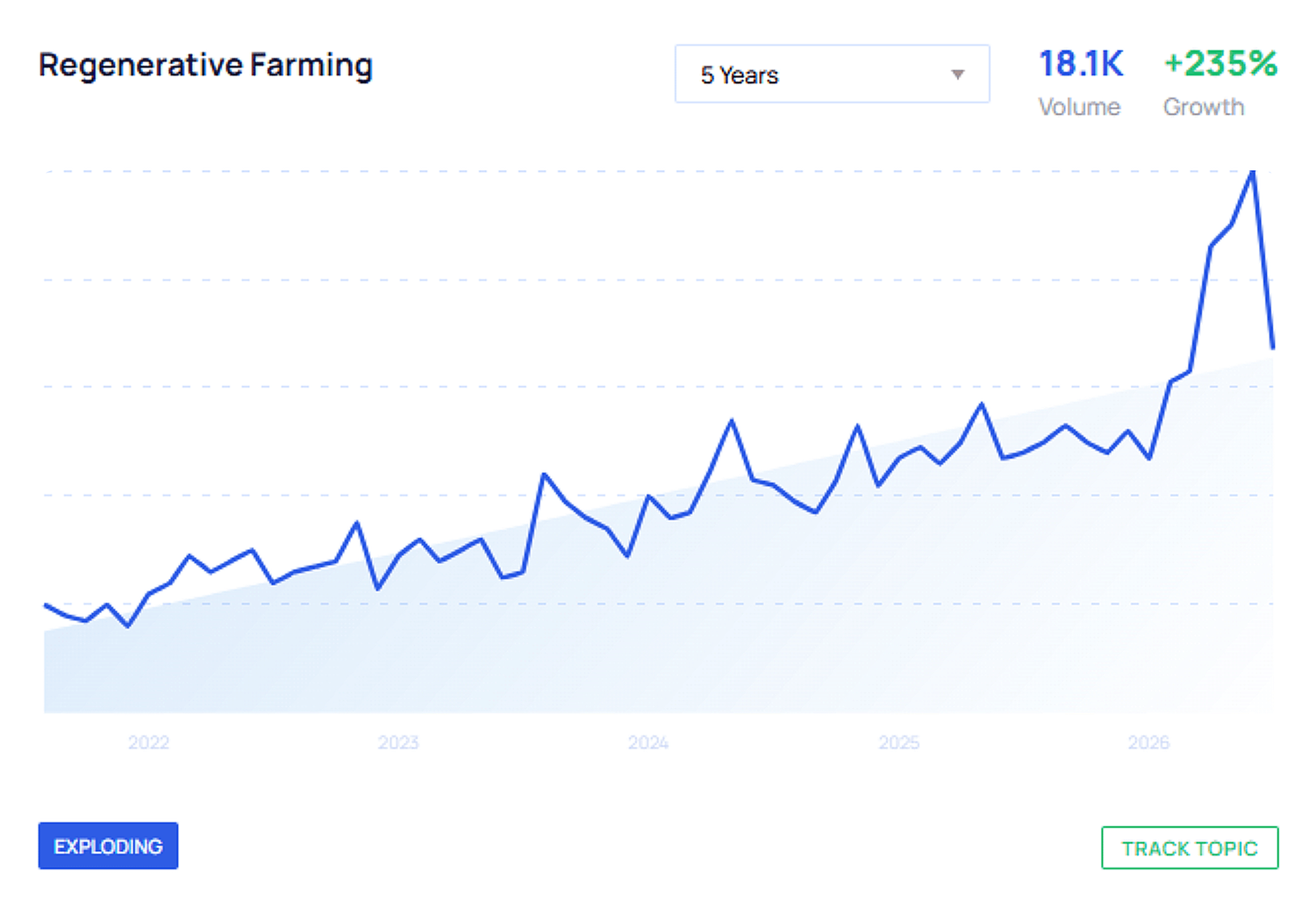
If you want to be one of the brands showing up in AI mentions and citations on emerging topics, you need to publish content in the early growth phase.
Here’s what that lifecycle looks like:
Stage 1: Emerging queries
Emerging queries are the earliest signal. This is when search volume is low, competition is nearly nonexistent, and the topic hasn’t been covered much at all.
This stage is the hardest moment to act on, but it also could be the most valuable if the topic takes off because you can establish a presence before your competition even knows the topic exists.
Stage 2: The growth phase
The growth phase is where the opportunity to dominate the conversation gets larger. Search volume is rising, but your competition hasn’t jumped in with both feet yet.
This phase is the sweet spot for a lot of content teams because the topic has enough search demand to justify investment while the competition is still thin.
Stage 3: Peak
Peak is when everyone jumps on board the trend. It usually features a higher search volume, higher competition, and a search engine results page (SERP) that’s already dense with established content and authoritative domains.
It’s not impossible to win citations here, but it’s significantly harder to fight for the space that early movers have already claimed.
Stage 4: Decline
Decline means a topic has had its moment. Traffic may still flow, but the trend line is going down. Content published now will probably have a shorter shelf life and is unlikely to become a strong citation source in AI-generated answers.
In general, if you’re creating content at peak, you’re late. If you’re creating at the growth phase, you have a shot. If you’re creating at the emerging level, you’re building a compounding advantage.
But how do you identify which phase a topic is in?
Tools to help identify trend phases
Semrush’s Keyword Overview report can show you search volume trends over time for any given term, which gives you a quick read on a topic’s trajectory.
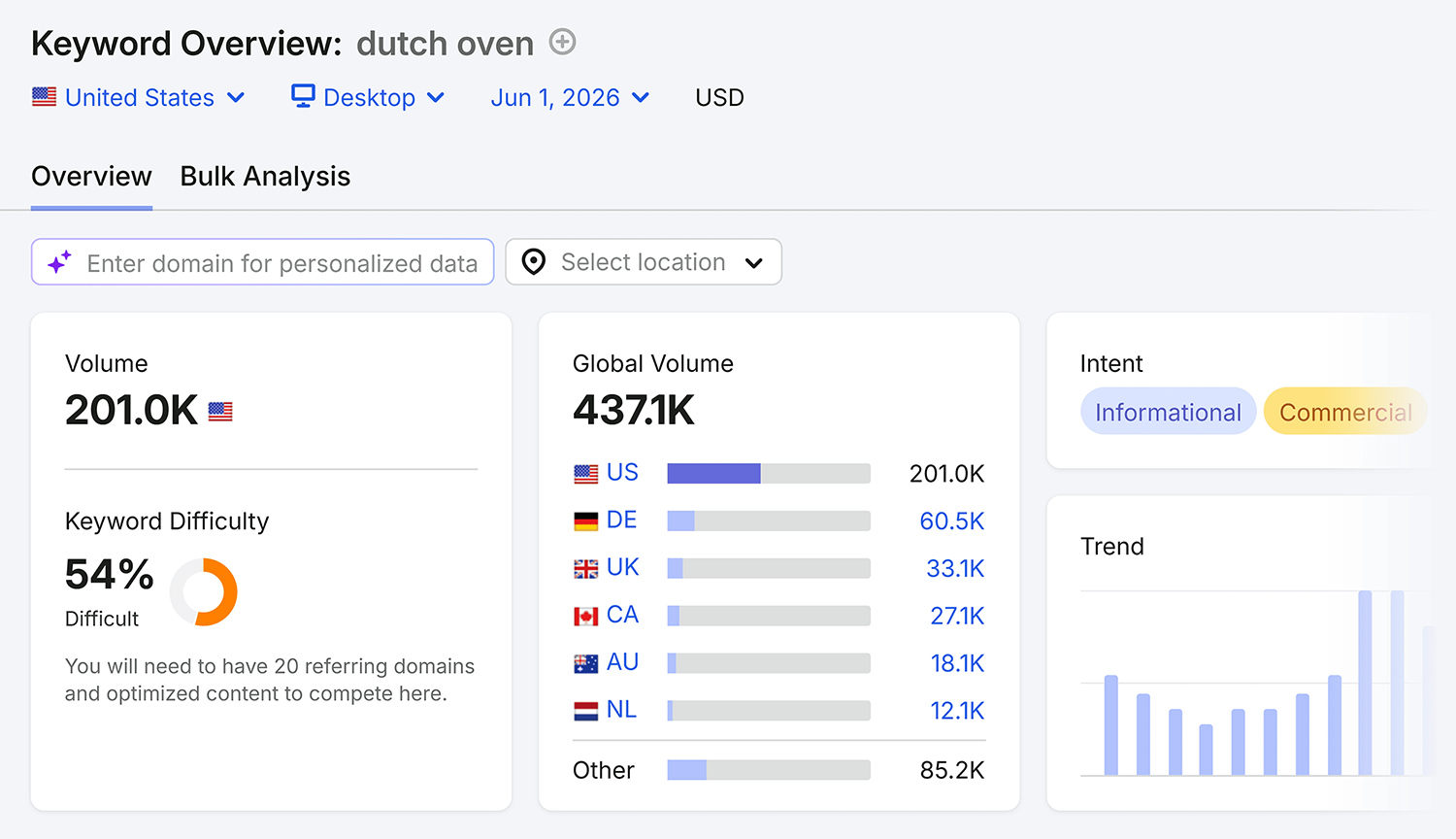
But keyword tools are largely reactive: By the time a topic shows significant search volume, you’re already looking at the growth or peak phase.
To catch topics earlier — at the emerging stage, before they register in keyword databases — Exploding Topics is purpose-built for exactly this type of proactive research.
Exploding Topics monitors millions of data points across the web — search, social, forums, and beyond — to surface trends months or years before they hit the mainstream. Its database covers more than 10,000 trends across industries, updated daily, so you’re not relying on historical keyword data to spot what’s next.
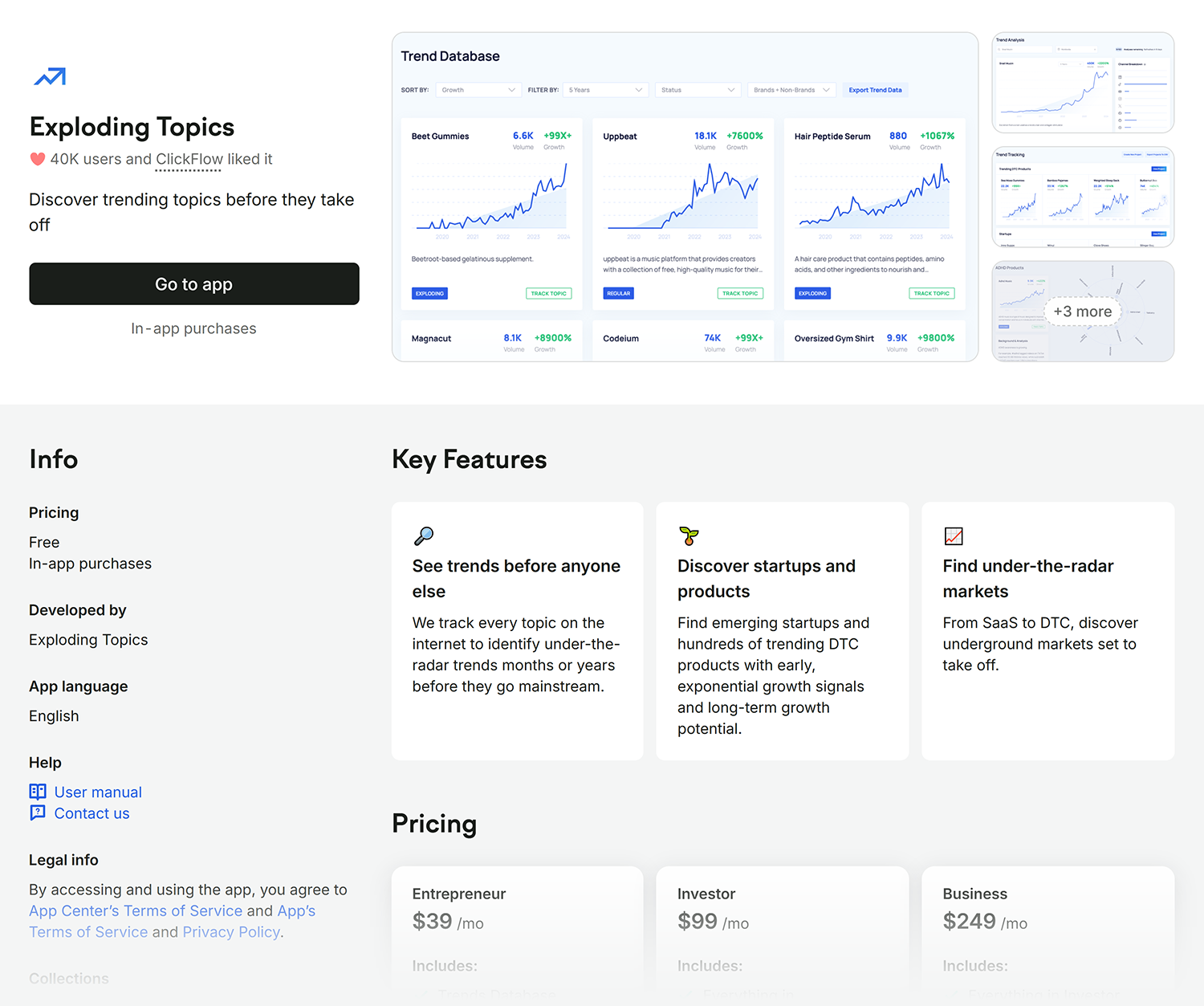
Here are three of Exploding Topics’ top features that are fantastic for SEO and content teams:
Trending topics
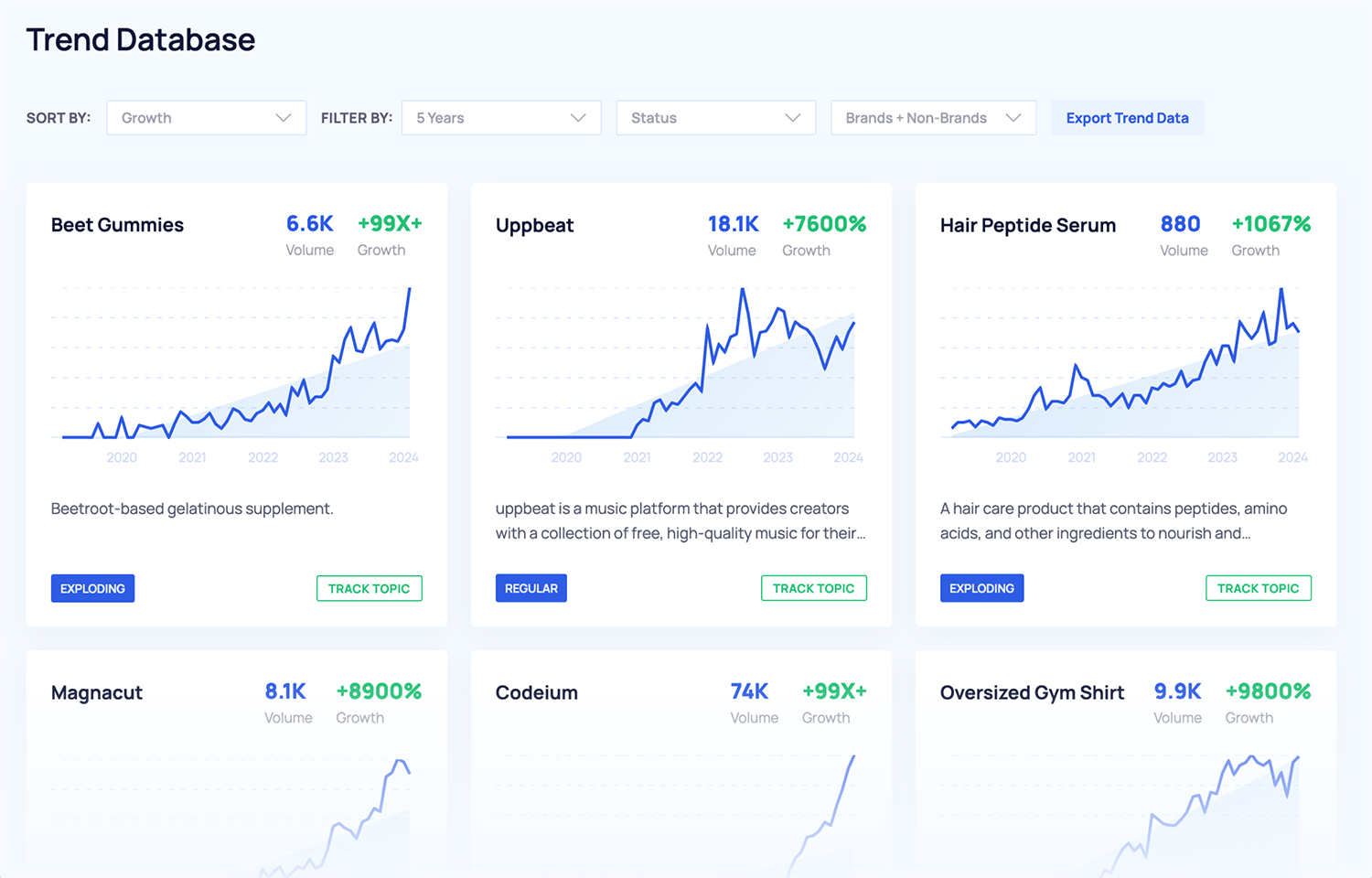
Browse or search the trends database by category and filter by growth classification:
- Exploding (rapid upward movement)
- Regular (steady consistent growth)
- Peaked (already declining)
For content strategy purposes, you want to target Exploding and Regular trends before they tip into Peak.
Trend analysis
Once you’ve spotted a potential topic, the Trend Analysis report lets you dig into the data:
- Find search volume over time
- Channel breakdown showing platform coverage (TikTok, YouTube, Reddit, LinkedIn, and more)
- Related trends
- Key indicators, including growth speed, volatility, and sentiment analysis
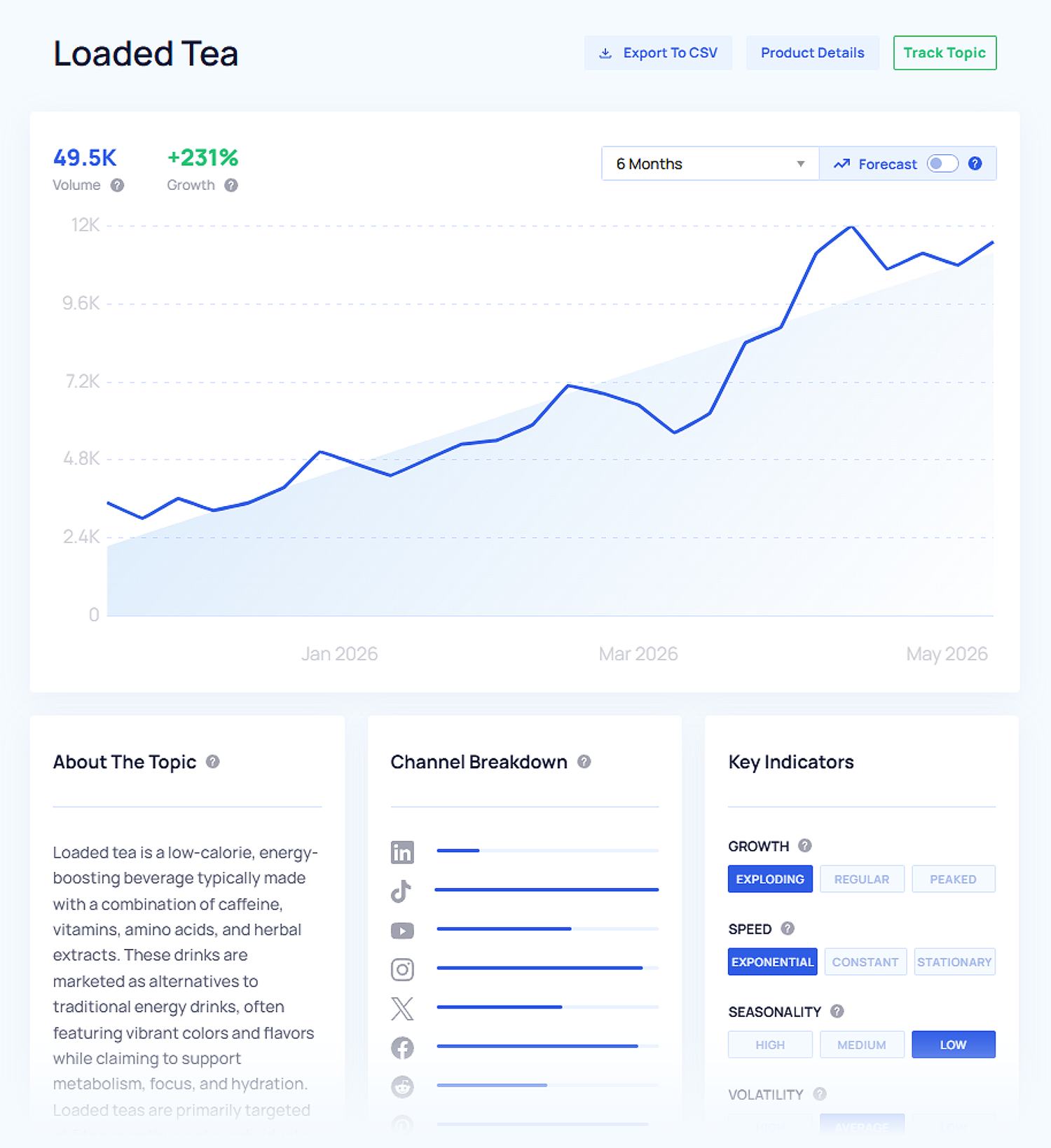
Trend forecasting
If you find a potential topic via the Trend Database, you’ll also get a 12-month Future Forecast, powered by machine learning. Use it to forecast patterns in consumer behavior and decide which topics to move on first.
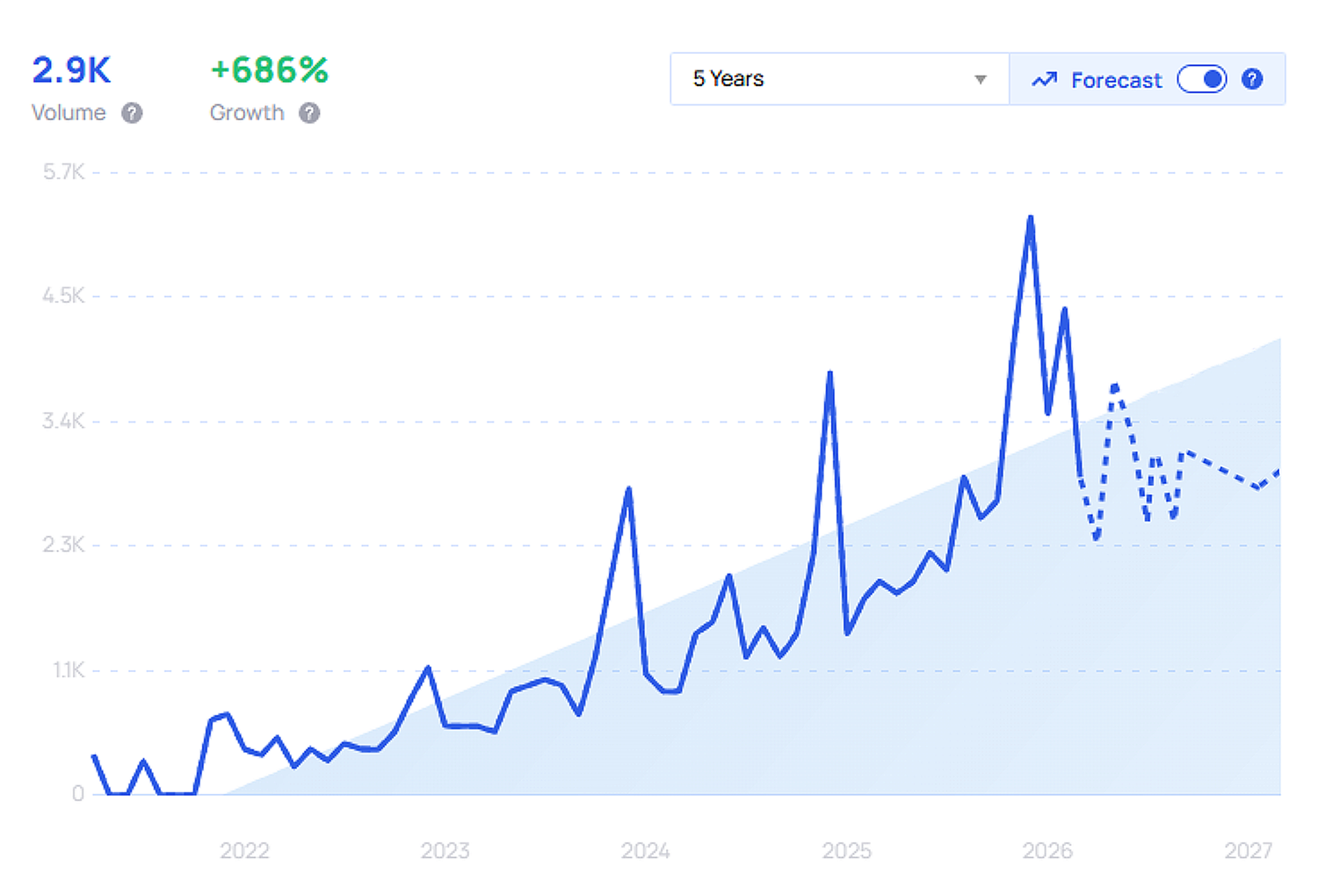
The goal here is to publish content on a topic before your competitors and before the SERP gets crowded to maximize your chances of earning AI citations.
How to build topical authority around emerging subjects and increase chances of AI citation
Being early to a topic isn’t enough on its own, and traditional rankings don’t automatically translate into AI citations. To earn AI citations, you need depth.
When Google generates an AI Overview (AIO), it doesn’t just pull from the top-ranking result for a single query. It fans out across related subtopics in a process called query fan-out, synthesizing answers from multiple sources. According to the Pew Research Center, 88% of Google AI Overviews cite three or more sources, and, according to research by SE Ranking, longer overviews cite approximately 28.
A single well-optimized page competes for one of those citation slots. But a topic cluster (multiple interconnected pages covering a subject from different angles) competes across dozens of related sub-queries simultaneously, giving AI systems more reasons to cite you at every step.
According to Ziptie, topical authority is the strongest predictor of AI citation, with a correlation of r=0.41 — outperforming Domain Authority, backlinks, and organic rank position. Pages ranking #6–#10 with strong topical authority are cited more often than pages ranking #1 with weak topical authority.
What the shift from keywords to clusters means for your content strategy
Your strategy should evolve from “best single page for a keyword” to “most comprehensive coverage of a topic domain.” That means restructuring editorial calendars from keyword-driven articles to cluster-driven categories — fewer topics covered more deeply, rather than more topics covered thinly.
If you’re thinking, “Wait a second, this isn’t a new concept,” you’re right. Pillar pages and topic clusters were popularized by HubSpot all the way back in 2017 as a way to rank higher in search results and build your “sphere of influence.” The strategy hasn’t changed. What has changed is why it works.
In 2017, topic clusters helped Google understand your site architecture. Today, they determine whether AI systems recognize you as an authority worth citing at all. According to Semrush research, ChatGPT cites pages ranking in positions 21+ almost 90% of the time. That means your keyword rankings have almost nothing to do with your AI visibility. Topical depth does.
If you’ve built strong topic clusters for traditional SEO, you already have a head start. But now it’s time to build topic clusters around emerging topics, too.

When you identify an emerging trend early using Exploding Topics, don’t publish one piece and move on. Treat the trend as a topic domain and map it out. What are the subtopics? What questions are users asking around it? What angles haven’t been covered yet?
For example, around the AI fitness coach topic, you might publish content like:
- What is an AI fitness coach?
- Best AI fitness coach apps
- AI fitness coach vs. human trainer
- How AI fitness coaches use wearables
- Privacy concerns with AI fitness apps
If you publish a cluster of content around an emerging topic before competitors even realize it’s trending, you can build the kind of topical depth that earns citations.
Dig deeper: How to shift from keyword research to topic research for AI visibility
Now you know why you should cover trending topics with your content, but how do you find the ones worth covering?
How to find emerging trending topics in your niche
Ready to grow your AI citations with trend-targeted content? Follow this step-by-step workflow that combines Exploding Topics trend data with keyword research and AI visibility tools to find those opportunities before your competitors do.
Step 1: Analyze trends and see what’s been published already
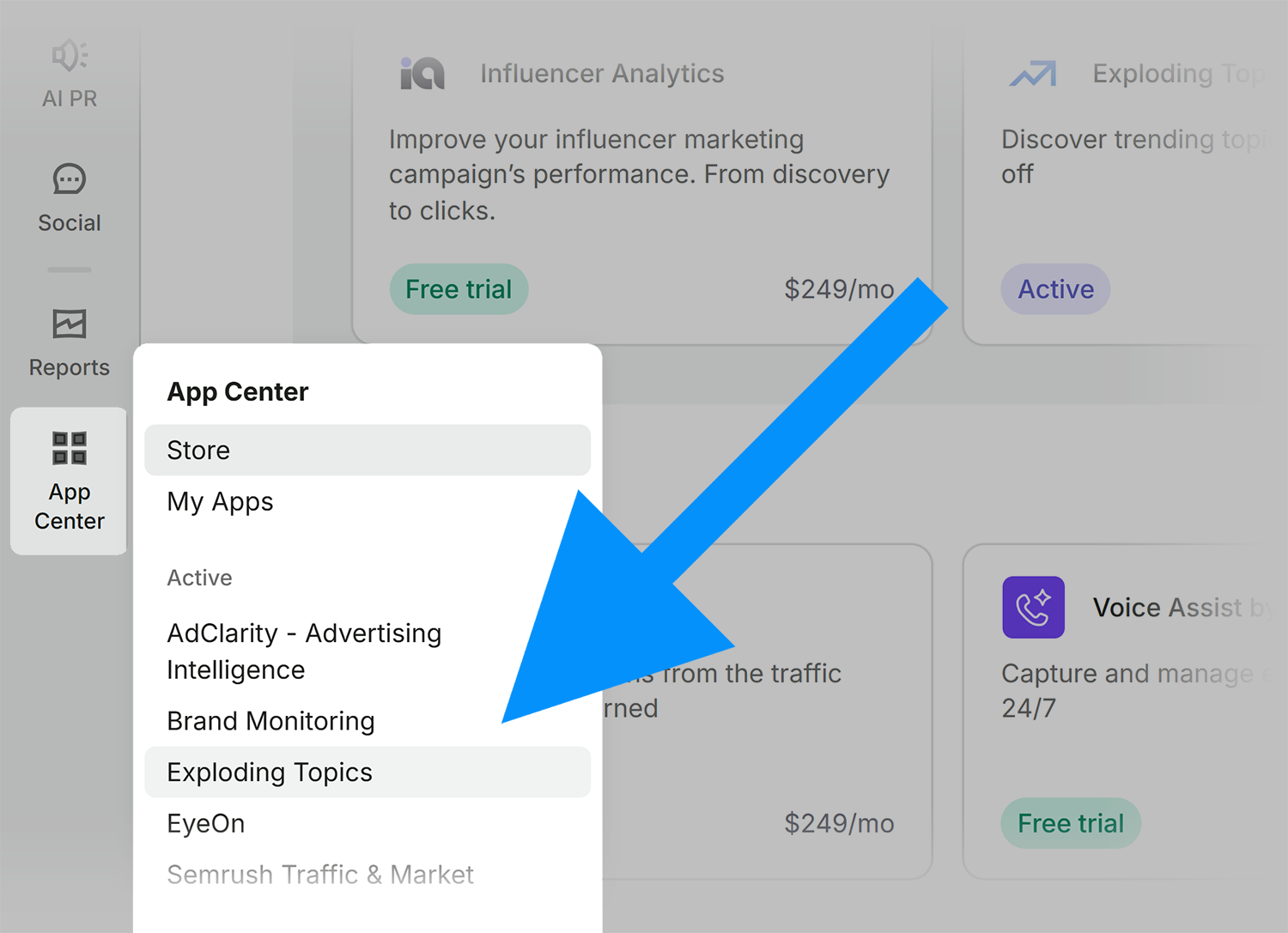
Start by adding Exploding Topics to your Semrush account. Then, you’ll be able to access Exploding Topics via the Semrush App Center menu.
In Exploding Topics, head to the “Trends Database” tab and choose a category, or use the search bar to find a topic area relevant to your business.
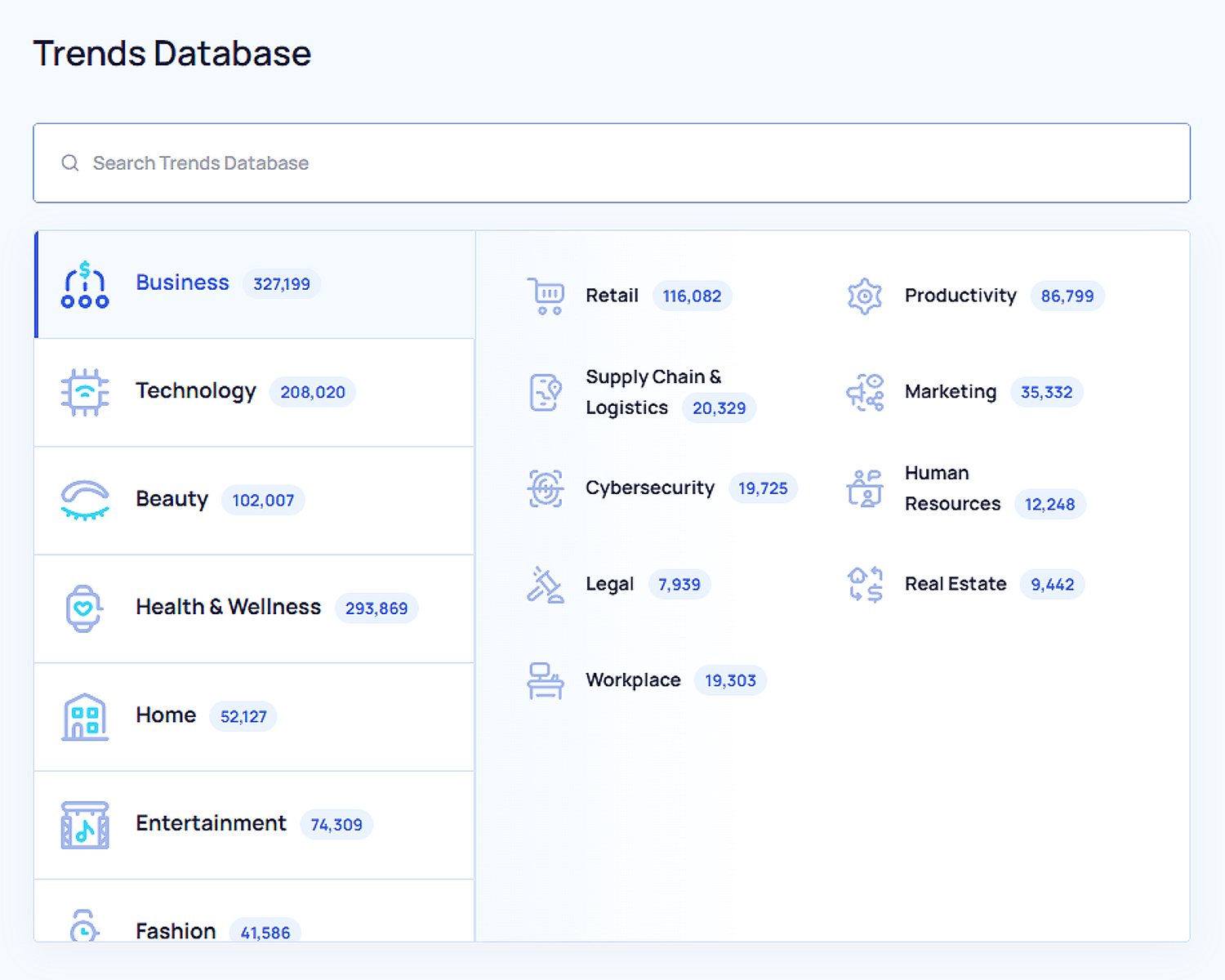
For content strategy purposes, use the Growth filter to look at “Regular” and “Exploding” topics. Anything labeled “Peaked” is most likely not worth your time like the others will be.
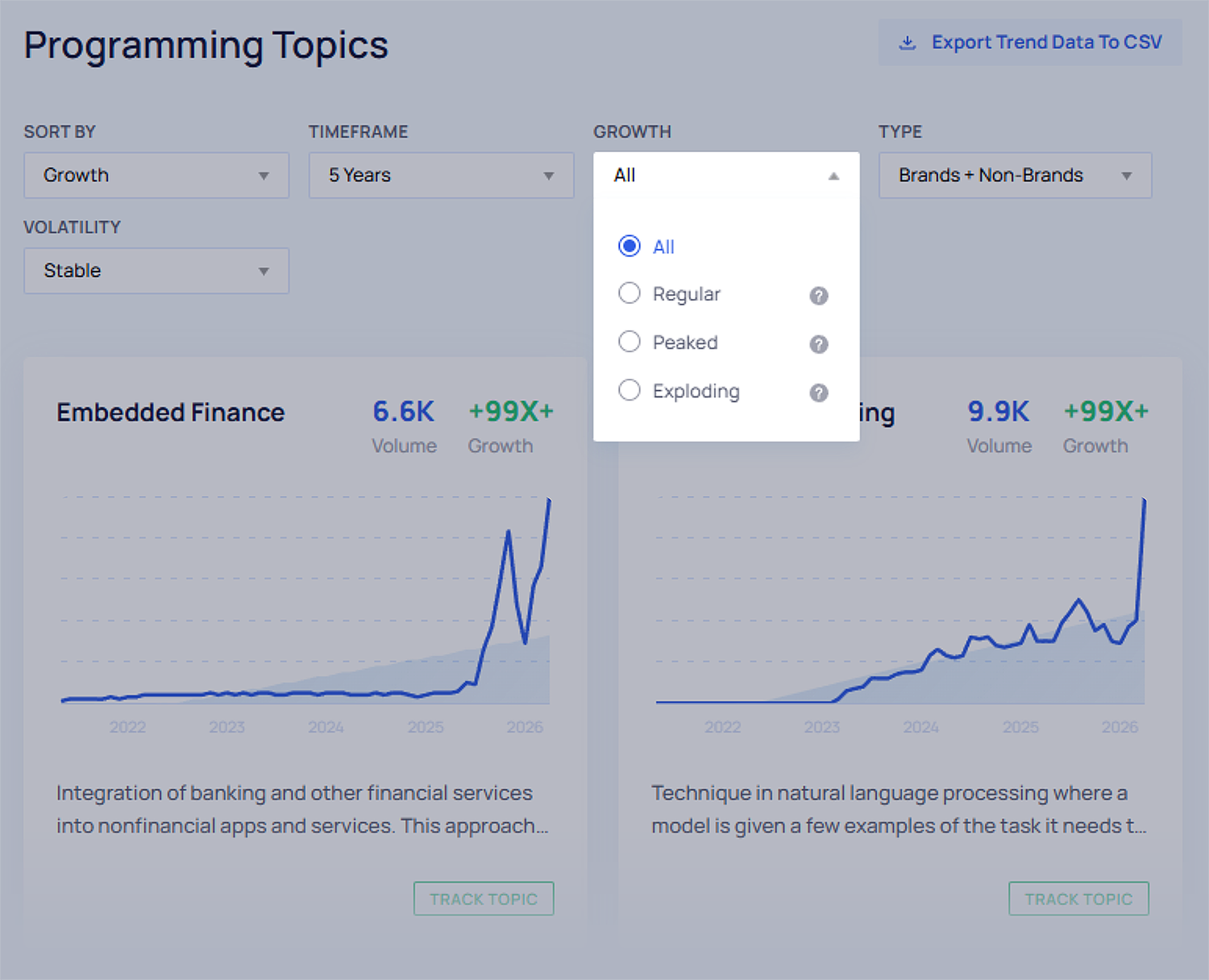
Once you’ve spotted a trend that intrigues you, click into it to open the Trend Analysis view.
Here you’ll see the topic’s search volume over time, its forecast, a channel breakdown showing which social network the topic is trending on, related trends, key indicators, related topics, and more.
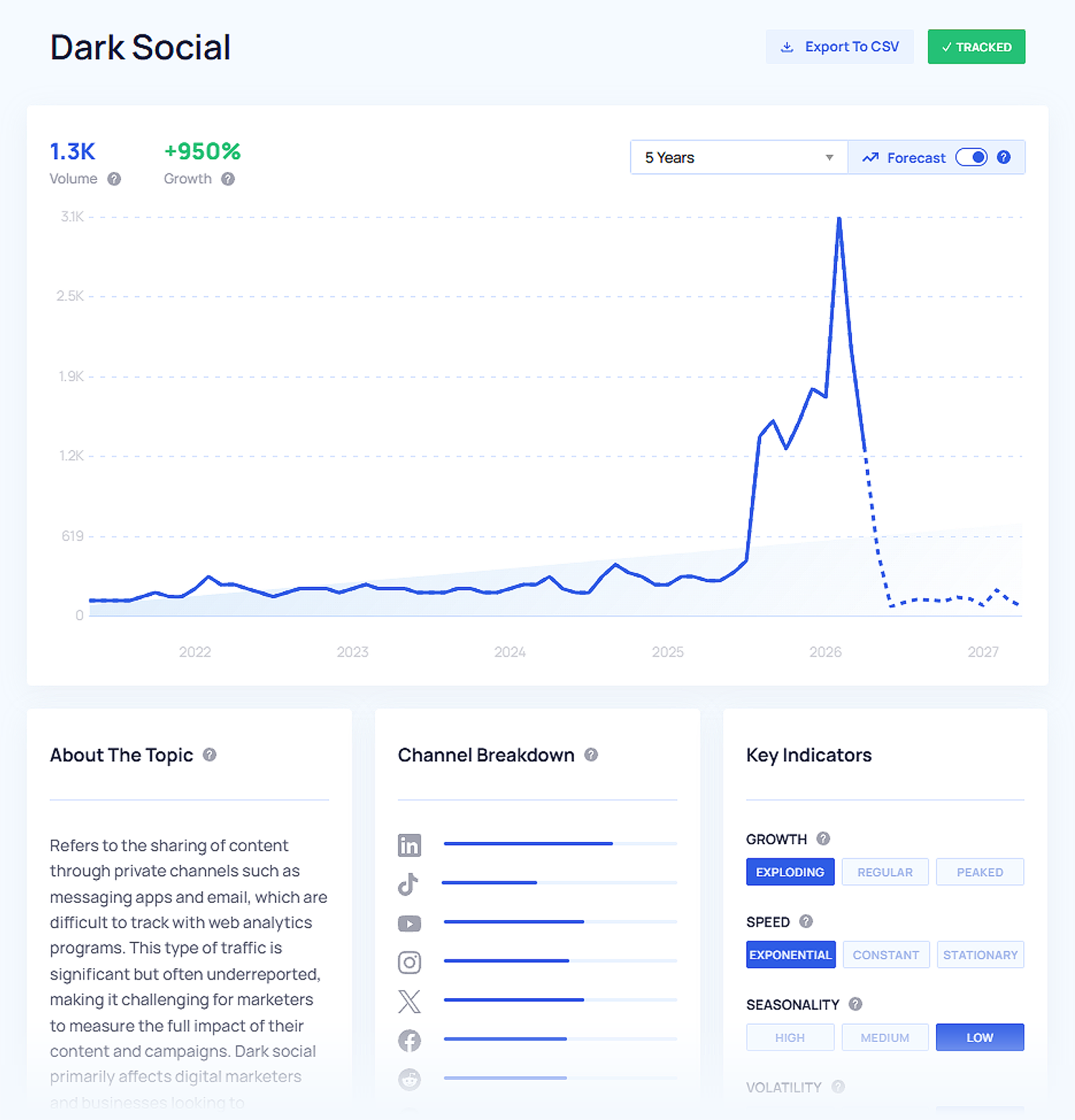
Run a competitor analysis of the landscape in both traditional organic and AI search.
For traditional organic (SEO) competition, open Semrush’s “Keyword Overview” tool and enter your trend as a keyword.
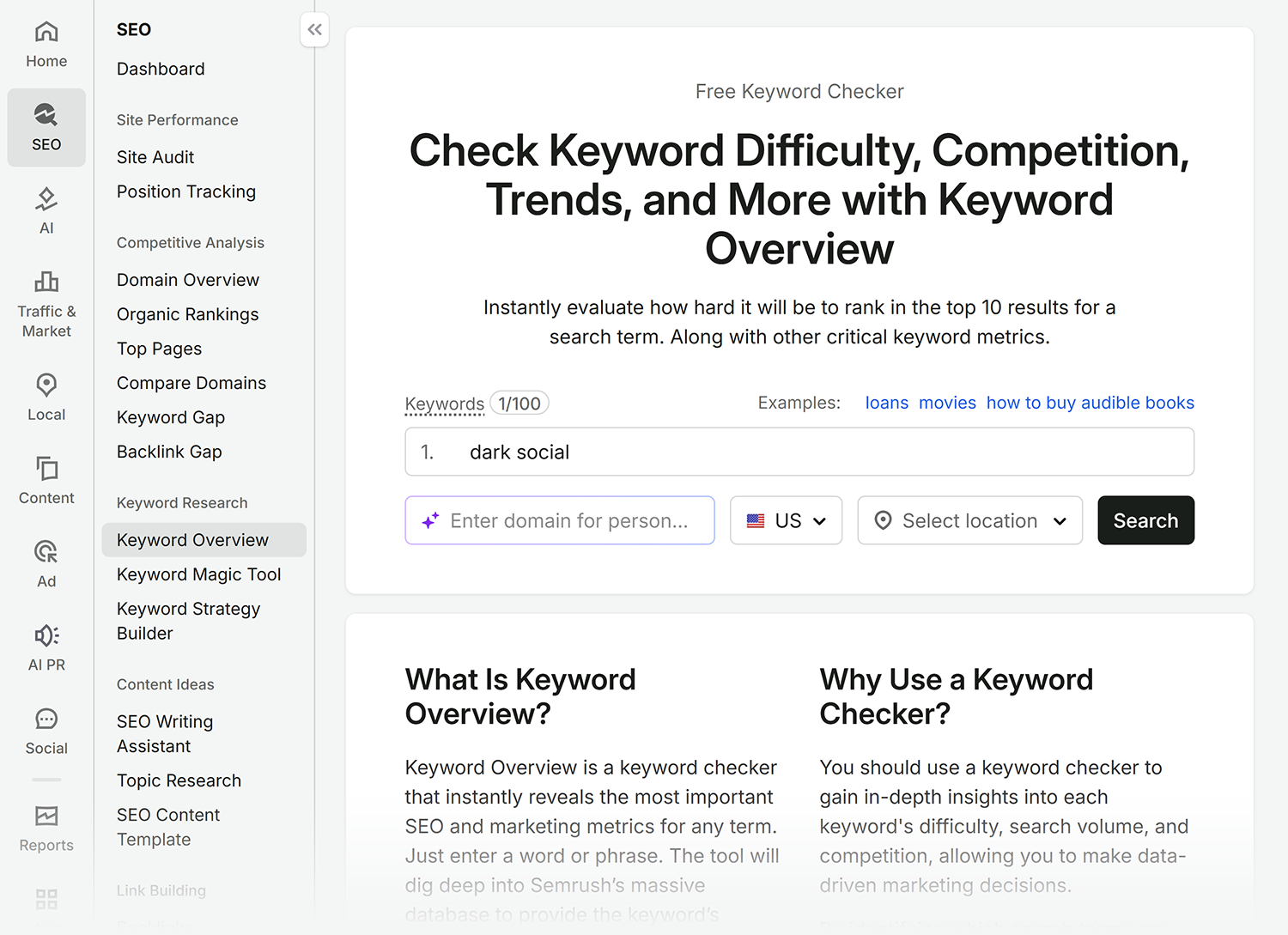
If the topic you’re searching is really new, it may not have any results in the Keyword Overview tool. That’s okay — if it doesn’t, go ahead and move on to the next step.
But if you do see some results, take a look at two things in particular:
1. The number of results Google returns for the query (visible in the “SERP Analysis” section):
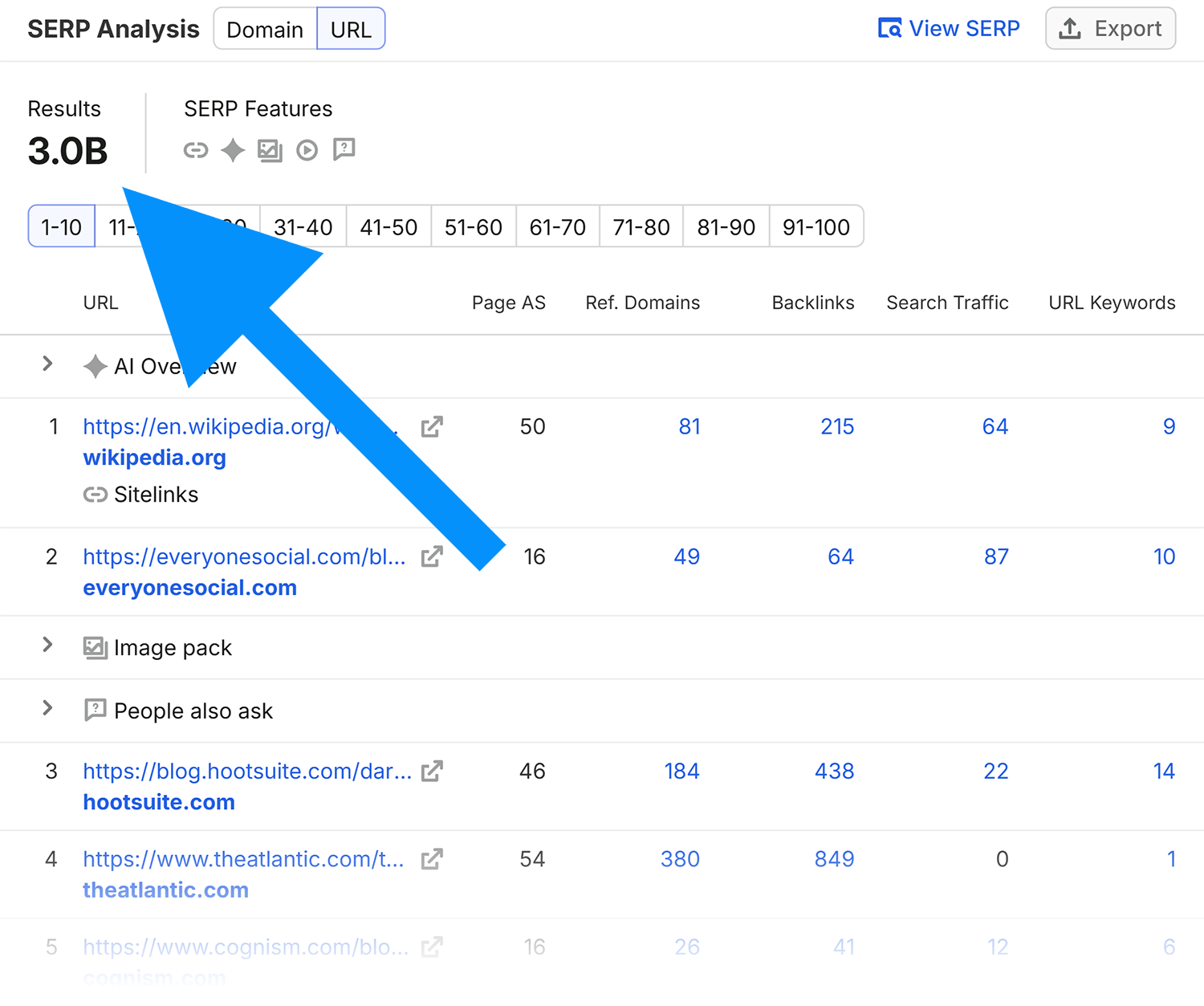
Compare this against similar established topics in your niche. The lower the number of results, the more likely it is that the topic hasn’t been widely covered yet and the window to put your content out there is still wide open.
2. Authority Scores for the top-ranking pages and domains
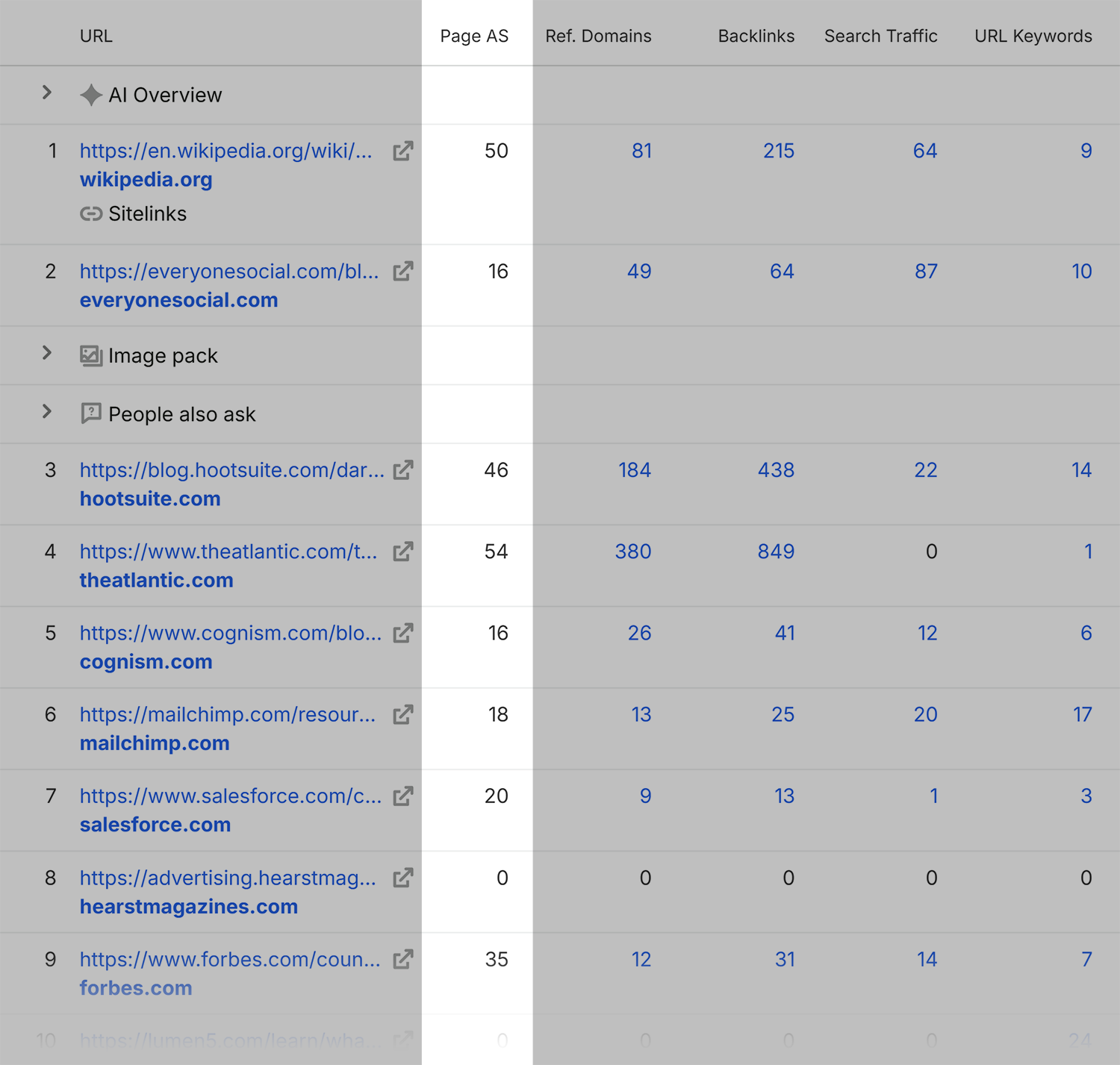
If the pages currently ranking are coming from sites you don’t recognize rather than established industry publications or major brands, that’s a strong signal that competition is still thin.
To check the AI search competition, open the Prompt Research report inside Semrush’s AI Visibility Toolkit.
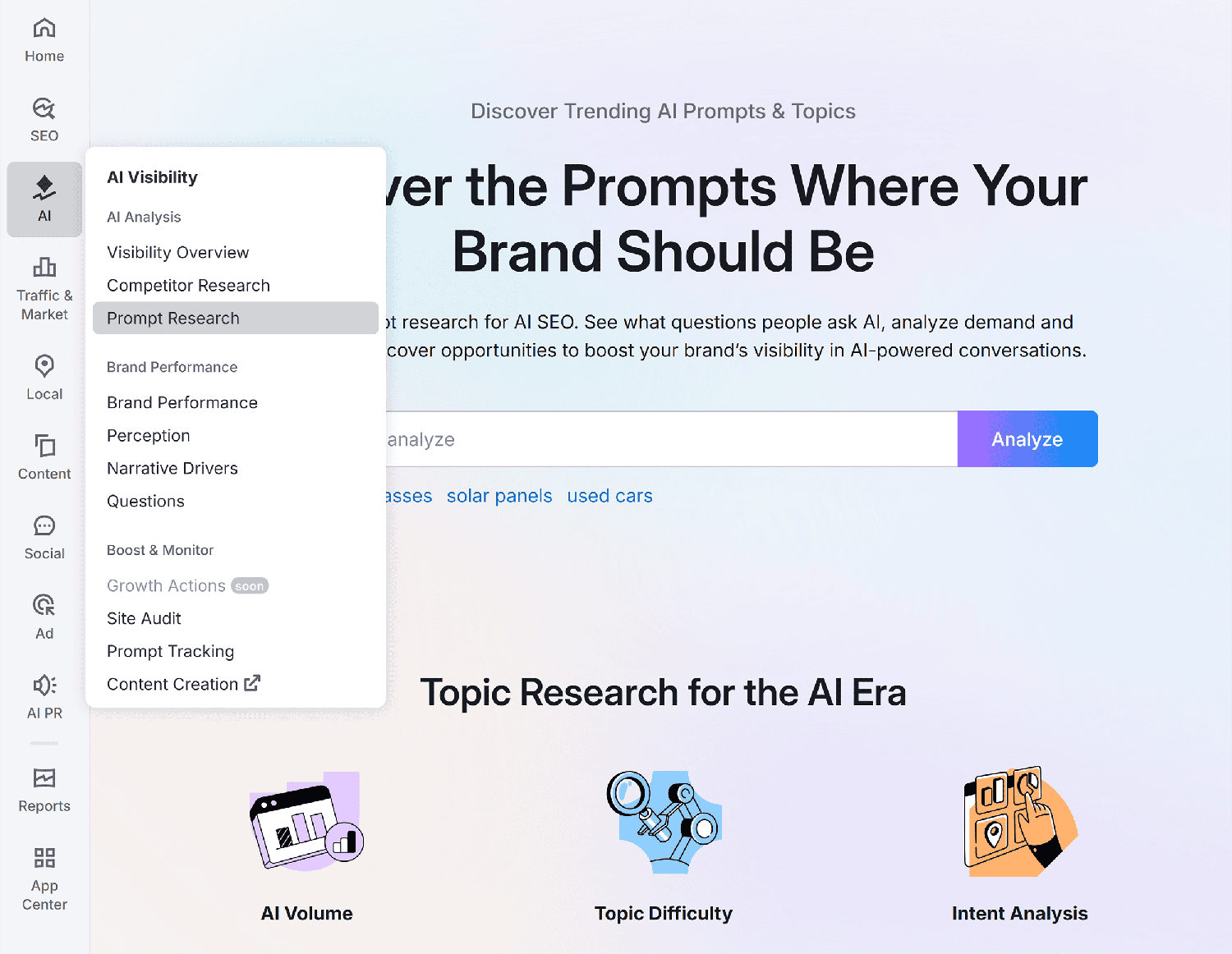
Once you’ve plugged in your topic, check two numbers at the top of the report:
- “Brands Mentioned”
- “Source Domains”
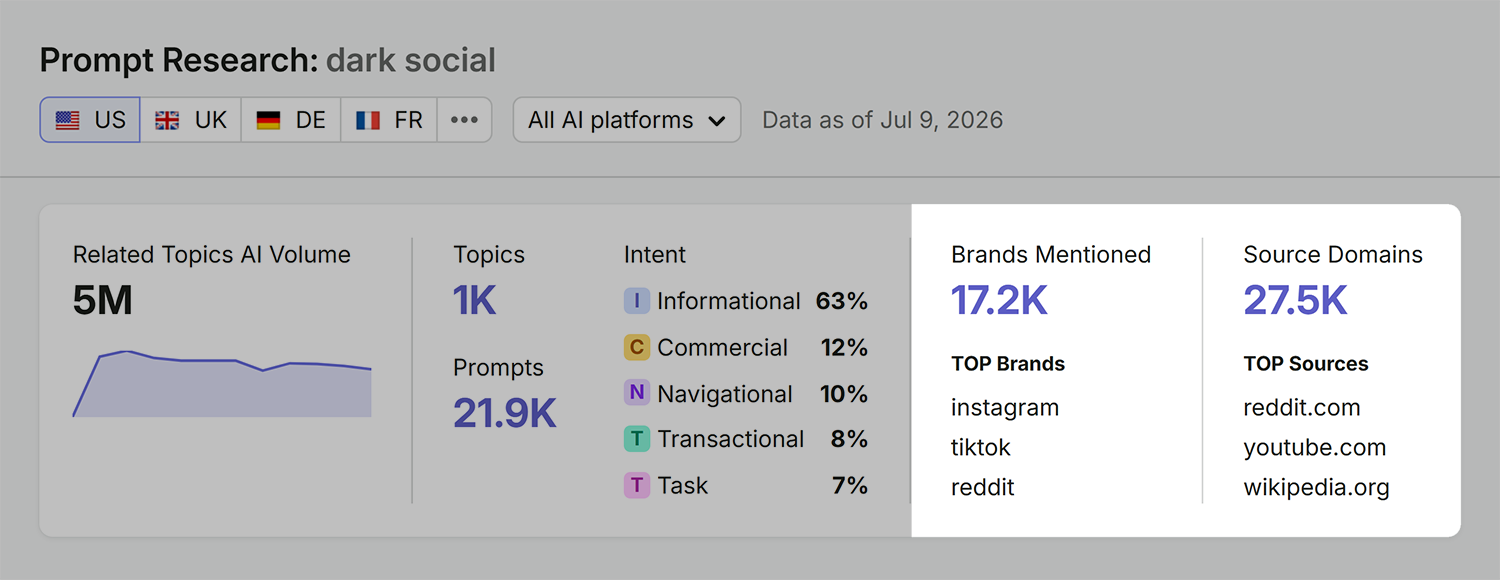
Compare these numbers across different prompts. The lesser the numbers, the more the AI citation landscape for the topic is still wide open and there’s room to establish yourself as a cited source and claim share of voice before the field fills in.
Now, scroll down to “Related topics” to see how AI search volume is distributed across different subtopics. Check the “Relevance” column first. Are there a lot of topics that are marked as highly relevant? Or only a couple?
In this screenshot of an analysis of “dark social,” you can see that there aren’t many highly relevant topics found — mostly medium:
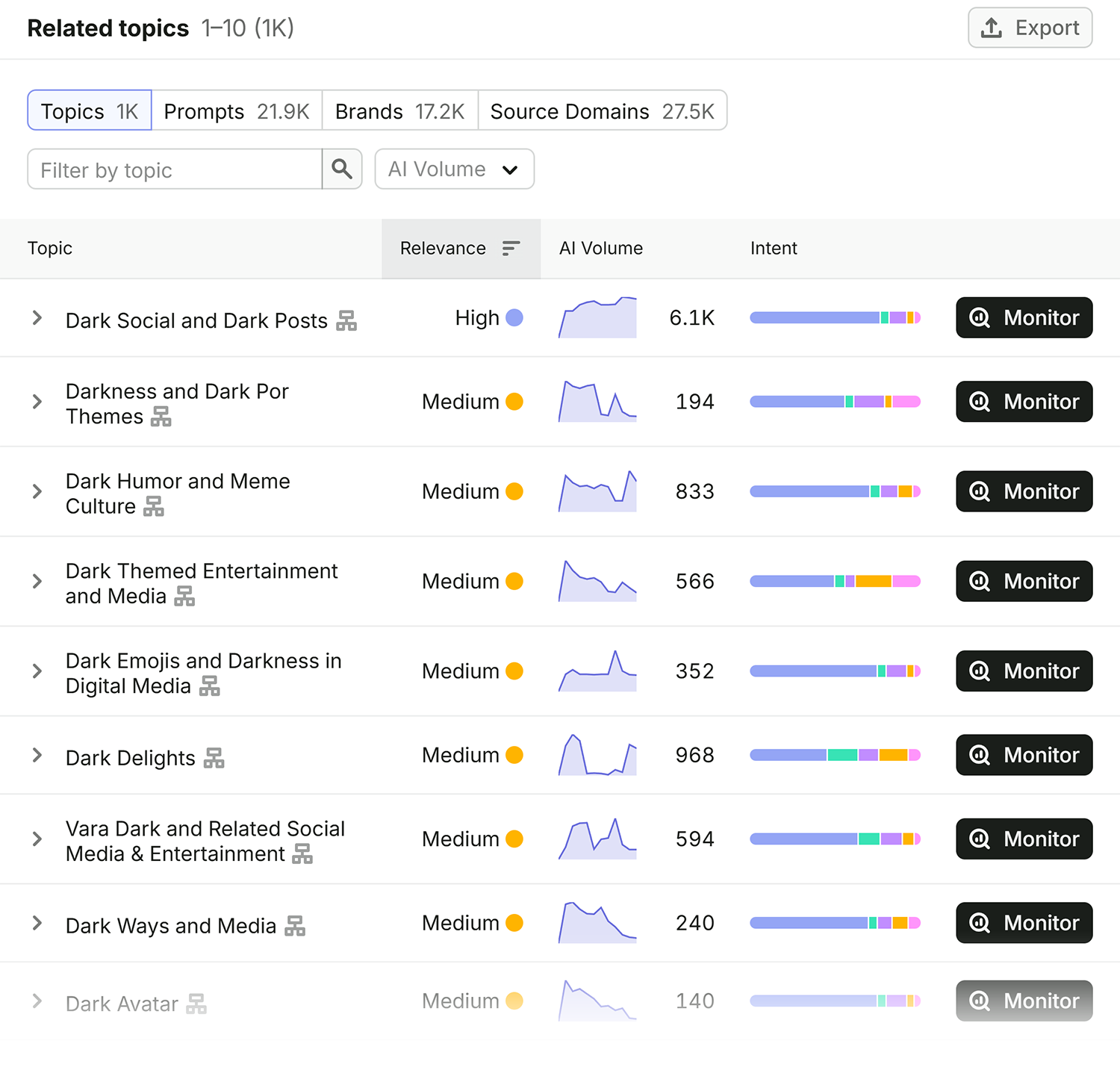
That means Semrush isn’t finding a lot of content out there for your topic just yet. It’s a great opportunity for you to come in and own the conversation!
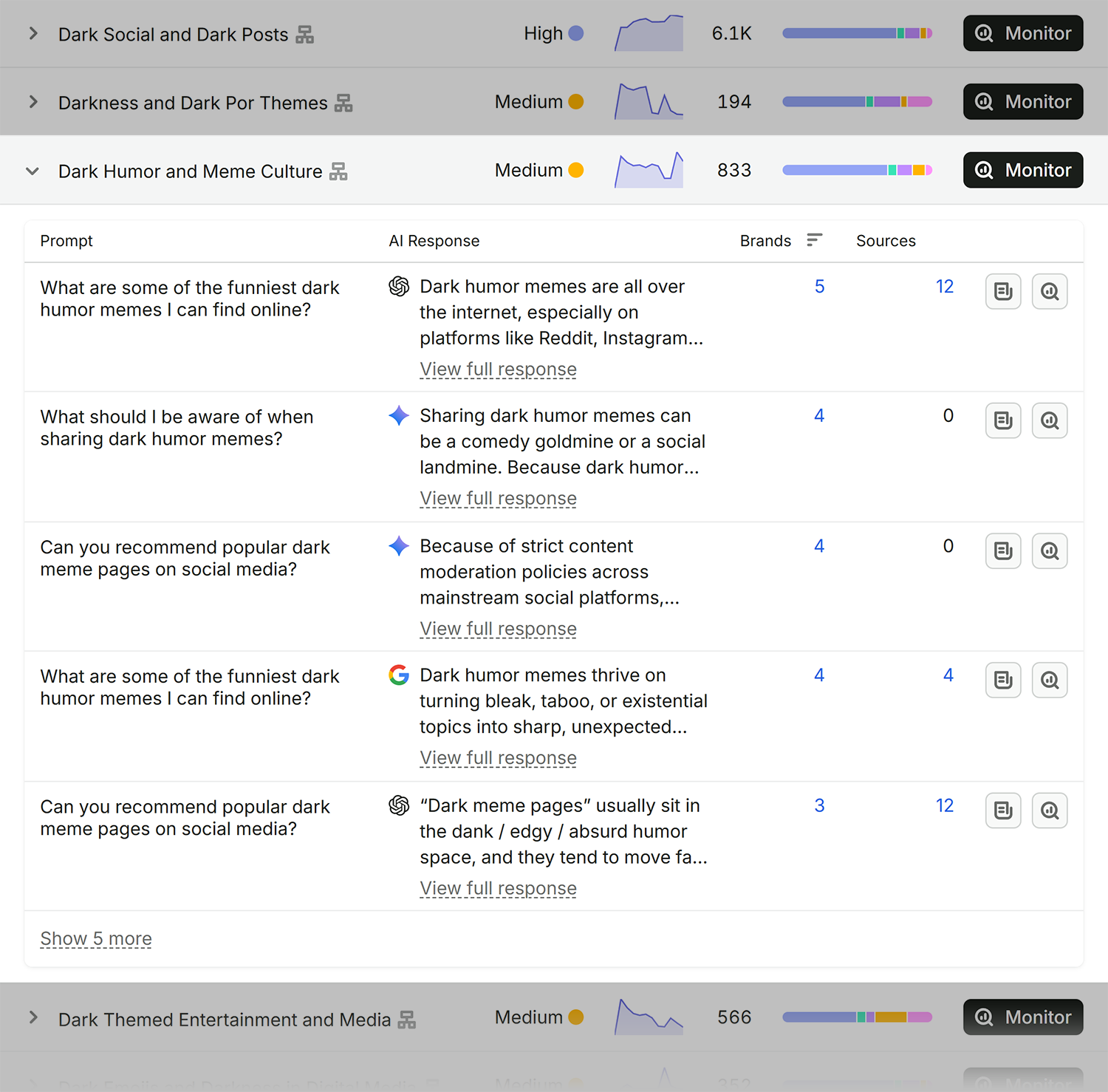
Next, click into individual topics or prompts to see exactly which brands and sources are being cited for each one. This information will help you get the lay of the land in terms of what content is already out there, who’s being cited, and where your own content might fit into the conversation.
Step 2: Content planning and creation
Once you’ve confirmed an emerging topic with thin enough competition in both traditional and AI search, it’s time to move quickly by publishing content as fast as you can.
AI citations compound once established. According to a 2026 Goodfirms study, only 14% of marketers are currently tracking AI citation visibility, despite 89% of brands already appearing in AI-generated answers.
That means most of your competitors are showing up without a strategy, so the window to build intentional first-mover authority is still wide open. But that opportunity narrows with every month you wait, and once a competitor earns consistent citations on a topic, displacing them and taking the citation becomes progressively harder.
How do you build that authority?
Publish more than one content piece
As covered earlier, topic clusters — multiple interconnected pieces covering a subject from different angles — are part of what signal your expertise to AI systems. Consequently, you need more than a single article to establish your authority. You also need to publish your content beyond just your own website.
Research suggests that AI systems evaluate brands as entities rather than isolated websites, relying on corroborating signals from across the web when determining which sources to cite. A study examining how AI search engines construct authority found that generative search systems draw from a wide mix of sources to establish credibility and expertise.
Meanwhile, research from AirOps found that 85% of brand mentions in AI-generated responses came from third-party domains rather than brand-owned websites.
That means your website content, media mentions, industry publications, community discussions, reviews, and other third-party references all contribute to how AI systems perceive your authority on a topic.
Topic clusters help strengthen those signals by giving AI systems a clear, comprehensive body of first-party content to associate with your brand. They also give you more content to use on social media, cite in community discussions, and more.
To plan your cluster, use the Prompt Research report as your content map. The groups of related prompts it finds show you what subtopics users are asking AI about. Each prompt group is a potential piece of content.
When creating the content itself, optimize for query fan-out. That means each piece should address the related questions a reader (and an AI system) would naturally ask next.
Here’s a practical query-fan-out-optimized content checklist:
- Identify the primary question your content answers
- List the three to five sub-questions a reader would likely ask after getting that answer
- Make sure your content addresses those sub-questions, either within the same piece or through clear internal links to cluster pages that do
- Include original data, expert quotes, or proprietary insight where possible
- Connect each piece back to your pillar page with descriptive internal anchor text, so AI systems can map your full coverage of the topic
Publish, then monitor your AI visibility in an AI search monitoring tool like the Semrush AI Visibility Toolkit to track whether your brand is being cited in responses related to your target topics.
Keep in mind, though, that not every emerging trend will become a meaningful business opportunity. Before investing in a full content cluster, validate that the topic aligns with your audience, products, and long-term expertise. Being early matters, but relevance matters more.
Case Study: How Probitec uses Exploding Topics to reach customers before competitors do
Jason Stewart launched Probitec, a high-quality probiotic supplement, into an emerging market in South Africa, a market already full of competing claims and established players. Getting in front of the right customers required knowing what they were searching for before his competitors did.
His approach was to monitor trends not just in gut health, but in adjacent categories like skincare and cognition, looking for connections competitors haven’t made yet.
“I like to understand the ‘why’ behind a trending topic and look for further trends,” said Stewart. “A lot of trends that are global can be hidden in South Africa until a little bit later. And even if a trend isn’t directly relevant now, it plants a seed in my mind.”
He uses the Exploding Topics newsletter as a structured weekly research habit. It alerts him to emerging topics across different categories without requiring him to monitor everything manually.
The result is a content strategy built on early, cross-category topic coverage that capitalizes on trends and earns AI visibility.
Read the full case study: How One Entrepreneur Turns Bacteria Into a Trending Topic
Start monitoring trends before your competitors do
To earn AI citations right now, don’t wait for topics to peak before covering them. Publish earlier, go deeper, and build the kind of topical authority that AI systems like Claude and Microsoft Copilot recognize and cite consistently.
Exploding Topics is an invaluable resource for finding those topics you can dominate early, earn AI visibility around, and ultimately use to drive more business.
Explore more on
Editorial disclosure
Search Engine Land is owned by Semrush. We remain committed to providing high-quality coverage of marketing topics. Unless otherwise noted, this page’s content was written by either an employee or a paid contractor of Semrush Inc.
About the author