How to build an ecommerce product discovery engine

If you’ve tried selling online, you already know how important it is to choose the right products. Sure, marketing is important. But if you’re trying to sell a product that doesn’t have demand, the time, budget, and energy spent won’t justify the return on investment.
To avoid the headaches and losses of choosing the wrong products, you need a reliable way to discover and research them before committing to selling them. In this guide, you’ll learn how to discover the right ecommerce products at the right time, and you’ll learn how to put some of your product research on autopilot.
It starts with using ecommerce trends data to discover up-and-coming products before your competition.
Using trends data to find new ecommerce products
Have you ever chosen to sell an ecommerce product based on nothing but gut feelings and vibes?
The odds of gut feelings and vibes helping you pick the right product are slim, as are the other most common ways sellers choose products:
- Copying competitors
- Guessing based on personal taste
- Chasing viral products
Those methods are neither data-backed nor timely, leading to many potential frustrations and minimal wins.
Enter ecommerce product trend tracking.

When tracking trending products, your goal is to discover products whose popularity is about to take off. You can then stock them before competing stores do to grow your sales and win more customers.
Why one-off product hunting doesn’t work
How much time have you spent scrolling TikTok Shop, Amazon, eBay, Etsy, other online marketplaces, or competitor websites hoping to find a product that not only is about to take off in popularity, but is also a great fit for your (or your client’s) online store?
Maybe you’ve successfully identified a viral product before it took off that way before. The truth is that without data to back up your decision, that find was largely just a lucky guess.
You don’t need to chase random products, make selections based on gut instinct, or stock a viral product too late. Instead, you can easily create a system that produces a steady stream of vetted, high-demand products to successfully sell.
Spend less time scrolling and guesstimating. Let the product ideas roll in via an engine that combines constant inflow with a way to judge which products are going to be the “next big thing.”
The first concept you must understand about this product-finding engine is discovering products early in their trajectory.
What “early in the trajectory” actually means
When selling viral products, timing is everything. If you stock a product after its popularity peaks, you could end up with way too much competition, a product that buyers aren’t excited about anymore, and inventory that doesn’t move.
Conversely, if you stock or start dropshipping a product that’s still in its early growth phase, you’ll enter a market with much lower competition and a chance to establish yourself as the primary seller of the product before it reaches peak popularity.
To find products in that early phase at exactly the right time, you need a trend-tracking tool like Exploding Topics. In Exploding Topics, viral products are classified by growth type:

- “Peaked” means growth has already hit a high point and is now in decline. Unless you have a very specific reason to believe that it’ll revive, peaked products are usually best passed on. You’d be sourcing into declining consumer demand.
- “Regular” means consistent, compounding growth over the measured period. Search interest is climbing steadily without dramatic spikes or reversals. This is a healthy signal. The product has real, sustained demand, and it hasn’t yet hit peak popularity. “Regular” is often the sweet spot, especially for physical products that take time to source and launch.
- “Exploding” means a sharp, rapid upward surge in interest over a short period of time. The growth rate is steep. These products can be genuinely exciting, but they carry more risk. A sharp spike can mean a lasting category shift is occurring, or it can mean a fad that will collapse as fast as it rose. Give these products more scrutiny before you commit.
These growth classifications are a much better way to source products than simply looking at search volume. For example, a viral product might have 50,000 monthly searches, but if it has already peaked, it’s a worse bet than one with only 8,000 searches and a “Regular” classification that’s been trending upward for the past 18 months.
Let’s take a look at exactly how to source the right trending products for your store using Exploding Topics.
Sourcing: How to find trending products worth the investment
To get started with finding products in the right growth phase, head to the “Trending Products” tab in the Exploding Topics dashboard:

Next, filter the product list by choosing an appropriate category from the dropdown:

To find the most relevant products with growing popularity, Exploding Topics’ AI monitors billions of signals across Google Search, YouTube, Spotify, Reddit, TikTok, and social media to surface products gaining popularity before they’re on anyone’s radar.
It then layers in Amazon Marketplace data like best seller rank (BSR), revenue, sales, price, and reviews so you can go deeper in evaluating whether each product will be the right fit for your store (and your ecommerce SEO strategy). Instead of just seeing what people are talking about, Exploding Topics shows you what they’re buying — and for how much.
To find the exact products that’ll thrive in your store, use the Amazon Marketplace filters in the “Trending Products” dashboard to narrow down your search.

To recap, follow these quick steps to find the best trending products to invest in now:
- Open the “Trending Topics” report in Exploding Topics
- Click on the “Category” dropdown and choose the most relevant category for your business
- Narrow down your search using the other filters — search by growth classification, search volume, Amazon revenue, average price on Amazon, and more
Once you’ve found a product to investigate further, move on to the next step.
Reading the signals: Channel breakdown and key indicators
When you find a product you want to investigate, click into it to get more data.
On the product detail page, you’ll find a goldmine of data about the product that will help you make your decision and also help you market the product once you’ve committed.
At the top, you can read more information about the product, review its Amazon Marketplace data, and assess its full trend line from the past five years, complete with a 12-month forecast:
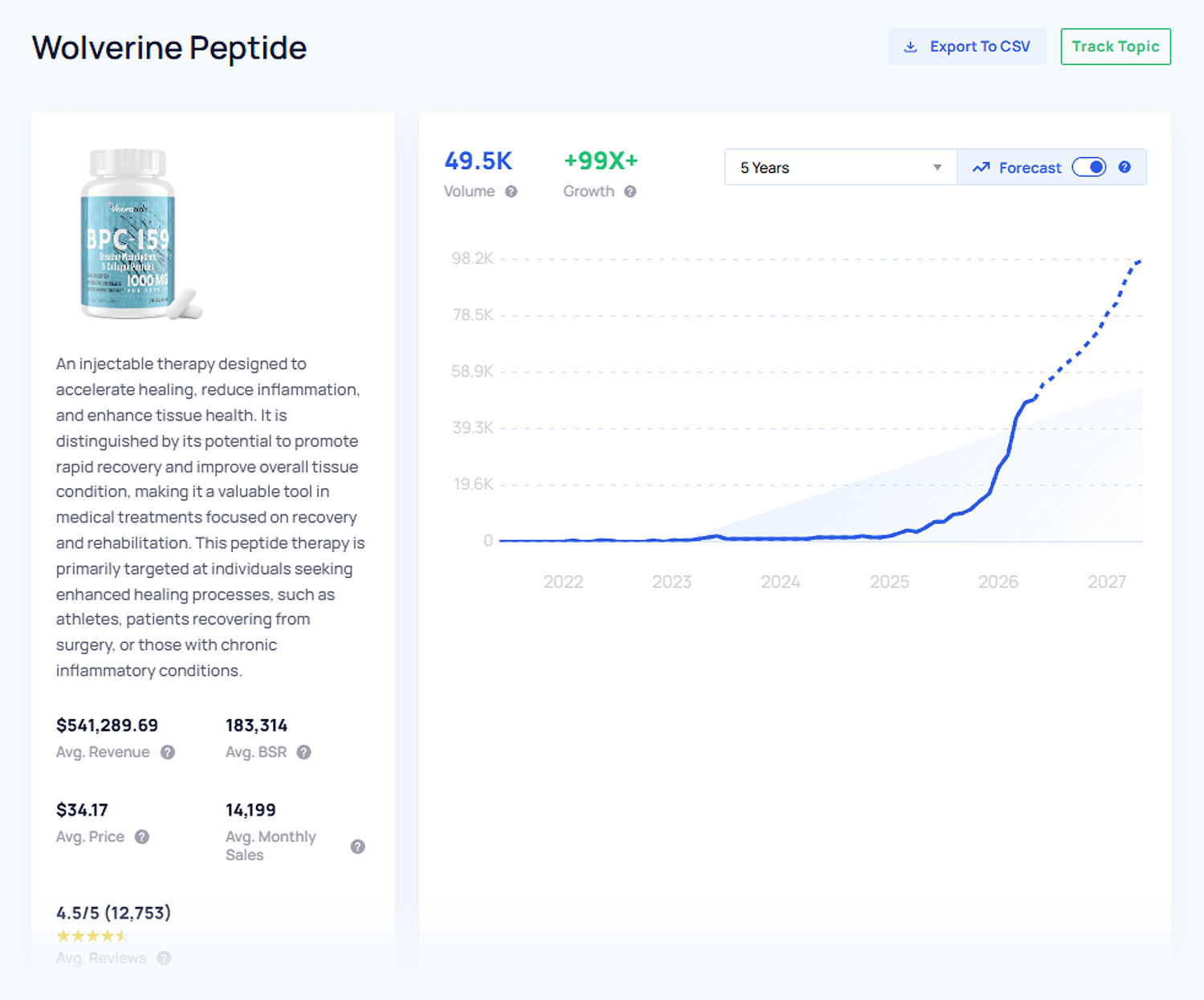
Below that, you’ll find reports on which social channels are driving the most buzz, what the product’s key indicators are, and which categories the product belongs to:

Let’s take a closer look at a few of these reports and data points:
Channel breakdown
The “Channel Breakdown” report shows you where demand for a product is the strongest across social platforms, including TikTok, YouTube, Reddit, Instagram, LinkedIn, Facebook, Pinterest, and X.

This matters because a trend’s source and its current popularity can tell you a lot about its staying power. A product simultaneously gaining popularity across multiple channels typically has more resilient demand than one that’s spiking on a single platform.
For example, TikTok is a platform that shoppers increasingly use to discover products, and some of those products do gain a lot of popularity. However, if the product is only popular on TikTok and hasn’t managed to grow elsewhere, that could be a sign that it doesn’t have staying power.
What you want to see is cross-platform growth: search interest climbing in Google Trends, conversations happening on Reddit, and video content performing well on YouTube or TikTok.
Use the “Channel Breakdown” report to ask, “If the platform driving most of this activity slowed down tomorrow, would demand survive?”
Key indicators
The “Key Indicators” report is a set of machine-learning classifications that provide a quick read on the nature and durability of a trend. There are five key indicators to evaluate:
- “Growth” is the one you’ve already seen in the “Trending Products” report: “Exploding,” “Regular,” or “Peaked.” “Regular” is the level to shoot for, but “Exploding” shouldn’t be written off without a deeper look. Even “Peaked” could work under the right circumstances.
- “Speed” tells you the rate at which growth is happening. “Exponential” means the trend is growing quickly. “Constant” means it’s growing at a steady pace. “Stationary” means growth has flatlined. “Constant” is the ideal level for product sourcing — it suggests sustainable demand rather than a spike that could reverse just as quickly.
- “Seasonality” tells you whether interest follows a recurring annual pattern. High seasonality means strong peaks at certain times of year and significant troughs in-between. That’s not necessarily a dealbreaker, but it changes how you think about inventory timing and cash flow. A product with low seasonality and a “Regular” growth classification is more predictable than one with high seasonality and an “Exploding” classification.
- “Volatility” measures how stable or erratic the trend line is. Low volatility means the growth has been steady and consistent. High volatility means there have been large, unpredictable swings. That makes inventory planning much harder and increases the risk of getting caught holding inventory if interest drops again.
- “Sentiment” reflects the overall consumer feeling toward a product. Positive sentiment means people are talking about it favorably. Neutral is fine. Negative sentiment is a warning sign worth taking seriously — it can indicate quality complaints, controversy, or other issues.
- “Forecast” is Exploding Topics’ 12-month prediction for where the trend is heading: “Growing,” “Stationary,” or “Declining.” The forecast isn’t a guarantee, but it’s a useful signal when you’re deciding whether to commit.
The ideal combination in the “Key Indicators” report would be:
- “Regular” or early “Exploding” growth
- “Constant” or “Exponential” speed
- Low volatility
- Positive sentiment
- “Growing” forecast
Use TikTok Insights to catch trends earlier
While the “Trending Products” report is ideal for sourcing emerging popular products, note that sometimes the Amazon data isn’t a great indicator of just how popular a product is. This is because in 2026, there’s another platform that often drives sales before Amazon does: TikTok.
According to TikTok’s newsroom, US TikTok Shop sales grew 120% year-over-year in 2025, and 83% of shoppers say they’ve discovered a new product on the platform. That discovery often happens well before the trend shows up in Amazon sales data. So if you want to catch trends even earlier, you need to keep an eye on TikTok.
The best way to watch what’s trending on TikTok is with the Exploding Topics TikTok Insights add-on.

The add-on lets you check growth signals like content activity, engagement volume, and what’s resonating with creators before the products even reach Amazon.
What TikTok Insights surfaces
Click on any product in the “TikTok Insights” feed and you’ll see data like:
- Total posts created around the product
- Total likes and views across those posts
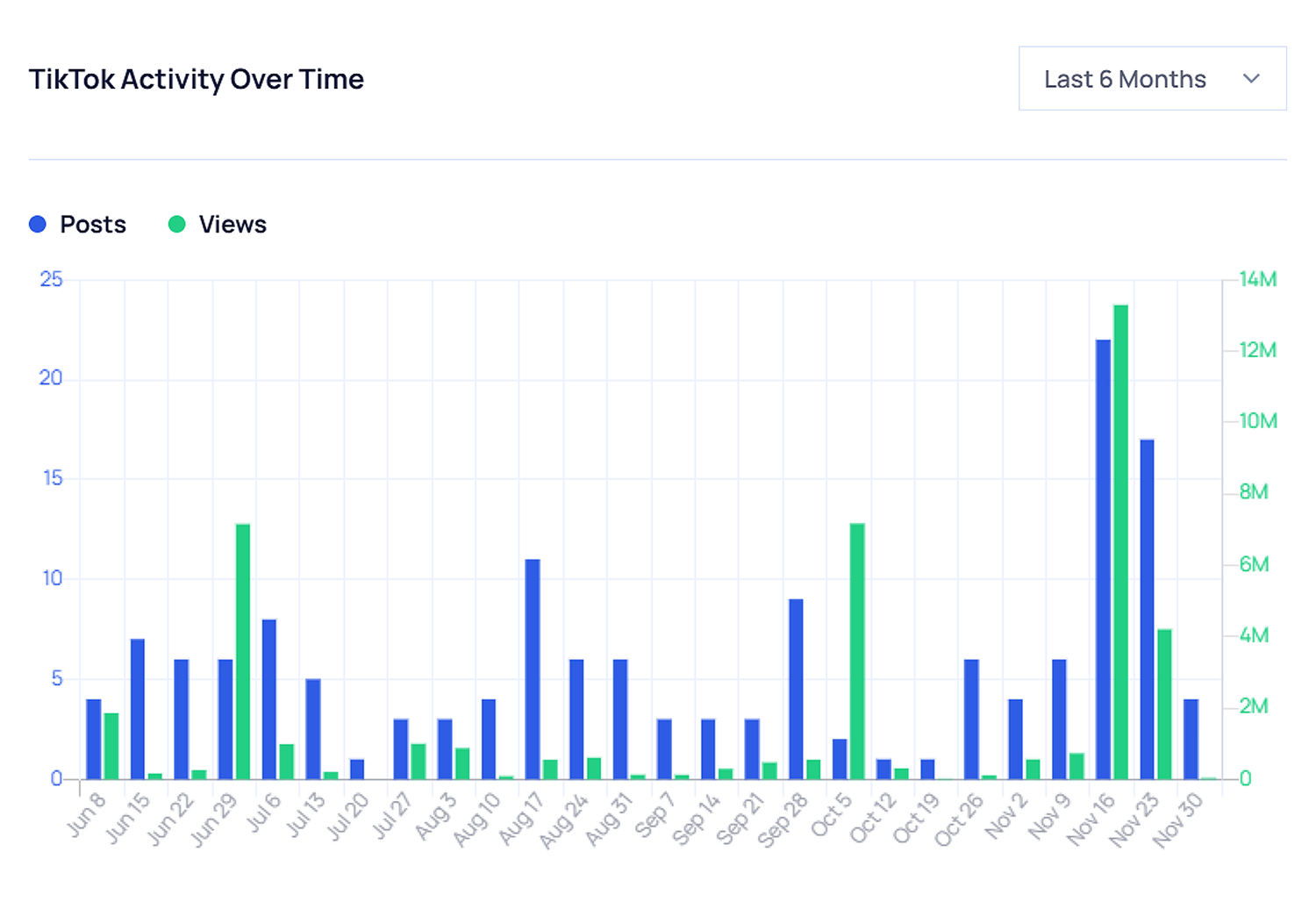
- A trend line of activity around the product
- The top-performing video content for the product
- Top related hashtags
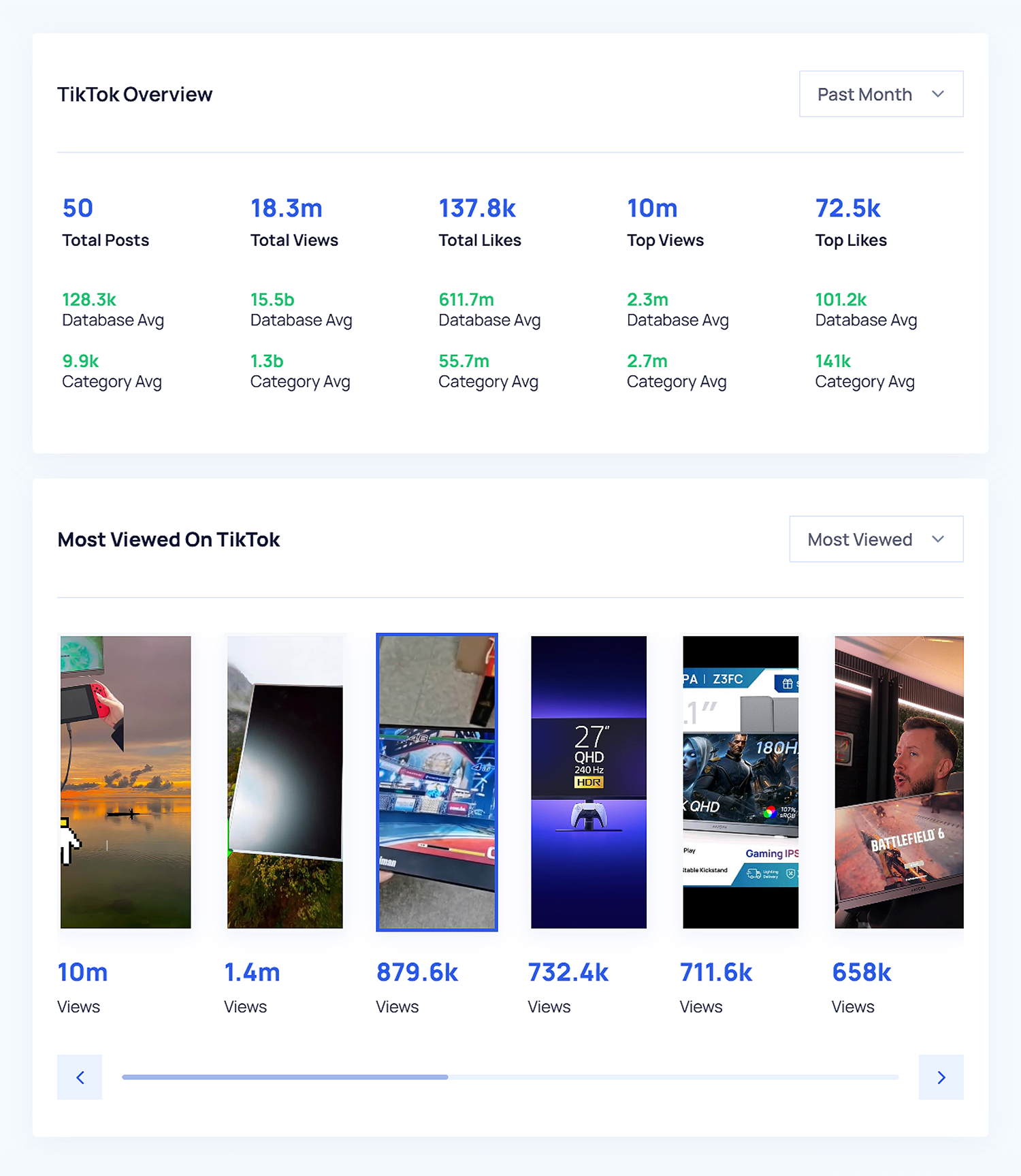
The volume numbers tell you how much creator attention a product is getting, and the engagement numbers tell you whether the content is landing.
A product with thousands of posts but minimal engagement is getting coverage but not much interaction. A product with fewer posts but high engagement per video, however, means audiences are responding and purchase intent is likely to follow.
To see whether TikTok activity around a product is current or whether popularity might be fading, scroll down to see the activity trendline:
Validation: Confirming demand with search and keyword data
Say you’ve found a product (or multiple) that could be a great fit for your store. You’ve seen the momentum in Exploding Topics and you want to capitalize on it.
There’s one more step you should take before jumping in: check for search demand.
Take the product term into Semrush and do some quick keyword research in the “Keyword Overview” tool. You’re looking for a few things: monthly search volume that confirms people are actively looking for the product, keyword intent that skews toward buying rather than browsing, and a competition level indicating the SEO opportunity is still open.
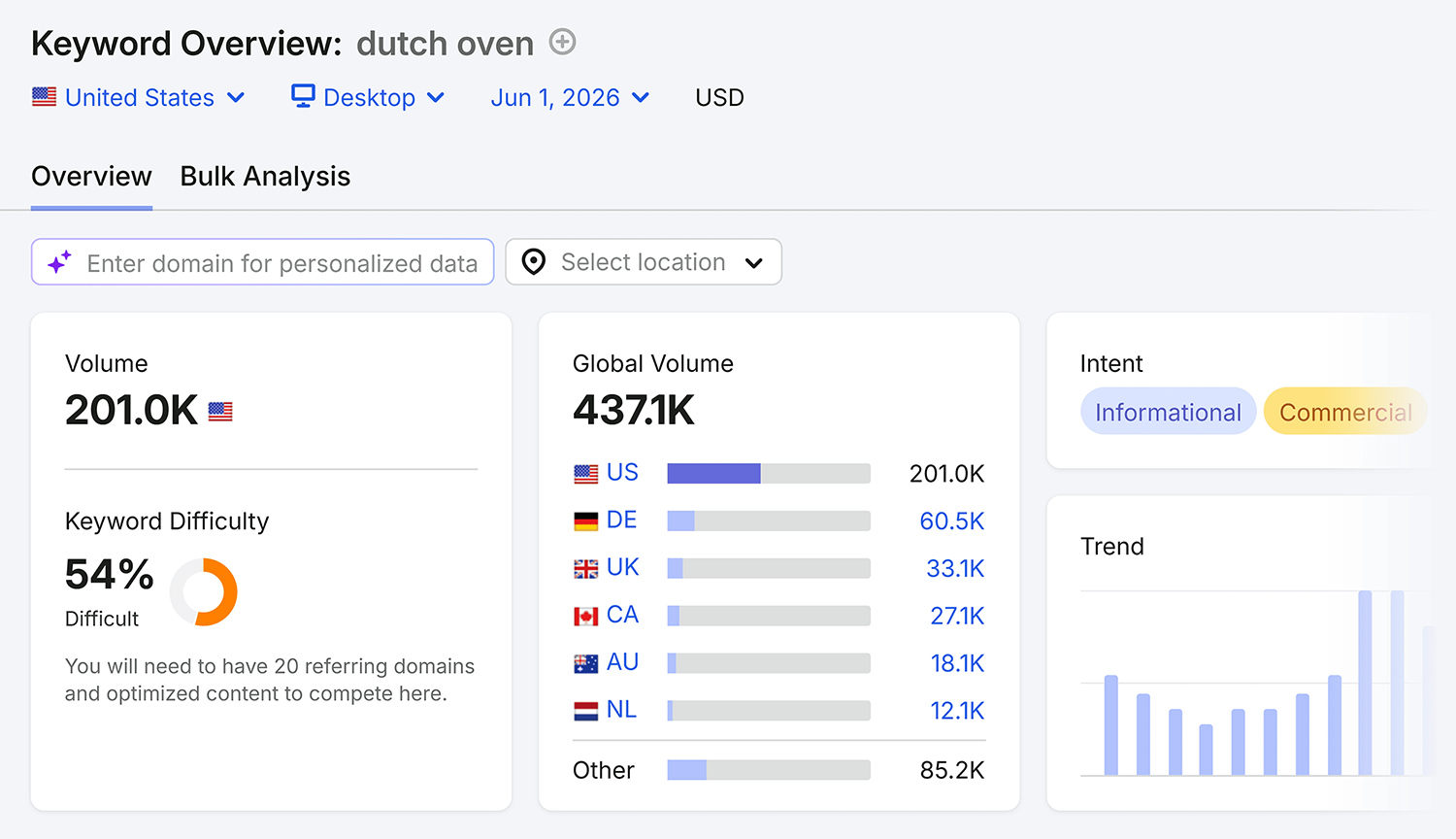
It’s also advisable to check AI search visibility in Semrush and not just traditional organic results. Run the product term as a prompt in ChatGPT, Perplexity, or Google’s AI Overviews and see what comes up. If AI search results are already surfacing established brands and well-optimized product pages for this term, you’re looking at a more competitive landscape than the keyword data alone might indicate.
You can also check your keyword in Semrush’s “Prompt Research” tool to get a feel for any AI prompts and topics emerging around the product:

A trending product that’s already seeing some search demand is a great candidate.
Pro tip: Note that if you’re using Exploding Topics, you might be uncovering products that are early enough in their trajectory to not yet have established search volume. As long as the signals in Exploding Topics are strong, that’s okay!
Making your decision: From validated trend to action
Even if a product has growing search demand, strong TikTok engagement, and healthy Amazon numbers, it’s still not a guaranteed winner. Demand is only half the equation. The other half is whether you can actually make money selling the product.
Three things kill otherwise winning products at this stage:
1. Thin margins after landed cost
The revenue figures in the “Trending Products” report show how much products are generating on Amazon, but they don’t show what it costs to get there.
Before you move forward, work out your landed cost: the product price plus freight, duties, and any prep or fulfillment fees. Then subtract your Amazon FBA or Shopify platform fees, ad spend, and returns. What’s left is your actual margin.
For example, a product doing $80,000 in monthly Amazon revenue sounds exciting. But if that same product is only generating a 6% net margin after landed cost and fees, that’s not very sustainable.
Run the numbers before you fall in love with the trend.
2. Supplier and sourcing problems
Some trending products are difficult to source reliably, either because supply is concentrated in a small number of manufacturers, lead times are long relative to how quickly the trend is moving, or minimum order quantities are too high to test the market without significant risk.
Use the “Top Sellers” breakdown on the Exploding Topics product detail page to understand which brands are already winning in this space:

If the category is dominated by a handful of established brands with deep supplier relationships, it could be harder to break into. If the top sellers are a mix of smaller brands, the sourcing landscape is likely more open.
3. Competitive saturation has already set in
Growth classifications and search volume tell you where a trend is heading, but they don’t always tell you how crowded the path already is. Cross-reference your Exploding Topics data with a quick look at the actual Amazon search results for the product term. How many listings are there? How many reviews do the top sellers have? Are there products with under 200 reviews in the top 10, or does every listing have thousands?
A product trend can still be early while the Amazon market is already saturated. Both things can be true at the same time. The search results will tell you which one you’re dealing with.
If a product clears all three of these checks — the margin works, sourcing is viable, and competition hasn’t already locked up the market — you’re much more likely to turn a profit. If it fails one check, you have a problem to solve or a reason to pass. Either way, you’re making a decision based on data and not a gut feeling.
Maintaining a constant product recommendation flow
Finding a great product once is great, but a system that keeps surfacing new candidates automatically is what makes this a product discovery engine rather than a one-time thing.
Here are three ways to set up this type of system inside Exploding Topics:
1. Track topics
Any product or trend you find interesting can be added to a project using the “Track Topic” button on any trend tile or product detail page:

Projects live in the “Trend Tracking” dashboard and update automatically, so you’re not stuck manually refreshing spreadsheets to stay current. Build out a few projects organized by category or client, and you have a custom, living watchlist that grows alongside your research:

This is also useful for monitoring candidates you weren’t ready to act on yet. A product with “Regular” growth today might hit the criteria you’re looking for in three months. Tracking it means you’ll know when that happens.
2. Export to CSV
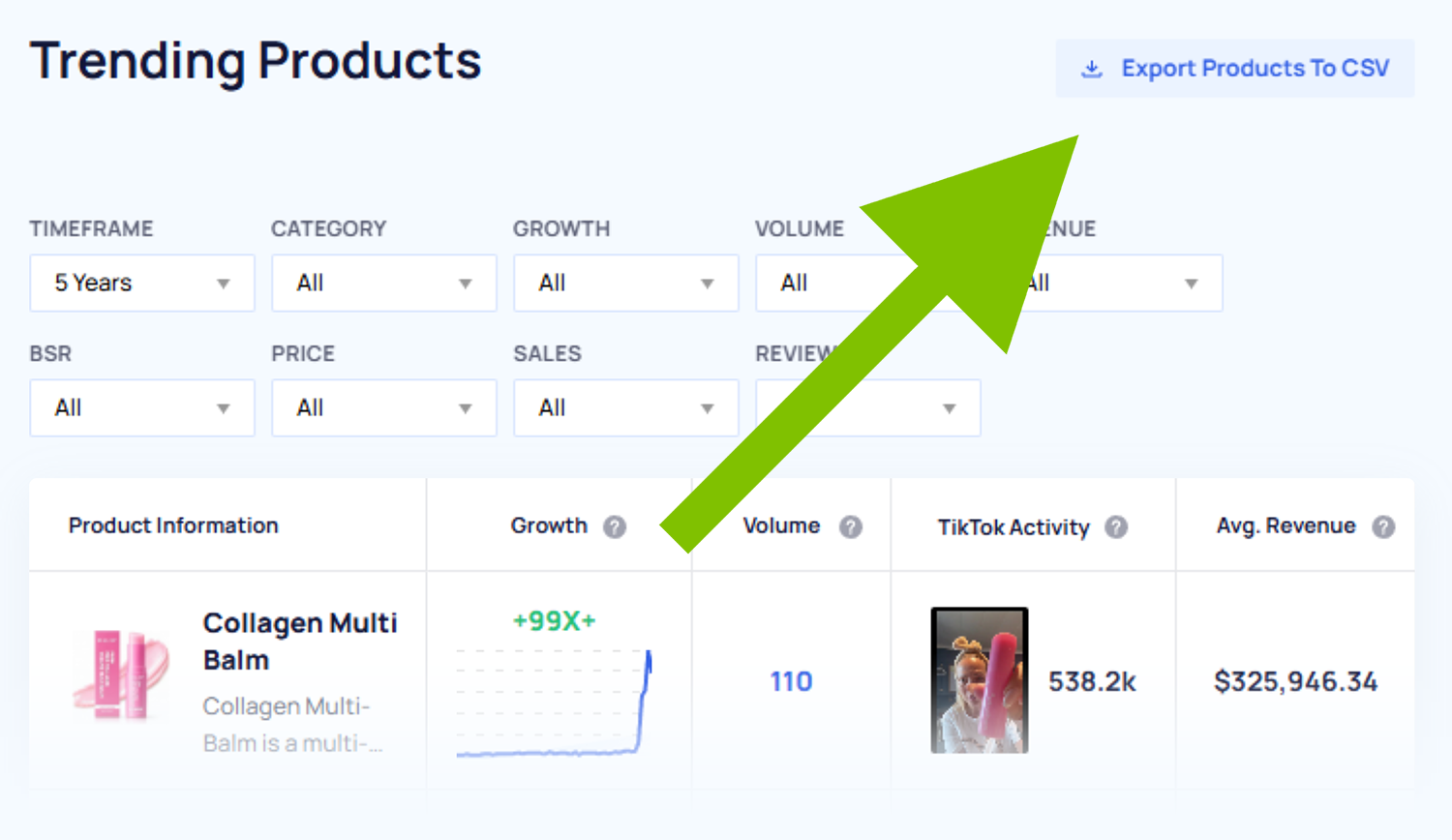
If you’re managing product research across a team, reporting to clients, or just want to work through candidates in a spreadsheet, “Trending Products” data is exportable to CSV on Investor and Business plans. Pull your filtered, sorted candidate list and work through it outside of Exploding Topics without losing any of the underlying data.
3. The Exploding Topics API
For larger organizations that want product trend data fed directly into internal tools or dashboards, Exploding Topics offers an API. Packages start at $1,000 per month, so this is an enterprise option — but for teams running product research at scale, the ability to pipe a continuous stream of trend data into your own systems is what genuinely puts discovery on autopilot.
Cadence and tracking
Running this trending products research process once and then walking away defeats the purpose. The whole point of building a system is that it compounds over time. Products you pass on today might be worth revisiting in six weeks. Trends move fast!
A monthly review cadence works well for most sellers. Once per month, go back into your tracked projects, check whether any classifications have shifted, and pull a fresh filtered export from “Trending Products” to see what’s new in your categories. Run any promising products through the validation steps you’ve already built into your process.
For candidates you’re actively watching but haven’t committed to yet, note the date you first flagged them and what the growth classification was at the time. If a product moves from “Regular” to “Exploding” while you’re watching it, that’s a signal worth quickly acting on. If it moves toward “Peaked” without ever clearing your margin and sourcing checks, that’s your cue to drop it and stop allocating attention to it.
Cut stalled products often. Keep your pipeline clean, keep it current, and let the data tell you when something is no longer worth watching.
Build the engine, then let it run
Product discovery doesn’t have to be a scramble. When you combine Exploding Topics’ trend signals with Amazon Marketplace data, TikTok Insights, and a consistent validation process, you stop reacting to what’s already popular and start jumping on trends ahead of your competitors.
The Exploding Topics app is available inside Semrush, which also gives you access to the keyword and competitive research tools you need to validate products with precision. If you’re not already signed up, you can try Semrush free for seven days and add the Exploding Topics app.
Explore more on
Editorial disclosure
Search Engine Land is owned by Semrush. We remain committed to providing high-quality coverage of marketing topics. Unless otherwise noted, this page’s content was written by either an employee or a paid contractor of Semrush Inc.
About the author