Search everywhere optimization guide (+ free checklist)
Learn how Search Everywhere Optimization expands SEO beyond Google to build visibility, trust, and conversions across platforms like YouTube, Reddit, TikTok, Amazon, and AI search.
Learn how Search Everywhere Optimization expands SEO beyond Google to build visibility, trust, and conversions across platforms like YouTube, Reddit, TikTok, Amazon, and AI search.

From buying links to AI search, Lily Ray shares why lasting visibility comes from E-E-A-T, real expertise and earning recommendations.
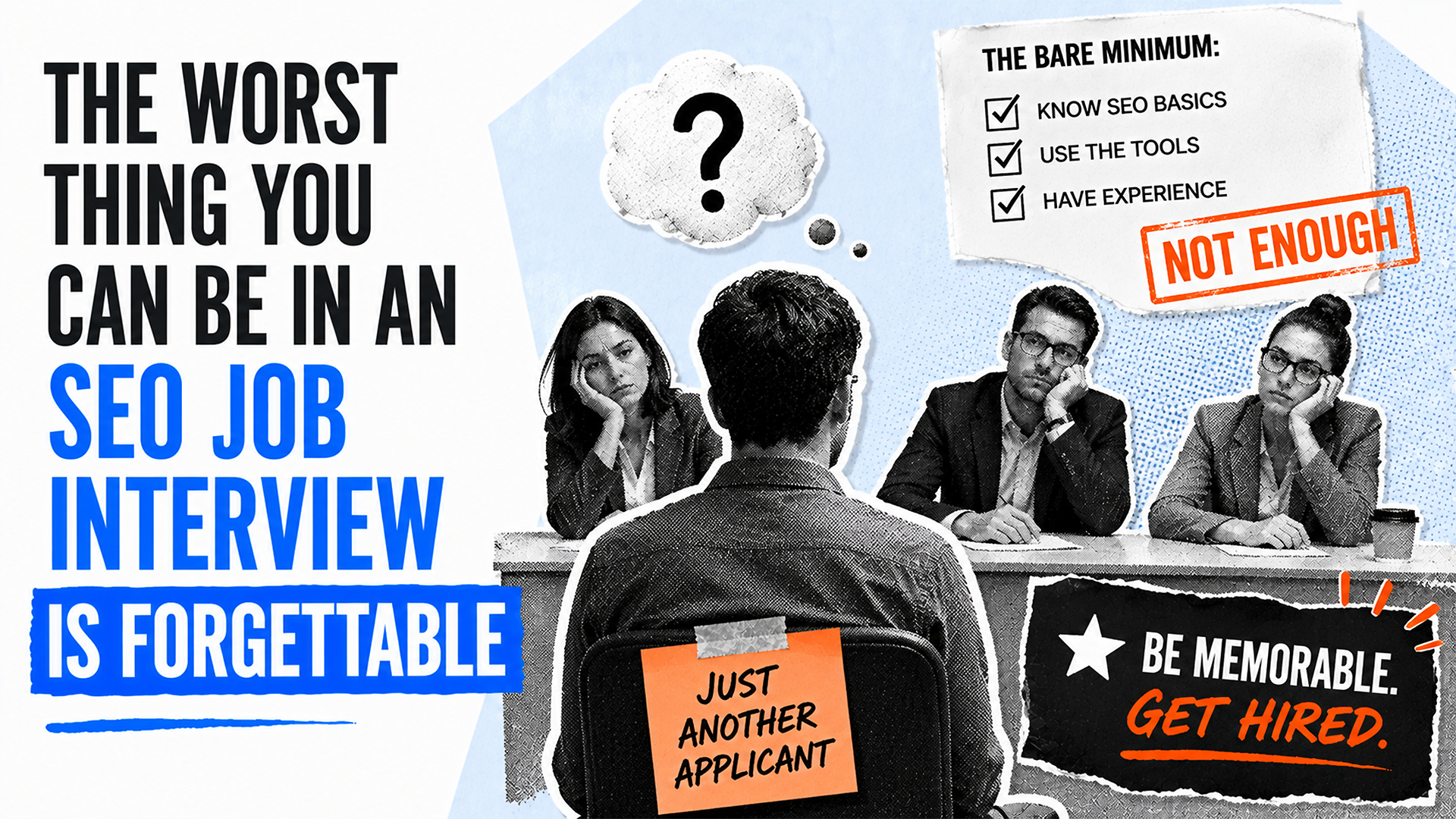
SEO skills are now the baseline. Learn how side projects, experiments, and other tangible work can make you more memorable.

Your strongest traffic signals may be reinforcing the wrong brand identity. Learn how to uncover the gaps limiting search and AI visibility.

Recommendations depend on confidence, not just content. Here's how search, knowledge graphs, and third-party proof influence AI decisions.

The line between paid and organic is fading as Gemini shapes campaigns, search experiences, and brand visibility across Google's ecosystem.

Google’s AI answers keep more users on-platform, with AI Overviews reducing CTRs and AI Mode could soon accelerate the trend.

Build a digital footprint that helps AI understand your expertise, recognize your credibility, and recommend your brand.

Much of the evidence AI systems rely on lives inside customer success, support, and delivery teams. Here’s how SEO can surface it.

AI visibility is now a macro measurement problem. Here’s how to build a defensible framework for tracking recommendation trends.

Not every organic visit deserves equal weight anymore. Here’s how to focus SEO reporting on high-intent pages and business impact.

AI use may be stalling with consumers while surging among professionals, according to new Datos and SparkToro data.

Traditional SEO metrics break in AI environments. Here’s a new model for tracking visibility across search, assistants, and agents.

AI assistants shape recommendations, purchases, and transactions, forcing brands to compete for algorithmic confidence, not just clicks.

Most visibility is shaped before the query. Learn how influence, entity signals, and original data determine who AI systems cite.

AI can verify claims, but it won’t choose the conclusions that benefit your business. Learn how framing turns proof into preference.

AI changed how the funnel works. Acquisition now starts at the bottom — build understanding, credibility, and reach in the right order.

Fishkin also discussed AI’s unreliable answers, Google reducing organic visibility, and why early SEO offered more open opportunities.

AI systems don’t just evaluate content. They choose between entities. Learn the nine-cell model that explains how selection actually works.

AI systems label and score content before ranking. Annotation determines how you’re understood — and whether you compete at all.

Content gets brands found. AI decides who gets recommended — based on positioning, proof, and presence across the web.

See how AI systems process content through five entry modes — and why relying on crawling alone limits visibility, speed, and revenue

AI citation data is easy to misread. Acting on it often creates noise, risk, and weak signals instead of real visibility.

Define your entity home, support it with pillar pages, and build corroboration. That’s how search and AI learn to trust your brand.

Zero-click changes how visibility works, not where knowledge comes from. Here’s why first-party content still matters.

AI may be changing search, but much of the visibility is already going to platforms that dominate results and user attention.

The annotation, recruitment, grounding, display, and won gates determine which content AI engines trust and recommend. Here’s how it works.

Understand AI’s role in local SEO: See how AI is changing local results, user behavior, and optimization strategies — and explore the top tools to use now.

Where do AI systems lose confidence in your content? Discovery, selection, crawling, rendering, and indexing hold the answer.

Mobile apps drive most activity as ChatGPT, Gemini and others push AI discovery to 45 billion monthly sessions, new analysis finds.

AI recommendations are decided upstream. Understand the 10-gate pipeline, where brands fail, and how small improvements compound.

AI drives vendor discovery before Google ever sees the click. Learn how brand mentions, LLM citations, and branded search generate pipeline.

See how long-tail Google Search Console queries reveal AI-style prompts, plus a regex trick and ways to turn raw data into tracking insights.

LLM answers vary widely. Here’s how to extract repeatable structural, conceptual, and entity patterns to inform optimization and positioning.

Incomplete terminology leads to incomplete strategy. Here’s a clearer framework for optimizing when AI systems recommend and act.

Traditional SEO metrics miss recommendation-driven visibility. Learn how LCRS tracks brand presence across AI-powered search.

AI outputs vary because confidence varies. Corroboration and entity optimization turn inconsistent AI visibility into consistent presence.

AI recommendations vary widely, even when prompts are identical. New data shows intent is consistent, but position tracking is mostly noise.

Datos data signals a tougher discovery era as AI cuts repeat searches, concentrates traffic, and leaves publishers with fewer opportunities.

AI search sentiment is positive, but consistency isn’t. Data shows why volatility – not acronyms – is the real risk.