Content scoring tools work, but only for the first gate in Google’s pipeline
Google’s first-stage retrieval still runs on word matching, not AI magic. Here’s how to use content scoring tools accordingly.

Google’s first-stage retrieval still runs on word matching, not AI magic. Here’s how to use content scoring tools accordingly.

The fight focuses on default search deals that critics say lock out competitors and limit choice for users, advertisers, and rival companies.
Google warns that a court-ordered ad syndication could expose its ad algorithms, increase click fraud, and deliver less relevant traffic.
A judge's ruling will force Google to end its long-term pacts with Apple and Samsung, but is unlikely to dent its search dominance.

AI tools can accelerate content workflows – but without governance, accuracy, and human oversight, quality and trust quickly erode.

Google's FastSearch and RankEmbed reveal why clarity drives AI visibility. Here's how to strengthen the signals that count.

A federal judge in the DOJ antitrust case ruled that Google must share its search data and end its use of exclusive contracts.

SMX Advanced speaker James Brockbank shares insights on, SEO strategy, AI impacts, and SEOs working backwards from business goals.
New DOJ exhibits reveal insights into how Google Search ranks content, Navboost, RankEmbed, and LLMs reshaping the future of search.

The DOJ’s proposed Google breakup targets Search, Chrome, and ads to boost competition. Here's everything you need to know.
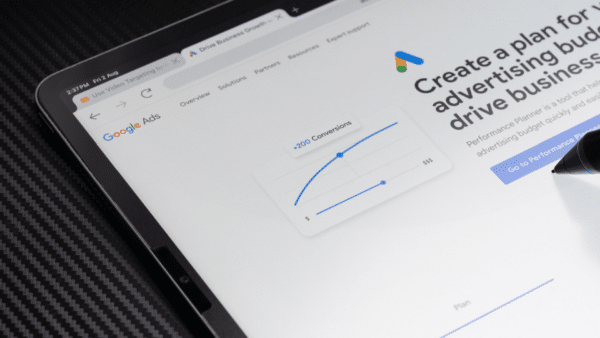
Rising CPCs on branded keywords? Here's why Google’s push for PMax and AI-driven auctions are inflating costs and reducing efficiency.

What if the Google document "leak" was intentional? Here’s why it might have been purposefully shared with industry experts.
The Google antitrust trial's early proceedings have revealed scathing judicial criticism and potential evidence of misconduct.

Nobody notices when search engines work perfectly. but they notice when they don't – and more wisdom from Stefan Weitz.

After sending a $2.3 million check to cover potential damages, Google has sidestepped a less predictable jury verdict.
The documents reveal how Google Search is using, or has used, clicks, links, content, entities, Chrome data and more for ranking.
The U.S. Department of Justice hammered Google over search ad price manipulation and more in its closing statement on search advertising.
Windows users are reporting seeing ads for Bing AI and the Bing search engine, but they're worried the ads might actually be malware.
The landmark court case brought by the US Justice Department could spell huge changes for Google and the future of Search.
iPhone and car insurance related search terms made Google the most revenue, according to a new trial exhibit.
We also now know exactly how much Google paid to be the default search engine on multiple devices and browsers: $26.3 billion in 2021.
The documents have been made public by the Department of Justice as the federal antitrust trial continues.

Despite investing $100 billion in Bing, the search engine simply can't compete with Google due to its monopoly position, says Satya Nadella.

Microsoft boss Mikhail Parakhin claims that despite offering more money than Google, the company was still turned down by Apple.
"There should not be one ounce of trust left that any advertiser has in Google Ads," according to Greg Finn.

Does this mean clicks are a direct ranking factor? No. In fact, BERT and MUM are making user data less important.
The federal antitrust trial is now going to be much harder for the public to follow.
Anticompetitive claims related to Google Search Ads 360 and the company's mobile search dominance are moving forward.