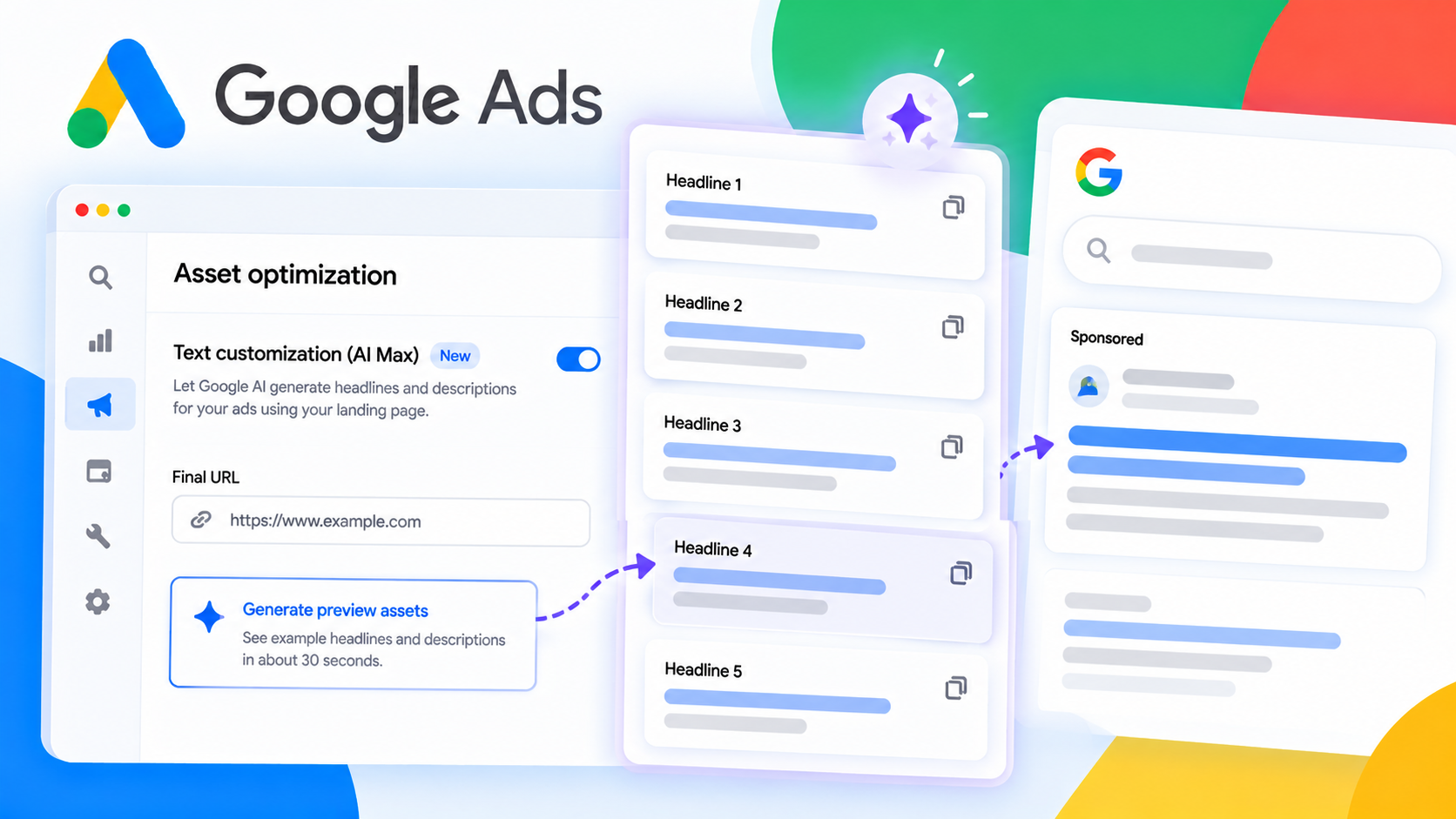
Google AI Max for Search campaigns: New insights from Ginny Marvin
Google Ads Liaison Ginny Marvin answered a slew of questions about the upcoming AI Max for Search Campaigns feature.
Here are the key insights and revelations about this significant update to Google’s advertising platform from the interview, which was conducted by PPC specialist Julie Bacchini, founder of Neptune Moon.
Rollout timeline and availability
AI Max for Search Campaigns will begin rolling out globally at the end of May, with the complete rollout expected by early Q3.
This optional suite of AI-powered features aims to enhance existing search campaigns rather than introduce an entirely new campaign type.
Keyword strategy and keywordless targeting
One of the most significant aspects of AI Max is its “keywordless targeting” capability, which works alongside traditional keywords:
- The system uses information from your landing pages (similar to Dynamic Search Ads) and assets in the ad group to find relevant queries.
- Traditional keywords continue to function with their normal match types, while also expanding to broad match versions in the backend.
- For existing campaigns, AI Max is opt-in, but it will likely be enabled by default for new campaigns (with the ability to opt out).
Marvin clarified that advertisers should continue thinking strategically about ad group theming because “search term matching uses the keywords, assets and landing pages in your ad group to find new queries that are predicted to perform.”
Enhanced geographic targeting
AI Max introduces new geographic targeting capabilities at the ad group level:
- You can reach users based on their expressed geo intent in searches or their physical location.
- This creates opportunities for businesses like tourism companies to target users interested in their location but not physically present there.
- For example, if you want to promote Spain to users in the U.S., you can create an ad group with Spain as the location of interest in a campaign targeting the U.S.
- When using location in keywords, adding it as a location of interest at the ad group level ensures keywordless targeting will respect it, too.
Flexible controls and settings
Advertisers maintain significant control with AI Max:
- The opt-in activates all three features (search term matching, text customization, final URL expansion), but each can be adjusted separately.
- You can opt out of text customization and final URL expansion at the campaign level.
- Search term matching (covering both broad match and keywordless expansion) can be disabled at the ad group level.
- Negative keywords continue to function as they currently do.
- Brand controls are available at both campaign and ad group levels.
Improved reporting
AI Max introduces enhanced reporting capabilities:
- A new \Source column in the search terms report indicates whether a match came from a keyword, keywordless targeting, or broad match expansion.
- A dedicated “AI Max for Search campaigns” view shows queries plus the headlines and landing page combinations served for keywordless and broad match expansion traffic
- Additional reporting features in Keywords, Assets, and Landing Pages reports provide greater visibility into AI Max performance
Interaction with other campaign types
Marvin addressed how AI Max will interact with existing campaign types:
- Keyword prioritization rules remain unchanged. If a user’s search query matches an eligible Search keyword of any match type, that Search campaign will be prioritized over AI Max keywordless/broad match expansions and Performance Max.
- For advertisers already running Search and Performance Max campaigns together, Google recommends continuing to use both.
- AI Max for Search campaigns achieves parity with the Search component of Performance Max but operates only on Search text inventory (not across multiple channels like Performance Max).
Seasonal adaptability and performance expectations
AI Max is designed to respond effectively to seasonal trends and shifting user behavior without requiring complex campaign structures.
- For example, if you have a Mother’s Day promotion on your landing page, the system could match to relevant queries like “Mother’s Day gift” even without those terms in your keywords or ads.
Advertisers activating AI Max typically see 14% more conversions or conversion value at similar CPA/ROAS, according to internal Google data. For campaigns mostly using exact and phrase keywords, the uplift can reach 27%.
Testing options
For advertisers who prefer to test before fully committing, Marvin confirmed that AI Max can be enabled through experiment campaigns using Google’s drafts and experiments feature, with more backend improvements for A/B testing on the roadmap.
Final thoughts
For advertisers considering whether to adopt AI Max when it becomes available, Marvin’s advice is clear: test it, particularly if you’re primarily using exact and phrase match keywords and not already heavily invested in Performance Max campaigns, as these advertisers have seen the most significant impact in early testing.
The full Q&A. Your AI Max for Search Campaigns Questions Answered with Google Ads’ Ginny Marvin
Explore more on
Editorial disclosure
Search Engine Land is owned by Semrush. We remain committed to providing high-quality coverage of marketing topics. Unless otherwise noted, this page’s content was written by either an employee or a paid contractor of Semrush Inc.
About the author