Generative Engine Optimization (GEO)
Search Engine Land is your go-to-source source for Generative Engine Optimization (GEO) news, trends, and cutting-edge content. You’ll find a variety of up-to-date and authoritative resources, including the latest news, tactic-rich tutorials, and the latest data to help you work smarter and make better decisions. What you read here is written by our experienced in-house team, and subject matter experts from leading brands and agencies at the forefront of AI in search marketing.
Google AI Overviews: Breaking down innovations
Explore detailed insights into Google’s latest advancements in AI-powered search features, such as Google AI Overviews. From updates on how these tools shape search results to actionable tips for SEOs to maximize visibility, we cover the strategies you need to stay ahead.
Bing Generative Search: A competitive edge
Stay informed on Microsoft’s groundbreaking work in Bing Generative Search. Dive into news stories that explore the latest in generative AI’s impact on Bing and how marketers can leverage this technology to gain a competitive advantage. 
Emerging AI search platforms: Expanding possibilities
The rise of new AI-driven tools is reshaping the search landscape beyond traditional players. Platforms like Perplexity AI and Microsoft Copilot offer innovative approaches to search, focusing on conversational, context-rich results tailored to user intent. Semrush Enterprise AIO lets you monitor brand visibility in AI-generated content, with eyes on everything from brand sentiment to how competitors are doing. These tools showcase how emerging platforms can complement existing strategies, helping marketers harness the full potential of AI to drive engagement and efficiency. Don’t miss out on the AI evolution in search! Get the Search Engine Land newsletter delivered daily to your inbox. Subscribe for free and stay ahead in the rapidly evolving landscape of search marketing!


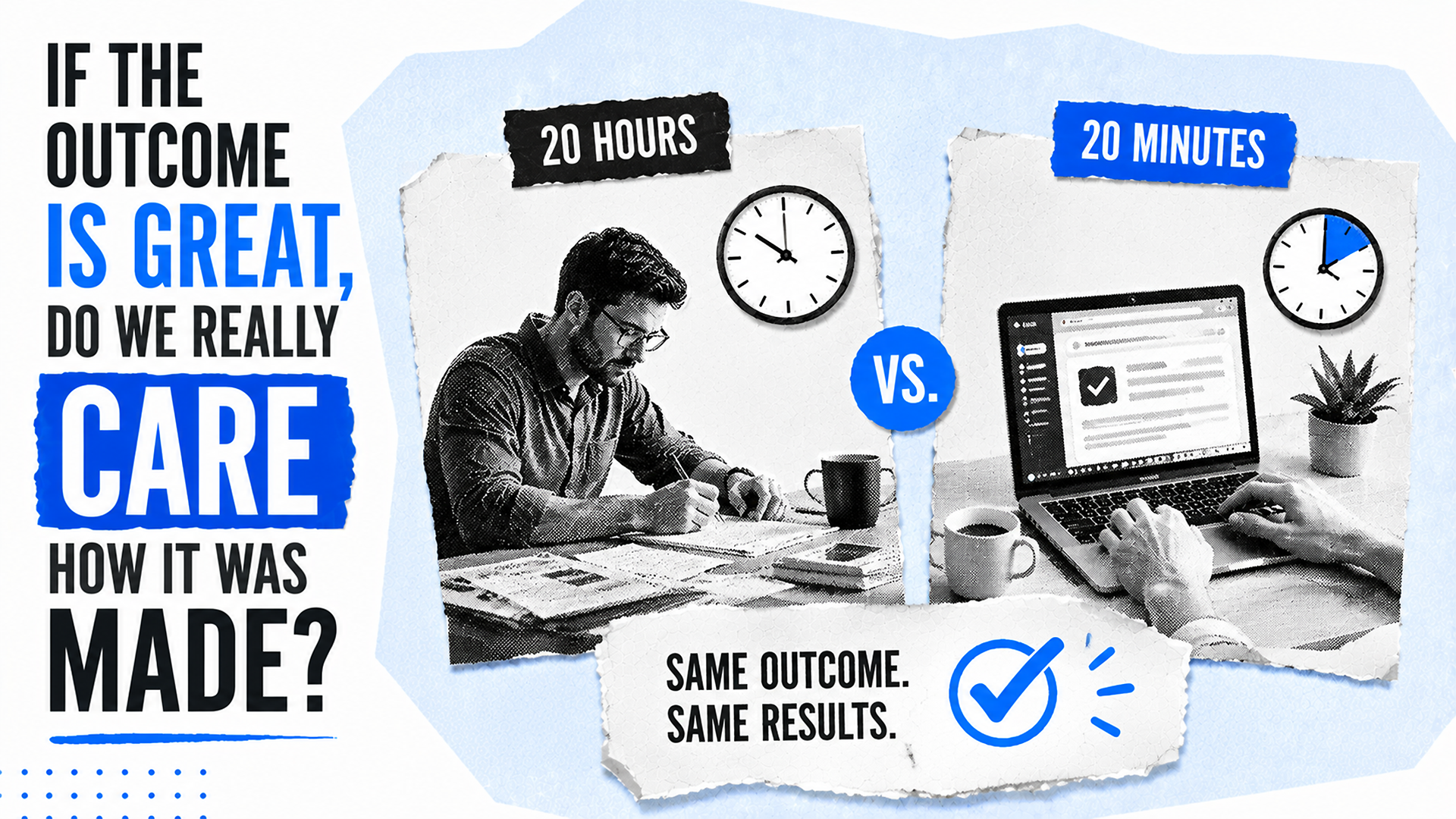
Why AI deliverables should be judged by outcomes, not effort
If two deliverables produce the same outcome, should it matter whether one took 20 hours or 20 minutes? AI is forcing that conversation.

Why proprietary data is your most defensible AI citation asset
Original data helps pages stand out in search, but structure determines whether AI cites it. Learn how to optimize for extraction.

What 1 million keywords reveal about AI’s impact on search
A large-scale study of search behavior shows which industries are losing demand, where it is shifting, and how AI is changing discovery.

ChatGPT Thinking mode changes which brands get cited
Only 25.6% source overlap between minimal and high reasoning across 100 prompts and 20 buyer journeys, according to Semrush and Kevin Indig.

GraphRAG: What entity-first retrieval means for SEO
GraphRAG explains why AI is shifting from isolated text to connected knowledge, and what that means for AI search optimization.

6 content audit workflows to build in Claude
Turn one-off prompts into reusable skills that uncover topical gaps, outdated content, AI visibility issues, and brand voice inconsistencies.

The paid brand mention problem in GEO
Paid placements and questionable outreach tactics are blurring the line between legitimate GEO and manipulative SEO.

Your AI salesforce is already selling your brand. The question is who trained it.
Recommendations depend on confidence, not just content. Here's how search, knowledge graphs, and third-party proof influence AI decisions.

How to use Google query expansion to improve content visibility
Your content may already be surfacing for searches you never planned for. Here's how to identify those opportunities and act on them.
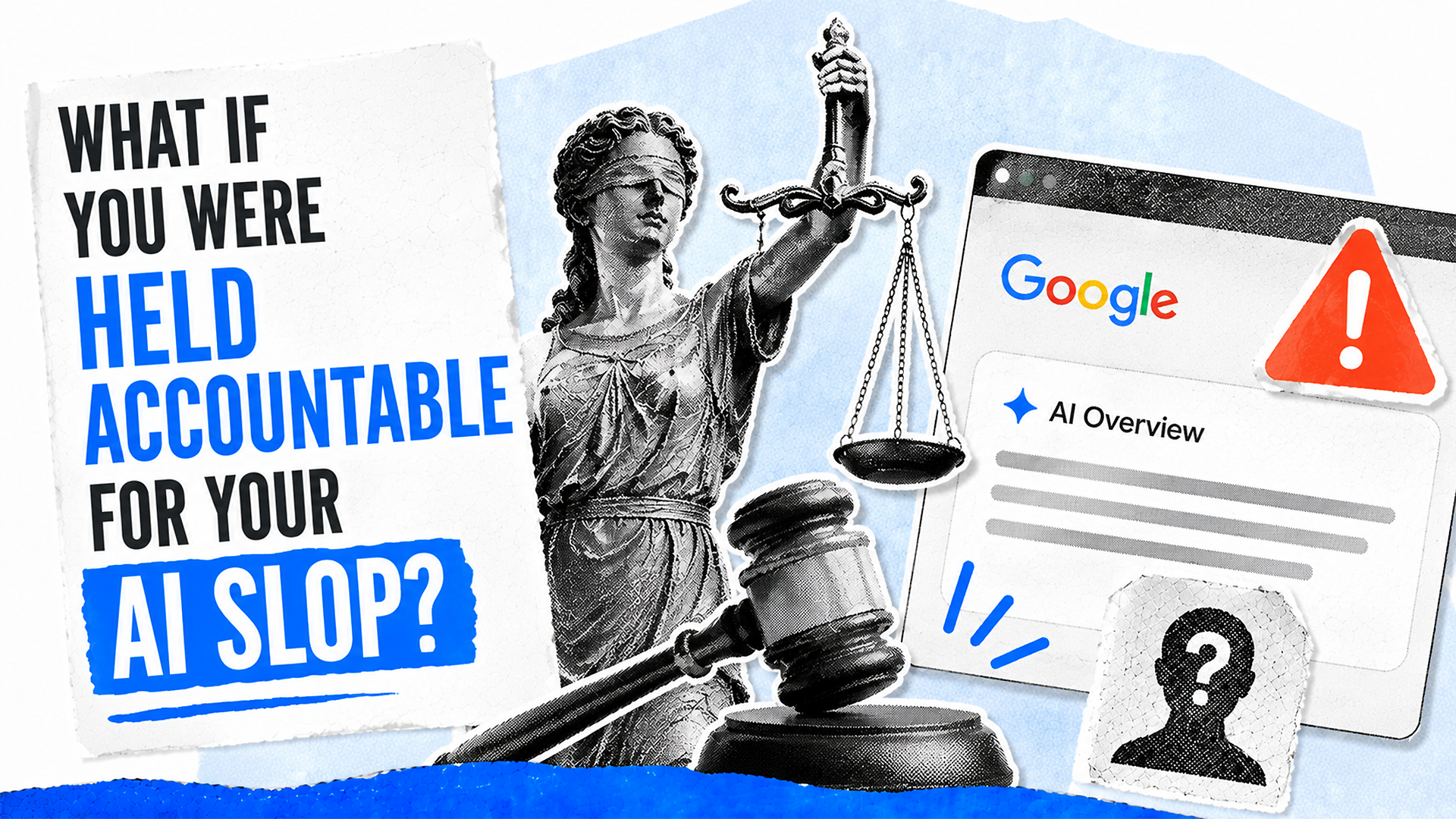
What if you were held accountable for your AI slop?
A ruling against Google signals a broader shift: companies may be responsible for AI-generated errors, even when humans didn't write them.

ChatGPT recommendations drive more brand website visits: Study
AI-influenced visitors viewed 12 pages and spent 11.8 minutes on site, compared with 6.5 pages and 5.6 minutes for others, SimilarWeb found.

Stop trying to replace people with AI
Fear-based AI positioning grabs attention, but it can undermine trust. Here's why augmentation is a stronger long-term marketing strategy.

A 13-word edit can steer what deep-research AI agents recommend
Fake entities appeared in 38% to 51% of reports when agents retrieved a manipulated page, rising to 62% with multiple pages.

B2B brands rank in Google but appear in just 3% of AI Overviews
AI Overviews appear in roughly half of relevant B2B searches, yet most brands remain largely absent from the answers buyers see.

Cloudflare and beehiiv give publishers new AI crawler controls
A new dashboard shows which AI bots hit newsletters, what got blocked and whether any of that crawling sends readers back.

How to approach build-versus-buy decisions for SEO
Before requesting a new tool, understand the tradeoffs between custom solutions, SaaS platforms, and hybrid approaches that combine both.

LLM prompt tracking: How to monitor generative AI prompts more accurately, and with more context
Today, prompt tracking works well but it doesn’t give you the full picture. Learn how to make your prompt monitoring work better for you.

3 questions that reveal your real search performance
Rankings and conversions show outcomes. The bigger challenge is understanding how buyers discover, evaluate, and choose brands.

Why continuous learning is now part of search performance
As AI takes on more execution, you need stronger skills in interpretation, prioritization, and performance analysis.

How to win the gatekeeper’s ‘Yes’ with stakeholder co-citation gap analysis
To get cited in AI answers, stop writing for keywords. Map buyer-role evidence gaps, find the missing gatekeeper, and build the evidence.

USA Today vs. Google AI Overviews: A World Cup battle for breaking news traffic
As Google's AI Overviews arrive more quickly for developing stories, publishers are adjusting workflows to capture search interest early.
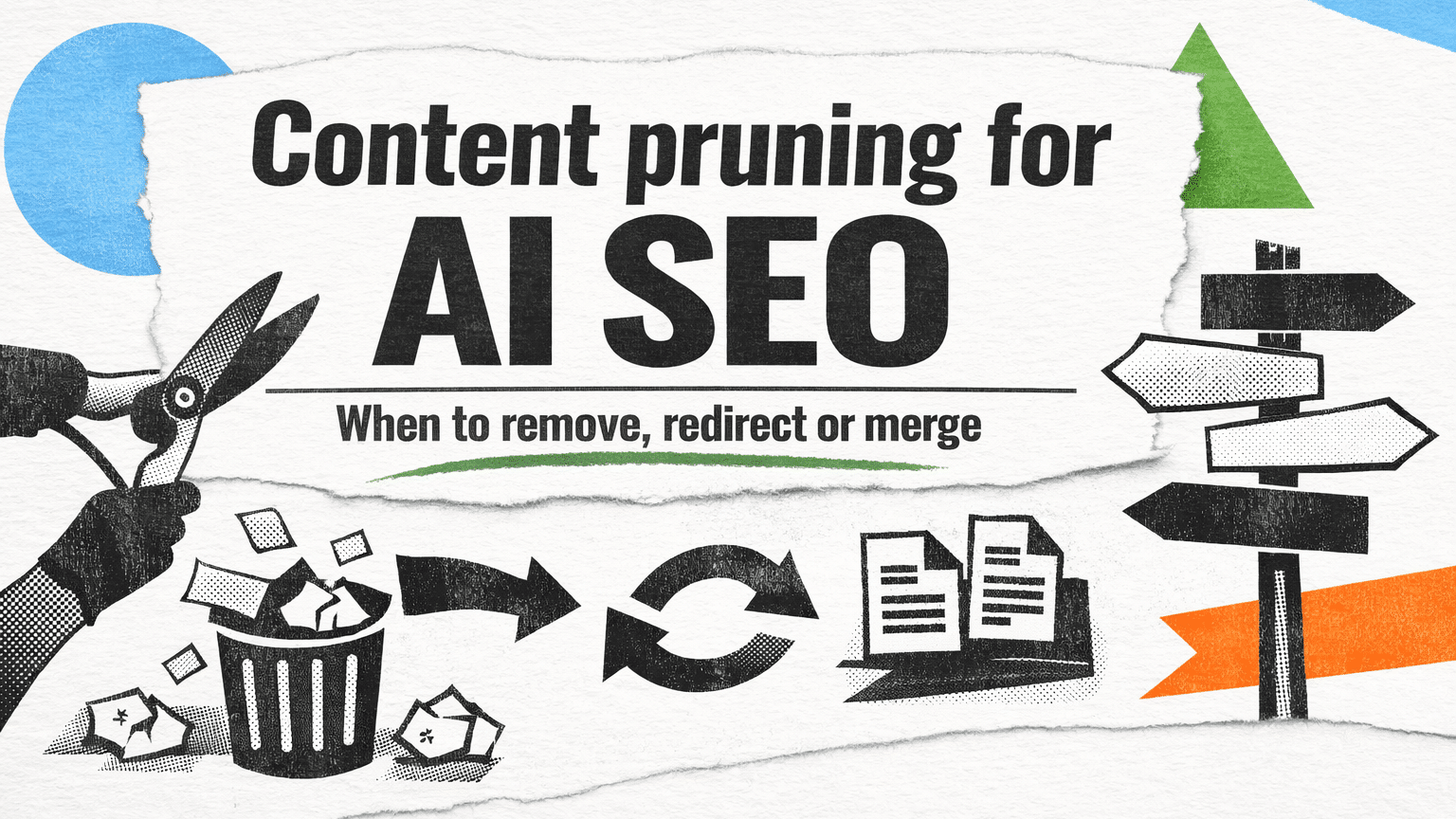
Content pruning for AI search: When to remove, redirect, or consolidate pages
Discover key metrics for content pruning and decide whether to remove, redirect, or consolidate pages with our free decision matrix workflow.

Google AI Overviews cite self-serving listicles, but recommend competitors 69% of the time
Lily Ray’s study found Google cited brands’ own listicles in AI Overviews, yet excluded those brands from recommendations in most cases.

New Adobe tool shows where brands win and lose in AI search
Backed by 300 million AI prompts and Semrush data, the platform tracks mentions, share of voice, and content gaps across leading AI engines.

Turn your SEO process into AI-powered tools
Learn how to package your workflows, expertise, and business context into AI assistants that work the way you do.

Google just released an AI opt-out feature. Your competitors hope you use it.
Users aren't opting out of AI Overviews or AI Mode. If your content disappears from those experiences, someone else will take its place.
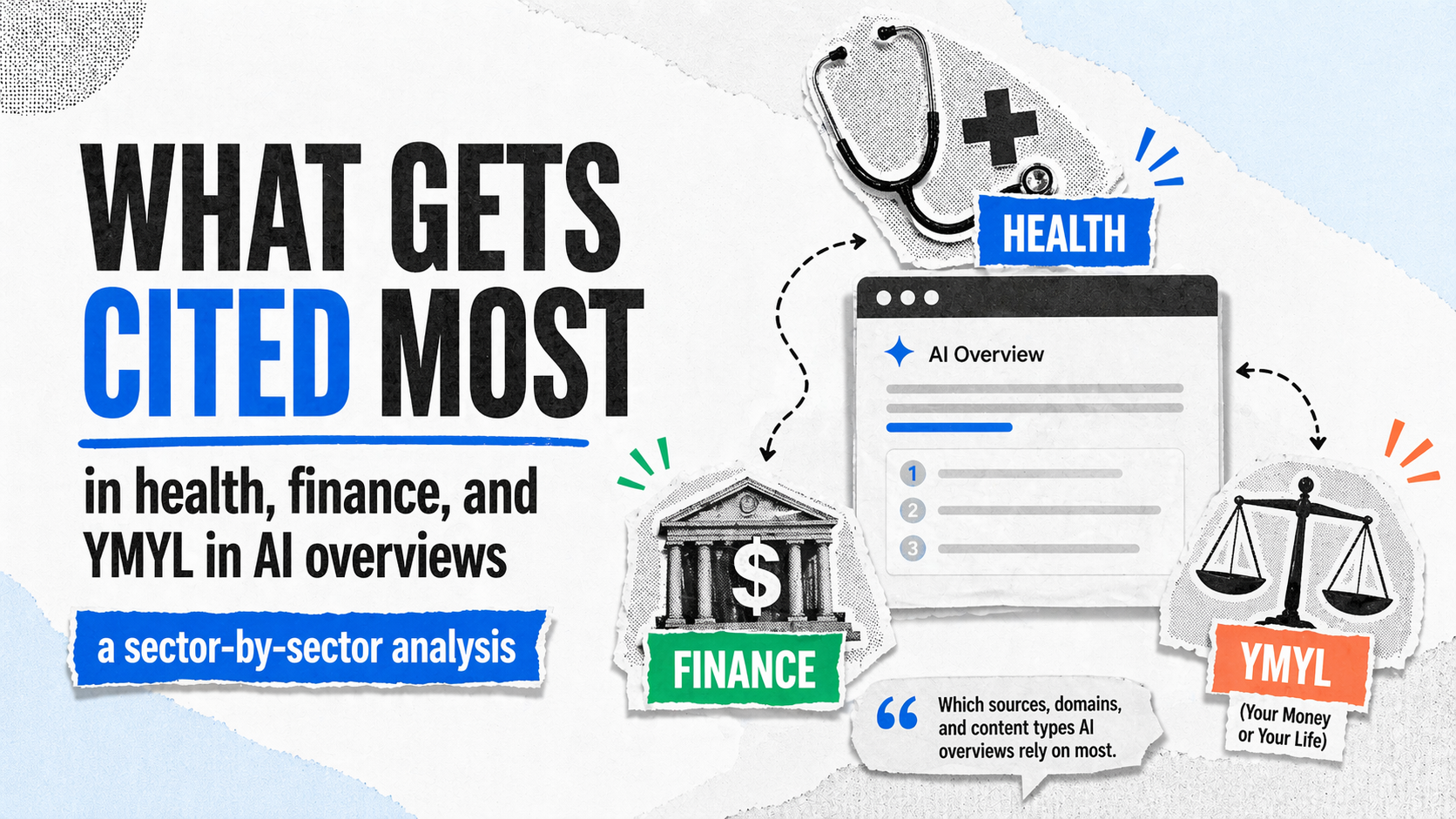
What gets cited most in health, finance, and YMYL in AI Overviews: A sector-by-sector analysis
How often do AI Overviews show up for YMYL content? How has this changed over time? Find out with our analysis of health, finance & legal categories.

80% of ChatGPT product recommendations change when search is enabled: Study
Turning on search cut recommendation overlap to 19.8%, reshuffling product picks across 20,000 ChatGPT responses.

AI referrals to travel sites surge 194% as engagement rises: Adobe
AI-referred travelers spend 70% longer on sites, engage 21% more, and bounce 41% less as the conversion gap continues to narrow.

7 AI search shifts you can’t afford to ignore
Why Claude and ChatGPT surface different sources, how ChatGPT ads work, and what new AI search data means for visibility.
AI search adoption rises as consumer trust declines: Study
Survey data from 1,008 consumers and 150 marketers reveals how AI is reshaping search visibility, brand trust, GEO, and content strategy.

What replaces the ultimate guide in AI search
Long-form content alone no longer guarantees visibility. Learn the principles behind content AI systems retrieve and cite.

Meta launches AI Mode in Facebook search to answer questions
Public posts, Groups and Reels now power responses, turning conversations into a new discovery engine for advice and recommendations.

Content repurposing map for better SEO and LLM visibility
Learn how to repurpose content, discover which formats LLMs prefer, and get our content repurposing map to boost SEO and AI search performance.

How AI is merging paid and organic visibility
The line between paid and organic is fading as Gemini shapes campaigns, search experiences, and brand visibility across Google's ecosystem.

How AI helped build hreflang XML sitemaps at scale
Learn how iterative prompting, Python, and Google Colab helped turn a multilingual hreflang mapping project into a scalable workflow.

Why next-question intent matters for AI search visibility
Many pages answer the query but stop short of the decision. Next-question intent helps create more useful content for users and AI systems.

How travel brands can earn AI recommendations
TripAdvisor, Google Business Profile, OTAs, and reviews help AI understand travel brands. Learn how to strengthen those signals.

What new AI search data reveals about visibility and trust
Consumers are validating information across more platforms before making decisions. New findings show where AI systems look for authority.

Claude visibility may depend heavily on Brave Search rankings, new data suggests
Claude frequently pulls from Brave Search results, with ranking, recency, and comparison prompts triggering searches most often.