Bing: It’s The Relevancy, Stupid

Lost in the shuffle of yesterday’s report about Bing’s impact on the search industry was some interesting and, for Microsoft, potentially valuable feedback on its new search engine.
The J.P. Morgan report (available to the company’s clients at mm.jpmorgan.com) is based on a survey of 763 U.S. adults and their search behavior during June — Bing’s first month online after replacing Live Search.
When Bing launched, much was made of its new design, showing topics, related searches, and other information in the left-side column. The decision to organize search results into categories earned Bing a lot of buzz, too, along with the web page previews that appear to the right of some results.
But for all the talk and promotion of Bing’s new design, the J.P. Morgan study suggests it’s the relevancy that matters.
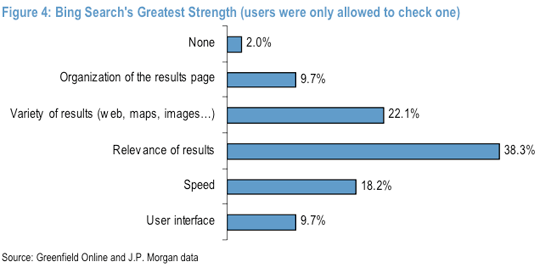
When asked to name Bing’s greatest strength, relevance of results was a clear No. 1, well ahead of “variety of results.” In fact, design-related choices like “user interface” and “organization of the results page” tied for fourth with less than 10% each.
On one hand, this is good news for Microsoft that so many people are saying relevance is the best thing Bing has going for it. On the other hand, it also validates Google’s approach all along: relevant results first and foremost, even at the expense of frills and design. And as long as searchers believe Google has the most relevant results, all the new design ideas in the world may not make a difference.
Explore more on
Editorial disclosure
Contributing authors are chosen for their expertise and work under the oversight of the editorial staff. Search Engine Land is owned by Semrush. The contributor was not asked to mention Semrush; the opinions expressed are their own.
About the author