Why your highest-converting B2B landing page might be hurting your pipeline


A landing page with a 10% conversion rate looks better than one converting at 4%. But what if most of those additional conversions never become qualified opportunities?
In long B2B sales cycles, optimizing landing pages only for conversion rate can create the wrong incentive. You remove friction, shorten forms, and push harder for submissions because the dashboard rewards more conversions.
The result may be more leads. It doesn’t necessarily mean more pipeline. For high-ticket B2B products, the goal of a landing page shouldn’t be to convince everyone to submit the form. It should be to convince the right people.
Conversion rate doesn’t measure lead quality
Landing page optimization often follows a simple logic: more conversions = better performance.
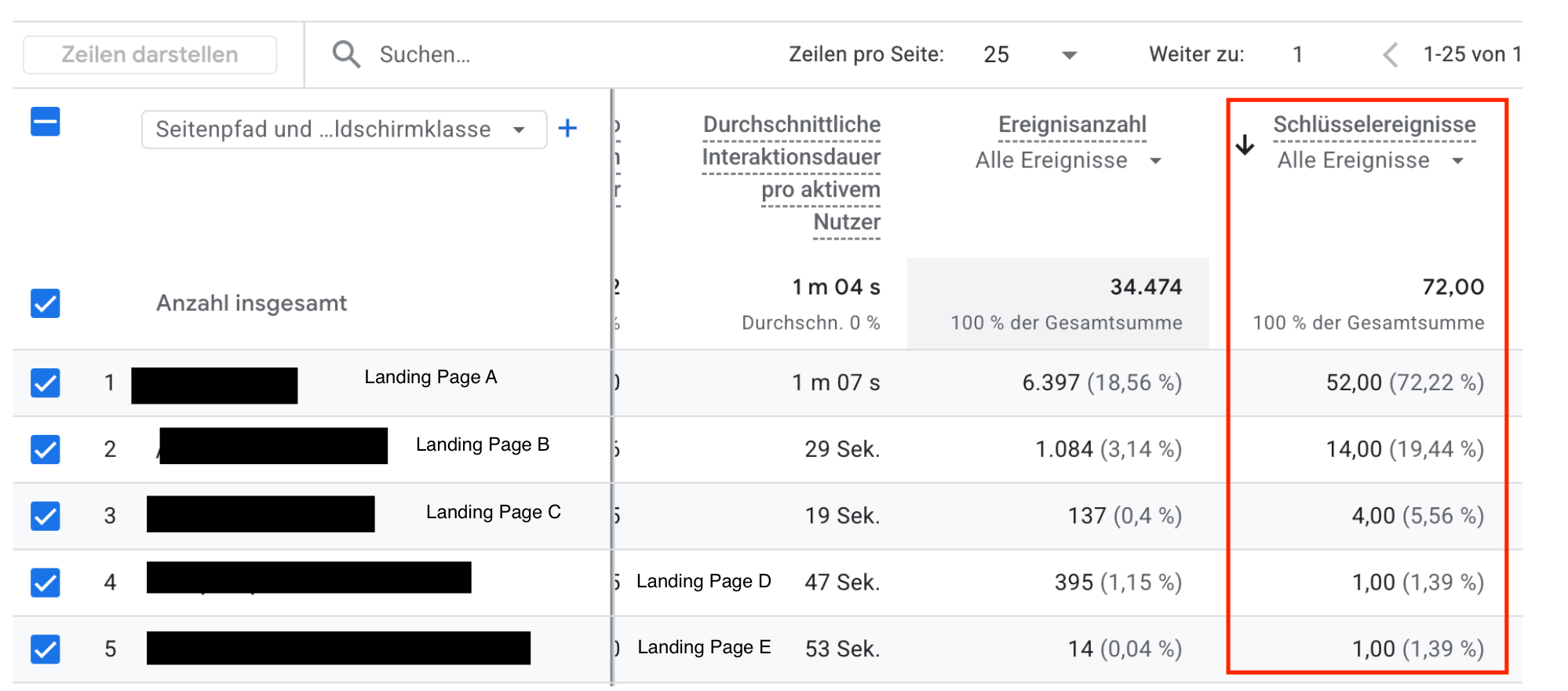
GA4 can show which landing pages generate the most key events and how users engage with them. In the example below, landing page A accounts for most of the recorded key events and also shows stronger engagement than others.
At first glance, that page looks like the clear winner. But in B2B, website conversions are only the first layer of performance.
A form submission from a clinic owner actively evaluating an investment is very different from that of a private consumer, student, or someone simply looking for information. GA4 may record both as the same key event, while sales will value them differently.
Landing page performance should include more than conversions and engagement. What percentage of those conversions become qualified opportunities?
More friction isn’t always bad
CRO advice often focuses on removing friction:
- Shorter forms.
- Fewer fields.
- Less copy.
- Fewer distractions.
- Stronger CTAs.
That can improve conversion rate.
But in complex B2B sales, some friction serves a purpose.
A serious buyer may need to understand who the solution is for, whether it fits their business or practice, how it works, what implementation involves, and what the next step looks like. The form itself can also support that qualification process.
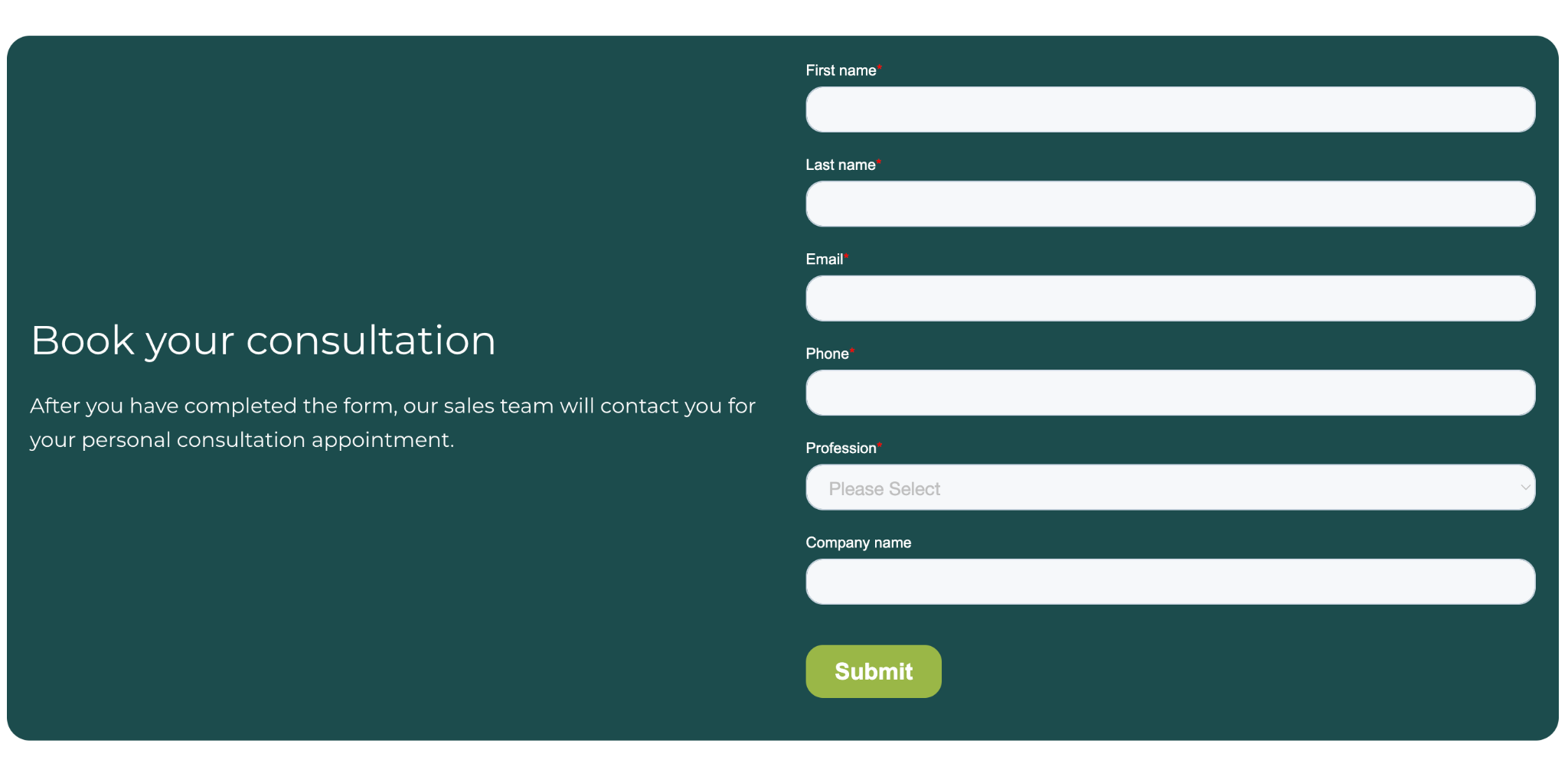
In the example below, fields such as Profession and Company name add a small amount of friction, but they also make it easier to distinguish relevant B2B prospects from lower-value or irrelevant inquiries. A clinic owner, physiotherapist, or business partner shouldn’t be treated the same way as a private consumer simply looking for general information.
Removing too much friction can increase submissions while reducing qualification. The page becomes easier to convert on, but less effective at helping the right buyer move forward.
The best B2B landing pages eliminate unnecessary friction while keeping enough information to qualify intent.
Behavior data can reveal where buyers hesitate
Conversion rate tells you what happened. Behavioral analytics can help explain why.
This is where I find Microsoft Clarity particularly useful. Heatmaps, scroll depth, and session recordings show how visitors move through the page and which sections attract the most attention.
In the example below, users pay close attention to the FAQ section and continue down the page toward the next-step CTA. That suggests they’re looking for reassurance and additional information before moving forward.
For B2B landing pages, this is important. A lower conversion rate doesn’t always mean the form is too long or the CTA is too weak. Sometimes prospects simply need more information before they’re ready to convert.
Heatmap data can help identify whether users:
- Reach important product information.
- Read FAQs and proof points.
- Engage with business case or implementation content.
- Continue toward the CTA.
- Drop off before reaching key sections.
These signals provide context that a standard conversion report can’t show.

The industry’s trusted source for essential news and analysis.
Sign up for our newsletter to receive exclusive insights and updates directly to your inbox.
- Daily breaking news
- Expert analysis from industry veterans
- Join over 200k subscribers
- Covering SEO, PPC and AIO
The landing page should answer sales questions before sales does
One of the best sources of landing page optimization ideas is the sales team.
If prospects repeatedly ask the same questions after submitting the form, some of those answers may belong on the landing page. Common examples include:
- Is the solution suitable for my type of business?
- How does the technology work?
- What training is included?
- How is it implemented?
- Who is already using it?
- What evidence supports it?
- What happens after I request information?
Answering these questions before the form builds confidence among serious buyers and discourages people who are clearly not a fit.
That may reduce raw conversion volume. But if the remaining leads are more qualified, the page is doing a better job.
Search intent should shape the landing page
Not every visitor arrives with the same level of intent.
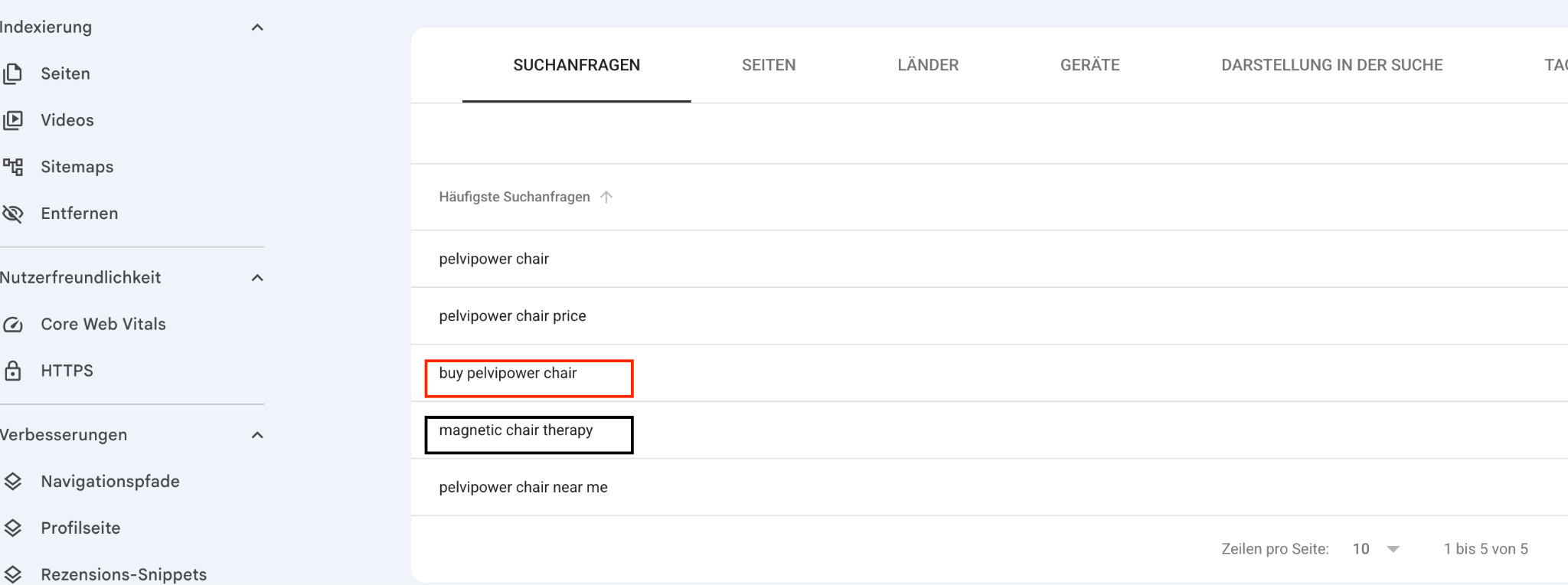
Search Console data makes that visible. In the example below, users search for broad category terms such as “magnetic chair therapy,” use case queries such as “pelvic chair for postpartum recovery,” evaluation terms such as “PelviPower reviews,” and more commercial searches such as “better pelvi chair cost to buy.”
These users may reach similar pages, but they’re clearly at different stages of the buying journey.
That matters for B2B landing pages.
An informational visitor may still need education and proof. Someone comparing products may be looking for differentiation, reviews, or evidence. A high-intent buyer may want pricing context, implementation details, and a clear path to speak with sales.
The landing page should support all of these stages without treating every visitor as equally ready to convert.
Alternatively, use Semrush to show keyword intent classifications such as informational, commercial, and transactional.
Optimize for qualified conversion rate
Traditional CRO asks: “How do we increase the percentage of visitors who convert?”
For B2B, a more useful question is: “How do we increase the percentage of visitors who become qualified prospects?”
That creates a clearer funnel:
- Traffic → Form submission → Qualified lead → Opportunity → Revenue
Imagine two landing pages:
- Landing page A
- 10% conversion rate
- 100 leads
- 10 qualified leads
- Landing page B
- 5% conversion rate
- 50 leads
- 20 qualified leads
Traditional CRO would declare landing page A the winner. Sales would probably choose landing page B.
Landing page B converts fewer visitors and produces twice as many qualified prospects.
That’s why conversion rate should be evaluated alongside downstream lead quality.
| Metric | Landing Page A | Landing Page B |
| Conversion rate | 10% | 5% |
| Leads generated | 100 | 50 |
| Qualified leads | 10 | 20 |
| Qualified lead rate | 10% | 40% |
| Sales opportunities | 3 | 12 |
A lower-converting landing page can create more qualified pipeline when lead quality is included in the analysis.
A better landing page measurement framework
Evaluate B2B landing pages across three layers. The first layer tells you who arrived. The second tells you what they did. The third tells you whether it mattered.
1. Acquisition
Use Search Console, Semrush, and advertising platforms to understand:
- Search intent.
- Query relevance.
- Traffic source.
- Audience quality.
2. On-site behavior
Use GA4 and Microsoft Clarity to measure:
- Engagement.
- Scroll depth.
- Important interactions.
- Form submissions.
- Conversion rate.
3. Business outcome
Connect those leads with downstream sales data:
- Qualified lead rate.
- Opportunities created.
- Pipeline value.
- Closed revenue.
The best landing page can generate higher-quality leads
Conversion rate remains an important metric. In long B2B sales cycles, it’s one part of the performance picture.
A landing page should help serious buyers move forward by providing enough information, proof, and qualification. It should also help filter out poor-fit demand.
That may mean accepting a lower conversion rate. If the result is stronger opportunities and more revenue, the landing page is contributing more value to the business.
The goal of a B2B landing page is to generate the highest-quality next step.
Explore more on
Editorial disclosure
Contributing authors are chosen for their expertise and work under the oversight of the editorial staff. Search Engine Land is owned by Semrush. The contributor was not asked to mention Semrush; the opinions expressed are their own.
About the author