How to win with your local marketing strategy (with AI, SEO, and Community)


AI and declining organic clicks are redefining what local visibility means today. Traditional signals like search rankings and website traffic are being supplemented—or replaced—by visibility across AI surfaces, social platforms, and real-world brand activity.
Consumers now get answers without ever clicking a link. AI-generated results, influencer content, podcast appearances, and unstructured citations all influence whether someone remembers your brand or visits your business.
Modern local marketing spans online and offline channels and, when done right, drives:
- Brand discovery and recognition
- Search visibility (including AI-generated answers)
- Engagement, conversions, and in-store visits
- Loyalty, repeat purchases, and referrals
The shift isn’t subtle. Just as businesses once moved from Yellow Pages to Google Maps, they now must adapt to how AI is reshaping search behavior.

A simple query like “best gluten-free pizza in San Francisco” might get answered by an AI Overview—or by ChatGPT—without ever reaching your site.

Major research partnerships like Datos and SparkToro are now actively investigating these changes. Their early findings challenge long-held assumptions about digital behavior.

For instance, while past stats suggested 76% of people check out a brand’s online presence before visiting in person, that story is shifting. It’s not just whether people check online—it’s how they do it. Which surfaces they trust. Which brands stick.
Meanwhile, the basics still matter. Great customer service, strong community ties, memorable in-person experiences—these remain the foundation of building a local audience. What’s new is that these moments now shape what AI sees, what content surfaces in feeds, and what earns trust at scale.
In short: local marketing is more powerful than ever, but only if you understand how real-world actions translate into digital and AI visibility. This guide shows you how.
What is local marketing? (And how it’s changed in 2025)
Local marketing means showing up where real people search, browse, and talk—online and offline, algorithmically and socially.
To understand how local marketing has evolved, it helps to look at the three major eras of influence:
Before the internet
- Marketing centered on visibility in the real world: signage, billboards, radio, newspapers, and in-person events.
- Influence was local and tangible, built through reputation and presence.
The digital era
- SEO, PPC, and websites became essential.
- Success was measured in clicks and conversions. Influence was built online through rankings, links, and content.
The AI era (2025 and beyond)
- AI-generated results, social proof, and brand signals now shape visibility.
- Offline credibility is influencing digital results again.
- Influence spans multiple surfaces—from search engines and social apps to AI tools and community referrals.
As AI reshapes how people find businesses, the most successful brands are going back to basics to reach their target audience in their local area: building real-world trust, earning unstructured citations, and staying top-of-mind across both digital and physical channels.
The SEO toolkit you know, plus the AI visibility data you need.

Core digital marketing channels for local businesses in 2025
Local marketers are already ahead of the curve. We’ve long known that not every local customer journey ends with a click to our website. A conversion from a Google Business Profile is just as valuable as one from a homepage visit. In local, it’s the result that matters.
But in 2025, success means expanding your definition of visibility. You’re not throwing out traditional SEO, you’re adding new opportunities to reach people where they search, scroll, and show intent.
Key channels include:
- Google Business Profiles
- Reviews and ratings
- AI-generated results
- Social media
- Local PR and earned media
- Events and sponsorships
- Local ads and geotargeting
- Voice search and virtual assistants
- Your own physical location
Each of these channels gives you a chance to be found, remembered, and trusted by potential customers. The strongest brands stay present across all of them.
Offline strategies for local visibility

In a time when digital interactions dominate, local businesses can stand out by reinforcing their physical presence and personal connection with the community. Strong offline visibility strategies in 2025 include:
- In-person service and experiences: Excellent customer service creates memorable, shareable experiences. These interactions often drive online reviews and positive sentiment that show up in AI-generated recommendations.
- Event marketing and community involvement: Sponsoring local events, participating with the local chamber of commerce, or supporting neighborhood initiatives earns unstructured citations—mentions that AI tools and search engines now use to validate business authority.
- Referral partnerships: Collaborate with nearby businesses to create mutual promotions and earn word-of-mouth trust. For example, a wedding planner partnering with local vendors builds credibility both online and off.
- Offline media outreach: Local newspapers, print ads, or radio spots still carry weight. Being cited in traditional media can support brand visibility in local SEO and AI models.
Digital channels that still drive local growth
Digital presence remains essential to connect with your customer base, but expectations have shifted. In 2025, these digital tactics continue to support local growth:
- Review platforms as visibility engines: Reviews are no longer just for conversions—they train LLMs and influence zero-click answers. Prioritize consistent review volume and sentiment across platforms.
- Localized websites and landing pages: Your website still matters, but clarity and geo-signals (e.g., service area pages, location schema) are now critical inputs for both search engines and AI tools.
- Social content with community signals: Platforms like TikTok, Instagram, and Facebook can drive high local engagement when content reflects neighborhood-specific themes, creators, or events.
Hybrid visibility is key. Brands that show up in both physical and digital spaces build stronger local authority and stay top-of-mind across more customer touchpoints.
On-page local SEO basics
In 2025, a strong local business website still supports discoverability, but the benchmarks have evolved. Prioritize these essentials:
- Geo-targeted optimization: Include full business location details (city, street, neighborhood, zip) on all key pages. Use local keywords and phrases customers actually say—this helps with both search and AI comprehension.
- Clear branding and positioning: Your homepage should instantly confirm who you are, what you offer, and where you operate. Align visual branding with real-world assets like signage, uniforms, and print materials.
- Structured location pages: If you have multiple locations or departments, give each one a dedicated page with full contact info, service descriptions, and answers to common questions.
- Conversion-oriented UX: Include calls to action, maps, reviews, and appointment tools where relevant. Make it easy for users to take the next step—whether it’s calling, booking, or visiting.
- Mobile-first and accessible design: Your site should render cleanly on all devices, follow accessibility standards, and load fast. Google’s Helpful Content guidelines reward sites built for humans.
- User-generated content: Feature authentic reviews and testimonials prominently. Consider collecting first-party reviews and displaying them on product or service pages.
- Security and compliance: SSL encryption, GDPR compliance, and proper data handling are non-negotiables. These affect both trust and performance.
If your site isn’t meeting these standards, consider running a local SEO audit to identify and prioritize the right fixes.
Review and reputation management

Research shows that the overwhelming majority of consumers read reviews before choosing a local business. In 2025, your reputation is more public and more powerful than ever.
Reviews now influence:
- Google Maps and local pack rankings
- AI summaries in tools like ChatGPT
- Customer decisions before they even visit your website
That’s why review strategy can’t be passive. When someone searches “Which Mexican restaurants in San Francisco have the best reviews?”—your visibility depends on what people are saying about you, and how often.

A strong review and reputation program includes:
Earning reviews:
- Collect customer contact info (email or SMS) during service.
- Send review requests shortly after the visit.
- Include direct links and simple instructions.
- Encourage customers to add photos or videos.
- Customize requests to support specific goals (e.g., improving Yelp sentiment or showcasing top-rated menu items).
- Pace requests to avoid spam filters or overwhelming any one platform.
Responding to reviews:
- Thank every reviewer and offer to resolve issues when reviews are negative.
- Always reply as a human—60% of users distrust AI-generated responses.
- If using AI to scale, review every response before it goes live.
Learning from reviews:
- Use sentiment analysis tools like GatherUp or Semrush Media Monitoring to detect patterns.
- Spot patterns in praise and complaints.
- Fact-check AI-generated summaries—they often miss key context or get things wrong.
Protecting your reputation:
- Flag and report fake or spammy reviews.
- Follow platform and legal guidelines for review collection.
- Monitor competitor behavior for violations.
- Share standout reviews across your website, ads, and social media.
How to build local authority with citations and PR
There are three core areas where local businesses need visibility to improve their chances of appearing in search results, including AI-generated ones. Focus on building authority in each:
1. Structured citations

Structured citations are listings of your business on formal local business indexes like:
- Google Business Profile (GBP)
- Yelp
- Nextdoor
It also includes industry-specific indexes like FindLaw for lawyers or ZocDoc for medical practitioners.
To get the most value from structured citations:
- Complete and accurate contact information that matches what is published on the website
- Accurate hours of information (including holiday, special, and divided hours)
- Photography of interior/exterior premises, amenities, core products and services, staff, completed projects, and all other aspects of the business that answer consumer demand
- Reviews and owner responses
- Robust use of additional fields, such as menus, descriptions, attributes, booking functionality, posts, videos, etc.
These listings still form the foundation of local visibility, and their contents are now powering AI outputs as well.
2. Unstructured citations

Mentions in third-party content, without formal listings, help build broader authority. These are unstructured citations, and they matter more in 2025 thanks to how AI models learn.
They can include:
- Local or national news articles
- Blog mentions
- Podcast interviews
- YouTube video transcripts
- Event recaps
Tip: If you’re interviewed by a local content creator, marketer, or journalist, even in a casual setting, that mention can strengthen your authority in search and AI-generated results.
To grow your citation footprint, focus on:
- Publishing content that’s worth referencing in third-party publications
- Appearing on local or industry podcasts, YouTube channels, blogs, or panels
- Getting involved in community or professional events that naturally lead to online mentions (e.g., a local sponsorship page, speaker bio, or community feature)
Example: A garage door enterprise owner appears on a podcast hosted by a local SEO expert. The podcast gets transcribed and published online, and the mention of the business—alongside keywords like “garage door repair” and the city name—helps establish trust signals for AI models.
3. Social media
Local influence grows when your business is part of the social conversation. A strong presence across social platforms can create unstructured citations, deepen relationships, and build community recognition.
Find the right fit by:
- Researching where your audience spends time
- Matching content formats to each platform (e.g., video for TikTok, guides for Reddit)
- Listening and engaging with local creators and communities
- Resharing any positive mentions or features
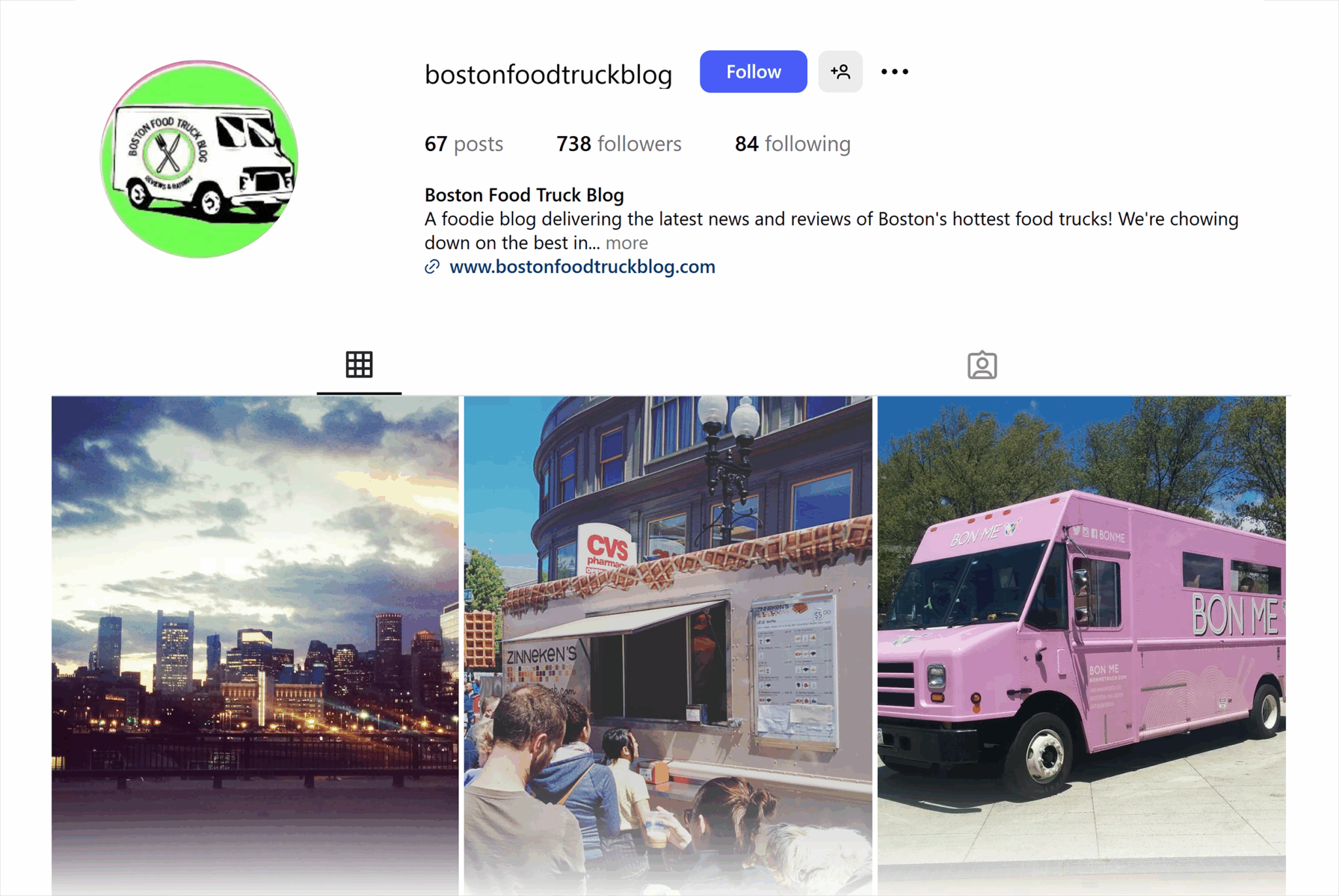
For example, if your business is a food truck in Boston, you would definitely want to get cited by this Instagram account that covers local food truck news. You’d want to tune in and answer any questions that come up as a result of this publicity. And, you’d want to remarket the publicity on your own channels.
The ultimate goal for any local business is to discover which content is the right match for which audience on which social channels. Even a single business may need to create and maintain a presence of a variety of social channels to reach different segments of its community. Opportunities to investigate include:
- TikTok
- YouTube
- Bluesky
- Nextdoor
- Threads
- Private servers, such as Discord
- Local community forums
- X
There’s no one-size-fits-all approach to social media marketing. Use tools like SparkToro for audience research, but validate with manual investigation of your city’s digital habits.
How AI and personalization are changing local buyer behavior
AI is reshaping how people discover and engage with local businesses. For local marketers, this shift brings new rules, but also new opportunities.
What local brands do need to onboard when it comes to how AI is changing local buyer behavior is that:
1. Search results are increasingly personalized
Local search has always been customized based on proximity. Now, personalization includes how people interact with AI tools like ChatGPT.
AI models process content as tokens—small bits of text like words or parts of words. To be included in AI-generated recommendations, your brand name must regularly appear alongside other relevant tokens.
For example: If a user asks, “Where can I buy vegan shoes in Boston?”—AI is more likely to mention your business if your brand (e.g., ShoeTown) has often appeared near phrases like vegan shoes and Boston in articles, citations, and other digital content.
This makes PR and content strategy more important than ever:
- Earn unstructured citations that include your brand + key phrases
- Be intentional about how your business is referenced online
- Build recognition around your niche and location together
2. Buyers now guide their own search experiences
Traditional search engines return static results. AI chat interfaces are interactive, allowing users to refine their queries until they get what they need.
In the past, if a shopper queried Google with something like “vegan shoes in Boston,” and they didn’t like the local pack results they received, there wasn’t a clear way to tell the search engine that their needs hadn’t been met. Accessing different results meant starting a search from scratch with altered language.

AI is quite different, because it has a memory component. The program maintains a record of the last query and its subsequent outputs can take that into account. This gives buyers more control and brands less. Instead of hoping to rank in a static list, your brand needs to become something people ask for by name.
Brand recognition, trust, and relevance are now more important than ever. When people search for you directly or mention your business in prompts, it increases your visibility in future AI responses.
3. AI raises the stakes for bad data
Despite its “intelligent” branding, AI is simply a mimic of the data it’s trained on. It doesn’t have expertise, empathy, or intuition—the qualities that define great customer service.
Local businesses already know how damaging bad data can be. A wrong phone number, broken map pin, or outdated hours frustrate customers and often lead to negative reviews. These reviews lower your average rating and turn away future buyers. It’s a cycle that can erode trust and hurt your reputation over time.
AI tools introduce a new layer of risk. When language models generate incorrect business details, like fake quotes, inaccurate pricing, or a made-up address, those errors are harder to catch. But customers still hold your brand responsible.
To protect your brand, the same vigilance you bring to your listings now needs to extend to your digital footprint. Keep your core information accurate and monitor how your business is being represented across AI-powered surfaces.
You can’t fully control what AI says. But you can limit damage by:
- Keeping your listings updated when your data (like addresses, hours, or phone numbers) changes
- Carefully monitoring your listings to discover and reject unwanted data edits
- Watchdogging your listings and competition to detect and report signs of spam
- Investing heavily in creating superior in-store customer experiences that drive loyalty and referrals so that future transactions depend as little as possible on third-parties like Google; by having a personal relationship with each customer, your brand can bring its community outside of Google’s “walled garden” and onto its own territory for excellent and memorable face-to-face experiences
This last point is especially relevant in the AI era. While you can make every effort to ensure that your own content and third-party references to your business information are accurate, you can’t do anything about the fact that AI is so error-prone. Instead, local brands need to double down on creating the kinds of in-person experiences that will be remembered and relied upon for future transactions, making it unnecessary for consumers to re-query AI the next time they need the same goods or services.
Your real-world reputation is now your best defense against digital distortion.
Digital foundations: Winning the local search game
Google remains the dominant force in local search. But in 2025, AI adds new layers of opportunity. To stay competitive, local businesses need to solidify their digital foundations while adapting to changing discovery methods.
Local SEO 2025 best practices
The essentials haven’t changed:
- Build a consumer-focused website that answers local search queries
- Maintain accurate Google Business Profiles for each location, department, or practitioner
- Complete all applicable GBP fields to encourage conversions
- Create structured citations on trusted third-party platforms
In 2025, with AI in mind, place added emphasis on:
- Reviews: AI tools are referencing review content more frequently. Make sure your business has high-volume, high-quality reviews on major platforms.
- Structured data: Given the tokenization model of AI, marking up all possible aspects of your website with appropriate Schema will be a smart move, because structured data is being used to train LLMs. Pay special attention to properties like areaServed to clarify your geographic coverage and hasMap to support your location data. These small details can improve both local rankings and AI-driven visibility.
- Unstructured citations: Audit where your local business is already mentioned online and seek more placements. Proximity between your brand name and relevant keyword phrases helps AI recognize and recommend your business.
Content for local relevance
In the past, the local SEO industry has placed a strong emphasis on developing a rich set of website pages that have been optimized for your hyperlocal audience. This hasn’t changed. Locally-optimized location landing pages, service area hubs, practitioner landing pages, department landing pages, real-time local inventory pages, reviews/testimonials pages, hyperlocal blog posts, and abundant contact information are all still foundational to local SEO success.
What to prioritize in 2025:
- Deepen and optimize your homepage depth
Clicks to organic search results are down. In March 2025, 4% fewer U.S. Google users clicked on organic search results compared to March 2024. At the same time, nearly 3% more searches ended without a click. This shift highlights a key opportunity: AI results often cite website homepages. That means your homepage needs to work harder to convert visitors who find you via AI summaries rather than traditional search listings.- Expand the number of questions your homepage answers clearly and directly
- Make sure important content is visible to AI crawlers (not buried in dropdowns or scripts)
- Think of your homepage as a landing page for AI-driven traffic
About 4% fewer US Google searchers clicked on organic results in March of 2025 vs. March of 2024. Meanwhile, nearly 3% more searches ended without a click in this same timeframe. However, AI results are frequently citing website homepages, meaning that you need to serve customers who reach you this way instead of via clicking on organic results. Expand the number of questions your homepage is answering right off the bat for consumers entering via AI. Make sure your content is visible to AI search engines. More on this in a moment.
- Secure citations on third-party publications
It’s no longer enough to publish content on your own site. In 2025, strategic PR outreach is essential. AI models pull training data from a wide variety of third-party sources, so your brand and experts need to appear in them. Look for opportunities to:- Be a guest on local or industry podcasts and YouTube channels
- Be quoted in blogs, news reports, or community roundups
- Partner with trusted publishers in your space
The more often your brand is cited alongside relevant topics, the better your chances of surfacing in AI results.
- Invest in YouTube
Video is dominating both traditional and AI-driven discovery. According to the State of Search Q1 2025 Report from SparkToro and Datos (a Semrush company), YouTube is now the #1 destination for traditional search and the second-most accessed domain in AI outputs. That makes 2025 the ideal time to:- Launch a branded YouTube channel with helpful, relevant content
- Appear as a guest on popular local or industry video channels
- Repurpose written content into engaging video formats
If you’ve been waiting to explore YouTube, this is your sign to move.
Voice + AI optimization

If you’re a seasoned local business marketer, some of your healthy skepticism about the future of AI may stem from having experienced some of the hype surrounding voice search failing to immediately pan out. In 2025, however, it’s clear that the more conversational tone of voice search-style queries is getting its second wind as users experiment with emergent AI products.
It’s critical to prepare your content so that AI can scrape it, and Will Scott has written a detailed tutorial on Why your best content is invisible to AI search engines (and how to fix it in 30 minutes). In brief:
- You can test your AI visibility by viewing your page source and searching it for your key selling points and main benefits
- If these phrases aren’t present in your raw HTML code, AI cannot see them
- AI systems want clear headings (H1 to H3), simple lists, FAQ markup code, and plain HTML that loads quickly
- AI overlooks Javascript widgets, dropdowns, content that doesn’t load unless a user clicks on it, and text in images that doesn’t include a description
Fancy website features simply won’t cut it in the AI era, and we recommend reading Will’s tutorial in full to access the special FAQ markup code he cites and to rethink your website content from an AI perspective.
Conversion UX for mobile

Google seems to have recently deleted some historic mobile-local statistics from their “Think with Google” site that SEOs have been used to citing for many years. Nevertheless, the overall local SEO industry narrative has long been that a mobile-first approach is most appropriate to local business marketing because the majority of local searches are conducted on phones. Necessarily, this requires the creation of website usability experiences (UX) that honor the needs of mobile users.

Running a free Google Search Console “Core Web Vitals” report is an excellent step towards improving the mobile UX your customers are having. Rolled out in 2020, Core Web Vitals are metrics Google uses to assess your website’s:
- Loading speed and performance (best practice is to keep load time under 2.5 seconds)
- Responsiveness to interactivity (best practice is that it should take 200 milliseconds or less for your website to respond to user interactions)
- Stability (the metric known as “cumulative layout shift” should be at less than 0.1%, meaning that your page’s layout does not tend to shift unexpectedly as it is loading)
In 2025, if your Core Web Vitals report is turning up serious problems with the usability of the experience you’re providing mobile consumers, it could stand in your way of becoming used and cited enough to become a dominant AI result. Access Google’s entire resource on improving your Core Web Vitals so that you know how to address and resolve mobile user roadblocks.
One of the most positive aspects of improving Core Web Vitals signals is that they are directly tied to conversion rate optimization (CRO). In a local context, a “conversion” can encompass many different user activities, including but not limited to:
- Clicks-to-call, clicks-to-website, and clicks-for-directions on your Google Business Profile
- Clicks from organic search engine results to your website
- Clicks within your website from page to page, filling out forms, using shopping carts, booking appointments, etc.
- Clicks on paid advertising, such as Google Local Service Ads
Getting Core Website Vitals right will necessarily improve the experience the public is having with your website, and this should improve CRO because roadblocks have been removed from the customer’s journey.
Review management and local reputation building
Reviews remain a cornerstone of local marketing and in 2025, they’re even more important. AI models increasingly use review content to summarize brand reputation in search results, making it critical to earn and showcase customer feedback thoughtfully.
How to earn more reviews
Here’s how to increase review volume without overwhelming your customers:
- Honor reviewer preferences: A recent GatherUp study shows most customers are willing to leave a review, but only if prompted. Here’s what to keep in mind:
- They expect an ask. Passive tactics don’t work. Send a direct request after a positive experience.
- Google is the default. Most reviewers prefer to leave feedback on Google over other platforms.
- Email works best. While some customers respond to text or in-app prompts, email remains the most preferred method.
- Remind them. What is the most common reason people don’t leave reviews or answer survey requests? They forget. A well-timed reminder can double your response rate.
- Adapt to generational behaviors: Different age groups interact with reviews in different ways:
- 45–60-year-olds leave the most reviews, but they’re also the most skeptical. Authenticity matters, so fake-sounding replies or boilerplate requests can backfire.
- 30–44-year-olds post across platforms like Facebook, Angi, Yelp, Trustpilot, and industry-specific review hubs. If this matches your audience, diversify your review strategy beyond Google.
- Younger audiences often leave fewer traditional reviews but may mention your brand in stories, comments, or tagged posts on social media, so monitor those too.
- Time your ask based on context: Avoid blasting review requests to everyone at once. Think about what your customer is experiencing before you hit “send”:
- After emotional or high-effort services: Give customers 24–48 hours to decompress. For example, after a pediatric dentist appointment or a moving service, people need a moment to catch their breath.
- When results take time: For services like landscaping, training, or medical treatment, wait until the customer has had a chance to evaluate outcomes. One month may yield better results than one day.
- After transactional or quick-turn experiences: Same-day or next-day requests work well for things like home repairs or local retail, while the experience is still fresh.
Here’s a great example of a review based on high-effort services:

Review acquisition isn’t about scale. It’s about steady, high-quality signals that align with how your customers want to engage.
How to showcase reviews across channels
Reviews shape your reputation and your visibility. Here’s how to get more value from the ones you earn:
- Photograph handwritten testimonials: Adds authenticity and builds trust. Post them on your website, GBP, and social channels.
- Create testimonial videos: Use a free tool like Canva to turn handwritten notes into a short slideshow. Post across all major platforms, including YouTube.
- Use reviews in advertising: Incorporate them into PPC ads, radio spots, or podcast scripts to increase credibility.
- Film customer interviews: Oral testimonials are powerful. Post them on your website, GBP, and social accounts.
- Embed reviews on product/service pages: Show positive feedback next to offerings to drive conversions.
- Re-share positive social mentions: A great comment on Instagram or Reddit is still a review. Share it, quote it, and celebrate it.
How to use social media to show you’re part of the community

Social media is one of the best ways to show that your business is active, accessible, and part of local life. Channels like Instagram, TikTok, and Facebook let you regularly highlight your involvement, values, and personality.
Use your posts to show that your business is:
- Open and engaged with customers
- Participating in local events and causes
- Introducing new ideas, services, or offerings
- Listening to community feedback
- Celebrating local wins and recognition
- Staffed by real people with real stories
One common misstep? Forgetting to emphasize your location. Whether you’re a neighborhood bakery or a destination B&B, always include geographic context in your posts and ads. Localization builds familiarity and it helps social platforms understand who to show your content to.
Check out these excellent social media resources and opportunities for local businesses:
- TikTok
- TikTok has launched a $1 million ad credit program for US small businesses in 2025.
- This comprehensive tutorial on TikTok advertising will help you understand whether the platform is a good fit for your brand, and the ad credit program could help you experiment with finding your voice in this busy space.
- TikTok ads feature robust geo-targeting options by country, region, state, city, zip code, etc. in many nations.
- TikTok tends to reward content that feels authentic and unpolished and can be a good playground for creative brands that aren’t afraid to tell quirky stories.
- Meta
- Meta’s properties, Facebook and Instagram, offer posting and advertising venues that can feel a little more mature in contrast to TikTok.
- Instead of emphasizing quirks, local businesses can focus on feel-good community stories with good success on these platforms.
- Meta-based ads offer fairly robust geo-targeting options by country, state, province, city, congressional districts, and zip codes.
- Reddit
- Reddit also allows the creation of ad groups that target location and demographics.
- It’s important to understand, however, that the social aspect of Reddit is notoriously averse to unpaid posting that feels like advertising.
- Influencer collaboration
Building your own following takes time. Shortcut the process by:
- Identifying local or industry creators with engaged audiences
- Reaching out for sponsored collaborations
- Always disclosing paid partnerships
Even one good video from a trusted local voice can drive new business while you grow your own social channels.
Offline + online synergy: Ground game marketing in a digital age
We’ve already covered the importance of earning unstructured citations to expand visibility in AI-driven results. Now, let’s look at how multi-location businesses can build local trust—even when corporate leadership is remote.
How enterprise brands can localize authentically
Smaller businesses naturally build personal connections because owners and staff live in the community. Enterprises don’t have that built-in advantage, but they can close the gap with a few intentional strategies:
Invest in local events and sponsorships
Assign staff at each location to:
- Identify relevant community events, nonprofits, and school initiatives
- Sponsor or participate to demonstrate your brand’s commitment to the area
Empower in-store staff to to build media relationships
Train employees to:
- Share positive brand stories with local reporters and bloggers
- Build relationships with hyperlocal publishers and community influencers
- Position the business as a reliable source of local news and human interest
Use QR codes and NFC for storytelling
Move beyond discount coupons. Link physical touchpoints (like flyers or signage) to:
- Videos about your brand’s community work
- Stories that show your business’s impact beyond a single location
This helps customers feel good about supporting your local branch and the brand overall.
Local ads and geotargeting strategies that convert
In competitive markets where organic visibility isn’t enough, local advertising can help fill the gap. Below are two proven strategies to target high-intent customers and measure local campaign effectiveness.
Google Local Services Ads (LSAs) and their 2025 updates
Google’s Local Services Ads (LSAs) remain a strong option for service-based businesses. If you operate in one of the following sectors, your business is likely eligible:
- Home services
- Business services
- Health services
- Educational services
- Care services
- Wellness services
- Beauty services
- Automotive services
These listings display with trust-building labels like “Google Verified” or “Google Screened,” and Google is currently offering ad credits to encourage new adoption.

Recent changes to be aware of:
In April 2025, Google updated its Terms of Service for LSA participants:
- Google now reserves the right to use, modify, and analyze all content in your LSA profile—including recorded customer phone calls.
- Advertisers must comply with these terms or risk removal from the LSA program.
- Google may reuse your LSA content across other Google products and services.
Watch this space: These TOS changes are still evolving. If you operate in a sensitive or regulated industry, it’s worth reviewing the fine print and monitoring for future changes.
Advanced geofencing and footfall attribution
Proving ROI from local ads can be tricky, but foot traffic attribution is getting more sophisticated. Whether you’re using Google, Meta, or another platform, here are some tools and techniques to understand whether your campaigns are actually driving in-person visits:
- Anonymized mobile tracking
- Video camera tracking
- Infrared sensors
- Thermal sensors
- Pressure mats
- WiFi connectivity engagements
- Click counters
- Manual tallies
Vendors like GroundTruth, SafeGraph, and WebFX offer these services with varying levels of complexity and cost. Choose the right provider based on your location size, tech stack, and customer flow.
Local marketing KPIs that matter in 2025

As AI surfaces replace traditional SERPs and click-through rates continue to drop, marketers need to rethink how they define success. Metrics once dismissed as “vanity,” like impressions, views, and engagements, are becoming essential signals of local visibility.
Take top-of-funnel efforts. The goal isn’t just driving traffic anymore. It’s reaching the right people in the right context, whether that’s through a podcast, a LinkedIn video, or local influencer content. These touchpoints may not generate immediate clicks, but they build brand awareness that pays off later.
As Rand Fishkin recently noted, marketers are increasingly using impressions, views, and engagement rates as proxies for awareness and reach. Mid-funnel KPIs then capture how that awareness converts, through branded search volume, direct visits, and eventual conversions.
The key shift: Local marketing success in 2025 isn’t just about ranking. It’s about showing up where your customers pay attention and being memorable when you do.
As search behavior shifts and AI changes the visibility landscape, it’s more important than ever to focus on KPIs that connect actions to outcomes. Below, we break down key metrics by funnel stage, so you can better track performance across the full customer journey.
1. Top of funnel: build visibility and demand
Focus on visibility and brand awareness across search and discovery platforms. These metrics help you understand how well your campaigns are capturing attention:
- Branded search volume
- Local search impressions (Google Business Profile, AI assistants, social media)
- Social media reach and video views
- Website homepage visits from AI-sourced entry points
- Earned media mentions
2. Mid-funnel: drive intent and engagement
This is where prospects start evaluating you more closely. Optimize your profiles, content, and calls-to-action to increase engagement:
- Clicks-to-call from Google Business Profiles
- Direction requests
- Clicks to website or booking pages
- Contact or quote form submissions
- AI snippet mentions (where visible)
3. Bottom of funnel: convert and prove ROI
When it’s time to convert, focus on metrics that tie directly to business impact. These KPIs help you measure the success of both online and offline conversions:
- Completed bookings or appointments
- In-store purchases or transactions
- Loyalty sign-ups or account creations
- Repeat visits (via CRM or loyalty programs)
- Foot traffic attribution (via geofencing or sensors)
Use blended attribution models to measure how online campaigns contribute to offline conversions. Combine UTMs, call tracking, surveys, and limited-time offers by location to isolate campaign impact.
Setting benchmarks by vertical and location
Setting realistic goals requires relevant benchmarks. Here’s how to build yours:
- Use a framework like SMART Goals. This acronym stands for Specific, Measurable, Achievable, Relevant, and Time-bound, and is meant to give you a practical set of boundaries to work within.
- Analyze your competitors to discover their strengths and weaknesses so that you have a baseline for comparison.
- Identify your own strengths and weaknesses and pick an area in which you believe you can achieve improvement with a campaign.
- Implement your campaign.
- Measuring success with tools.
You can read more about SEO benchmarking best practices in How to benchmark your SEO performance in 2025.
Local businesses have vertical- and location-based opportunities that are sometimes overlooked by remote brands. These include:
- Net Promoter Score (NPS): Track customer satisfaction and likelihood to refer. This is especially useful in industries where trust is hard to earn.
- UTMs on Google Business Profile: Add tracking to booking links, menus, or website URLs to measure engagement by location.
- On-the-ground changes: If you run a physical business, test environmental improvements (e.g., shade tents for a food truck) and track their effect on sales or mentions.
The more you tailor benchmarks to your business model and community, the more meaningful your metrics become.
12 local marketing mistakes to avoid
These common errors can seriously damage trust and visibility. Avoid them to stay competitive in your market:
- Not tracking local marketing KPIs Make the switch now to caring again about impressions, engagements, and views.
- Failing to build real local relationships: Your locality and 1:1 connection to real people is your greatest advantage over remote brands. Be as present as possible to your customers and your community.
- Over-relying on paid ads without organic investment: Paid visibility means being dependent on third parties. Invest in your own website so that it is the next-best-thing to a human customer service pro at your business. Build your site for customer use from the ground up.
- Using stock images instead of real local visuals: Branding is going to mean more and more in the coming years. Start creating a distinctive presence now with authentic images of your own business, staff, amenities, and surroundings.
- Failing to localize at the neighborhood or micro-market level: Unless you’re in a very small town or rural area with few local resources, be sure you’re creating content for distinct communities. Don’t treat “Los Angeles” as one big campaign. Connect with customers in Venice and Van Nuys as unique centers.
- Over-automating customer interactions at the cost of authenticity: So many brands are making the mistake of thinking they can replace their public-facing staff with AI. It’s a brand reputation disaster. Avoid it. Customers want to be served, not handled.
- Relying on outdated directory tactics or spammy citations: Avoid low-quality directory spam. Stick to authoritative platforms. And make sure your NAP (name, address, phone) info is accurate everywhere—especially if AI models are indexing that data.
- Overlooking the role of local influencers and creator partnerships: Even niche businesses can often find creators with influence in their location or industry. A single mention by the right person can be a major gain for your business.
- Using generic schema markup instead of service-area-specific structured data: Many businesses apply generic schema or forget to use areaServed, localBusiness, and hasMap markup per location, weakening local visibility in SERPs and AI assistants alike.
- Underinvesting in real user-generated content (UGC): Customers trust photos, videos, and reviews from other locals far more than polished brand assets. Failing to proactively request and repurpose UGC is a missed trust and SEO opportunity.
- Using the same copy across all local landing pages: Avoid publishing landing pages that don’t offer a customized, guided experience to consumers. Highlight what is of unique value about each location or service area.
- Ignoring community engagement because “it’s not scalable”: Multi-location enterprises should consider employing branch-level staff to engage with communities in an authentic way.
Track, optimize, and win in Google and AI search from one platform.
Next steps: Strengthen your local visibility where it counts
Local marketing in 2025 isn’t about choosing between search, social, or AI. Brands need to show up across all of them in ways that build trust and drive action.
As search behavior shifts and AI reshapes discovery, focus on:
- Building a homepage that answers real customer questions
- Earning reviews that reflect the full customer experience
- Getting cited across third-party sites, creators, and local media
- Optimizing your content for both people and machines
Success won’t come from a single channel or quick win. It’ll come from consistency—building a recognizable presence in the places your customers already rely on to find, evaluate, and choose local businesses.
Ready to see how your local presence stacks up? Start with a full audit of your search, social, and AI visibility.
Explore more on
Editorial disclosure
Search Engine Land is owned by Semrush. We remain committed to providing high-quality coverage of marketing topics. Unless otherwise noted, this page’s content was written by either an employee or a paid contractor of Semrush Inc.
About the author


