The true cost of reactive SEO (and how to escape it)


Reactive SEO is the cycle of addressing problems only after they’ve already hit your bottom line: responding to traffic drops, algorithm impacts, or technical issues only when they become urgent. It’s the opposite of proactive SEO, where you’re monitoring performance, testing strategies, and optimizing continuously to stay ahead of changes before they cost you revenue.
But here’s the thing: reactive SEO doesn’t just drain your budget on emergency fixes. It quietly erodes opportunity cost, brand visibility, and your team’s ability to focus on growth.
And the landscape has changed. From 2020 to today, search has become drastically less forgiving. You could once make a few optimization fixes and coast for months; now, Google runs thousands of search quality tests and algorithmic evaluations each year. In an environment that volatile, one-time optimization simply doesn’t hold.
Even sophisticated organizations aren’t immune. HubSpot’s 70-80% organic traffic decline is a reminder of how reactive strategies fail. Their reactive content strategy around loosely related topics left them exposed when Google began prioritizing depth and topic expertise.
This isn’t an isolated incident. This pattern appears across industries, with financial consequences that compound far beyond initial traffic losses.
The arrival of AI Overviews and Google’s March 2024 algorithm update have fundamentally altered competitive dynamics, making the gap between proactive and reactive teams even wider. Organizations maintaining proactive SEO foundations can reduce monthly ad spend by 45% while maintaining lead volume. Meanwhile, reactive organizations become more dependent on increasingly competitive paid advertising auctions.
In this piece, we’ll break down the hidden costs of waiting to act—from revenue you’ll never recover to the compounding effect of falling behind competitors—and show you how to build a proactive SEO system that protects and grows your search presence.
The hidden costs of reactivity in SEO
Reactive SEO rarely appears as a single catastrophic failure. Instead, it compounds quietly, eroding value across multiple dimensions before teams even realize what they’ve lost.
Visibility decay happens in silence
Search performance often deteriorates gradually. Rankings slip. Impressions flatten. Brand visibility contracts while internal dashboards still show reassuring averages because the decline is slow and distributed. Most teams only notice when cumulative loss becomes large enough to trigger discussion—which is usually too late. Meanwhile, competitors fill the gaps, strengthen their authority signals, and expand their share of intent.
Built for how people search today. Track your brand across Google rankings and AI search in one place.

A wedding venue example from 39 Celsius illustrates how silent this decay can be. A routine CMS update removed Schema markup across hundreds of pages without triggering alerts. Google gradually lost understanding of core business information, and the site began dropping for thousands of local keywords. The decline looked sudden when the team finally saw it, but the erosion had been happening quietly for weeks while competitors captured local demand.

Opportunity loss is invisible until it’s permanent
When you’re constantly firefighting, you miss the moments that matter. Search behavior, SERP surfaces, and AI-driven results evolve quickly. When teams don’t monitor these changes proactively, competitors claim emerging visibility before the opportunity even appears in analytics.
HubSpot demonstrates this pattern at scale. As The Digital Bloom reported, expanding content into loosely related topics diluted their core authority in inbound marketing and CRM. When Google’s March 2024 update emphasized depth of expertise and E-E-A-T signals, HubSpot lost 70–80% of its organic visibility. The loss didn’t happen at the moment of the update—it began months earlier, when topical focus started drifting and opportunities for reinforcement went unclaimed.

If a mature organization with deep marketing expertise can experience a 70–80% decline, no organization is immune to reactive SEO failures.
Operational inefficiency becomes the culture
Reactive work patterns shift how teams operate. Instead of building strategic initiatives, teams spend most of their time addressing legacy issues, responding to sudden drops, or managing internal escalations. Firefighting becomes the routine, leaving limited capacity for experimentation or long-term improvements. Innovation slows, and even well-planned roadmaps fall behind because urgent fixes dominate attention.
Data blindness makes you confident at exactly the wrong time
Most SEO reporting reflects the past, not the present. Lagging indicators can make performance appear stable long after user behavior, competitive positioning, or SERP features have changed. In reactive environments, decisions rely heavily on these delayed metrics, creating a false sense of security. By the time a decline becomes visible, competitors may already be several cycles ahead.
Brand trust erodes with every broken experience
Users experience declining quality long before it shows up in rankings. Outdated pages, inconsistent messaging, missing structured data, and broken internal links quietly weaken trust. Small friction points accumulate, shaping how users perceive the brand and its reliability.
The compound cost is the real threat
Reactivity rarely causes a single failure, but it creates conditions where issues reinforce one another. Technical debt accelerates visibility decay. Drifting topical focus increases opportunity losses. Lagging data worsens decision-making. Over time, these compounding effects make recovery slow and resource intensive.
What happened to Casual demonstrates how reactive decisions can evolve into systemic vulnerability. UserP’s analysis showed that copying competitor templates and rapidly publishing AI-generated pages created short-term gains while weakening long-term trust signals. A later manual review resulted in a 99.52% loss of organic visibility. The penalty was sudden, but the underlying risk accumulated quietly over months of reactive choices and insufficient differentiation.

The long-term impact is significant: reactive SEO doesn’t just cost you today’s rankings. It weakens your ability to compete tomorrow.
These patterns happen because most organizations are set up in ways that make reactive SEO almost unavoidable. To fix the outcomes, you first need to understand the root causes.
Why SEO teams fall into reactive mode
Reactivity is the result of how SEO work is structured, measured, and prioritized.
Most teams work on short reporting cycles. Weekly or monthly updates create expectations of visible changes, pushing people to respond to small ranking shifts before understanding their cause. This cadence encourages tactical adjustments. It also reduces the time available for strategic planning.
Executive pressure adds another layer of reactivity. Leadership often wants fast results, so teams optimize for the metrics that move quickly—rankings, clicks, or CTR—instead of deeper signals like topical authority, entity strength, or demand shifts.
Department silos compound the issue. SEO teams may not be aware of product updates, brand changes, or shifts in customer language that influence search behavior. As a result, teams react to traffic movement without understanding the upstream cause.
And even with the best intentions, traditional monitoring often lags behind today’s search environment. AI Overviews, SGE, ChatGPT citations, and SERP feature volatility can reshape visibility overnight. If teams rely only on rankings and sessions, they’re reacting to the past.

Ultimately, incentives drive behavior. Teams are rewarded for fixing problems quickly, not preventing them. This creates a culture where speed becomes more important than stability—and where reactive responses replace long-term planning.
Once teams fall into this reactive cycle, the costs don’t stay operational. They compound into significant financial and competitive disadvantages.
The opportunity cost of delay in SEO
The cure for reactivity isn’t faster responses—it’s better foresight. Every month spent in reactive mode doesn’t only cost rankings. It slows momentum, reduces competitiveness, and increases the cost of recovery.
Content freshness is one of the first areas to suffer. When teams fall behind on updates, topical authority decays. Google increasingly rewards relevance signals tied to current expertise, so delayed refresh cycles create long-term disadvantages. You lose ground and give competitors more time to strengthen their position.
The same is true for technical foundations. Issues with crawling, indexation, or site speed become more expensive the longer they linger. A team that waits six months to resolve crawl budget waste loses six months of potential discovery, link acquisition, and visibility gains that competitors continue to build on.
The financial impact of delay is well-documented. Liberty Marketing’s analysis of a financial services client, based on reported data, found that pausing SEO investment led to an 80% drop in organic leads over three years—equal to £832,200 in lost annual revenue. The decline began slowly, but the longer the issues persisted, the harder and more resource-intensive recovery became.
Industry research also shows a recurring pattern: Companies facing downturns often reduce SEO budgets just as performance begins slipping. This accelerates the decline. Reduced investment slows refresh cycles, delays technical fixes, and limits monitoring—which creates even larger visibility losses that require even more resources to repair later. This creates a feedback loop where declining performance justifies further cuts.

Competitive displacement makes delay even more costly. Mark Celerate’s research suggests that roughly 80% of lost organic visibility is ignored long enough that it can be permanently captured by competitors. Once they acquire the clicks, user behavior data, and engagement signals, they can strengthen their authority—making it significantly harder for the original site to reclaim those positions.
Delayed action often pushes organizations into paid acquisition at the worst possible moment. As organic visibility weakens, teams rely more heavily on paid search to replace lost demand. But CPCs can rise 15–20% annually in competitive B2B environments, creating a widening cost gap. Research from Higher Visibility shows that proactive organizations reduce monthly ad spend by up to 45% while maintaining lead volume. Reactive organizations see the opposite trajectory, paying more for each click while competitors capture free organic traffic.
And then there are recovery costs. Emergency responses require intensive resources, specialized expertise, and longer timelines—often with no guarantee of full restoration.
Proactive SEO behaves like compound interest. Early action builds resilience, domain strength, and visibility momentum. Reactive SEO spends those same resources later, but applies them to addressing symptoms rather than building advantage. The difference doesn’t just show in rankings—it shows in revenue momentum that accelerates over time.
Avoiding these losses requires a fundamental shift in how teams approach search: from reacting to diagnosing to anticipating what’s coming next.
From reactive to predictive SEO
The best SEO teams aren’t reacting faster. They’re reacting less. Predictive SEO shifts the focus from diagnosing problems to anticipating them, using signals that highlight risk before performance declines.
At the center of this shift is trend modeling. Instead of waiting for traffic or rankings to drop, teams monitor leading indicators such as content decay scores, demand-pattern changes, SERP surface volatility, and emerging competitors gaining ground. These signals reveal risk weeks before it becomes visible in analytics.
Entity tracking plays a key role. As search engines rely more heavily on knowledge graphs, tracking how your brand is associated with topics, attributes, and entities highlights when relevance is strengthening or drifting. These subtle shifts often begin long before rankings follow.
AI visibility metrics are now essential. As generative systems shape discovery, teams can track citation frequency, snippet presence, and source attribution across AI-powered interfaces. These metrics help teams understand how their content appears beyond traditional SERPs.
Structured data forecasting closes the loop. By mapping schema coverage to SERP features, teams can predict which pages will capture enhanced results and which may remain invisible in developing search experiences.
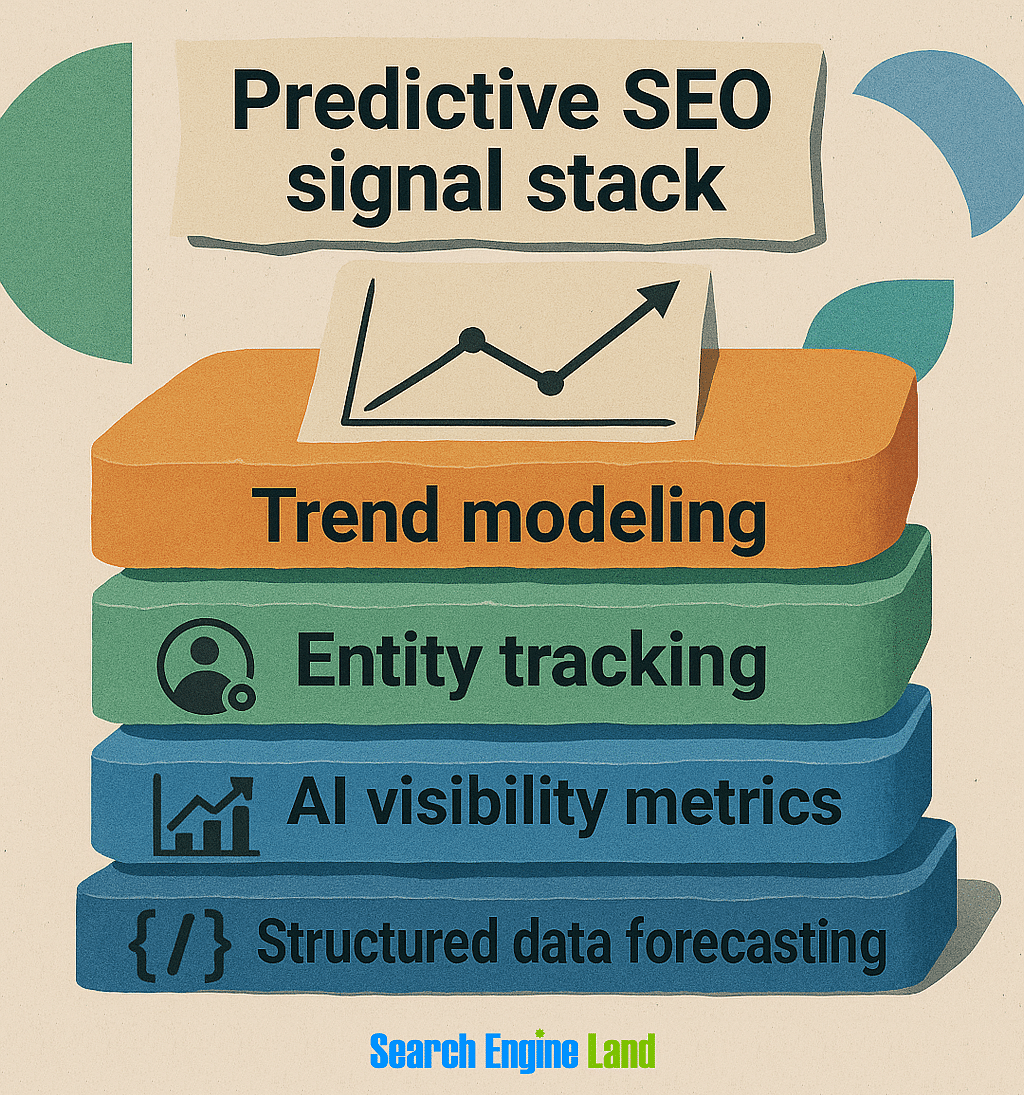
Together, these inputs build a predictive model of SEO health. This isn’t more work—it’s better timing. It shifts SEO from a cycle of reactive fixes to a process of anticipating change and acting before problems escalate.
But predictive SEO doesn’t work in isolation. To make these early signals actionable, teams need the right culture, workflows, and shared ownership structures in place.
Building a proactive SEO culture
SEO firefighting often feels productive in the moment—you patch the ranking drop, fix the indexing issue, and stabilize the dashboard. But reactive SEO doesn’t scale, and it doesn’t prevent the next crisis. A proactive SEO culture shifts the organization from damage control to continuous governance, where preventing problems becomes as important as resolving them.
The foundation is cross-functional visibility. Content teams should understand how topical authority can decay when updates slow down. Developers need to see how site speed, Core Web Vitals, and clean architecture influence crawl efficiency. Analytics teams must track leading indicators (schema coverage, internal link equity, page freshness) not just traffic and rankings that report what already happened.
Predictive dashboards support that shift. Instead of highlighting drops, they surface early signals: emerging content decay, growing structured data gaps, or technical regressions that may affect crawlability. When teams start monitoring what predicts performance rather than what reports it, they move from reacting to anticipating.
Incentives matter just as much as tools. If teams are rewarded only for traffic spikes, they will optimize for volatility. Instead, recognition should be tied to preventive outcomes: consistent refresh cadence, maintained technical health scores, stable schema coverage, and expanded topical depth. These behaviors create resilience, a far more valuable asset than isolated wins.
This cultural shift is supported by what high-performing organizations demonstrate in practice. When teams invest consistently in content quality, technical foundations, and structured data, every improvement reinforces the next. 39 Celsius documented this with a custom mouthguard manufacturer: six months of consistent SEO investment was associated with a 400% ROI increase, with each content improvement contributing to better crawlability which enhanced indexation and improved topical authority. Momentum didn’t come from working harder; it came from working predictively.
The math is pretty compelling. Google processes over 8.5 billion searches daily, with 15% being completely new queries. Proactive organizations position themselves to capture these emerging opportunities through systematic content coverage and technical readiness.
Technical readiness is another cultural differentiator. Organizations that maintain clean architectures and structured data systems can build long-term advantages that reactive teams struggle to match. OnCrawl’s research shows how deferred technical fixes can create crawl waste and index bloat that compound over time because good technical SEO makes content marketing more effective. In contrast, teams with proactive technical processes maintain efficient crawl budgets, faster indexation, and more stable ranking signals: advantages that accumulate month after month.

Ultimately, this isn’t a tactical shift. It’s a cultural one. Proactive SEO requires buy-in across functions, shared responsibility for visibility, and a mindset that values prevention as much as recovery. When organizations treat SEO as infrastructure rather than intervention, they stop playing defense and start building durable, compounding organic growth.
Once this cultural foundation is in place, the next step is operational: giving teams the tools to detect risks earlier and act before issues escalate.
The role of AI in ending reactive SEO
AI is transforming SEO by reducing the conditions that make reactivity inevitable. It doesn’t replace SEO teams. It helps them improve by automating the monitoring, detection, and analysis tasks that previously created blind spots. Instead of waiting for traffic drops or ranking changes, AI surfaces weak signals long before they show up on a dashboard.
Anomaly-detection systems (such as Botify) can flag unexpected shifts in crawl behavior, internal link patterns, or user engagement in real time. What previously required manual analysis can now surface as an alert: a sudden spike in orphaned URLs, a decline in entity associations, or a change in how Google interprets a category. These early warnings give teams time to intervene before performance declines.
AI also expands visibility far beyond traditional rankings. As generative engines shape discovery, AI systems can monitor citation frequency, source attribution, and presence in AI Overviews across thousands of prompts. Manually tracking this is hard at scale, which is why automation is becoming essential. Platforms like Semrush One are beginning to bridge this gap, offering AI-search visibility tools that track brand presence across LLMs and emerging AI surfaces. This type of monitoring helps teams understand how their content appears in new discovery environments.
Advanced entity drift detection gives teams another layer of protection. Machine learning can flag when your brand’s relationships in the knowledge graphs begin shifting—whether from new competitors, changed user behavior, or algorithmic reinterpretation. These are the earliest signals of relevance risk.
AI-powered structured data analysis helps teams prioritize fixes before they affect eligibility for SERP features or AI surfaces. Predictive models can identify which schema gaps matter most and which pages should be optimized first.

The practical benefit is operational: AI takes on the constant vigilance required to stay ahead of change. Teams move from scanning dashboards weekly to receiving targeted alerts that guide their next priority. It’s not about automating SEO but about automating awareness.
Ultimately, AI makes predictive SEO possible at scale. It gives teams the capacity to detect weak signals early, understand how their content is interpreted across new interfaces, and stay ahead in an increasingly dynamic search ecosystem.
Discover how you appear across LLMs like ChatGPT, Perplexity, and Google AI, and get AI-powered strategy recommendations.
The P.R.O.B.E. framework for proactive SEO
A proactive SEO practice isn’t about reacting faster but about building systems that reduce the likelihood of crises. The P.R.O.B.E. framework gives teams a practical way to shift from emergency response to durable, forward-looking visibility.
P: Predict shifts before they hit
Use entity analysis, SERP behavior tracking, and competitive intelligence to surface weak signals early. Many visibility losses can start weeks before they appear in analytics.
R: Review gaps monthly
Audit content freshness and search intent optimization, technical health, and schema coverage on a fixed schedule. Organizations that track leading indicators can prevent many issues from escalating into ranking drops.
O: Orchestrate cross-functional workflows
Align dev, content, product, and analytics teams around shared visibility goals. When SEO is embedded into roadmaps and releases, you eliminate the hidden risks that cause reactive cycles.
B: Build automated monitoring
Set up alerts for crawl changes, Core Web Vitals regression, indexing anomalies, and competitor moves. Early detection can help prevent the cascading failures that make recovery long and expensive.
E: Evolve through iteration
Treat SEO as infrastructure, not intervention. The same way technical debt compounds, proactive improvements can compound as well—reinforcing authority, crawl efficiency, and long-term resilience.
Reactive organizations spend months (sometimes longer) trying to recover from issues proactive systems could have prevented. Preventive monitoring reduces the likelihood of major crises, while recovery timelines often stretch across multiple update cycles. The difference isn’t the team’s skill. It’s the structure supporting the work.
If you’re constantly responding to algorithm updates or traffic drops, it’s a sign your systems are lagging behind. Durable growth comes from systems that anticipate change, not scramble to respond to it.
If you’re ready to shift from reactive to proactive, explore our guide on building an SEO monitoring dashboard that actually works.
FAQs
What is reactive SEO?
Reactive SEO is the practice of addressing problems only after visibility has already declined—such as responding to algorithm updates, traffic drops, or indexing issues after they appear in analytics. It relies on lagging indicators instead of early warning signals, which can make performance losses slower to detect and more resource-intensive to recover from.
How can I prevent reactive SEO?
You prevent reactive SEO by shifting to a predictive model:
- Use automated monitoring for crawl changes, technical regressions, SERP volatility, and AI Overview shifts.
- Run monthly audits of content freshness, entity alignment, and structured data coverage.
- Integrate SEO into development, product, and content workflows so potential issues are seen earlier in the process.
Proactive visibility comes from early detection, not faster reactions.
What are the costs of reactive SEO?
Reactive SEO creates compounding operational and financial losses. Teams face prolonged traffic decline, higher recovery costs, and long-term competitive displacement, since competitors capture the queries you lose and strengthen their authority. Organizations also become more dependent on rising paid acquisition costs, while internal teams shift more of their time toward reactive fixes instead of strategic growth.
Explore more on
Editorial disclosure
Search Engine Land is owned by Semrush. We remain committed to providing high-quality coverage of marketing topics. Unless otherwise noted, this page’s content was written by either an employee or a paid contractor of Semrush Inc.
About the author