Content pruning for AI search: When to remove, redirect, or consolidate pages
Discover key metrics for content pruning and decide whether to remove, redirect, or consolidate pages with our free decision matrix workflow.
Discover key metrics for content pruning and decide whether to remove, redirect, or consolidate pages with our free decision matrix workflow.

Google is allowing advertisers to gain more complete measurement and improve bidding performance with stronger first-party signals.

Microsoft said this is beginning to roll out in preview within Bing Webmaster Tools globally today.

Google Analytics is introducing cleaner source attribution and new filtering controls, for easier cross-channel performance analysis

Ever wonder how many sites are using a specific type of structured data element? Now you can know.

These features are rolling out to subset of website owners in the UK and will expand it to more in the future.
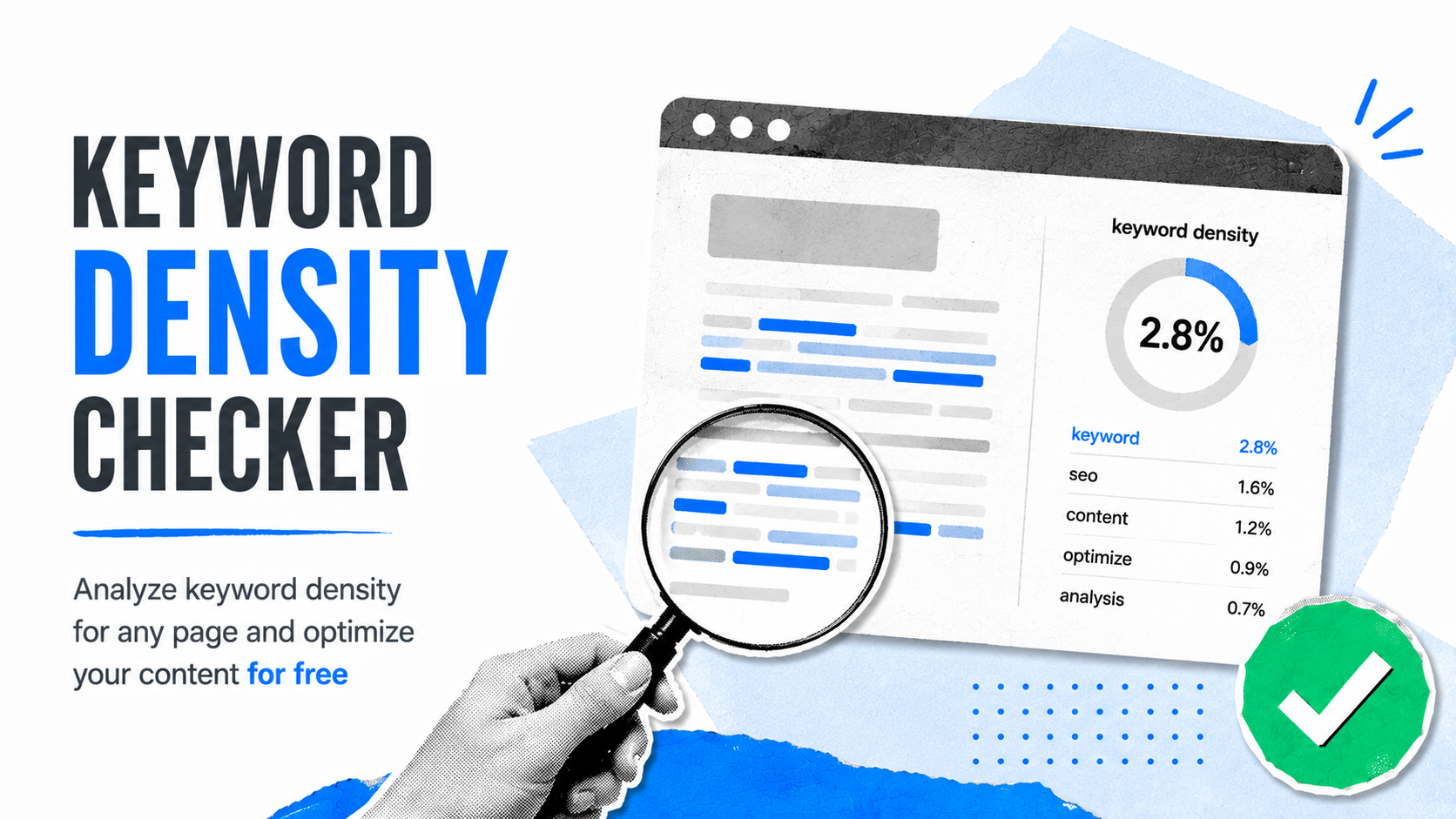
Is your content over or under-optimized? Use our free Keyword Density Checker tool to analyze a page for keyword count and density percentage.

AI visibility dashboards can’t answer the ROI question on their own. Here’s how to build a more credible GEO measurement model.

The Citation dashboard shows how your content is referenced in AI-generated answers across supported AI experiences.

You can now see in Google Analytics which AI tools drive visits and whether users from ChatGPT, Claude, or Gemini convert differently.

The first systematic analysis of Google's invitation-only enhanced publisher profiles on Discover, based on monitoring 46,926 publishers.

Google Ads may soon let advertisers manage tags in-platform, streamlining setup and reducing reliance on external tools.

Technical fixes alone won’t resolve weak relevance signals. Here’s how to identify and correct intent mismatches across your site.

AI search is creating new visibility gaps for brands. These metrics help you track presence, influence, and inclusion across platforms.

Developers can now access unified paid and organic conversion data programmatically, though the feature is still in limited alpha.

GA’s new Task Assistant helps advertisers quickly improve setup and data quality with guided, actionable recommendations.

Parameterized URLs bloat crawl paths, fragment attribution, and dilute link equity. Here’s a cleaner, scalable tracking approach.

These include citation share, grounding query intent, and GEO-focused recommendations.

Organic traffic down? Learn the 2026 two-surface content strategy: audit Google + AI search visibility, measure LLM citations, protect rankings, and grow authority.

Learn how to connect YouTube data, fix template issues, and customize dashboards for clearer, shareable performance insights.

A new Google Ads integration with Google Tag Manager could make conversion tracking faster to set up and less prone to errors.

Track how AI crawlers access your site, identify crawl gaps, and understand what content gets missed using log file data.

Google providing a single toggle and multi-source data capture promise more accurate conversion tracking with less setup for advertisers.

As data loss grows, brands are rethinking tracking. Explore when a server-based setup delivers cleaner data and stronger ad optimization.

Google’s new developer hub simplifies access to tools for automation, tracking and scalable campaign management.
Meta’s new Google Tag Manager template simplifies Pixel setup, making cross-platform tracking faster and more consistent for advertisers.

Learn how Google Search Console’s branded query filtering helps you track awareness, diagnose drops, and measure true SEO impact.

Bing now lets you click a query to view cited pages or a page to see its grounding queries, with multiple queries and pages linked together.

Master SEO data analysis: Identify spikes and drops in organic traffic, uncover root causes of, and make informed decisions with our detailed guide.

Google Search Console now shows how much traffic your site gets from branded versus non-branded search queries.

AI referrals drove stronger purchase intent, faster growth, lower average order value, and just 1.5% of organic revenue, new analysis finds.

Dive into Google Search Console's features and reports, plus how to navigate the tool like a pro, from basic setup to advanced SEO analysis.

New insights include total citations, average cited pages, grounding queries, page-level citation activity, and visibility trends over time.

As browser restrictions limit identifiers, PPC measurement relies more on redundancy, modeling, and inference than perfect tracking.

Relying on GA4 alone leaves AI SEO analytics lost in the Bermuda Triangle of measurement. Learn what’s missing – and what to track instead.
Sadly, it does not show you clicks, so you still have no idea what your click-through rate is from AI search results.

Track positions, monitor changes over time, and see how your site performs in search results.

AI-driven search is breaking last-touch attribution. First-touch analytics reveals SEO’s role in discovery, influence, and revenue.

Google’s new data transmission controls let advertisers fine-tune how ad and analytics data flows when user consent is limited.

Google’s new Google Cloud Tag Gateway integration makes first-party tagging easier to deploy and more resilient to privacy restrictions.