How to find and get SEO clients: 19 tips from an agency owner

If you want to scale your SEO agency or start your journey as a freelancer, you have to find SEO clients.
But clients don’t just fall into your lap.You need a solid system for generating new leads and turning those leads into clients, which allows you to consistently work on new SEO projects.
In this guide, learn how to find and win SEO clients, including strategies for acquiring clients and how to grow your SEO career.
The SEO toolkit you know, plus the AI visibility data you need.

How to find SEO leads
There are many ways to get SEO clients, but here are some strategies you can implement right away.
1. Create SEO content
As an SEO consultant or agency, you need to focus on your own SEO. Converting qualified leads to clients who found you organically through your content is always easier than converting cold leads.
When potential clients find your content ranking high in search results, it helps build trust and credibility. The more valuable and informative your content is, the more likely potential clients will see you as the SEO expert they’ve been searching for.
To start, identify several target audiences that might benefit from your digital marketing services. Next, publish optimized articles educating potential clients on how they can grow their businesses with SEO.
Here’s an example from Digital Commerce Partners’ Banks guide under the Finance category. The guide outlines five digital marketing strategies tailored for banks. It’s built on the premise that most banking customers begin their journey by comparing financial institutions online, making a strong digital presence essential.

The outcome?
Digital Commerce Partners’ optimized guide for banks hit the Google front page and appeared in four SERP features.

2. Share your expertise on social media
If you strategically share your expertise, social media can be a goldmine for attracting SEO clients.
Pick one platform where your audience actively hangs out and start sharing your thoughts. It can be SEO best practices, industry trends, quotes, and thought-provoking posts that can help you establish yourself as a thought leader.
People are drawn to success stories and impactful case studies. They inspire and show what’s achievable through hard work and the right approach. Seeing others overcome challenges and achieve goals can motivate potential customers to seek expert advice from you.
For example, here’s a LinkedIn post sharing how the team at Digital Commerce Partners boosted the client’s organic traffic by 233%.

This post is just one example of how a success story can become a lead magnet and help get SEO clients on LinkedIn. You don’t have to go viral in order for this to work — this post landed a client with a six-month retainer to start.
3. Ask for referrals
After successfully completing a client project, ask them, “Is there anyone you believe would be interested in our services?”
You’ll have to be a salesperson for a while and get used to rejections. But it never hurts to ask, right?
Satisfied clients are great advocates for your business, and you’ll often see testimonials from happy clients in the best agency pitch deck examples.
Past clients have experienced the positive impact of your SEO work and are more likely to recommend you to businesses facing similar SEO challenges. A warm introduction eliminates the need to build rapport from scratch and helps you make the sales process smoother.
Remember, referrals can open doors to new SEO clients you might not have reached otherwise.
4. Attend networking events
Online and offline networking events offer many opportunities to connect with potential SEO clients. Networking events often attract a diverse range of professionals, including business owners, marketers, and decision-makers who may need SEO help or know someone who does.
Engaging in conversations at conferences or industry meetups can spark genuine connections with business owners struggling with SEO. Sharing your insights during discussions can position you as a trusted advisor and plant the seeds for future collaborations.
Effective networking isn’t limited to offline events. The online world offers a vast and powerful landscape for connecting with potential SEO clients. Unlike physical events with limited capacity, online SEO workshops and conferences allow you to connect with a much larger pool of potential clients worldwide.
The more people you meet and leave with a positive impression, the wider your reach will become.
5. Host local events to promote your business
Stepping outside the digital world lets you connect face-to-face with business owners and marketing managers who might need your expertise.
These events provide a platform to showcase your knowledge and problem-solving skills in a live setting. They create a space for open discussions and let you showcase your expertise in a friendly and approachable way.
Local meetups also foster a sense of community, allowing you to connect with business owners on a personal level and develop lasting relationships. As a result, you have a warmer audience for your future SEO client outreach. Additionally, events are often recorded and promoted online, helping expand your reach beyond the local area to attract new leads.
Traffic Think Tank co-founder Nick Eubanks used to host the technical SEO meetup in Philadelphia. It helped Eubanks connect with local businesses seeking technical SEO help.

Eubanks’ page has also ranked first for the local keyword “technical SEO in Philadelphia,” spreading the word about his capabilities to more potential clients.
6. Contact local businesses
Let’s imagine you want to get local SEO clients in New York. Where do you start?
Type any local business keyword in the search bar, such as “flower delivery NYC,” and open a few links from the third to fifth pages of search results. You can quickly assess websites with Semrush Site Audit to discover critical issues impacting rankings.
For example, running a quick site audit on this website immediately uncovered issues with a sitemap. Two pages were displayed by mistake in the sitemap and other essential pages might be excluded, which can negatively impact crawlability and indexability.
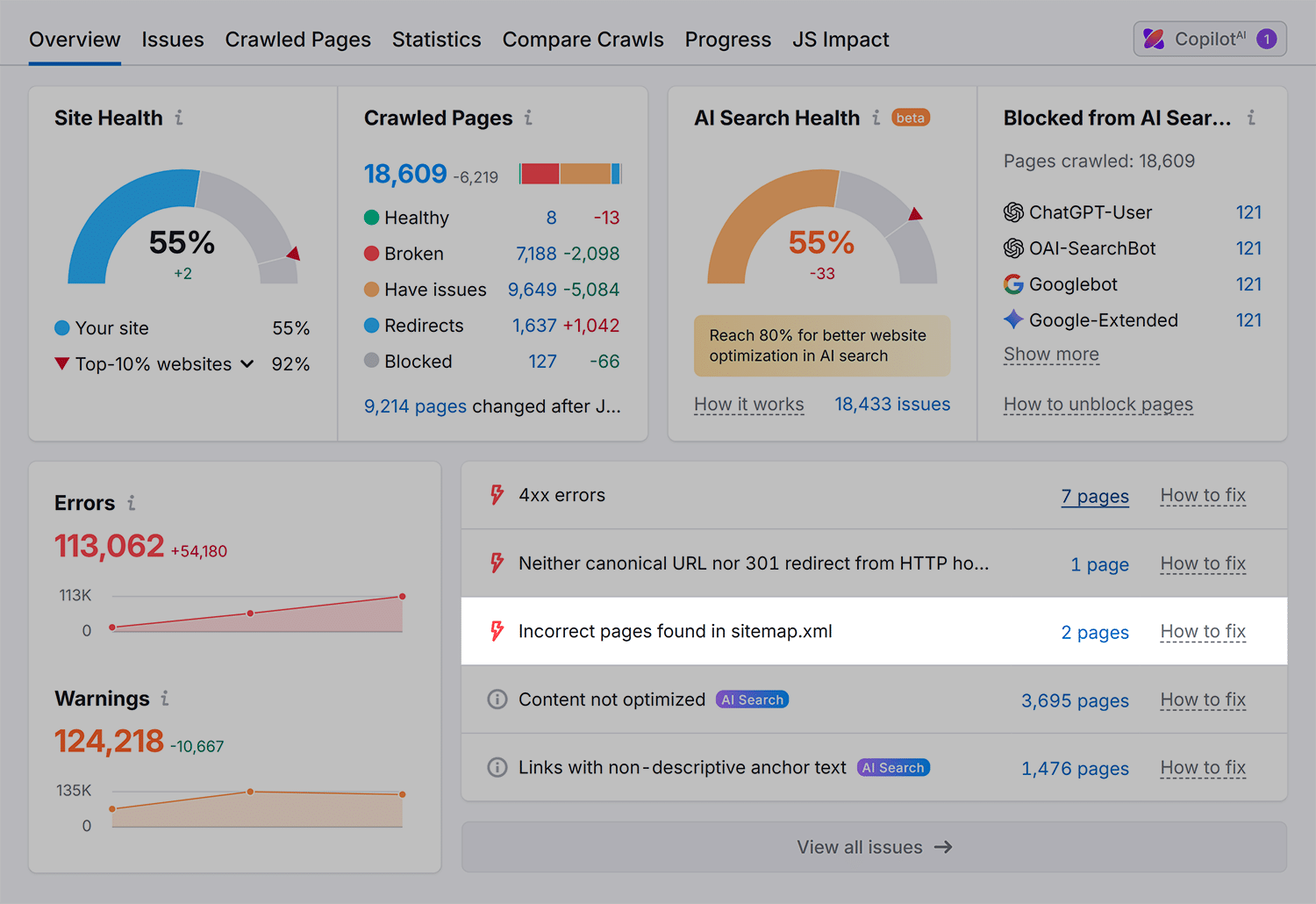
Contact these local businesses, share your findings, and offer your SEO help. They may be likely to listen to you because they’ve just witnessed your genuine interest in their success and your keen eye for optimizing their online presence.
They won’t see you as a salesman, but as a potential partner who understands their local market and can translate that knowledge into results.
Remember, many local businesses lack in-house SEO knowledge, which makes them prime candidates for your guidance. Don’t underestimate the power of a friendly conversation — it could start a long-lasting client relationship.
7. Join online groups and communities
Online communities let members share ideas, spread knowledge, and help each other. The deeper you engage in discussions, the more you’ll position yourself as a thought leader.
While exchanging ideas, look for businesses subtly mentioning their SEO struggles or frustrations. This is your chance to shine! You can reach out to your potential customers with personalized messages, addressing their specific SEO issues and explaining how you can help them.
Remember, building relationships is key. When you consistently provide valuable insights, you become a go-to SEO expert in the community, attracting potential clients already familiar with your capabilities.
For instance, if you join the Semrush subreddit, you’ll engage in a space where both SEO experts and newcomers come together to share advice, answer questions, and learn from each other.
8. Connect with your target audience on LinkedIn
Sending cold messages on LinkedIn is like blind fishing. You cast a net into an ocean, hoping to catch a specific fish without knowing its location.
Tailored outreach, on the other hand, is like spearfishing — targeted and efficient. It’s a much more pleasant experience for potential clients who probably have been bombarded with generic messages.
By leveraging LinkedIn’s advanced search, you can directly target marketing managers, business owners, and digital strategists — your ideal client base!
Craft personalized connection requests that highlight your SEO expertise and the specific pain points you can solve for their businesses. Don’t just connect, though. Engage with their content, leave insightful comments, and share valuable SEO resources.
Remember, it’s not about selling, it’s about establishing yourself as a trusted advisor.
As you become a reliable source of SEO knowledge, potential clients will naturally turn to you when they’re ready to invest in ranking higher in search results.
9. Find a strategic agency partner
Suppose you offer SEO services while your friend has a design agency. Why not team up to help each other?
You can significantly expand your reach when you find a complementary agency, like a web design firm or a content marketing agency. These partnerships allow you to tap into their existing client base, offering SEO expertise to businesses who might not have considered it before.
It’s a win-win scenario: You gain access to potential clients, while your partner can offer SEO help in addition to their services.
10. Utilize service directories
Clutch, Manifest, and Semrush Agency Partners are a few well-known service directories where you can list your agency.
More importantly, your potential clients can find service directories in organic search results while looking for a suitable SEO partner. This is where your profile should stand out — craft a compelling description of your SEO expertise, showcase past SEO case studies, and encourage satisfied clients to leave positive reviews.
Clutch and Manifest employ sophisticated search and ranking algorithms. Optimizing your profile with relevant keywords can increase your chances of being discovered by potential clients.
Start with local directories, like “SEO companies in Detroit” or “SEO services in Toronto.” These are low-competition keywords that can help your profile rank higher.

11. Use technology lookup software
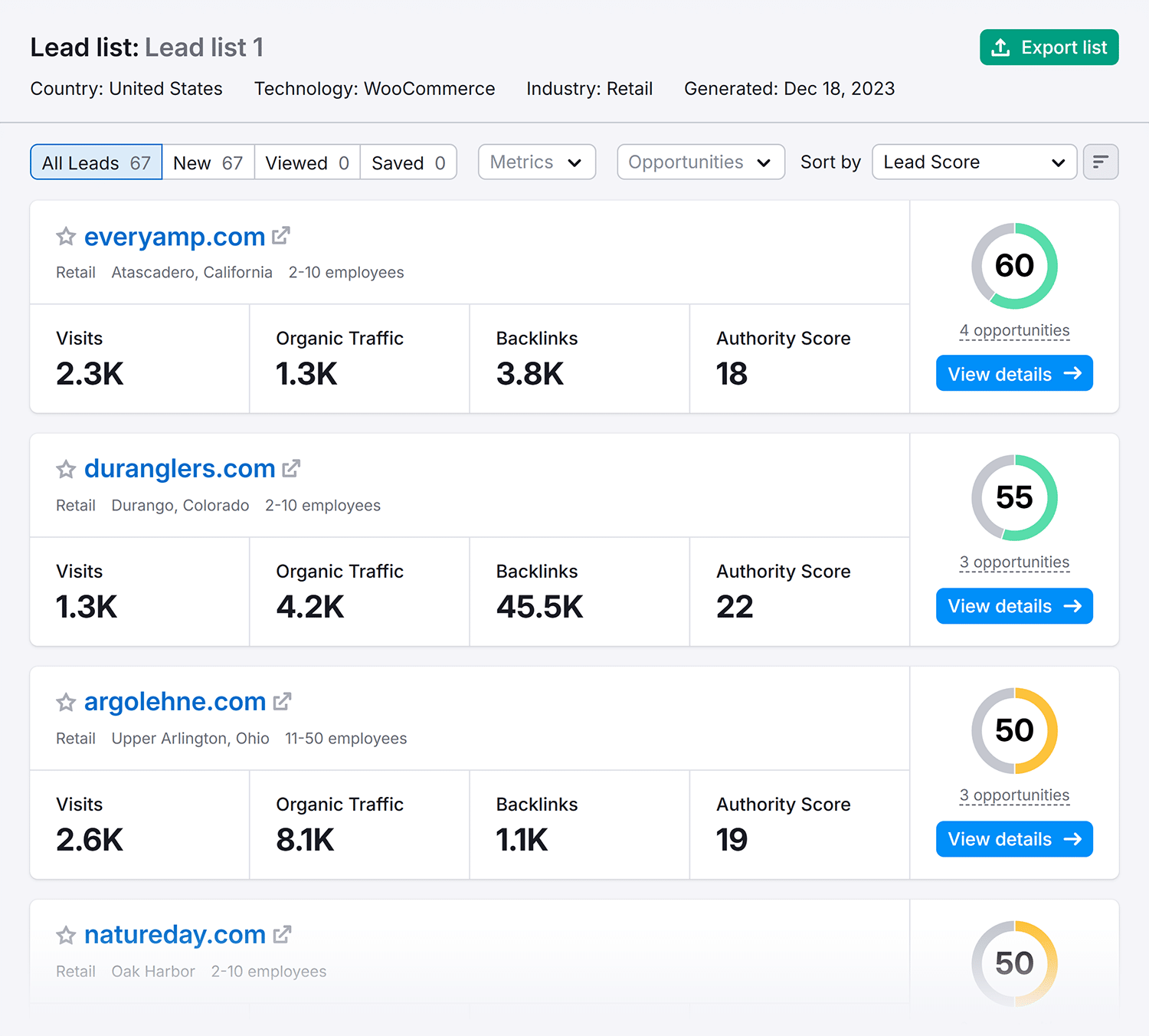
Tools like BuiltWith and Lead Finder make it easy to discover and qualify new business leads more efficiently. These leads are based on location and the technologies businesses use on their websites, helping you focus only on the most viable prospects.
In Lead Finder, simply select the technology and industry you want to target. An ecommerce-focused agency, for instance, could choose “WooCommerce” and “Retail” to pull up a list of retail sites built on that platform.
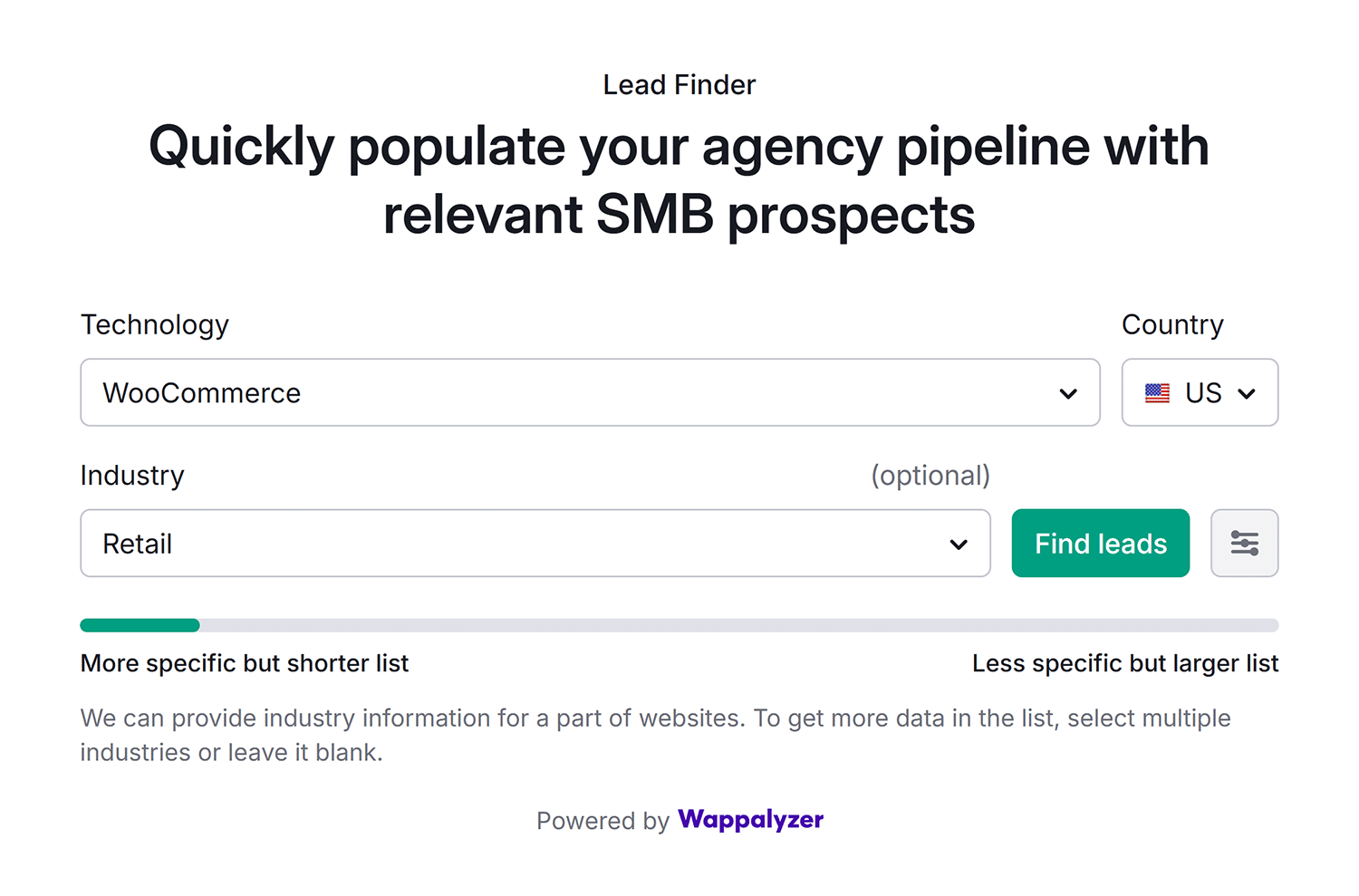
You can then review those sites for issues that fall squarely in your wheelhouse, approach those companies with tailored solutions, and work toward bringing them on as new clients.
12. Incorporate AI into your lead gen and sales process
Start by weaving AI into the parts of your process that slow you down the most if you want to find and close more SEO leads.
AI can speed up your SEO sales process. Drafting cold outreach emails with AI lets you personalize messages fast, so you send more of them without sounding generic. When done well, better outreach leads directly to more conversations with the right prospects.
Extract review data about your SEO leads products or services to spot reputation gaps. Use that insight to reach out with a real offer to improve their reputation or product positioning.
Once leads start coming in, use AI to summarize sales calls and surface real insights from those conversations. This makes follow‑ups clearer and keeps deals moving. AI can also coach reps, highlighting objections and suggesting ways to close more deals.
How to convert leads and get SEO clients
Attracting SEO leads is a crucial first step, but converting those leads into paying clients is where the real magic happens.
This section details how to convert prospects into loyal SEO clients. It covers everything from optimizing your website for conversions to crafting winning proposals so you can learn how to showcase your expertise, build trust, and ultimately win more clients.
1. Create a website to capture leads
A well-designed website acts as a silent salesperson, working 24/7 to build trust and capture new leads.
When potential customers discover your website organically, they’re already halfway interested. This is your chance to convert them.
When it comes to capturing SEO leads on your website, optimization is key. Here’s how you can turn your website into a lead-generation machine:
Construct landing pages
Build dedicated pages for every SEO service you offer. These pages will rank on Google, communicate your value to potential clients, showcase benefits, and feature lead capture forms.
Showcase impactful case studies
Your achievements and the results of your work differentiate you from your competitors. If you can talk numbers, showcase how you helped your clients alleviate pain points and achieve their business goals.
Share your story
An effective About page goes beyond listing names and positions. It’s your chance to connect with your potential customers on a human level and showcase the values that drive your team.
Include testimonials
Feature positive client testimonials on your website. Social proof helps build trust and encourages your prospects to submit a contact form.
Add frictionless forms
Design user-friendly lead capture forms. Collect only essential information, like name, email address, and a message. You could also include a “How did you hear about us?” field where leads can fill in how they were referred (e.g., through a colleague, from organic SEO, via an AI recommendation). Ensure all contact forms are optimized for mobile devices.
Use compelling call-to-actions (CTAs)
Don’t confuse your potential customers. Include clear CTAs to help them make the next step, like submitting a contact form or downloading a free resource.
Deploy pop-ups wisely
Consider using an exit pop-up to capture users who are leaving your site. You can increase the visitor-to-lead conversion rate by offering valuable incentives like a free SEO checklist.
Here’s an example:
Wait! Before you go…Grab our free SEO checklist and find out exactly what’s holding your site back from ranking higher. No fluff, just actionable steps you can use today. [Download the free checklist]
Feature your awards and accolades
Did a respected industry leader acknowledge your achievements? Don’t be shy! Feature those awards on your website to build instant credibility.
Test chatbots
You can add a live chat feature to address visitor questions and capture leads in real-time. A well-placed chatbot can engage visitors the moment they show interest, answering common questions about your services and guiding them toward booking a call or filling out a contact form.
Even a simple automated flow that asks “What are you looking for today?” can meaningfully reduce bounce rates and turn passive browsers into qualified leads.
2. Create tailored SEO packages
A one-size-fits-all approach to SEO services won’t appeal to most clients. The key to winning business is creating SEO packages that cater to the specific client’s needs and budget. Businesses have unique challenges and goals, and they respond best to partners who understand that.
Take local businesses, for instance. Their SEO needs to differ significantly from ecommerce giants. By creating tailored services for specific niches or locations, you can demonstrate a deeper understanding of their competitive landscape and target audience. This strategy will set you apart from competitors offering generic packages.
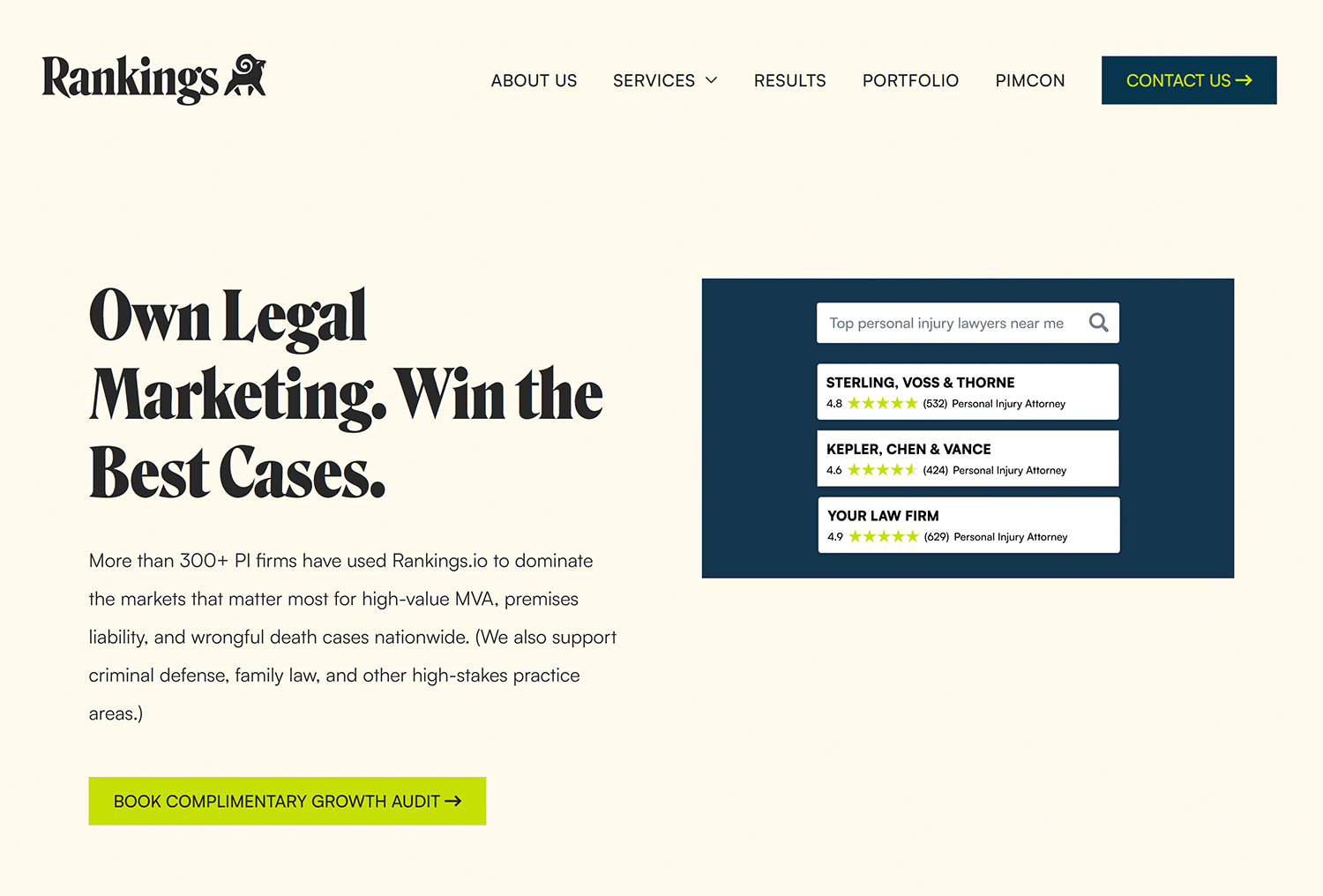
Imagine you own a law firm and you’re looking to invest in SEO. Would you choose a generic SEO company or one who specializes in what you do?
Rankings.io is a perfect example because it works exclusively with legal clients and has built out proven systems specifically designed to get results for law firms. It’s exactly the kind of niche specialist a law firm would choose over a generic SEO agency.
3. Show the impact of your work
Clients are results-oriented. They want concrete evidence that your SEO efforts can lead to success.
Simply talking about your services isn’t enough. Don’t just tell them you’re great. Prove your worth with data and client testimonials.
Highlight SEO case studies that demonstrate how you’ve increased organic traffic, improved keyword rankings, and boosted website conversions for your past clients.
Quantify the results whenever possible. For example, have you achieved a 20% increase in organic traffic for an ecommerce store? Or maybe you’ve improved a ranking position from 10 to three for a target keyword. Make sure to showcase these impressive metrics to potential clients.
Visuals are powerful tools, too. Use charts, graphs, and before-and-after comparisons to clearly show the positive impact of your work.
Organize a case study to capture more SEO leads. Case studies demonstrate the positive impact of your work and explain how you achieved it. Your potential clients see that you’re able to deliver the results they want, such as increased website traffic, improved rankings, or boosted conversions. This level of detail builds trust and motivates prospective clients to dive deeper into your work.
An example case study from Digital Commerce Partners highlights how the company helped ADD.org reach 114,548 more people each month in a hyper-competitive market.

Remember, numbers are powerful. They resonate with potential clients far more than words alone.
4. Do a discovery (not a sales) call
The primary goal of a discovery call is to share how you can help your potential client and whether there’s a mutual fit.
Not every discovery call will eventually turn into a closed deal. That’s normal — think of these calls as collaborative consultations, not sales pitches. Ask open-ended questions and actively listen to your prospect’s pain points and goals.
Here’s what you should strive to uncover and communicate during the discovery call with a potential client:
- Understand the client’s unique challenges and pain points
- Identify the client’s perception of potential solutions
- Get the client’s budget estimate
- Explain our pricing categories
- Note impactful client results
Capturing a few impactful quotes directly from the call can add a personal touch to your SEO proposal. It will also demonstrate that you were truly attentive to your potential client’s challenges and needs.
While the discovery call allows you to qualify potential clients, it’s also a chance for them to evaluate your expertise and approach. That’s why it’s essential to come prepared. This will lay the foundation for a productive partnership built on mutual trust and understanding.
5. Focus on providing value during the discovery call
Let’s say during a call you identify a critical SEO issue on the prospect’s website that they might not have been aware of. You point this out and offer expert advice to address it. This way, you instantly demonstrate your knowledge and genuine interest in their success.
A complimentary mini-consultation builds trust and sets you apart from pushy salespeople. It will also help make your potential clients far more receptive to your services when the time comes to discuss a proposal.
Remember, it’s not just about what you can do for potential clients. It’s also about showing them you genuinely care about their website’s health and growth.
6. Create a value-based proposal
Here’s a piece of advice that will save you time and money: Don’t waste time creating a proposal before agreeing on a price with your potential client.
Prospects often don’t know their budget but insist on creating a proposal. If your pricing is beyond their budget, they’ll likely say no or won’t respond at all.
Communicate your price ranges before the proposal stage. You can start working on a proposal if you get a green light from the client during the discovery call.
Focus on these details when creating client proposals:
- Emphasize the tangible growth clients can expect from your partnership
- Paint a clear picture of where their business could be with the right SEO strategy
- Outline the specific tasks and actions required to achieve that projected growth
- Structure your pricing around different levels of involvement to give prospects options
Here’s an example proposal template you can check out.
A persuasive SEO proposal is about showcasing your value. Your client wants tangible results. Focus on the return on investment (ROI) they can expect by partnering with you. Show them how your SEO efforts will translate into increased organic traffic, leads, and revenue growth.
This excerpt from a sample proposal shows the current website’s state and the projected traffic growth based on executing the proposed SEO improvements:

Remember, clients are willing to pay a premium for expertise and a clear path toward achieving their SEO KPIs. However, in order to close the deal you’ll want to approach pricing with care.
Even if you have a client’s preliminary approval, they might still be hesitant after reviewing your proposal. Create a few custom pricing plans to offer various collaboration opportunities depending on your level of involvement.
The example below presents two pricing options to the client. The first option allows the client to take the agency’s recommendations and execute everything themselves, while the second option is priced with the expectation of the agency handling everything, from delivering recommendations to executing solutions.

7. Sign the contract
A deal isn’t complete until a contract is signed by both parties. Following a successful discovery call and proposal presentation, capitalize on the momentum by swiftly getting your contract signed by your new client.
Make sure to promptly address any questions or concerns your client might have about the contract since this may significantly delay the project. Once both parties have signed, you can celebrate the official start of your SEO partnership!
Build an agency that wins SEO clients
If you want to scale your SEO business and win more clients, Semrush One gives you the SEO tools to do it. Use website metrics to strengthen your pitches, research competing agencies, and identify new opportunities.
With the Lead Generation add-on, you gain even more visibility through the Semrush Agency Partners directory and can proactively find high-intent prospects using Lead Finder.
Track, optimize, and win in Google and AI search from one platform.
If you are ready to spend less time chasing leads and more time closing the right ones, now’s the time to try Semrush One and turn insights into revenue.
Explore more on
Editorial disclosure
Search Engine Land is owned by Semrush. We remain committed to providing high-quality coverage of marketing topics. Unless otherwise noted, this page’s content was written by either an employee or a paid contractor of Semrush Inc.
About the author