Google algorithm updates

Google has a long history of famous algorithm updates, search index changes and refreshes. Here is a timeline of major Google search algorithm updates. Want to read our latest coverage of algorithm updates and changes? Jump to the latest Google algorithm news and insights.

How many times does Google update its search algorithms?

Google Search is constantly changing. Google launched 4,725 changes to search – including changes to its ranking systems, user interface and more – in 2022. That means Google Search is changing 13 times per day, on average. But really, it could change even more than that if you’re opted into one or many experiments. Google also said in 2022 it ran:

  • 13,280 live traffic experiments
  • 894,660 search quality tests
  • 148,038 side-by-side experiments

Many of these changes are minor. But algorithm updates tend to have a bigger, more noticeable impact. Algorithm updates can result in big wins or losses in rankings, traffic and revenue.

Has the Google Algorithm Changed?

A few of Google’s most significant and disruptive algorithm updates recently is the Helpful Content Update from 2022, which targeted and penalized sites created solely to boost search rankings. The September 2023 update focused on promoting useful and original content, while the March 2024 update pushed more AI-generated content to the top of search results, ensuring it meets the quality standards of leading websites.

The history of Google algorithm updates: 2003-today

Here is a complete history of Google algorithm updates that you need to know about, in reverse chronological order.


2026 Google algorithm updates


Google March 2026 core update

March 27

  • Google called it a “regular update designed to better surface relevant, satisfying content for searchers from all types of sites.”

March 2026 spam update

March 24

February 2026 Discover core update

Feb. 5

  • Google called it “a broad update to our systems that surface articles in Discover.”
  • Rollout completed Feb. 27 (21 days)

2025 Google algorithm updates


December 2025 core update

Dec. 11

  • Google called it “a regular update designed to better surface relevant, satisfying content for searchers from all types of sites.”
  • Rollout completed Dec. 29 (18 days)

August 2025 spam update

Aug. 26

June 2025 core update

June 30, 2025

March 2025 core update

March 13, 2025


2024 Google algorithm updates


December 2024 spam update

Dec. 19

December 2024 core update

Dec. 12

  • This update came one week after the November 2024 core update finished rolling out.
  • Google said the two consecutive core updates (November/December) were due to Google improving “different core systems.”
  • Rollout completed Dec. 18 (6 days)
  • This update was more impactful than the November update, but less impactful than the August and March updates.

November 2024 core update

Nov. 11

August 2024 core update

Aug. 15

Deepfake ranking system update

July 31

  • Updated its ranking system to help ensure deepfake content does not rank highly in Google Search.
  • Google aims to show “surface high-quality, non-explicit content — like relevant news articles — when it’s available” instead of deepfakes.

June 2024 spam update

June 20

Site reputation abuse

May 6

  • Google said third-party content produced primarily for ranking purposes and without close oversight of a website owner would be considered spam. For example, a third party publishing payday loan reviews on a trusted educational website.
  • Some SEOs refer to this practice as “parasite SEO.”
  • Google pre-announced this update as part of its rollout of the March 2024 core update and spam updates (March 5).
  • Google will take both automated and manual actions. As far as we know, Google never launched this algorithmically.

March 2024 core update

March 5

  • A more complex algorithm update, with multiple core systems getting updated and released, resulting in more fluctuations in rankings than a regular core update.
  • Google said unhelpful content in Search was reduced by 45%.
  • Google’s helpful content system was incorporated into its overall core ranking system.
  • Rollout completed April 19 (45 days) – Google announced its completion on April 26.

March 2024 spam updates

March 5

  • Scaled content abuse (producing content at scale to boost search rankings – whether with automation, people or a combination) was classified as search spam.
  • Expired domain abuse (buying expired domains and repurposing them with the “intention of boosting the search ranking of low-quality content”) was classified as spam.
  • Google started taking action against these new types of spam through algorithmic spam systems and manual actions.
  • Rollout completed March 20 (14 days)

2023 Google algorithm updates


 ‘Openness’ local search update

Dec. 16

  • Google confirmed “openness” (whether a business is currently open) became a stronger signal for non-navigational queries.

November 2023 reviews update

Nov. 8

  • Google said, heading forward, its reviews system would be “improved at a regular and ongoing pace,” so they would no longer announce future updates.
  • Rollout completed Dec. 7 (29 days)
  • Rollout overlapped with November 2023 core update (Nov. 2).

November 2023 core update

Nov. 2

October 2023 core update

Oct. 5

October 2023 spam update

Oct. 4

  • Improved Google’s “coverage in many languages” (including Turkish, Vietnamese, Indonesian, Hindi, Chinese) “and spam types” (cloaking, hacked, auto-generated, and scraped).
  • Rollout completed Oct. 20 (15 days).
  • Rollout overlapped with October 2023 core update (Oct. 5).

September 2023 helpful content system update

Sept. 14

August 2023 core update

Aug. 22

Topic authority system

May 23

  • This system aims to help surface relevant, expert and knowledgeable content in Google Search and Google News.
  • The system looks at several signals to understand the expertise of a publication on a specific topic or location.
  • Google said they have been using this system for “several years,” but this was the first time discussing it.

April 2023 reviews update

April 12

March 2023 core update

March 15

February 2023 product reviews update

Feb. 21


2022 Google algorithm updates


December 2022 link spam update

Dec. 14

Google helpful content system update

Dec. 6

  • New signals were added to Google’s classifier.
  • Launched globally, impacted all languages.
  • Rollout overlapped with the link spam update (Dec. 14).
  • Rollout completed: Jan. 12 (38 days, took longer than estimated due to the holidays).

October 2022 spam update

Oct. 19

  • Google did not specifically say whether this update was focused on links, content or other forms of spam.
  • Global update, impacted all languages.
  • Rollout completed: Oct. 21 (less than 48 hours).

September 2022 product reviews update

Sept. 20

September 2022 core update

Sept. 12

August 2022 helpful content update

Aug. 25

  • A sitewide signal meant to reward content that helps or informs people, rather than created primarily to rank well in search results.
  • Google provided a list of 15 questions to ask about your content reviews to ensure you are building human-first content.
  • Google said online education materials, arts and entertainment, shopping and tech-related content would be most impacted. However, the impact was mostly felt in a few categories (e.g., ringtones, coding, lyrics).
  • Announced Aug. 18, it began rolling out Aug. 25.
  • Rollout completed: Sept. 9 (15 days)
  • Its overall impact was relatively small.

July 2022 product reviews update

July 27

  • Google was likely refreshing the algorithm (and possibly making slight adjustments) to better reward high-quality product reviews.
  • Referenced the standard help document on how to write product reviews.
  • Rollout completed: Aug. 4 (6 days)
  • This update was not as widespread and had little ranking volatility compared to prior product review updates.

May 2022 core update

May 25

  • Like past core updates, Google broadly changed how its ranking systems assessed content.
  • This was the first broad core algorithm update of 2022 and the first in more than 6 months.
  • Rollout completed: June 9 (15 days)
  • Its impact seemed significant and more volatile than the November 2021 core update.

March 2022 product reviews update

March 23

  • Meant to help Google better identify high-quality product reviews and reward them with better rankings.
  • Google added new criteria for what matters with the product reviews update (helpful in-depth details, expertise, unique information and covering comparable products).
  • Google added new advice around ranked lists, recommendations of “best” products and creating reviews for multiple vs. individual products.
  • Rollout completed: April 11 (19 days)
  • Impact was not as widespread as prior product reviews updates.

Page experience update (desktop)

Feb. 22


2021 Google algorithm updates


December 2021 product reviews update

Dec. 1

  • Designed to reward product reviews that shared insightful analysis and in-depth, original research.
  • Google added new advice for this update on providing more multimedia “evidence” and including links to multiple sellers.
  • Began rolling out a day after the November 2021 core update was completed.
  • Rollout completed: Dec. 21 (20 days)
  • Update was bigger than the April 2021 product reviews update and pretty volatile.

November 2021 local search update

Nov. 30

  • Google said it rebalanced various factors it considered in generating local search results.
  • Google didn’t confirm this update happened until Dec. 16.
  • Overlapped with other ranking updates (product reviews, core update) and a Google map and local pack update design change.
  • Rollout completed: Dec. 8 (9 days).

November 2021 core update

Nov. 17

November 2021 spam update

Nov. 3

  • Google announced an update to its search spam detection systems.
  • Google’s guidance: follow Google’s best practices for search (a.k.a., Google’s Webmaster Guidelines).
  • Rollout completed: Nov. 11 (8 days)

Link spam update

July 26

  • Google said the purpose of this update was to “nullify” spammy links across the web and multiple languages.
  • Websites with spammy links were more likely to see an impact on their rankings.
  • Google’s advice: follow best practices for all incoming and outgoing links.
  • Rollout completed: Aug. 24 (29 days)

July 2021 core update

July 1

Spam update (Part 2)

June 28

  • The promised sequel of its Spam Update.
  • We learned that both parts of the Spam Update were “global” updates targeting web and image results.

Spam update (Part 1)

June 23

  • Google announced the release of a Spam Update to their systems and said a second was coming the following week.
  • There was no additional guidance or details.
  • As part of the Twitter announcement, Google referenced its Webmaster Guidelines.

Page experience

June 15

  • This new ranking algorithm was announced in May 2020.
  • Google began using a new set of metrics – Core Web Vitals – to understand how users perceive the experience of a specific web page.
  • The three Core Web Vitals metrics were Largest Contentful Paint (LCP) (measured loading performance); First Input Delay (FID) (measured interactivity); Cumulative Layout Shift (CLS): (measured visual stability).
  • Part of the Page Experience Update includes existing ranking signals, such as page load speed, mobile-friendliness, HTTPS and lack of intrusive ads.
  • Rollout completed: Sept. 2 (79 days)

Multitask Unified Model (MUM)

June

June 2021 core update

June 2

  • This was the first of two back-to-back core updates. Google decided to release these updates separately because some of the updates they planned to roll out weren’t ready.
  • Like other Google core updates, the June 2021 update was comprehensive and wide-reaching. It’s likely many sites felt the impact of this update.
  • Rollout completed: June 15 (13 days)
  • A mixed view of the update – when it hit the hardest, who it hit the most and the overall impact.

April 2021 product reviews update

April 8

  • The Product Reviews Update is meant to better reward product reviews that go above and beyond (e.g., by including in-depth and original research, insightful analysis). Google said it will promote these types of product reviews in its search results rankings.
  • Google provided a list of nine questions to ask about your product reviews to make sure they are insightful, include original research and are written by experts or enthusiasts who know the topic well.

Passage ranking

Feb. 10

  • Google began rolling out a change to how it ranks specific passages from a webpage in search results. This update was meant to help searchers find specific “needle-in-a-haystack” information. Google said this update would impact 7% of search queries across all languages.
  • Because this update was more about how Google understands your content, there was no specific advice on things to address or change, according to Google.

2020 Google algorithm updates


December 2020 core update

Dec. 3

  • The 2020 Core Update was the last major update of 2020 and the first major update since May of that year.
  • Like all of Google’s core updates, the December 2020 core update was wide-reaching, impacting websites across all languages.

BERT expansion

Oct. 15

  • Google announced that BERT was powering nearly all English-based search queries, a big leap from 10% it powered the year prior.
  • You cannot optimize for BERT per se, as BERT is designed to improve the relevancy of search results by better understanding the content on webpages.

May 2020 core update

May 4

  • Google rolled out its relatively strong May 2020 broad core algorithm update over a few weeks.
  • This update was broad and comprehensive. Like other core updates, it was not targeted at any specific aspect of the algorithm.

January 2020 core update

Jan. 13

  • A relatively weak core update.

2019 Google algorithm updates


BERT

Oct. 25

  • Google announced its Bidirectional Encoder Representations from Transformers (BERT) update, which impacted 10% of searches. In short, BERT was created to help Google understand queries and webpage content more like how humans do.

September 2019 core update

Sept. 24

  • The September 2019 Core Update was another broad core algorithm update of the kind that Google rolls out every few months.

June 2019 core update

June 3

  • Covered broad aspects of Google’s algorithm.
  • Intended to improve user experience in multiple areas.

March 2019 core update

March 15

  • The March 2019 Core Update was somewhat confusing, briefly disrupting the usual equilibrium of the SEO world. The March 2019 Core Update was released without a name, giving users all across Twitter to speculate about the update and why it wasn’t named.
  • Google, catching wind of the confusion, quickly jumped on social media to right the wrong. On Twitter, they wrote, “Our name of this update is March 2019 Core Update.”

2018 Google algorithm updates


August 2018 core update (a.k.a. Medic)

Aug. 1

  • The August 2018 broad core algorithm update was a core update that shook up the SEO world. In this update, Google made major fixes to their algorithm that rewarded previously under-rewarded pages on the web.
  • Google said there was “no fix” to any observed drop in the rankings. The ranking drops were simply due to other under-rewarded sites finally making gains.
  • Google’s advice to webmasters with a ranking drop? Keep making excellent content, and you may very well see your site rise back in the rankings.

April 2018 core update

April 20

  • Aimed at improving the end-user experience by delivering the most relevant content for search queries.
  • Google didn’t announce this update and only came out with its announcement after speculation that there may have been a core update.

March 2018 broad core algorithm update

March 12

  • Google confirmed an update ran the previous week, impacting the appearance and rankings of some websites in Search results.
  • Aim was to benefit pages that were previously under-rewarded.
  • Google’s advice: Remain focused on building great content.

2017 Google algorithm updates


Mid-December updates

~Dec. 14-19

  • Google confirmed releasing several minor changes that were meant to improve relevancy.
  • It seemed to negatively affect sites that were targeting huge numbers of keyword variants.

Local

Aug. 22

  • This update made corrections to the Possum update, which had inadvertently unfairly impacted local rankings.
  • The Possum Update of 2016, which we’ll get into a little more detail further down, was intended to improve SERP relevancy by eliminating redundant search results from the SERPs. To summarize, some local business owners were being eliminated by Google’s filters because their businesses were too close to other similar businesses that already ranked on Google’s SERPs.
  • The Hawk Update slightly corrected the Possum update, making local businesses that competed with others that already ranked on the SERPs more likely to be seen in a relevant search query.

Fred

March 9

  • An unconfirmed Google ranking update seemed to target more of the link quality aspects of the overall algorithm.
  • The SEO community dubbed this update “Fred” based on a joke by Google’s Gary Illyes, who suggested that all future Google updates be called “Fred.”

2016 Google algorithm updates


Penguin 4.0

Sept. 23

  • After nearly two years, Google updated its Penguin algorithm – and it was for the last time.
  • Google announced Penguin became part of its core search algorithm, which meant data was refreshed in real-time.
  • It also became more granular, meaning Penguin might impact ranking for individual pages on a site, parts of a site, or the entire site.

Possum

Sept. 1

  • This update affected local listings. In brief, the Possum Update was a change to the way Google’s filters work.
  • What are filters? Filters for local results on Google eliminate websites that seem to be redundant. For local businesses, this can mean, for example, that if you have two websites for your service, only one of them will appear for a given local search term.
  • The Possum update was intended to improve the user experience of Google, but it may have gone too far. Certain businesses that were nearby to other businesses that already ranked on Google’s SERPs saw their website drop off significantly.

Mobile-Friendly 2

April 21

  • This update was more of a boost to the original Mobile-Friendly Update of 2015, a real-time, page-by-page signal that only impacts mobile search results.
  • This update was meant to “increase the effect of the [mobile-friendly] ranking signal.”

January 2016 core update

Jan. 17

  • Major fluctuations were being observed in the search results.
  • Google’s Gary Illyes confirmed it was a core ranking algorithm update.

January 2016 core update

Jan. 10

  • Following a weekend filled with ranking changes and fluctuations, Google on Jan. 12 confirmed it was due to a core ranking algorithm update.

2015 Google algorithm updates


RankBrain

Oct. 25

  • Powered by machine learning, RankBrain processed what people searched for and sorted through billions of webpages to rank the ones believed to be best first.
  • Initially used on a “very large fraction” of search results, it was later rolled out and used on all Google searches.

Panda 4.2

July 18

  • This was a refresh of the existing Panda algorithm.
  • It impacted about 2% to 3% of English language queries.

Quality

May

Mobile-Friendly

April 21


2014 Google algorithm updates


Pigeon Expansion

Dec. 22

Penguin Everflux

Dec. 10

Penguin 3.1

Nov. 27

Pirate 2

Oct. 21

Penguin 3.0

Oct. 17

Panda 4.1

Sept. 25

  • Google said this Panda update was supposed to be more precise and allow more high-quality small and medium-sized sites to rank better.
  • It impacted about 3% to 5% of English language queries.

Pigeon

July 24

  • Designed to provide more useful, relevant and accurate local search results that were tied more closely to traditional web search ranking signals.
  • Google said that this new algorithm improves their distance and location ranking parameters.

Payday Loan 3.0

June 12

Panda 4.0

May 20

  • The 27th update of Panda was supposed to be “gentler” for some websites and lay the groundwork for future changes in that direction.
  • Impacted 7.5% of English queries.

Payday Loan 2.0

May 16

Page Layout 3 (aka Top Heavy 3)

Feb. 6


2013 Google algorithm updates


Penguin 2.1

Oct. 4

Hummingbird

Sept. 26

Panda 26

July 18

  • New signals were incorporated to make Panda more finely targeted.

Multi-week

June 21

Payday Loan

June 11

Penguin 2.0

May 22

Panda 25

March 14

  • On March 11 at SMX, Google’s Matt Cutts said a Panda update was coming.
  • It seemed to roll out on time as promised. However, Google never officially confirmed the rollout happened.

Panda 24 (Jan. 22)

  • This was a refresh of the Panda algorithm.
  • Impacted 1.2% of English queries.

2012 Google algorithm updates


Panda 23 (Dec. 21)

  • This was a refresh of the Panda algorithm.
  • Impacted 1.3% of English queries.

Panda 22

Nov 21

Panda 21

Nov. 5

Page Layout Algorithm 2 (aka Top Heavy 2)

Oct. 9

Penguin 3

Oct. 5

Panda 20

Sept. 27

Exact-Match Domain (EMD)

Sept. 28

  • A “small” change to prevent low-quality sites from ranking well simply because they had words that matched search terms in their domain names.
  • Impacted 0.6% of English-US queries

Panda 3.9.2

Sept. 18

  • A data refresh, with no additional signals or changes.
  • Impacted 0.7% of queries

Panda 3.9.1

Aug. 20

  • A data refresh, with no additional signals or changes.
  • Impacted less than 1% of search queries.
  • Confirmed by Google on Aug. 22.

Pirate

Aug. 10

  • This update demoted the rankings of sites that received too many DMCA takedown requests.
  • It wouldn’t be until 2022 that we learned Pirate can cause up to, on average, an 89% drop in search traffic.

Panda 3.9

July 24

  • A data refresh, with no additional signals or changes.
  • Impacted ~1% of search results.

Panda expands to Japanese, Korean languages

July 18

  • Impacted about 5% of queries for those languages.

Panda 3.8

June 25

  • A data refresh, with no additional signals or changes.
  • Impacted ~1% of queries worldwide.

Panda 3.7

June 8

  • A data refresh, with no additional signals or changes.
  • Impacted less than 1% of search queries in the U.S. and ~1% worldwide.
  • Confirmed by Google on June 11.

Penguin 2

May 25

  • A data refresh, with no additional signals or changes.
  • Impacted <0.1% of English searches.

Panda Update 3.6

April 27

  • A data refresh, with no additional signals or changes.
  • Confirmed by Google on May 3.

Penguin

April 24

  • Aimed to decrease rankings for webspam – pages that Google believed were violating Google’s quality guidelines.
  • In particular, websites that were buying links or obtaining them through link networks that were primarily designed to boost Google rankings.
  • Impacted ~3% of search queries.

Panda 3.5

April 19

  • A data refresh, with no additional signals or changes.
  • Confirmed by Google on April 25.

Panda 3.4

March 23

  • A data refresh, with no additional signals or changes.
  • Impacted ~1.6% of queries.

Venice

Feb. 27

  • Traditional algorithmic ranking factors began playing a bigger part in triggering local search results.

Panda 3.3

Feb. 27

  • A data refresh, with no additional signals or changes.

Page Layout Algorithm (aka Top Heavy)

Jan. 19


2011 Google algorithm updates


Panda 3.1

Nov. 18

  • A minor update, impacting less than 1% of searches.
  • Confirmed by Google Nov. 21.

Freshness

Nov. 3

  • Impacted 35% of searches.
  • Types of searches impacted: recent events or hot topics; regularly recurring events; frequent updates.

Panda 3.0

Oct. 19

  • Matt Cutts tweeted about “some Panda-related flux in the next few weeks, but will have less impact than previous updates (~2%) on Oct. 5.
  • Confirmed the flux was Panda 3.0 on Oct. 19.

Panda 2.5

Sept. 28

  • Google declined to share any new details.
  • Confirmed by Google on Sept. 30

Panda 2.4

Aug. 12

  • Expanded internationally to all languages except Chinese, Japanese and Korean.
  • Impacted 6 to 9% of queries.
  • Other unspecified minor changes to the English version of Panda were released.

Panda 2.3

~July 23

  • This update added new signals to help Google “differentiate between higher- and lower-quality sites.”
  • Confirmed by Google on July 26

Panda 2.2

~June 16

  • Added improved scraper detection.
  • Confirmed by Google on June 21.

Panda 2.1

~May 9

  • Google called it a minor update, impacting a “far smaller” number of queries than prior Panda updates.
  • Confirmed by Google May 10.

Panda 2.0

April 11

  • Panda expanded to run on all English queries worldwide.
  • Started using data about what users had blocked from their search results in “high confidence situations.”
  • Update went “deeper into the ‘long tail’ of low-quality websites.”

Panda

Feb. 23

Scraper filter

~Jan. 28

  • Reduced the amount of low-quality scraper content in Google’s index.
  • Meant to reward sites that wrote the original content.
  • 2% of queries changed in some way; less than 0.5 % of search results noticeably changed, according to Google.

2010 Google algorithm updates


Merchant reviews

Dec. 1

  • Google introduced a change meant to demote merchants that provide an “extremely poor user experience.”

Brand

Aug. 19

  • For search queries that indicated a strong user interest in a particular domain, Google began allowing a larger number of pages from that domain to appear.

Caffeine

June 8

  • New indexing infrastructure went live after months of testing.
  • Made content available to searchers faster.
  • Google said the new web indexing system was “more than 50 percent fresher than our last index and it’s the largest collection of web content we’ve offered.”
  • No changes to Google’s ranking algorithms.

May Day

April 28 – May 3 

  • Google changed how it assessed which sites were the best match for long-tail queries.
  • It impacted long-tail searches more than short tail searches.

2009 Google algorithm updates


Vince

Feb. 20

  • Big brands started gaining more visibility in search results in late February.
  • On March 5, Google’s Matt Cutts confirmed the “minor change,” adding that Google’s ranking algorithm may be factoring trust, quality, PageRank, and other metrics for more generic queries.
  • Cutts said it did not impact long-tail queries.
  • A Googler named Vince created this change, which is how the update got its name.

2008 Google algorithm updates


Dewey

March 31

  • Some major shuffling in search results was being reported at the end of March and into early April.
  • Google’s Matt Cutts asked webmasters for feedback on the changes via a form and to include the word “dewey” in their feedback, giving this update a name.

2007 Google algorithm updates


PageRank update

Oct. 7

  • Google confirmed they were lowering PageRank scores for some sites that were selling links.
  • Google also said that some of those sites could be removed from its search results or be given penalties that prevent them from ranking well.
  • Google’s PageRank Update Goes After Paid Links? (Oct. 24) documented multiple sites that were impacted.

2005 Google algorithm updates


Big Daddy

December

  • An infrastructure change (a software upgrade of Google’s crawling and parts of its indexing system, according to Matt Cutts).
  • Fully deployed by March 29, 2006.

Jagger

Oct. 16 – ~November 18

  • A series of updates targeting low-quality links, including reciprocal links, link farms and paid links.
  • Rolled out in three parts – Jagger1 started Oct. 16; Jagger2 started Oct. 27; Jagger3 started Nov. 4).

Bourbon

~May 20 – ~June 8

  • GoogleGuy (Matt Cutts) said on June 1 this update included “3.5 improvements in search quality,” and “only a couple are out so far. The 0.5 will go out in a day or so, and the last major change should roll out over the next week or so. Then there will still be some minor changes after that as well.”
  • Seemed to change how duplicate content and non-canonical URLs were treated.

2004 Google algorithm updates


Austin

~Jan. 23

  • This is considered to be a continuation of the work Google started with Florida, aimed at producing more relevant search results.
  • Websites impacted by this update were using on-page SEO tactics that, at the time, had worked quite well (but today are considered spammy, outdated practices).

2003 Google algorithm updates


Florida

Nov. 15

  • Florida was the first major Google algorithm update and it caused a huge outcry.
  • Google’s goal was to make it harder for websites to rank well using manipulative SEO techniques.
  • Unfortunately, this update drove many websites out of business (including some “false positives”) right before the lucrative holiday season.
  • After this update, Google promised it would try to avoid rolling out major changes around the holidays (a promise that remained unbroken until 2011).

Fritz

July

  • This is the update when Google switched to indexing pages every day (or more often) instead of doing one large monthly algorithmic update (called the “Google Dance“), where everyone’s rankings would increase or decrease over a period of six to eight days.
  • From this point onward, Google made many (typically minor) changes every day, which came to be known as “everflux.”

Google algorithm updates: The latest news and guides

SearchCap: The Day In Search, October 31, 2011

Below is what happened in search today, as reported on Search Engine Land and from other places across the web. From Search Engine Land: Content Strategy Tuesday, Improve Paid Search on Thursday – Webcasts this week Search Marketing Now, our sister site, will host two webcasts this week. Tomorrow, November 1, Maria Pergolino of Marketo […]

SearchCap: The Day In Search, October 28, 2011

Below is what happened in search today, as reported on Search Engine Land and from other places across the web. From Search Engine Land: Google Tweaks Its Rel=Author Display, Promotes Google+ In Search Results Google has rolled out a few changes to how it shows results that use the rel=author markup. Some of these are […]

Panda Update 3.0 Live & Panda “Flux”

On around September 27th, Google launched what’s being called 2.5 of its Panda algorithm. On October 5th, Google’s Matt Cutts tweeted: “Weather report: expect some Panda-related flux in the next few weeks, but will have less impact than previous updates (~2%).” Panda-related flux? Indeed, this seems to be the case, with site owners reporting Panda-related […]

SearchCap: The Day In Search, October 14, 2011

Below is what happened in search today, as reported on Search Engine Land and from other places across the web. From Search Engine Land: Google Shuttering Buzz In Favor Of Google+; Farewell To Labs Buzz was a great learning experience, says Google, but in a few weeks it will be shut down and all such […]

SearchCap: The Day In Search, October 5, 2011

Below is what happened in search today, as reported on Search Engine Land and from other places across the web. From Search Engine Land: Google: Low PageRank & Bad Spelling May Go Hand-In-Hand; Panda, Too? If your website and/or web pages have low PageRank, it’s possible that they also suffer from poor spelling and grammar. […]

Google: Low PageRank & Bad Spelling May Go Hand-In-Hand; Panda, Too?

If your website and/or web pages have low PageRank, it’s possible that they also suffer from poor spelling and grammar. Google’s top spam cop, Matt Cutts, made the correlation between low PageRank and poor spelling in a Google Webmaster Help video just made public today. In responding to a question about whether spelling and grammar […]

SearchCap: The Day In Search, October 4, 2011

Below is what happened in search today, as reported on Search Engine Land and from other places across the web. From Search Engine Land: Google Analytics Webmaster Tools SEO Reports Now Available In June, Google released a limited beta of Webmaster Tools integration with Google Analytics, where you can view search query data from Webmaster […]

SearchCap: The Day In Search, October 3, 2011

Below is what happened in search today, as reported on Search Engine Land and from other places across the web. From Search Engine Land: Hot At Sphinn: Digg’s Irrelevance, Facebook’s Timeline, Marketing Diversity & More One thing’s for certain in the online marketing industry: change. That was the frame for our “Discussion of the Week” […]

Mobile SEO & The Need For Descriptive Links

It’s a well known fact that links play a key role in search engine optimization. In addition to providing a physical connection between pages, search engines also use links to get advance notice of the content they’ll find at the other end of that link. While it’s true that search engines place the greatest value […]

Google Panda 2.5: Losers Include Today Show, The Next Web; Winners Include YouTube, Fox News

Searchmetrics has a pretty good track record of figuring out who lost after one of Google’s Panda Updates. Among the latest victims of this week’s Panda Update 2.5, some unexpected surprises: popular tech blog The Next Web, blog aggregator Technorati, and NBC’s The Today Show. Winners include Google’s own YouTube, along with Fox News and several […]

Confirmed: Google Panda 2.5 Update Arrived This Week

Google has confirmed that the latest iteration of its Panda algorithm update is live. Based on our tracking of the algorithm changes, this is Panda Update 2.5. Google declined to share any specifics about what types of sites, pages or content this update targeted, instead only sharing the company’s default statement: We’re continuing to iterate […]

SearchCap: The Day In Search, September 29, 2011

Below is what happened in search today, as reported on Search Engine Land and from other places across the web. From Search Engine Land: Bing’s New Airport Maps Aim To Make Air Travel Easier Finally, some good news for air travelers: Flying gets a little bit easier with Bing’s launch of detailed U.S. airport maps. […]

Google Senate Hearings: The Post-Game Show

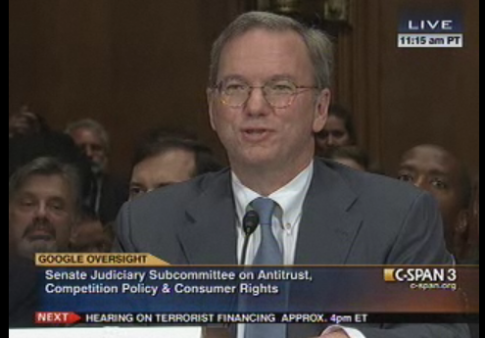
Earlier this morning I predicted that today’s three-hour Senate subcommittee hearing on Google and competition would be more theater than fact-finding. (You can read Danny’s live blog here and here.) And while there were lots of numbers and statistics thrown around by the witnesses (many of them inaccurate) there were few new facts; it was […]

SearchCap: The Day In Search, September 8, 2011

Below is what happened in search today, as reported on Search Engine Land and from other places across the web. From Search Engine Land: Twitter Hits 100 Million ‘Active’ Users Started just 5 years ago, Twitter announced today at the “State of the Union” that they have officially reached their 100 millionth ‘active’ user. Of […]

SearchCap: The Day In Search, August 18, 2011

Below is what happened in search today, as reported on Search Engine Land and from other places across the web. From Search Engine Land: Google News Archive Search Page: Gone Forever Or Temporary Bug? Another Google search interface has gone missing: The specialized interface/homepage to Google News Archive Search is no longer available. It was […]

SearchCap: The Day In Search, August 17, 2011

Below is what happened in search today, as reported on Search Engine Land and from other places across the web. From Search Engine Land: Google & Bing (Still) Handle Underscores & Dashes Differently It’s one of the longest-running SEO questions around, and still something many of us get asked by clients, readers, conference attendees and […]

SearchCap: The Day In Search, August 12, 2011

Below is what happened in search today, as reported on Search Engine Land and from other places across the web. From Search Engine Land: Update Made To Definition Of A Google Analytics Session Google Analytics announced a change on the way a sessions are calculated on the tool. While this change will not affect the […]

Google Panda Update 2.4: Panda Goes International, In Most Languages

Google has just announced that their “Panda” rankings changes, first launched in the United States in late February and rolled out to English language indices internationally in April, have now launched internationally in all languages other than Chinese, Japanese, and Korean. Their post notes that for non-English indices,  this change impacts 6-9% of queries (vs. […]

SearchCap: The Day In Search, August 11, 2011

Below is what happened in search today, as reported on Search Engine Land and from other places across the web. From Search Engine Land: Game On: Google+ Now Offers Games You knew it was coming: Google+ now includes games. According to a screenshot posted on Google’s announcement, there are currently 16 games available at launch, […]

No, Says Google, It’s Not Panda 2.4 Or Any Update

Yesterday, there were early rumors floating around at WebmasterWorld that there was yet another Panda updating taking place, possibly Panda 2.4. I covered it at the Search Engine Roundtable and asked Google for confirmation. Google informed me that there is no Panda update taking place currently. Google told us, “no Panda update is currently occurring.” […]

SearchCap: The Day In Search, August 10, 2011

Below is what happened in search today, as reported on Search Engine Land and from other places across the web. From Search Engine Land: Yahoo Gives Image Search A New Look Yahoo’s Image Search is sporting a fresh look today that presents the image results in a cleaner, more organized fashion. Do a search and […]

Major Google Updates Documented

SEOmoz announced they have published the Google Algorithm Change document detailing all “major updates” that happened since the Boston update in 2003. SEOmoz did it with style in this graphical document: While I agree with a lot of the updates listed here, I had worked up a list of my own a few months ago. […]

SearchCap: The Day In Search, August 9, 2011

Below is what happened in search today, as reported on Search Engine Land and from other places across the web. From Search Engine Land: Google’s Matt Cutts Offering More Detailed Video Search Tips The Google Webmaster Blog announced a new format for Google’s Matt Cutts video tutorials. Instead of the short minute or so videos, […]

SearchCap: The Day In Search, August 4, 2011

Below is what happened in search today, as reported on Search Engine Land and from other places across the web. From Search Engine Land: Report: Android Now 40 Percent Of Smartphone Market According to the latest comScore data, Android handsets now constitute 40 percent of the US smartphone market. Number two Apple gained modestly, and […]

SearchCap: The Day In Search, August 1, 2011

Below is what happened in search today, as reported on Search Engine Land and from other places across the web. From Search Engine Land: Catholic Priest Advises Engaged Couples: Don’t Use Google Maps You know it’s rough going when even the clergy can’t recommend your service. That’s what’s happening to Google Maps, which is listing […]

SearchCap: The Day In Search, July 28, 2011

Below is what happened in search today, as reported on Search Engine Land and from other places across the web. From Search Engine Land: Search For Hotels With Google Hotel Finder Forget using Google Maps when you want to find a hotel to stay at for a business trip or family vacation! You can now […]

Official: Google Panda 2.3 Update Is Live

Google has confirmed to Search Engine Land that late last week it pushed out a small update to the Panda filter. “We’re continuing to iterate on our Panda algorithm as part of our commitment to returning high-quality sites to Google users,” a Google spokesperson told us. “This most recent update is one of the roughly […]

SearchCap: The Day In Search, July 25, 2011

Below is what happened in search today, as reported on Search Engine Land and from other places across the web. From Search Engine Land: Tech Celebs Most Followed On Google+ While “Real World” Rules On Twitter & Facebook How do you measure the success of a social media site? One of several ways might be […]

SearchCap: The Day In Search, July 15, 2011

Below is what happened in search today, as reported on Search Engine Land and from other places across the web. From Search Engine Land: Google, Twitter Flaunt Social Stats … It’s Like 2003 All Over Again Whether on purpose or not, Google and Twitter are having a little back-and-forth this week about the size of […]

Mobile SEO: The Good, The Bad & The Ugly

Let me just start by saying the there is no such a thing as “mobile SEO”, just SEO for mobile search. True mobile SEO could only exist if you only have a mobile site and the only link building you do is from other mobile sites and pursue other SEO activities on only mobile based […]

SearchCap: The Day In Search, July 8, 2011

Below is what happened in search today, as reported on Search Engine Land and from other places across the web. From Search Engine Land: My Top 10 Insights From 10 Years In Search I recently reached my nine year anniversary in the search industry, which means I’m now on my tenth year in SEM. I […]

SearchCap: The Day In Search, June 21, 2011

Below is what happened in search today, as reported on Search Engine Land and from other places across the web. From Search Engine Land: Comparing Facebook Like vs. Google +1 Google’s new +1 feature was one of SMX Advanced Seattle most engaging sessions and, as a speaker, I have received a wide variety of feedback […]

Why Google Panda Is More A Ranking Factor Than Algorithm Update

With Google Panda Update 2.2 upon us, it’s worth revisiting what exactly Panda is and isn’t. Panda is a new ranking factor. Panda is not an entirely new overall ranking algorithm that’s employed by Google. The difference is important for anyone hit by Panda and hoping to recover from it. Google’s Ranking Algorithm & Updates […]

Official: Google Panda Update 2.2 Is Live

Google has given us confirmation that they have run an update to the Panda filter recently. We have been expecting the Panda 2.2 update based on news coming out of the SMX Advanced conference. Matt Cutts told SMX attendees that Panda 2.2 has been approved, hasn’t been rolled out yet, but that should happen soon. […]

SearchCap: The Day In Search, June 9, 2011

Below is what happened in search today, as reported on Search Engine Land and from other places across the web. From Search Engine Land: Google: Product Extension Ads Now Available For Mobile This morning Google announced two new ad formats or mobile — or rather the extension of two PC ad types to smartphones — […]

Coming Soon: Google Panda Update 2.2

One of the bigger pieces of news — certainly for webmasters and SEOs — from our SMX Advanced conference this week is that Google will soon be releasing version 2.2 of the Panda algorithm update. Google’s Matt Cutts confirmed that during Tuesday’s keynote question-and-answer session with Danny Sullivan. Cutts said that the update has been […]