Measuring AEO: A 3-layer attribution framework


SEO attribution takes a lot of trial and error, and even then, it’s not 100% accurate. Getting credit for our efforts requires digging into the data, but AI search has taken this to a whole new level.
AI search introduced different search behavior, bringing attribution complexity to a new high. But all isn’t lost. We still have our curiosity as SEOs. Our job is to experiment and figure things out. That’s what I attempted with a three-layer AEO attribution framework.
I work with B2B SaaS brands on SEO and AEO, and as AI search grew, clients increasingly asked: How do we know our AEO efforts are working? In other words, is the investment paying off?
My agency doesn’t offer AEO as a separate package. Every SEO strategy we build includes the “AEO” layer. Think of SEO as the foundation of the house and AEO as the roof.
The GA4 baseline: What you’re seeing is the floor
Earlier this year, Google A released the AI Assistant channel in your GA4 reports, which finally provided an easy way to monitor AI-generated traffic.
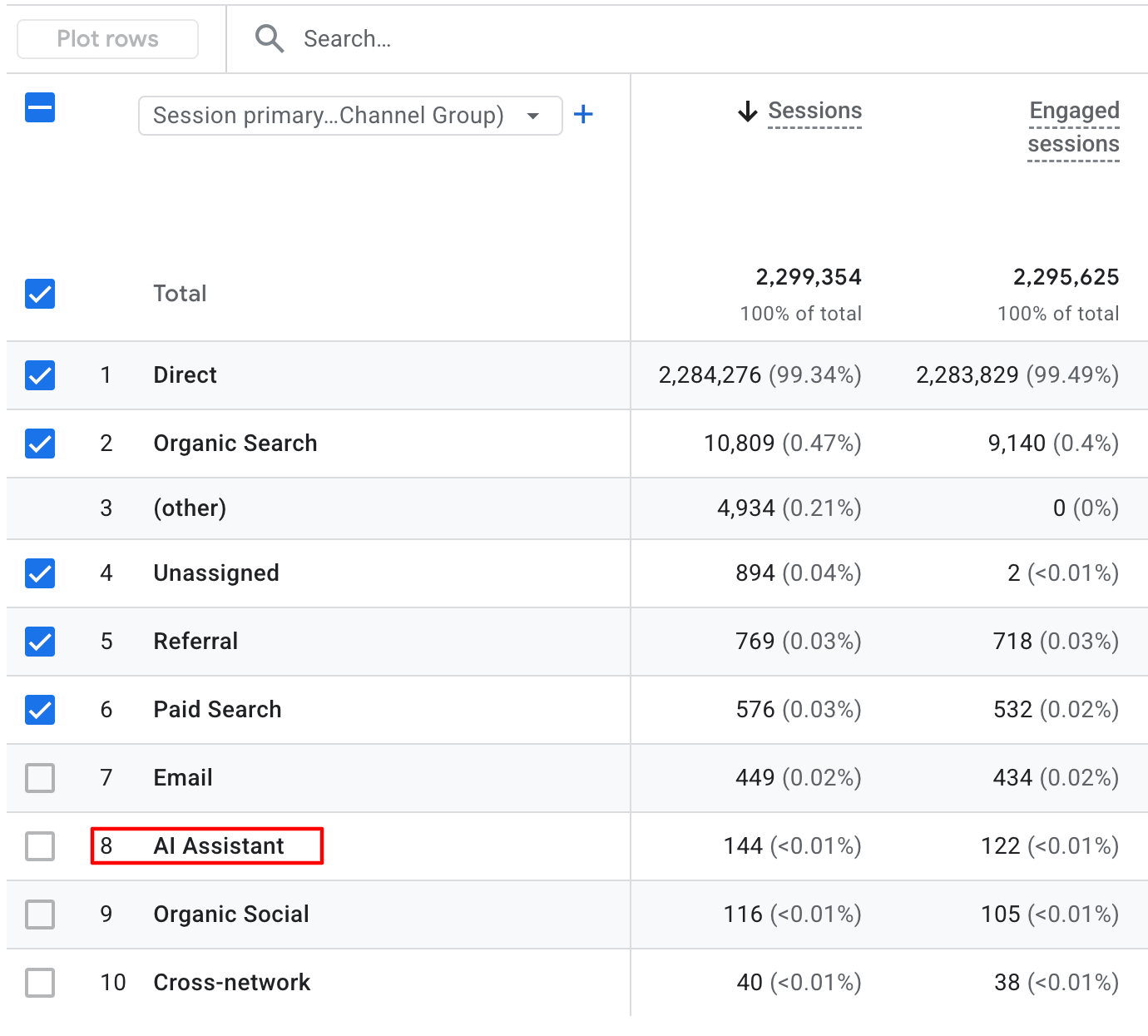
If you’re relying on GA4 to show the real number of people visiting your website from LLMs, you’re likely undercounting them. What you’re seeing in GA4 is the floor, not the norm.
What you’re seeing in GA4 is the floor for LLM visits, and there are several reasons for that:
- The majority of search interactions on LLMs happen without any clicks. People just get the information they need right away and bounce back or continue probing the LLM.
- Lots of LLMs lose their referrer headers before users reach your website if people use mobile or desktop app versions. The visits end up arriving as direct.
- People can switch devices as they search — they start their search on mobile and then switch to desktop midway. This contributes to losing the referrer UTMs.
A big portion of the LLM buyer journey happens in the “dark” funnel as we lose the referrer parameters before they reach the website and tracking tools. That’s why I advise treating your GA4 data with a big grain of salt.
Dig deeper: A 5-layer framework for measuring AI search performance
3-layer AEO attribution model
I had to find a way to connect all the dots for my clients and provide them with some understanding of what we’re working toward.
Given that AEO is a relatively new space with lots of fluctuations and rapid developments, this framework is a work in progress. It consists of three layers:
- Direct attribution.
- Influenced attribution.
- Future moat.
1. Direct attribution
This layer is the floor you can stand on — your reported direct LLM figures. This will include your LLM traffic from GA4 and your leads from LLMs that can also be tracked via GA4 or your CRM of choice.
Lots of clients we work with have specifically set up the “AI search” channel in their Salesforce or HubSpot (or other CRM) to track leads that are coming through with the referrer from LLMs.
Bear in mind that these numbers can be just a fraction of the leads that come in from LLMs for your website. But a small number attached to closed-won and revenue beats a large number attached to nothing.

Another great way to keep an eye on directly attributed leads is to set up a self-reported option for your key conversion forms on the website. I advise all clients to add “LLMs” to the “How did you hear about us?” dropdown in the demo/contact form — or to have their sales reps ask people about this during calls. The latter option is more of a hassle, but it’s still better than nothing.
This is the number you can assign a dollar value to — you can calculate your ROI for this channel if you want to. But it’s probably far from the truth, again, because the “reported” demos and traffic from LLMs don’t represent the real numbers. They’re just what makes it to your website with the referrer header that wasn’t stripped.
Dig deeper: How to build a meaningful AI search visibility dashboard
2. Influenced attribution
Here’s where things get interesting and where you can build a story for your boardroom. Influenced attribution is exactly what it sounds like — anything that’s been influenced by your AEO efforts.
There are multiple ways AEO can affect your bottom line. Here are the ones I recommend looking into:
Direct traffic and demos are growing
Your direct traffic and demos (anyone who’s typed your domain directly into the search bar) can increase as you work on your AEO. The reason is that people can copy and paste your domain from the LLM instead of clicking on it.
Branded organic traffic lift
If you’ve been working on your AI search visibility for some time, you should start seeing a natural increase in branded organic traffic.
As people type in their bottom-of-funnel questions in LLMs, they usually get a list of brand names. What often happens is that they remember the brand name and then type it into Google days later — and it shows up in Google Search Console as branded organic:
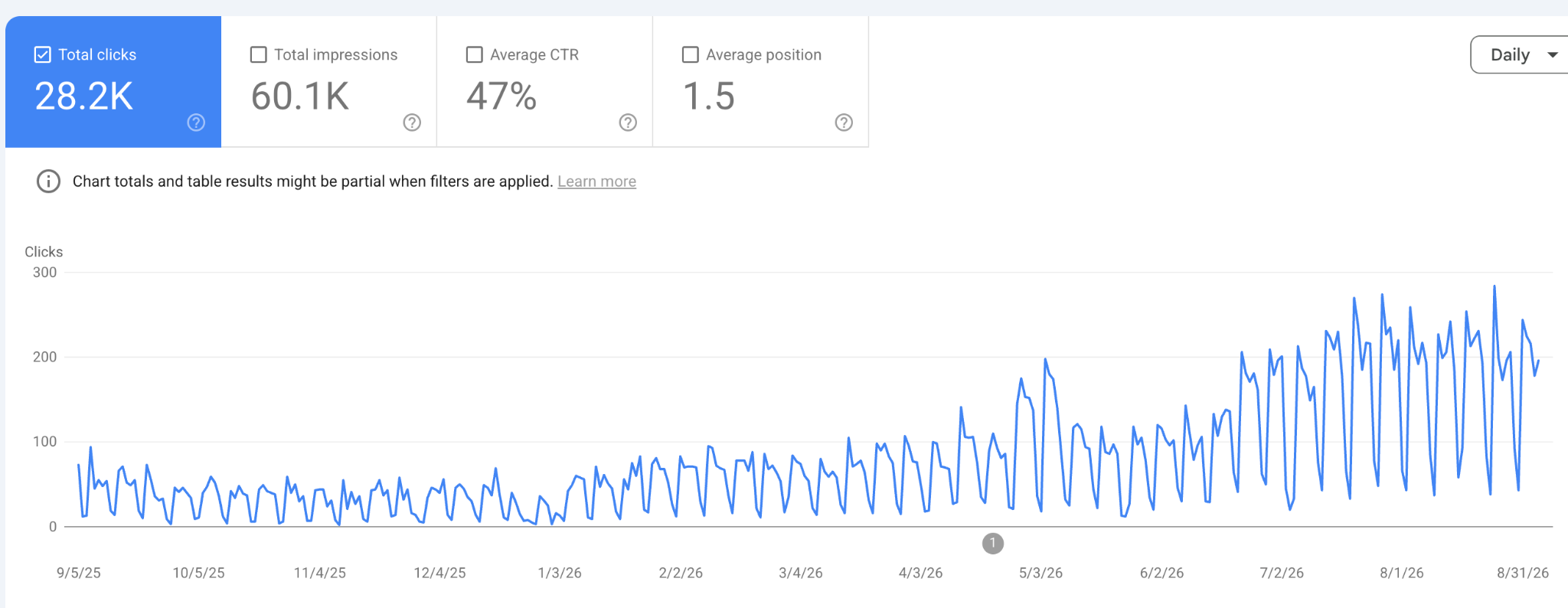
Normally, this kind of traffic converts well because people have already done the majority of the research before deciding to give your brand a look.
Shorter sales cycles and improved win rates against competitors
Your sales cycles typically become shorter as people’s objections are handled during their research process on LLMs. They no longer need to visit your website to find answers about your pricing or integrations — all that’s already been done for them by LLMs. They arrive at your website after doing enough research to be much warmer and readier to talk to your sales team.
Your win rates against competitors also should start improving if you’re doing your AEO right. If you’re putting out the proper information about your product and making it very easy for LLMs to access it, you’re making it easier for LLMs to recommend you.
While these factors don’t have a direct dollar sign attached to them, they have an enormous influence on your CAC, sales cycles, and the number of leads your brand is getting. Tracking these things will help you make the right decision down the line.
Dig deeper: What 4 AI search experiments reveal about attribution and buying decisions
The industry’s trusted source for essential news and analysis.
Sign up for our newsletter to receive exclusive insights and updates directly to your inbox.
- Daily breaking news
- Expert analysis from industry veterans
- Join over 200k subscribers
- Covering SEO, PPC and AIO
3. Future moat
The last layer is about building a foundation for what AI search will look like 12-24 months from now. This is where you’ll track your typical AI search KPIs with your tool of choice — AI share of voice, citation rate/visibility, and sentiment.
You want to make sure LLMs mention your brand when the right conversations are taking place, and you want to make sure LLMs are saying the right things about your brand.
With AEO, you’re working toward these two things. The question to ask is whether the brand can afford not to show up in these conversations two to three years from now, when potential customers are doing their research.
Dig deeper: 4 ways to track AI search visibility when attribution falls short
Building a clearer picture of AEO impact
Building out a dashboard with the above numbers is an easy task. Making sense of all of it takes some time and effort.
Track these KPIs/metrics monthly and approaching this as an experiment because it is. As you get more data combined in one place over a longer period (six months or more), you’ll start to see how the metrics tell a certain story. This assumes you’re actively working on your SEO and AEO together.
Explore more on
Editorial disclosure
Contributing authors are chosen for their expertise and work under the oversight of the editorial staff. Search Engine Land is owned by Semrush. The contributor was not asked to mention Semrush; the opinions expressed are their own.
About the author