Google Search now says it’s critical to manually factcheck and review all AI-generated content for accuracy and trustworthiness
Google has updated its AI-generated content guidelines for Google Search.
Google has updated its AI-generated content guidelines for Google Search.
Survey data from 1,008 consumers and 150 marketers reveals how AI is reshaping search visibility, brand trust, GEO, and content strategy.

AI doesn’t need to be fully correct to sound convincing. Three Gemini conversations reveal why expertise and skepticism still matter.

From Reddit threads to repeated claims, learn how AI search constructs brand narratives — and how to audit, correct, and influence them.

A five-minute video provides more data for an LLM than most blog posts. Here’s how to maximize your brand’s surface area for AI retrieval.

Google signals search’s next phase: small multimodal models on devices infer intent from behavior before a query is ever typed.

Prompts describe tasks. Rubrics define rules. Here’s how rubric-based prompting reduces hallucinations in search and content workflows.

Learn how to audit AI model outputs, apply entity markup, and reinforce accurate brand facts in Knowledge Graph data to correct AI hallucinations and protect your brand’s credibility.

A UK doctor and YouTuber says Google AI falsely accused him of selling sick notes and being suspended. Is Google AI protected by Section 230?

New AI models are underperforming on SEO tasks. Discover why accuracy is down and how to adapt before these regressions impact your results.

Here's why treating ChatGPT like Google will guarantee your failure in the age of RAG, reranking, and probabilistic systems.

From training data to citation frequency, learn how generative AI systems assess credibility and decide which sources to surface first.
Today isn't Tuesday, it's Wednesday! No, it isn't 2025, this year is 2025! Google AI Overviews again fail to answer simple questions.

For years, Google was known for crushing spam. Now, it's highlighting it in the most prominent position in its search results: AI Overviews.
I read the news today, oh boy. AI search engines give wrong answers 60% of the time and often cite fabricated or broken URLs.

Google said only one in every 7 million unique queries resulted in a Google policy violation.

Your Money, Your Life seems to not apply to AI Overviews. Google advises users to run with scissors, cook with glue and eat rocks.
As AI takes center stage in marketing, it is subject to machine error – ironically, only humans can check fallibility.

As AI disrupts SEO, ethical risks emerge. Learn best practices for transparent AI use and the human role in automation.
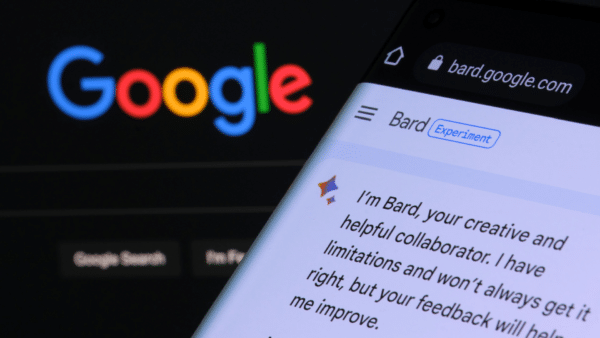
Here's how Bard's real-time insights and direct access to Google resources can help you navigate algorithm changes.

Google yesterday tried to rewrite history, claiming Bard wasn't rushed out to upstage Microsoft. But facts aren't on Google's side here.
Explore the intricacies of AI-generated content in search and how Google's long-term goals might be shaping its response to the technology.

You can now upload photos to Bing Chat and ask the AI search engine a question based on that images.

Here's why SEO pros should be careful when incorporating large language models in SEO campaigns and what you can do instead.
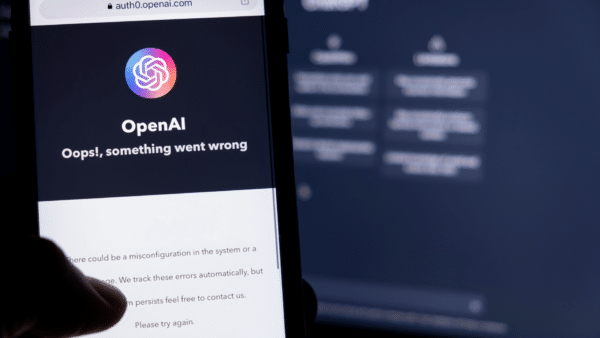
Learn ChatGPT's limitations so you can establish guardrails for using the tool and leverage its benefits while avoiding the negatives.

The AI will generate ads by remixing creative content (images, videos, text) to target specific audiences and meet campaign objectives.
Google Bard suggests buying links, predicts the next Core Update and refuses to share links to its sources. We're off to a ridiculous start.

These updates include a higher response rate and less hallucinations.
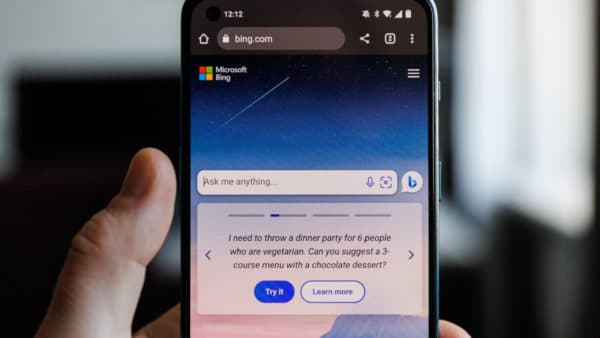
Gaslighting, memory loss, accidental racism, yep, sounds like AI.

Factually incorrect AI content on a health topic made its way into Men's Journal. Meanwhile, Google warns of AI hallucination.