Top 10 PPC news stories 2025 on Search Engine Land
Pay-per-click (PPC) marketing in 2025 moved fast and grew more complex.
Google drove many of the year’s most consequential changes, from deeper Search automation with AI Max and ads inside AI Overviews to long-awaited gains in transparency and control for Performance Max.
At the same time, updates to Google Tag Manager and conversion tracking changed how advertisers collect and trust data. Policy shifts, automatic content extraction, and pullbacks from Google Shopping by major advertisers like Amazon and Temu also disrupted auction dynamics, exposing growing tension between platform power, advertiser control, and market stability.
As 2025 winds down, let’s look at the most newsworthy headlines, ranked by pageviews.

10. Google changed how Tag Manager works with Google Ads
March 10 – Google updated Google Tag Manager (GTM) to ensure the Google tag loaded before events fired, improving tracking accuracy and data collection, starting April 10.
For containers with Google Ads and Floodlight tags, GTM now loads the Google tag automatically. Advertisers got easier access to Enhanced Conversions, cross-domain tracking, and auto events directly within tag settings.
The update further simplified data collection and compliance by automatically enabling user-provided data when Customer Data Terms were accepted.
The SEO toolkit you know, plus the AI visibility data you need.

9. Google Performance Max campaign API placement exclusions
Jan. 28 – Google clarified that you can control Performance Max campaigns using API-based placement exclusions, reversing months of documentation and support guidance that said this wasn’t possible.
Research from ad tech firm Optmyzr confirmed that API exclusions fully blocked spend on excluded placements and worked faster than manual UI controls.
The change gave advertisers stronger programmatic control over PMax campaigns and addresses a long-standing frustration with the AI-driven format.
8. Search Terms visibility in Google Performance Max campaigns
March 21 – Google updated Performance Max campaigns to show which search terms trigger ads and to let advertisers add negative keywords directly from the Search Terms report.
The rollout improved transparency and control, addressing long-standing criticism that Performance Max lacked query-level insight.
By tying into recent negative keyword features, the update gave advertisers visibility closer to standard Search campaigns while retaining AI-driven optimization.
7. Google Ads AI Max for Search campaigns beta
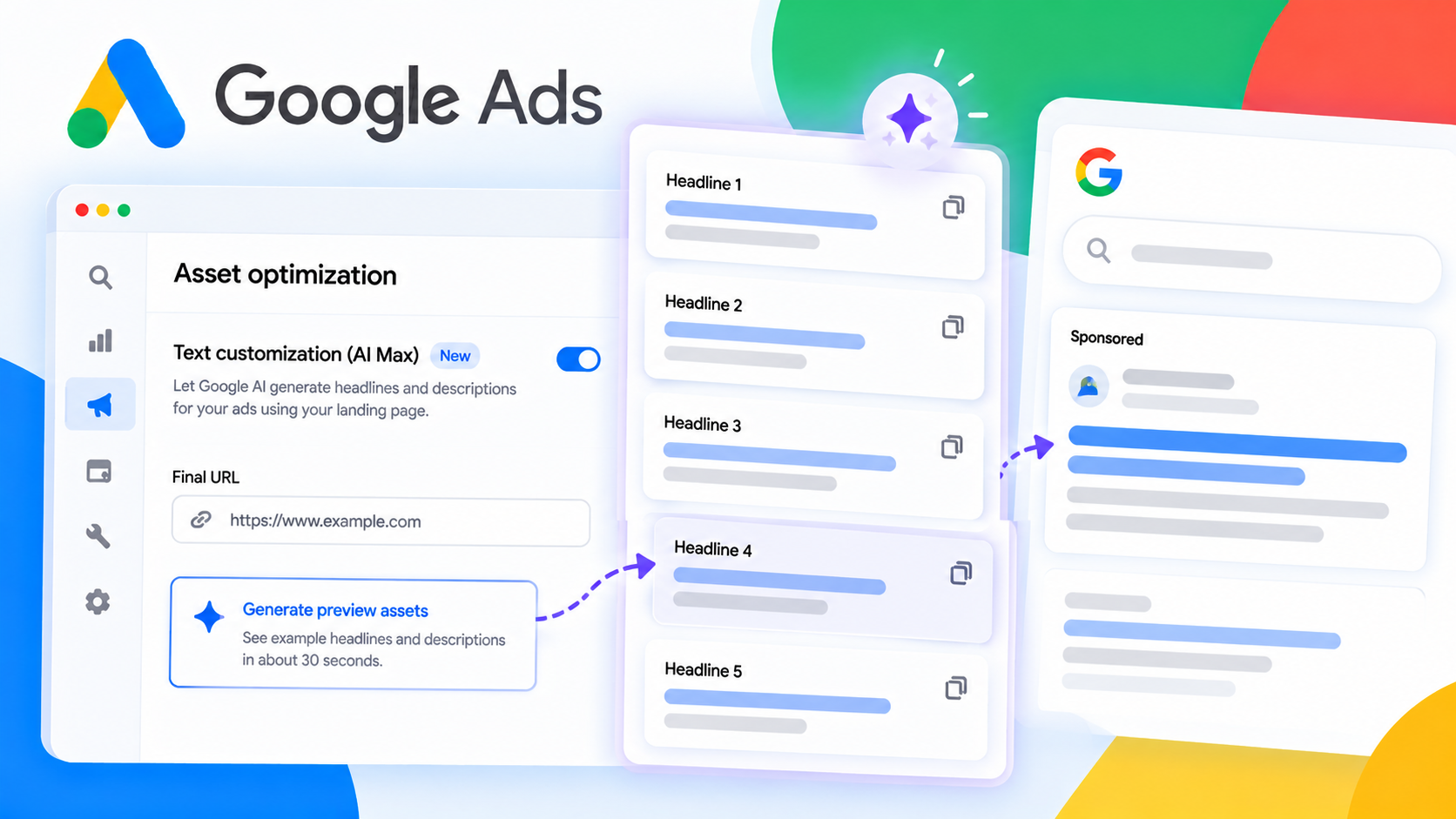
May 6 – Google announced AI Max, a new one-click enhancement for Search campaigns using advanced AI to expand reach, generate ads dynamically, and adapt creative in real time.
AI Max combined broad match, keywordless technology, automated text customization, and final URL expansion to help advertisers capture untapped high-intent queries while tailoring headlines, descriptions, and landing pages as user intent emerges.
6. Google AI Overviews ads
May 22 – Google began showing ads directly within AI Overviews on desktop search in May, marking a major shift in how it monetizes its generative search experience.
Confirmed at Google Marketing Live 2025, the rollout placed Search and Shopping ads within or alongside AI-generated summaries at the top of results.
5. Google Ads allowed multiple ads for the same business on one results page
March 31 – Google Ads updated its Unfair Advantage Policy to allow advertisers to show multiple ads for the same business on a single results page, as long as the ads appeared in different locations.
By treating each ad location as a separate auction, Google formalized earlier experiments that expand advertiser presence across the SERP. The change created new opportunities for larger brands to dominate visibility and potentially drive more clicks and conversions.
4. Google launched automatic marketing content extraction
April 3 – Google launched a feature that automatically pulled merchants’ existing marketing content (e.g., promotions, product details, social links, brand assets) to boost visibility across Search, Shopping, and Maps.
All merchants were auto-enrolled. Google sources the content through marketing emails or direct submissions to a dedicated Google address, though businesses could opt out at any time in Merchant Center.
3. Temu pulled its U.S. Google Shopping ads
April 14 – Temu abruptly shut off its U.S. Google Shopping ads, exposing how heavily its growth relied on paid acquisition. Within days, its App Store ranking fell from the top four to 58 as its impression share collapsed and vanished from auction data.
The pullback aligned with higher U.S. tariffs on Chinese imports and stricter enforcement of import loopholes, both of which directly weakened Temu’s subsidized, direct-from-manufacturer model.
2. Amazon pulled out of Google Shopping ads
July 25 – Amazon abruptly halted its Google Shopping ads, a move experts called unprecedented and “colossal” given Amazon’s long-standing role in fueling auction competition and Google ad revenue.
The shutdown marked a clear inflection point after a year of gradual cooling. It spanned roughly 20 international markets and removed a dominant bidder that routinely drove up CPCs and captured outsized impression share.
One month later, Amazon resumed Shopping ads globally but remained absent from the U.S.
Track, optimize, and win in Google and AI search from one platform.
1. Google Ads simplified conversion tracking with new tag manager feature
Feb. 5 – Google Ads introduced a new form tracking feature in Google Tag Manager to let you create conversion events for lead form submissions without manual coding.
The wizard-style setup supports codeless event detection, flexible form submission tracking, and multiple URL matching options, making conversion tracking far easier to implement.
That’s a wrap
PPC in 2025 was dominated by major talking points that, unsurprisingly, largely centered on Google.
Looking ahead, 2026 is likely to bring even deeper AI integration, with real differentiation coming from experts who can apply AI strategically rather than simply market its use.
Explore more on
Editorial disclosure
Search Engine Land is owned by Semrush. We remain committed to providing high-quality coverage of marketing topics. Unless otherwise noted, this page’s content was written by either an employee or a paid contractor of Semrush Inc.
About the author