Google search results eye candy: How users navigate search features and what it means for SEO
Search behaviors are changing as users "ping pong" their attention across search results pages.
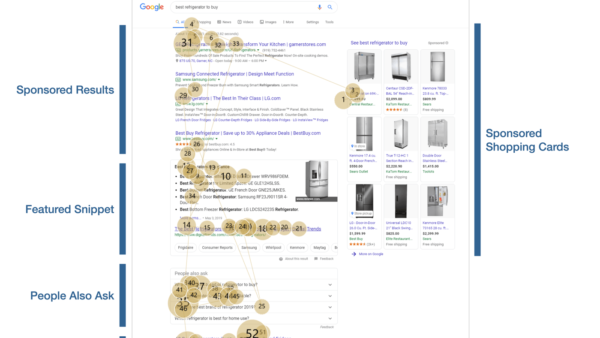
Search behaviors are changing as users "ping pong" their attention across search results pages.

Below is what happened in search today, as reported on Search Engine Land and from other places across the web. From Search Engine Land: Don’t take it from us. Here’s what SMX attendees say! Aug 28, 2018 by Search Engine Land Attending a conference is an investment. You expect sessions, keynotes and clinics that unearth […]
Below is what happened in search today, as reported on Search Engine Land and from other places across the web. From Search Engine Land: Bing Partners With NCAA To Deliver March Madness Predictions & Tournament App Mar 3, 2016 by Amy Gesenhues For the second year in a row, Bing and the NCAA are teaming […]

Below is what happened in search today, as reported on Search Engine Land and from other places across the web. From Search Engine Land: Yahoo Search Now Shows Your Flights, Events & Packages In The Search Results Yahoo announced that Yahoo Search, as well as Yahoo Mail‘s Today section will now show you your upcoming […]

A new Google eye tracking study published by Mediative shows how the evolution of the Google search results from 2005 to today has resulted in searchers looking outside of the golden triangle. The golden triangle was coined back in 2005 based on a study on how searchers looked at the Google search results page back […]

Think you know the web searcher goals and behaviors that are important for long term search engine visibility? Take this quiz and find out.

Last November Canadian digital agency Mediative (owned by Canada’s Yellow Pages Group) released an eye- and click-tracking study focused on Google Places and Google Maps on the PC. We wrote up the results when they were published. Mediative then followed up that study with a similar one focused on the Google Places app on the […]
Google announced on the Google Maps blog that they are now powering their own map data in the UK, Germany, Finland and Sweden. Google maps data in the U.S. and many other countries is powered by Google’s own data. But this week, Google dropped their third-party map data provider, Tele Atlas, and switched their map […]
Below is what happened in search today, as reported on Search Engine Land and from other places across the web. From Search Engine Land: Google Leads In Search Engines’ Efforts To Woo TV Viewers Google’s “Dear Sophie” TV spot for Chrome, in which a father creates a Gmail account for his newborn daughter and sends […]

A new eye-tracking and click-tracking study from Mediative (formerly known as Enquiro) shows the value of having the top spot in Google’s local results, but also suggests that social content and signals can boost rankings further down the page. Early last month, Mediative did eye tracking on 12 participants and online click tracking on another […]

Do SEO professionals use eyetracking usability studies as a link-juice fad? Can eyetracking tests yield useful information about Web searchers?
Interesting new data about searcher behavior from a recent User Centric eye-tracking study: Whether using Google or Bing, all 24 participants looked at the organic search results for their queries, but between 70% and 80% ignored the paid ads on the right side of the page. User Centric studied the search behavior of 24 “experienced […]
In part one of my interview with Hampus Jakobbson, TAT Co-Founder and now Strategic Alliances EMEA at Research in Motion, we talked about user experiences designed for Digital Natives and Digital Immigrants. As we continued to chat, we went into some fascinating territory that is literally right out of science fiction. TAT (short for The […]
Canada’s Yellow Pages Group has acquired the well-known search marketing agency Enquiro and folded it into a new entity known as Mediative. As explained in today’s announcement, Mediative will provide digital marketing services for national agencies and advertisers in Canada. YPG has also acquired two other Canadian advertising/marketing companies, Ad Splash Media and UPTREND Media. […]
A new eye tracking study done in Spanish by Mari-Carmen Marcos and Cristina González-Caro at Pompeu Fabra University in Barcelona and published July 2010 (Spanish PDF over here) was translated by Ani López reveals some new insights into searcher behavior. The study shows that the search snippet, often the meta description from the site, is […]
More egregious mistakes that website owners, web designers/developers, landing page experts, and others make to prevent qualified search engine traffic and conversions.
Online marketing firm OneUpWeb recently conducted an eye-tracking study about the impact of integrating real-time data into search results. The study involved 44 people divided into two groups: “consumers” and “information foragers.” The difference between the groups involved the tasks they were given: The first group was told to search for a product they might […]
TechCrunch yesterday reported on the results of a focus group conducted by NY design firm Catalyst Group comparing usability on Bing and Google. The study showed that in many instances Bing was preferred but that users already familiar and comfortable with Google would likely stay with Google. What’s partly interesting about this is that the […]
There’s an interesting post today on the Official Google Blog that gives a glimpse inside the company’s usability and eye-tracking studies — tests that help Google determine what their search results pages should look like. The image above, for example, shows how users interact with a standard results page with 10 links. The deeper colors […]
Dan Russell from Google’s search quality team has a post at the Google Blog on the art of field study. In short, he describes how the search interface plays a role in search quality, and what measures Google takes to study and improve the user interface, to ultimately help improve search quality.
So far in the Human Hardware series, we’ve dealt with working memory (a just released study confirms the limitations of this. See my note at the end of this column), differences between sexes, and Dunbar’s number (Parts One and Two). Today, I want to explore how we can look right at something and not see […]
A few columns ago I talked about user behavior on the results page and compared it to a shopping mall. In recent eye tracking studies, we’ve seen that several factors can create barriers or “walls” in this mall that can keep traffic from ever finding your listing.
Below are Search Engine Land’s 10 most popular stories from June 2007:
Below is what happened in search today, as reported on Search Engine Land and from other places across the web.
Below is what happened in search today, as reported on Search Engine Land and from other places across the web.
On Friday, we reported briefly on a new eye tracking study from Microsoft on how users interact with search results. I spent some time doing a deep dive into the survey, which is full of interesting information. Among the findings is that search marketers may need to be more concerned about getting into the top […]
Below is what happened in search today, as reported on Search Engine Land and from other places across the web:
Spotted via Resource Shelf, a new paper from Microsoft Research focusing on user eye tracking behavior while viewing MSN search results. The study used eye tracking methodologies to explore the effects of changes in the presentation of search results. Among the interesting findings: Adding information to result snippets significantly improved performance for informational tasks but […]