The funnel query pathway: A framework for measuring AI visibility
Traditional SEO metrics break in AI environments. Here’s a new model for tracking visibility across search, assistants, and agents.

Traditional SEO metrics break in AI environments. Here’s a new model for tracking visibility across search, assistants, and agents.

A review of 25,000 URLs yielded insights about the type of content most cited by ChatGPT and other popular large language models.

AI visibility dashboards can’t answer the ROI question on their own. Here’s how to build a more credible GEO measurement model.

Learn how to analyze AI outputs, uncover visibility gaps, and strengthen your brand’s presence to appear in LLMs and AI search results.

AI assistants shape recommendations, purchases, and transactions, forcing brands to compete for algorithmic confidence, not just clicks.

What are AI crawlers? Learn about the different types of AI crawlers, their purposes, what they can see, and if you should allow them to crawl your site.

AI search is creating new visibility gaps for brands. These metrics help you track presence, influence, and inclusion across platforms.

What users type isn’t always what they want. Learn how aligning intent signals, behavior, and brand improves performance.

Most visibility is shaped before the query. Learn how influence, entity signals, and original data determine who AI systems cite.

Want to optimize your content for fan-out queries? Learn how to find sub-queries, create multi-intent content, and format it for AI search visibility.
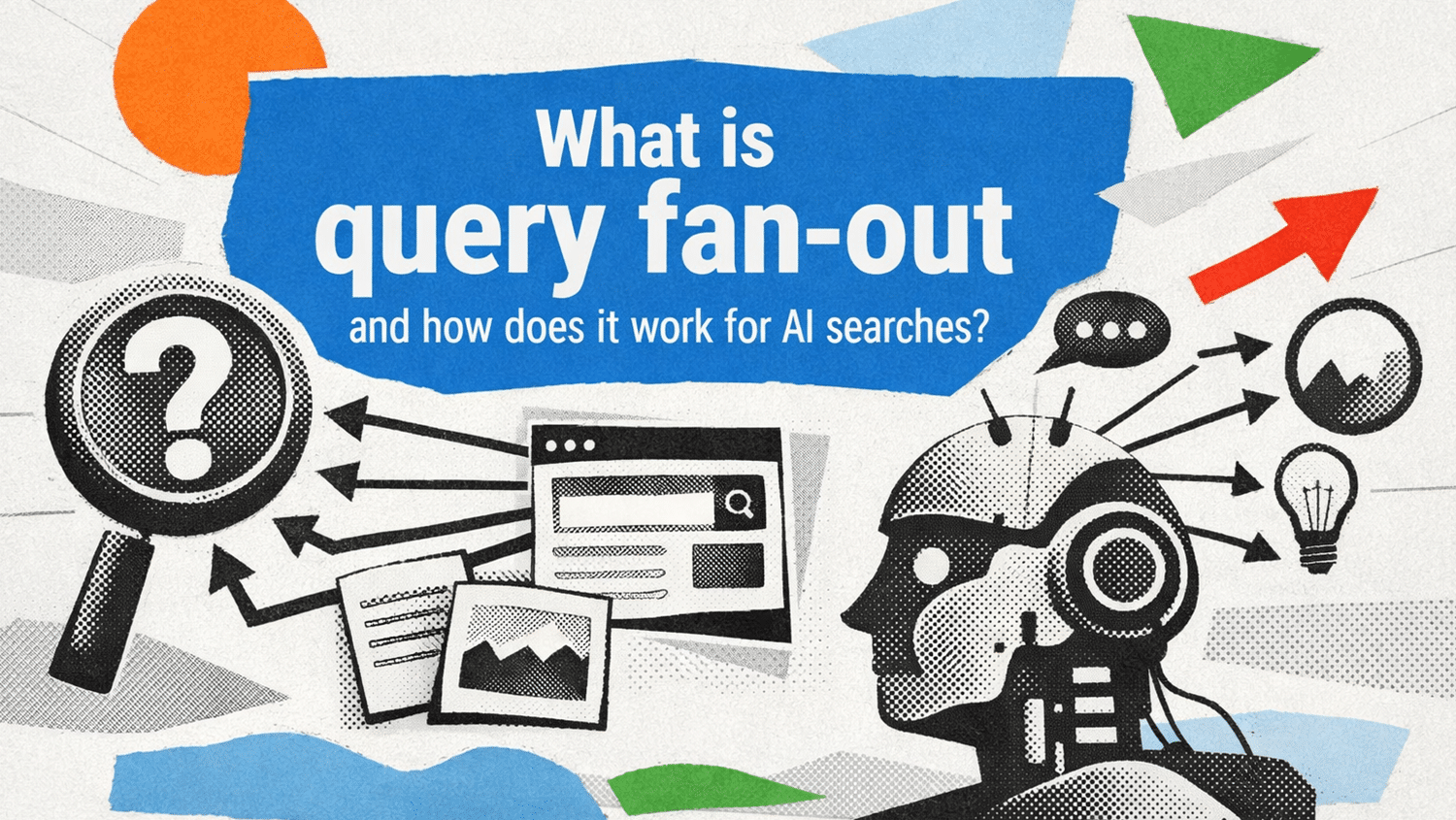
Discover query fan-out: what it is, how it works, and how understanding it can improve your content strategy for AI search visibility.

AI changed how the funnel works. Acquisition now starts at the bottom — build understanding, credibility, and reach in the right order.
Microsoft's new tools aim to help advertisers stay visible and competitive as AI agents increasingly drive discovery and purchasing decisions.

From AI poisoning fears to usability gains, AI buttons are sparking debate. Here’s a data-backed look at their real impact and limitations.

Deals and comparisons dominate AI nudges, shaping behavior and influencing decisions across the customer journey.

See how AI systems process content through five entry modes — and why relying on crawling alone limits visibility, speed, and revenue

Turn creator content into search inventory with keyword briefs, platform research, and SERP tracking across TikTok, Google, and AI.

Schema won’t guarantee citations, but it helps AI understand entities. Here’s how to use structured data for clarity and cleaner extraction.

Bing now lets you click a query to view cited pages or a page to see its grounding queries, with multiple queries and pages linked together.

The annotation, recruitment, grounding, display, and won gates determine which content AI engines trust and recommend. Here’s how it works.

Understand AI’s role in local SEO: See how AI is changing local results, user behavior, and optimization strategies — and explore the top tools to use now.

AI search summarizes your brand before users visit your site. Defensive SEO helps you monitor and shape your brand narrative in AI search.

Shoppers browse in ChatGPT but finish orders elsewhere, pushing OpenAI to rethink how AI drives retail sales.

Most SEO work means tab-switching between GSC, GA4, Ads, and AI tools. What if one setup could cross-reference them all?

Incomplete terminology leads to incomplete strategy. Here’s a clearer framework for optimizing when AI systems recommend and act.

How to get your brand cited, recommended, and discovered by AI search engines — a step-by-step framework.

AI traffic isn’t collapsing — it’s concentrating. Copilot surges in-workflow, 41% lands on search pages, and Q4 follows budget cycles.

New insights include total citations, average cited pages, grounding queries, page-level citation activity, and visibility trends over time.

Relying on GA4 alone leaves AI SEO analytics lost in the Bermuda Triangle of measurement. Learn what’s missing – and what to track instead.

New marketplace lets publishers set terms, track usage, and get paid when AI systems ground answers in premium, licensed content.

The agentic web is emerging fast. Definitions, practical applications, and pros and cons help clarify what readiness really looks like.

Bing's new multi-turn search is now global. As you scroll, a Copilot box appears at the bottom so follow-ups build on the last query.

From finance to SaaS, different LLMs win different jobs, which is why a single-platform AI strategy won’t work in 2026.

Datos data signals a tougher discovery era as AI cuts repeat searches, concentrates traffic, and leaves publishers with fewer opportunities.
Sadly, it does not show you clicks, so you still have no idea what your click-through rate is from AI search results.

Learn how Generative Engine Optimization (GEO) helps your content get retrieved, interpreted, and cited inside AI-generated answers across ChatGPT, Perplexity, and Google AI Overviews.

The best social media planning tools are Semrush Social, Hootsuite, Buffer, SocialPilot, and Sprout Social.

These new agentic experiences were showcased at the NRF 2026 conference.

OpenAI bets its future on a distraction-free experience, sacrificing ad revenue to stop Google’s ecosystem from winning the AI crown.
A closer look at how Microsoft Copilot uses conversational search to capture intent, reduce wasted spend, and improve ROAS.