Semantic depth in SEO: Go beyond keywords to rank higher
Semantic depth shows Google your content has substance. Learn how to cover topics thoroughly, build authority, and rank with context-rich content.

Semantic depth shows Google your content has substance. Learn how to cover topics thoroughly, build authority, and rank with context-rich content.

Semantic SEO helps search engines understand context. Learn how to use entities, topics, and intent to build richer content that ranks higher.

Discover how Google's Knowledge Graph works, why it matters for SEO, and how to optimize your content and entities for enhanced search visibility and authority.

Discover how AI is revolutionizing SEO — from smarter keyword research to automated content strategies. Learn what AI SEO is and how it boosts rankings and results.

Understanding the concept can help you optimize ecommerce content for better alignment with Google's AI-driven search, boosting visibility.
Explore how Google's AI systems like RankBrain, BERT and MUM influence search results and what it means for your SEO strategy.
Learn how modern search engines like Google use advanced NLP to understand searches, match queries to content, and rank results.

Get insights into Google's latest search innovations by exploring key patents from 2023, covering query filters, user notebooks, and more.

Explore the impact of transformers in natural language processing, what they're capable of and why they outperform traditional models.
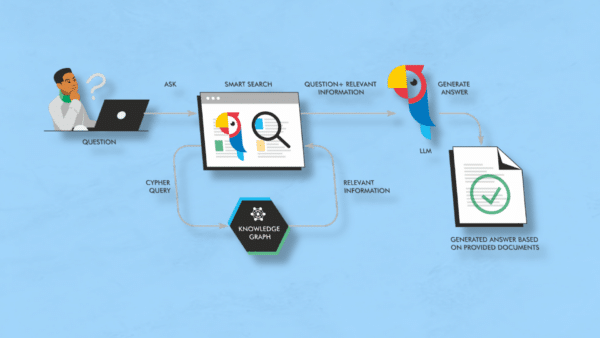
Gauge the potential threat level of SGE on your site traffic. Get insights into the likely changes to the search demand curve and CTR model.

Get a glimpse into the future of SEO as it intersects with AI. Uncover potential strategies and challenges in influencing AI-powered search.

Dive into how generative AI models work, what they can and can’t do, and the implications of all these elements.

Here's what SEOs need to know about large language models, natural language processing and everything in between.

Yandex isn't Google, but there is a lot SEOs can learn about how a modern search engine is built from reviewing this codebase.

Semantics = theory of meaning, yet most define semantic search with a focus on intent. “Meaning” is not the same as “intention.” Learn more.
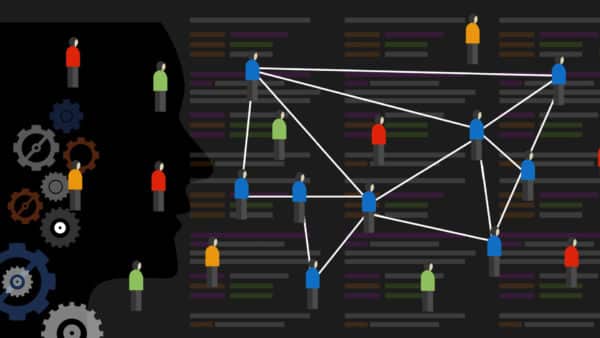
Learn the role that natural language processing plays in making Google search even more semantic and context-based.

Learn how to get the best out of the relationships between words, topics and pages to maximize your SEO results.

Want to understand how machine learning impacts search? Learn how Google uses machine learning models and algorithms in search.

Is MUM Google's next step toward becoming a purely semantic search engine? Learn what MUM could mean for the future of SEO.
From RankBrain, Neural Matching, BERT and MUM - here is how Google uses AI for understanding language for query, content and ranking purposes.

Google has also provided new details for when searches are identical to a given keyword as well as when a search isn’t identical to any of an advertiser’s keywords.
“There is no expectation that it will become this question-answering system,” Nayak told Search Engine Land, adding that such a system is “just not useful” for complex needs.

This might be the voice search functionality we’ve all been waiting for.

Multitasking is the key differentiator, enabling MUM to acquire knowledge, understand and generate language and interpret text, images and video all at the same time.

The controversy around AI researcher Timnit Gebru’s exit from Google, and what biased language models may mean for the search industry.
How Google leverages BERT depends on the use of the term ‘Passage Indexing’ (although it’s identified as a ranking update).
Google announced numerous improvements made to search over the year and some new features coming soon.
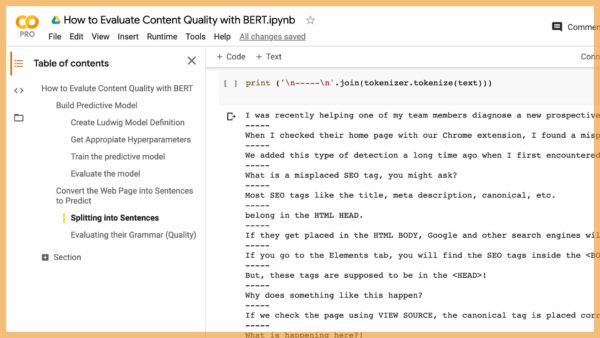
Using a code-free deep learning toolkit model to review grammar in your posts and could be used as one of several proxies for content quality.

What’s past is prologue. Here’s our recap of the stories that will shape search for years to come.
From core updates to BERT, here are the big algorithm changes that shook up search rankings in 2019.

The algorithm was first introduced to search in October.

The natural language processing capabilities are now applied to all Bing queries globally.

What it is, how it works and what it means for search.
Get the full backstory of the algorithm's evolution and how BERT has improved human language understanding for machines.
Don't try to optimize for BERT, try to optimize your content for humans.
BERT will impact 1 in 10 of all search queries. This is the biggest change in search since Google released RankBrain.