Trump gives TikTok until Dec. 16 to secure U.S. buyer
Brands and advertisers face fresh uncertainty as President Trump's executive order keeps TikTok alive in the U.S. as negotiations drag on.
Brands and advertisers face fresh uncertainty as President Trump's executive order keeps TikTok alive in the U.S. as negotiations drag on.
Advertisers targeting EU audiences must brace for sweeping new political ad limits and mandatory self-declaration – or risk losing access.
TikTok advertising confidence continues to erode. New data shows double-digit CPM declines and significant budget shifts to Meta's platforms.
TikTok’s brief U.S. shutdown and legal uncertainties signal a wake-up call for advertisers to diversify strategies and navigate risks.

TikTok to be banned for 170 million U.S. users, disrupting campaigns and forcing brands to pivot organic and paid strategies.
Despite cooling ad spend growth, TikTok remains a compelling advertising platform due to its massive user base and strong engagement rates.

Advertising sensitive products on Google Ads? Learn best practices for balancing policy compliance and marketing effectiveness.
TikTok says the measure, signed into law by President Joe Biden today, is unconstitutional and plans to challenge it in court.

The US government, worried about China's manipulation, seeks to manipulate TikTok to do what it wants.
The recent spy balloon incident could be a tipping point in the strained relationship between the US and China, leading to the US government taking action due to security concerns.

Elon Musk and Twitter continue to remain in the spotlight, for better or worse. Here is everything brands and marketers need to know.

Google's SOPA/PIPA prorest, plus: URL changes, Google core algorithm updates, AdWords mobile targeting, stop words and more.

The restriction period was also implemented in 2020 for the week leading up to General Election Day.

Plus, why you should automate more PPC tasks
Amidst the volatile US political climate, Google has banned all ads mentioning political topics until after the inauguration.

We'll save you a click. Google's banning click bait ads.
There's still a long way to go to fix the fake-news problem, but even further for Bing according to a new Stanford report.
The number of removed ads was down, but banned advertiser accounts nearly doubled from 2017.
Once the language is finalized, each member state will need to ratify the directive.

This case highlights the lack of protection and justice available for online defamation victims from Google and other tech companies.
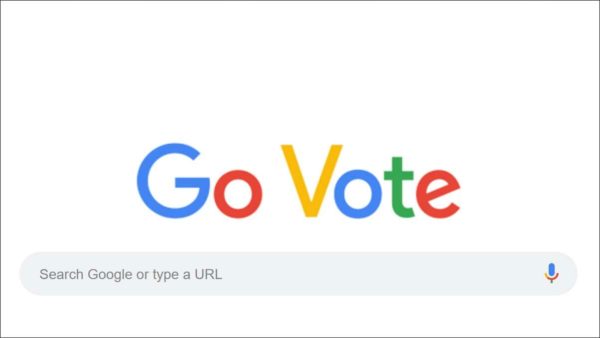
Gone are the days when the internet was simply a tool to learn more about candidates and issues.
The new rules, which require member-state approval to go into effect, amount to a kind of 'GDPR for copyright.'

Company reportedly has been meeting with officials and developing prototype search apps that comply with Chinese censorship demands.
New campaign finance rules require near real-time disclosure of data.
Legislation seeks to clean up copyright but also to subsidize traditional media at the expense of internet companies.

The updated financial product and services policy will take effect in June.
Due to increased scrutiny of how these ads affect users and voters, company says more transparency intiatives are to come.

The autocomplete search function saves 200 years of typing time every single day.

The US court agreed with Google that implementation of the Canadian court's ruling would violate US laws, including the right to free speech.
Another side effect of the opioid epidemic: A marketing environment ripe for abuse.
Regulators and courts seek to assert authority over global search results rather than limit decisions to their own countries.
Decision is dangerous to free speech and the free flow of online information.
According to the announcement, Bing's updated RTBF policy for the EU will use location-based signals to remove relevant URLs on all versions of Bing.
Google offers an autocomplete suggestion of "Lying Ted" for "lying" but fails to do something similar for Clinton, raising questions.
CNIL in France refuses to compromise on demand that Google remove all Right to Be Forgotten content from its entire index.
Links will no longer show for those in the particular country where a RTBF request was made, regardless of the Google edition they use.

Google keeps pulling away search features, but the removal of the google.com/ncr feature might be a mistake.

Setting up a potential international “conflict of laws” dispute, France’s privacy regulator (CNIL) rejected Google’s arguments against expanding the “right to be forgotten” (RTBF) to the company’s global index. Google had been limiting RTBF removals to European domains such as Google.fr. Privacy regulators in Europe have argued that the ability to access the “removed” content […]

Google has formally appealed France’s data protection authority’s order that Google apply Right-to-Be-Forgotten (RTBF) removals to its global index. The Commission Nationale de l’informatique et des Libertés (CNIL) had protested Google’s Europe-only removal policy and threatened to fine the company €150,000 ($169,000) for failing to apply the rule on a worldwide basis. Previously Google said […]
EU privacy regulators believe Europe-only application of rule undermines its effectiveness.