The latest data on AI citations vs. AI mentions


The best-performing brands aren’t just getting mentioned in AI search. They’re also earning direct link citations.
There are two ways your brand can show up in AI search: a mention or a citation. A mention happens when the AI platform names your brand in its answer but doesn’t include any links. A citation happens when it directly links to your content as a source.
While AI mentions build familiarity and feed into future searches, citations drive direct traffic and immediate conversions.
But data proves that achieving success in both AI mentions and citations is rare. Fewer than 30% of AI responses mention and cite the same brand. Research from Semrush shows that fewer than one in five brands are frequently mentioned and consistently cited as a source on AI platforms.
However, for the few brands that are finding success with citations and mentions, the conversion rates are significant: users who are referred to a brand’s site by AI convert at 23x the rate of organic search visitors.
We’ve compiled helpful data to clarify the relative impact of both mentions and citations, helping you see what truly matters for AI search and where your brand stands.
AI citations and AI mentions are not equal
An AI mention means that the platform finds your brand and determines that it’s relevant to the user’s prompt. The mention can be positive, negative, or neutral.
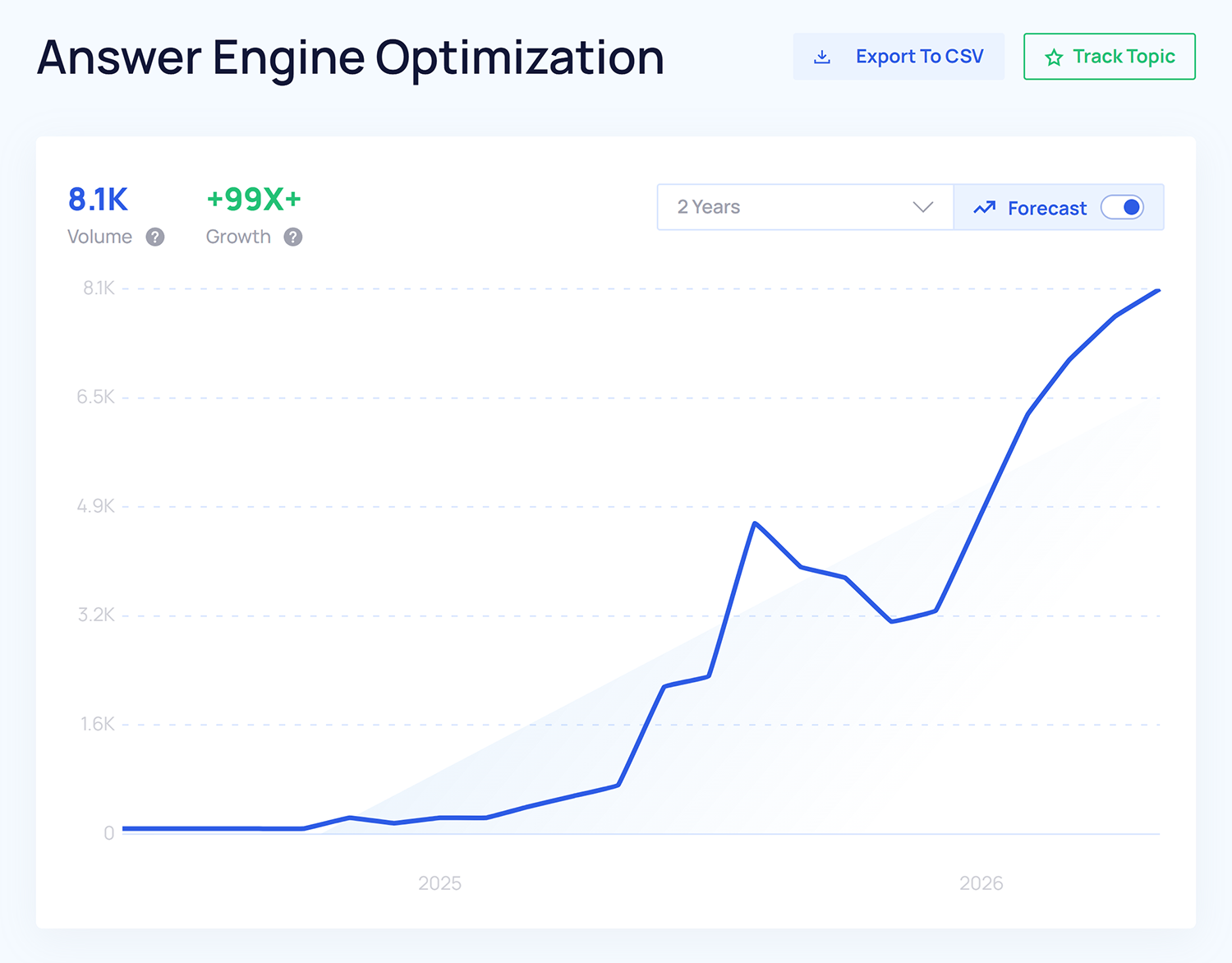
Exploding Topics data underscores the fact that this has become an important topic for brands over the past two years. Search interest has climbed more than 1,200% during that period.

Several factors feed into AI mentions: the AI model’s training data, the supplementary data sources the model uses, and the specifics of the user’s prompt are all important.
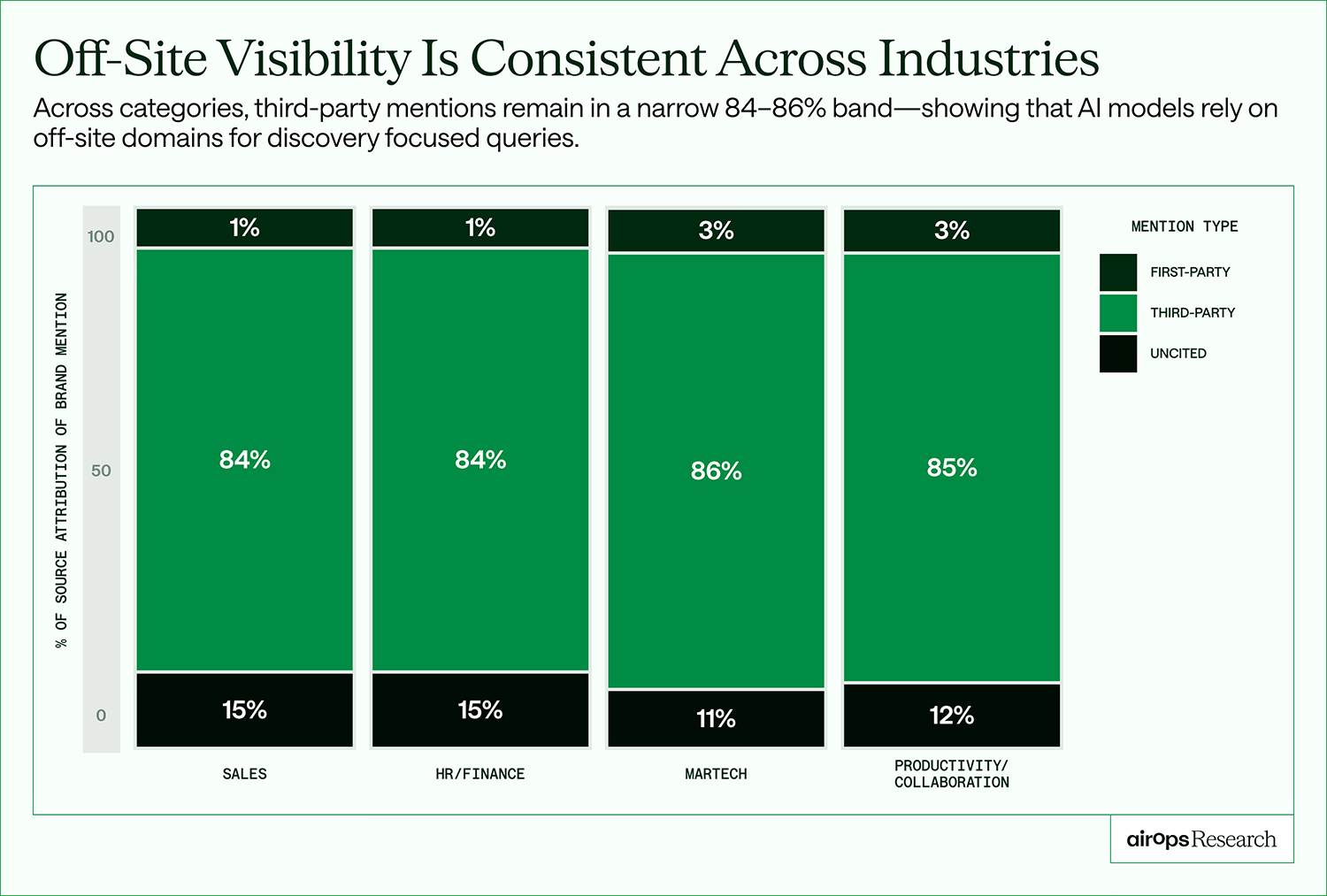
Data shows that third-party sites matter most. This includes sites like Trustpilot, Google Business, and Reddit, and also niche sites that publish listicles and best-of lists. Brands are 6.5x more likely to be mentioned on AI for their presence on a third-party site versus their own branded site. Just 13% of AI mentions come from a brand’s domain.
So where do AI citations come into the mix?
The truth is that AI platforms provide far more brand mentions than citations. Citations provide another layer of credibility to the AI platform’s answer, and only a few sites are chosen for this purpose. For instance, the number one link in the Google SERP is cited just 33% of the time in the AI Overview.
When looking at the reasoning behind this, the data shows there’s quite a bit of overlap between how AI engines choose brands to mention and brands to cite. Like mentions, third-party sites are the top sources of citations.
For example, Wix found that 40% of commercial-focused prompts cite listicles. Across all types of prompts, listicles are cited about 22% of the time. The analysis was quick to point out that in 81% of citations, these were third-party listicles as opposed to self-promoting listicles.
Research has also shown that 9% of total AI citations come from social media.
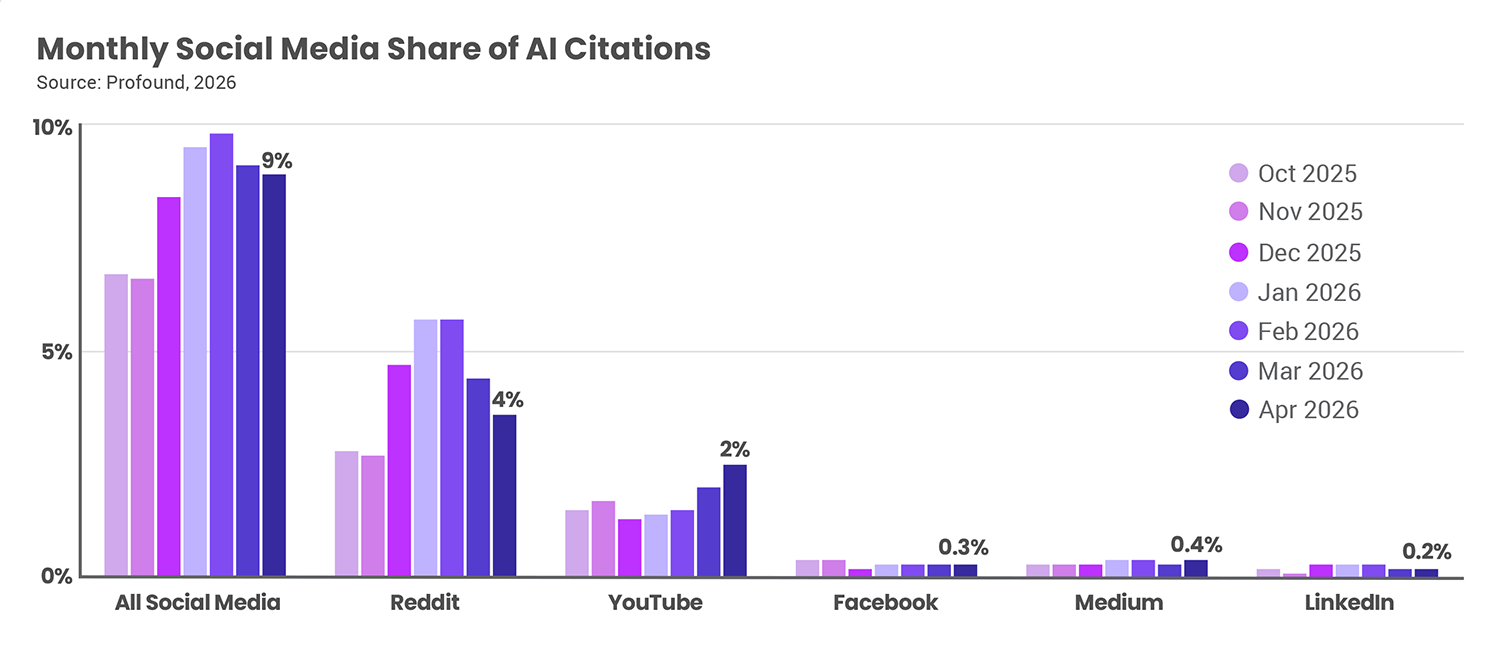
In fact, Reddit is the most-cited source across all AI platforms. YouTube and LinkedIn also rank in the top five.
Third-party articles are another well-documented way to earn AI citations. Journalistic articles account for more than one-quarter of all AI citations.
Differences across platforms
No two AI platforms think alike. They vary in terms of retrieval logic and methods, trust signals, and source preferences. In one analysis, nearly 70% of brands only appeared in one AI search platform.
Here’s a breakdown of the mention and citation preferences of three of the most popular AI platforms.
ChatGPT
Data shows that 60% of ChatGPT prompts are answered from its existing knowledge without reaching out to any other internet sources. However, nearly 90% of its citations align with the top 10 search results in Bing. ChatGPT also leans heavily on Wikipedia. Nearly half of all citations come from that source.
With this in mind, it’s not surprising that ChatGPT delivers the lowest number of first-party citations, averaging less than 11%. But it is the most diverse AI search provider. It pulls from its top 10 sources just 18.5% of the time.
Perplexity
Perplexity is known for its real-time retrieval abilities and authoritative search. It reportedly indexes more than 200 billion links in real-time and cites .edu sites more than any other AI platform.
Surprisingly, recent research found that its favorite source is Reddit, which is credited with over 46% of citations on the platform.

Perplexity is also heavily reliant on its top 10 most-used sources and pulls from that list in more than one-quarter of prompts.
Claude
Claude uses Brave Search on its backend, so it’s not surprising that many of its citations align with the top results from that search engine. In addition, one analysis found that Claude tends to favor smaller outlets in its citations. This means more niche publications and media sources.
It also relies on user-generated content more than any other AI platform. It cites links related to reviews and social media up to 4x more often than other AI models.
The business impact
There’s no question that AI citations generate traffic and revenue. One study found that brands mentioned in AI Overviews see a 35% higher CTR than uncited brands on the same query. And, AI visitors have been found to convert at 23x the rate of organic search visitors. However, this data point is an outlier. Most analyses do point to a positive conversion lift, but it’s much more conservative than 23x. For example, AI Overview citations have been found to perform roughly the same as a link in position six on Google’s SERP.
AI citations are also driving massive revenue gains for review sites like Trustpilot. In 2025, the site’s CTR from AI search grew by 1,490% YoY. That played a critical role in pushing Trustpilot’s annual operating profit up 320% to reach $16M.
The optimization strategies that work
Semrush data shows that the number of AI search visitors is set to surpass the number of traditional search visitors by 2028.

Optimizing for AI will only grow more important in the coming years. Although terms vary, answer engine optimization and generative engine optimization being two of the most popular, getting mentioned and cited in AI search is top of mind for many marketers.
Exploding Topics data shows that search interest in both answer engine optimization and generative engine optimization has increased by more than 8,800% in the past two years.
What actually increases the likelihood of your brand appearing in AI search? Here’s what the latest data says you should be doing.
- Prioritize marketing strategies on third-party sites. For many brands, this will drive more visibility on AI search than building backlinks because the vast majority of citations come from third-party community platforms rather than owned domains or traditional articles.
- Your content must be structured in a way that AI bots understand. For instance, pages with well-organized headings are nearly 3x more likely to earn citations than those that aren’t.
- Refreshing content is a must. Pages that are not updated quarterly are 3x more likely to lose their citation in AI search.
- Track AI visibility everywhere. Brand citations and mentions can vary by up to 615x across AI platforms.
Although there’s growing pressure to go all-in on AI search, do not abandon traditional SEO strategies. Experts recommend allocating about 40% of your total SEO budget to tried-and-true methods, while about 20% should be spent on overall tracking and 5% on experimental strategies like AI-native content and new platforms.
Explore more on
Editorial disclosure
Search Engine Land is owned by Semrush. We remain committed to providing high-quality coverage of marketing topics. Unless otherwise noted, this page’s content was written by either an employee or a paid contractor of Semrush Inc.
About the author