Google’s AI search guidance is naive and self-serving
Here's why you should take all of Google's latest guidance on optimizing for AI search with a grain of salt.

Here's why you should take all of Google's latest guidance on optimizing for AI search with a grain of salt.

A review of 25,000 URLs yielded insights about the type of content most cited by ChatGPT and other popular large language models.

AI visibility dashboards can’t answer the ROI question on their own. Here’s how to build a more credible GEO measurement model.

AI can scale SEO and GEO audits, but only if your system has the right data, methodology, and human oversight.

Many brands optimize for AI citations and extractability before establishing the clarity and relevance needed to enter the candidate set.

AI search is creating new visibility gaps for brands. These metrics help you track presence, influence, and inclusion across platforms.

Your customers see the whole SERP. You should too.

More than 3 in 4 people use AI for shopping — but trust drops to $0 when money’s involved. What that means for AI commerce in 2026.

Most GEO tactics don’t move the needle. Learn how brand positioning, category alignment, and third-party signals shape AI visibility.

Slow approval cycles and rigid workflows are costing enterprises AI visibility. Faster execution and structured data shift the balance.

Learn how to use query fan-out tools to improve AI search rankings on platforms like ChatGPT and AI Overviews, and track your optimization results.

As AI reshapes brand discovery, IBM outlines a 12-part system brands need to stay visible in machine-made decisions.

From AI poisoning fears to usability gains, AI buttons are sparking debate. Here’s a data-backed look at their real impact and limitations.

Google says it's aware of weak 'best of' lists and said it 'works to combat that kind of abuse' in Search and Gemini.

The real shift is machine-driven discovery, where AI agents research and decide before humans ever visit your website.

Join us April 1 for the first SMX Now, featuring iPullRank’s presentation: AI Search Picks Winners: Here’s the GEO Strategy Behind It.

Control how AI bots access your site, structure content for extraction, and improve your chances of being cited in AI-generated answers.

Learn how to structure clear, information-rich content that LLMs can extract, interpret, and cite in AI-driven search.

AI search is built on years-old patents. Here’s how those blueprints shape AEO, GEO, and modern SEO strategy.

AI systems rely on entities and relationships to understand and cite brands. Learn how schema and entity governance shape AI visibility.

The new search playbook ties content to revenue: win AI recommendations, cut defensive ad spend, and hold agencies to P&L results.

As AI search becomes conversational, prompt patterns reveal how questions evolve and how content appears in search results and AI answers.

SEO rarely has universal answers. From schema to domain age and 404s, context determines what actually impacts rankings and visibility.

How to get your brand cited, recommended, and discovered by AI search engines — a step-by-step framework.

New insights include total citations, average cited pages, grounding queries, page-level citation activity, and visibility trends over time.

Search patents reveal how AI search systems interpret intent, evaluate content passages, and build brand understanding in generative results.

AI systems don’t evaluate pages the way search engines do. Learn how extraction, embeddings, and structure determine reuse.

A practical approach for tying earned media to search behavior, downstream conversions, and visibility in AI-generated answers.

AI search sentiment is positive, but consistency isn’t. Data shows why volatility – not acronyms – is the real risk.

New data shows people use ChatGPT to find local healthcare and aesthetics providers through short prompts, keywords, and limited follow-up.
Hype cycles come and go. But real SEO gains still depend on trust, crawlable data, and meeting user needs — not chasing the latest novelty.

Why AI search advice spreads without proof, how to evaluate GEO claims, and which recommendations actually stand up to scrutiny.
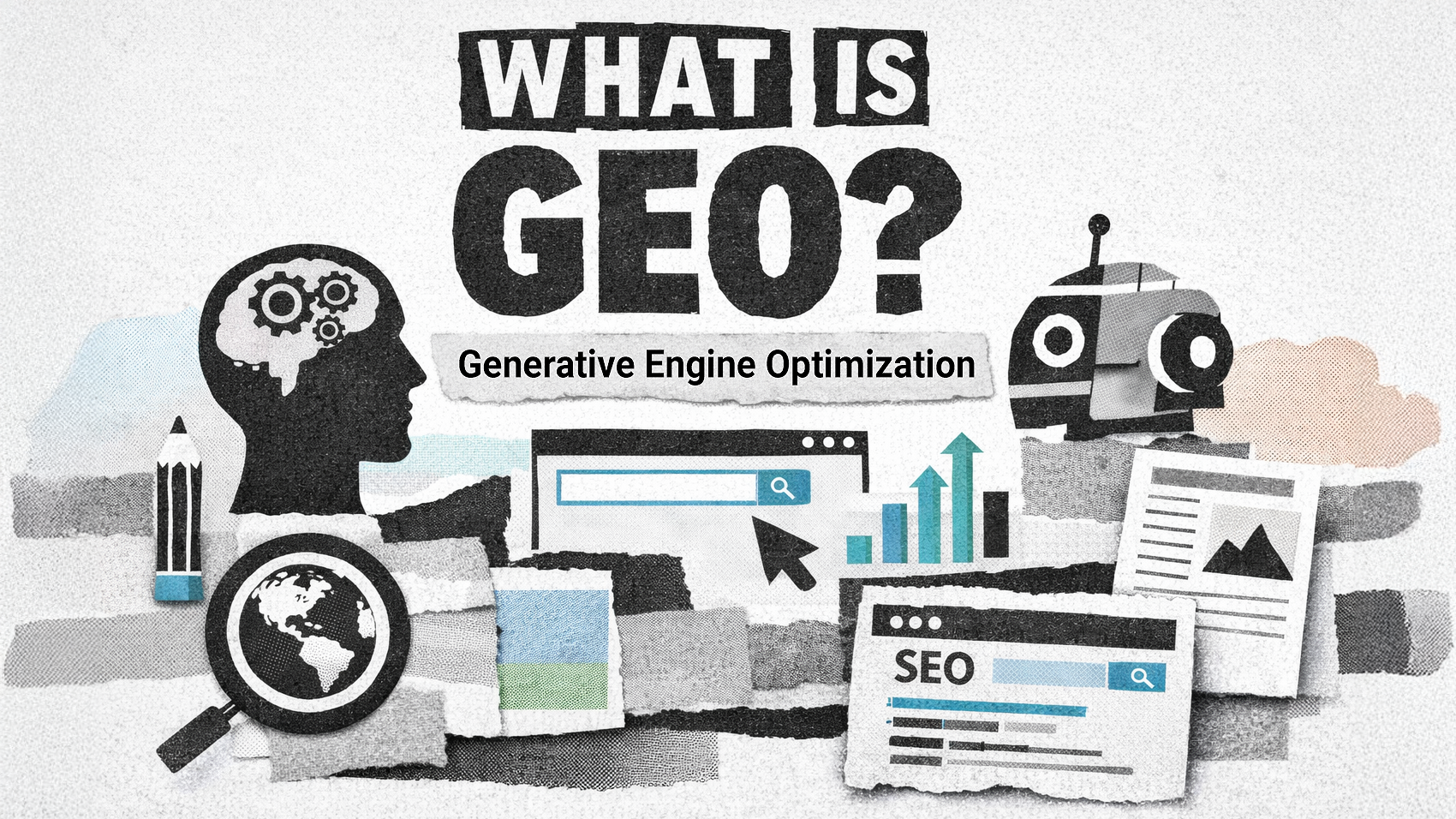
Learn how Generative Engine Optimization (GEO) helps your content get retrieved, interpreted, and cited inside AI-generated answers across ChatGPT, Perplexity, and Google AI Overviews.

Learn how AI content optimization helps your website get cited by ChatGPT, Perplexity, and Google AI Overviews.
AI answers are taking clicks from publishers. Media companies warn that Google Overviews and chat experiences are speeding up traffic loss.

AI didn’t kill copywriting. It killed low-grade informational SEO. Persuasion, positioning, and clarity now matter more than traffic volume.

As search shifts to AI-driven answers, YouTube is becoming key source material. Brands that underinvest in video risk losing visibility.
AI isn’t going away, but Mueller says strategy beats semantics. Focus on how users really find and engage with your site.

From probabilistic answers to off-site signals, AI visibility works differently than SEO. These seven truths explain how and why.

Answer-first content, structured data, and authority signals shape AI-driven search. This 90-day plan explains how to put them into practice.