DTC LLM visibility: A case study on how vertical authority wins AI mentions

H&M sells period underwear. Uniqlo sells period underwear. Victoria’s Secret sells period underwear. But in 20 buying-stage searches across ChatGPT and Google AI Mode, these brands only appeared twice.

Knix showed up 29 times.

Why?
Because visibility in large language models (LLMs) isn’t inherited from massive brand size. It’s engineered through repeated, structured signals. This means direct-to-consumer (DTC) brands that understand how LLMs learn can compete with anyone.
Knix — a period underwear and intimates brand — has a key strength for AI visibility: vertical authority. Large brands are horizontally dominant. They cover a huge range of products, crossing genders, age groups, sizes, and needs. Knix, on the other hand, fits a specific vertical. And they’ve engineered repeated signals that AI reads as authority.
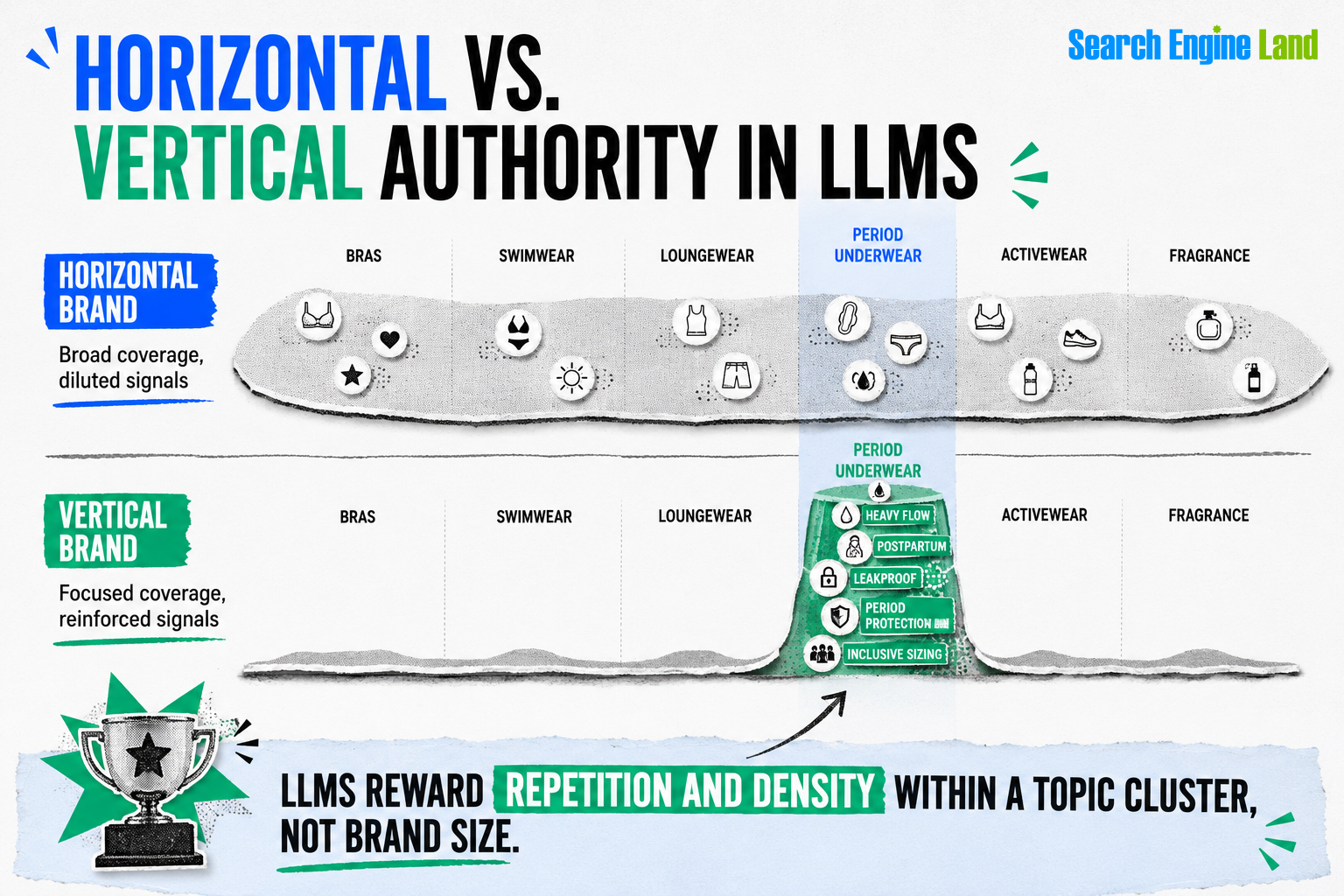
In this DTC LLM visibility case study, we dug deeper into why Knix appears so often in AI answers. We found that DTC brands don’t need to fight against the biggest brands. Often, they’re uniquely positioned to win.
Let’s look at six ways that Knix is winning LLM visibility, and how your DTC brand can copy their example. We’ll also dissect two areas where Knix could improve their visibility in AI search.
Narrating a brand story with a clear differentiation
AI systems don’t work like traditional search engines. Instead of just matching keywords, they build a contextual understanding of a brand and its products. Then, they use that understanding to match the right queries.
Your brand needs a consistent, specific point of view. Then, it’s easier for AI to associate it with certain themes, audiences, and use cases.
Knix has done this from day one (even before AI search existed). They anchored messaging around one idea: “living unapologetically free.”

That messaging shows up in campaigns, product copy, and media coverage.
For example: Knix was among the first lingerie brands to show products on people of every size, starting way back in 2013. In 2020, they launched a TV campaign featuring only women over 50 — highly unusual in lingerie marketing. And founder Joanna Griffiths regularly appears in the press. She talks about body positivity, postpartum bodies, and inclusivity.

That consistency also extends off-site. For example, investor profiles and business publications frame Knix as a disruptor in intimate apparel.

So, how does this tie back to AI visibility?
Searches like:
- “Intimates brands that are inclusive for postpartum bodies”
- “Best age-inclusive lingerie brands”
- “Body-inclusive lingerie brands”
Surface mentions of Knix almost every time. That’s not surprising, because they’re known for inclusivity and product function.

AI doesn’t guess who you are. It reflects what the web repeatedly says about you. So what happens when Knix consistently appears alongside topics like body positivity and inclusive sizing? A demonstration of vertical authority in practice: AI doesn’t just know what Knix sells — it knows what Knix stands for.
That clear differentiation helps Knix stand out in the right searches.
Action item: Engineer the brand message you want AI to learn
If you want AI to associate your brand with specific themes, you can’t leave it to chance. You have to deliberately reinforce those themes everywhere your brand shows up.
Here’s a simple framework for ecommerce AI visibility with the right brand message:
- Define one to three core associations for your brand: Decide what you want to be known for beyond your product. Don’t stop at “high quality.” Think: “size-inclusive activewear for new moms” or “sustainable basics for sensitive skin.”
- Audit your owned channels: Check your homepage, About page, top product categories, and top blog posts. If someone skimmed them for 30 seconds, would those associations be obvious?
- Reinforce the same themes off-site: Brief creators, PR partners, and media contacts on the positioning you want repeated. AI learns from third-party sources as much as from your own website.
- Test and refine: Run AI queries like “Which brands are known for ___?” or “Best ___ for ___?” If your brand isn’t listed, refine that message.
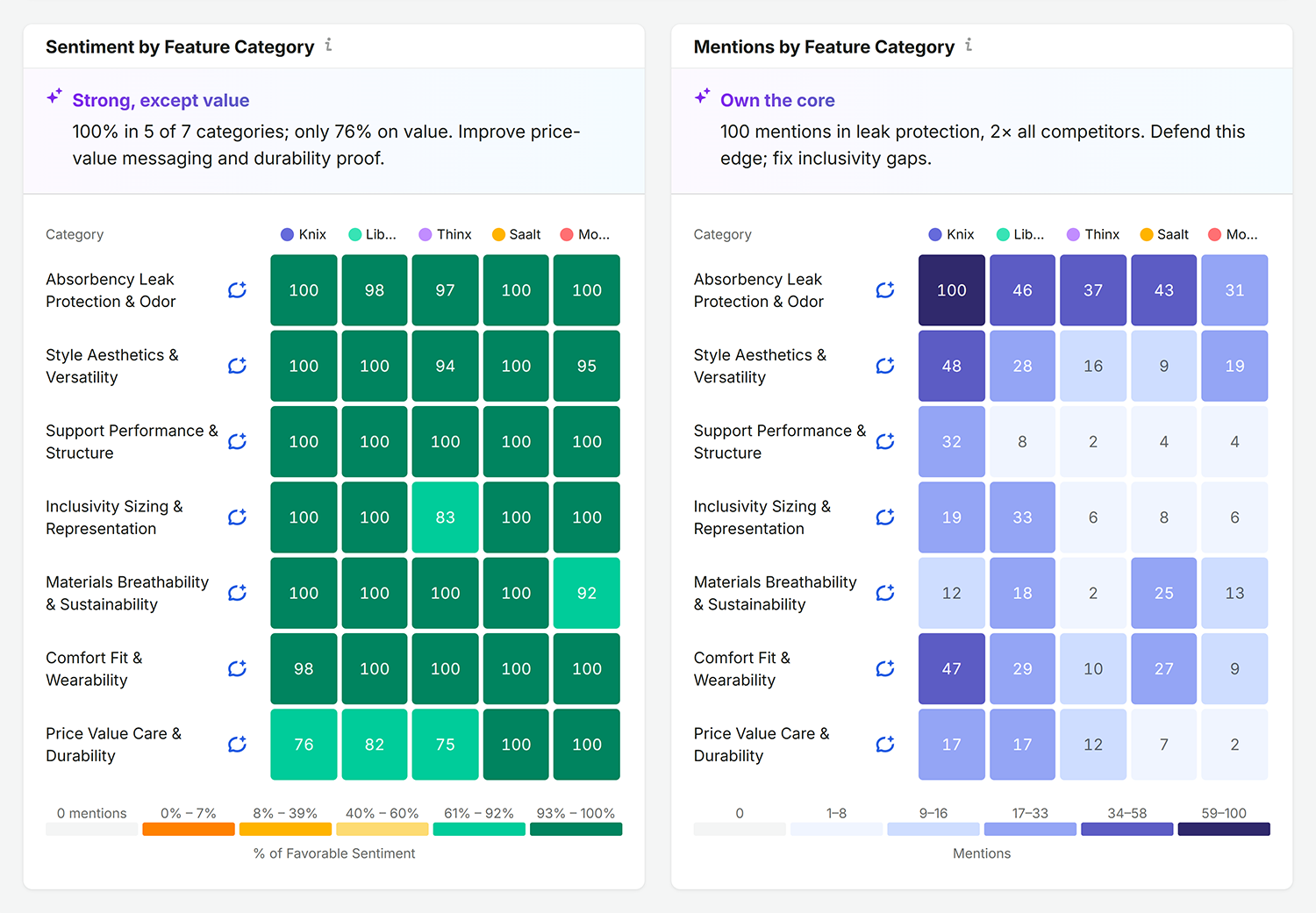
Tool tip: Want to see how your brand is perceived by AI, and which narratives are driving mentions? Use Semrush’s AI Visibility Toolkit. Head to the “Perception” tab, and you’ll see brand sentiment and mentions by features and topics. Plus, you’ll learn how your brand compares to top competitors.
Building content that gets cited
AI systems love to quote pages that directly answer real questions.
And skimming Knix’s blog, it seems likely their own content is a factor directly impacting their visibility in AI search. They consistently publish content that solves specific, recurring problems.

To test this theory, we checked the data in Knix’s AI Visibility Overview in Semrush. And we found that a lot of their blog posts are getting consistent citations in AI search:
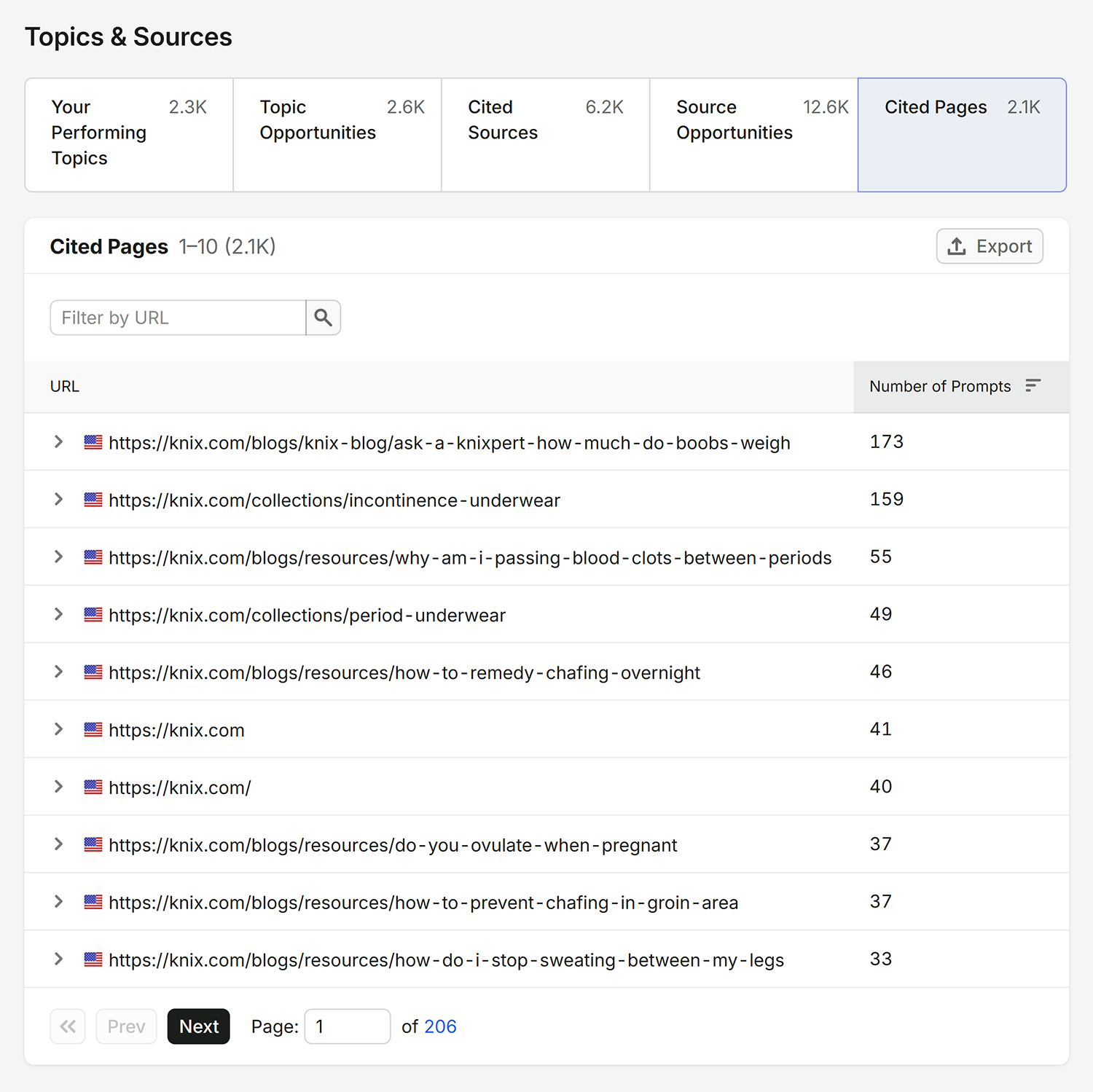
That includes top-of-the-funnel (ToFu) topics like “do you ovulate when pregnant” and “how do I stop sweating between my legs.”
But it also includes other topics that are more closely related to their product. Things like: “what’s the best incontinence underwear” or “how to wash period underwear.”

The fact that Knix shows up in these searches isn’t accidental. They’re actively targeting buying-stage friction with clear, specific content.
Action item: Find and answer real audience questions
Brainstorming content ideas in a vacuum is no fun. Instead, reverse-engineer ideas from real conversations. Let’s talk about two ways to do this research using social media and communities: social media and video research and visiting forums.
First, do social media and video research
To start, find the top 10-20 voices in your industry.
A tool like SparkToro can help you with this. But if you’re looking for a starting point on a budget, do a specific search with AI. Describe your audience clearly, and then ask for the most popular social media accounts that cover a relevant topic.
If we were doing this research for Knix, we’d ask Google’s AI Mode for social media accounts that talk about menstrual cycles and reusable period products.

Once you have a clear list of accounts, analyze these two things:
- First, what topics are they posting about? And which of those are getting the most engagement?
- Second, what are people saying in the comments? What content do people relate most to? What questions are they asking?
While checking out some of the social media accounts from the list that Google returned, we found an influencer posting about period underwear. Commenters underneath asked questions like:
- Does period underwear still work on heavy days?
- How do I wash them?

Coincidentally (or not?), these are all topics covered on Knix’s blog.
Next, look at community spaces, like online forums
For Knix, subreddits like r/Periods or r/PeriodUnderwear are full of unfiltered questions from their main audience.
These places can be a goldmine of ideas. But — more importantly — they help you understand how your audience talks about the problems they’re facing (and the solutions they’ve found).

After you’ve gathered data using your own research, you can use AI to validate what you’ve found.
Ask questions like:
- What are common questions about ___?
- Why do people struggle with ___?
When we asked ChatGPT this question, its response included links to real conversations on Reddit and other community pages:
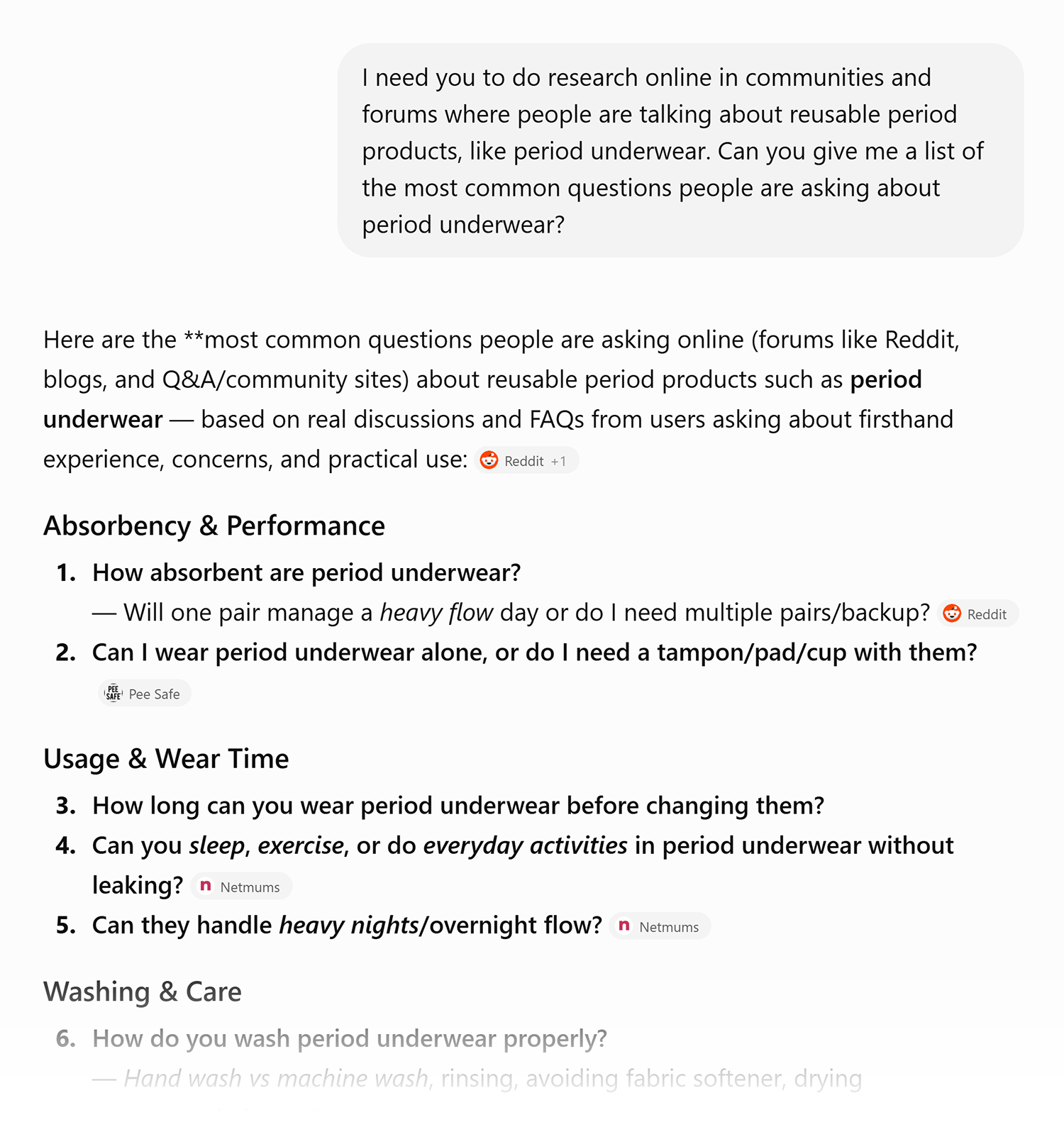
The goal: Identify real questions people are asking, and use those answers to shape your content. Then, when your audience asks those same questions to AI, your content could be part of the answer.
Of course, citations aren’t as exciting as a brand mention in an AI answer. But a good network of authoritative, citable content is also a signal for AI that your brand is trustworthy.
Each cited post deepens Knix’s vertical authority — reinforcing the same specific niche across hundreds of AI queries.
Using descriptive language on product pages and website navigation
AI may be great at understanding context. But it can’t infer what you mean about your products. It relies on what you explicitly say.
Clear product language helps AI systems match your product to specific, high-intent queries. Especially when you call out use cases.
Knix doesn’t just label categories generically (“underwear,” “bras,” “swim”). To start, the page navigation reflects use cases and functional benefits. Words that people use in search, like “period,” “bladder leaks,” “overnight,” or “sweat and discharge.”

On product pages themselves, titles and descriptions clearly state what the item is for, not just what it is.
For example, product names include descriptive words like:
- Leakproof
- High rise
- No show
And the product page highlights key features like absorbency, comfort, and washing instructions.

It gets better. The product description lists specific use cases for the product, including heavy periods and postpartum recovery.

How does this affect LLM visibility for Knix? We checked it out using Semrush’s AI Visibility toolkit, under “Brand Performance” and found that AI search consistently mentions the same features highlighted on their product pages.
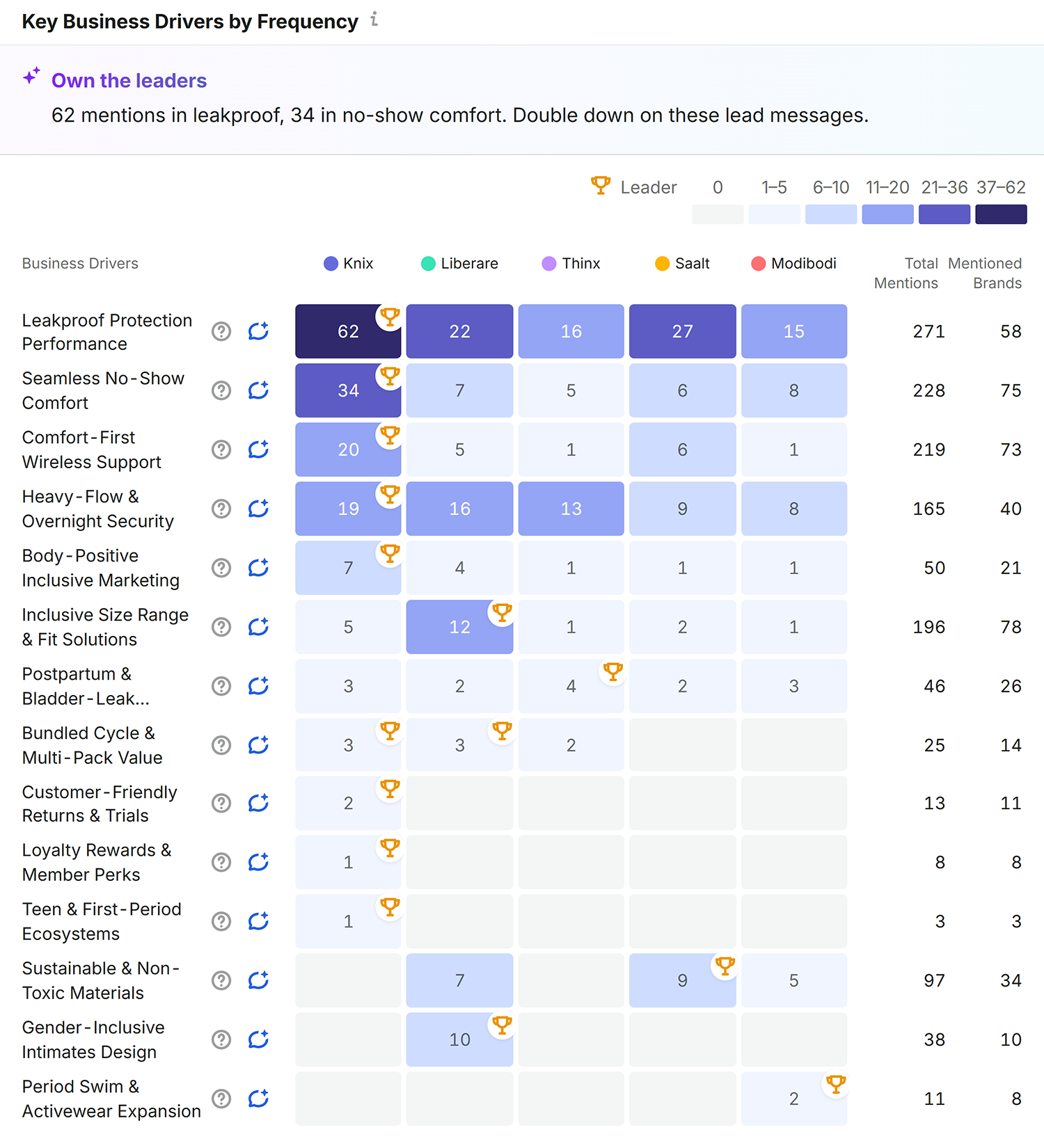
And Knix is outperforming its competitors in these high-intent topics.

Of course, LLMs don’t rely on your product pages alone. They also pull from press, reviews, and third-party discussions (we’ll dive into these more below).
But your product detail pages (PDPs) are the foundation. If the core information isn’t clear and specific there, third-party mentions have nothing solid to reinforce. With this foundation in place, AI can gather the details before cross-referencing them elsewhere.
Pro tip: Strengthen your retailer PDPs, not just your own site. Semrush data from February 2026 shows Amazon is one of the top sources cited in Google AI Mode answers. Other major retailers are also referenced, depending on the category. This means AI is pulling data about your products from retailer listings. If your Amazon (or other retailer) PDPs are thin or inconsistent, you’re weakening visibility.
Knix keeps product language and imagery consistent across its site and Amazon. They adapt to the platform while keeping the message aligned. When you create that kind of cross-platform consistency, it reinforces trust. And trust is what AI systems tend to surface.
Action item: Rewrite your PDPs around use cases
Start by listing the top five real-world scenarios your product is used in. Not abstract benefits — specific contexts.
If you don’t have these? Spend some time talking to your customers. Ask questions like:
- What made you consider purchasing this product?
- What was happening at the moment you decided to buy from us?
- How often do you use our products?
- When has this product been most useful to you?
Even simple post-purchase surveys can give you a starting point. The idea is to collect as much data as you can, and parse that into the most common responses. The end result: You’ll have a clearer understanding of the specific situations when your customers use your products.
Then audit your navigation labels, category page headline, product titles. Check the first 100 words of product descriptions.
Ask: Would someone searching “best ___ for ___” see their exact situation reflected in this copy?
If not, make it explicit.
Use product names and titles that show exactly what each product is for, like Knix does:

That clarity compounds.
When your PDP language mirrors how customers describe their problems, AI can connect the dots faster — and more often.
Adding structured social proof to strengthen trust signals
Brands that surface structured credibility signals appear more frequently in AI-generated answers.
To help prove this, Backlinko analyzed the top 50 ecommerce brands with a medium to high AI visibility score in Semrush’s AI Visibility Overview tool.
Of those, 82% featured awards and certifications on their product pages (like industry recognition or sustainability certifications).

That’s correlation and not causation, but it’s a strong pattern. Proven credibility builds trust. And trust helps LLM visibility. Knix plays into this by providing the validation that AI needs right on their product pages.
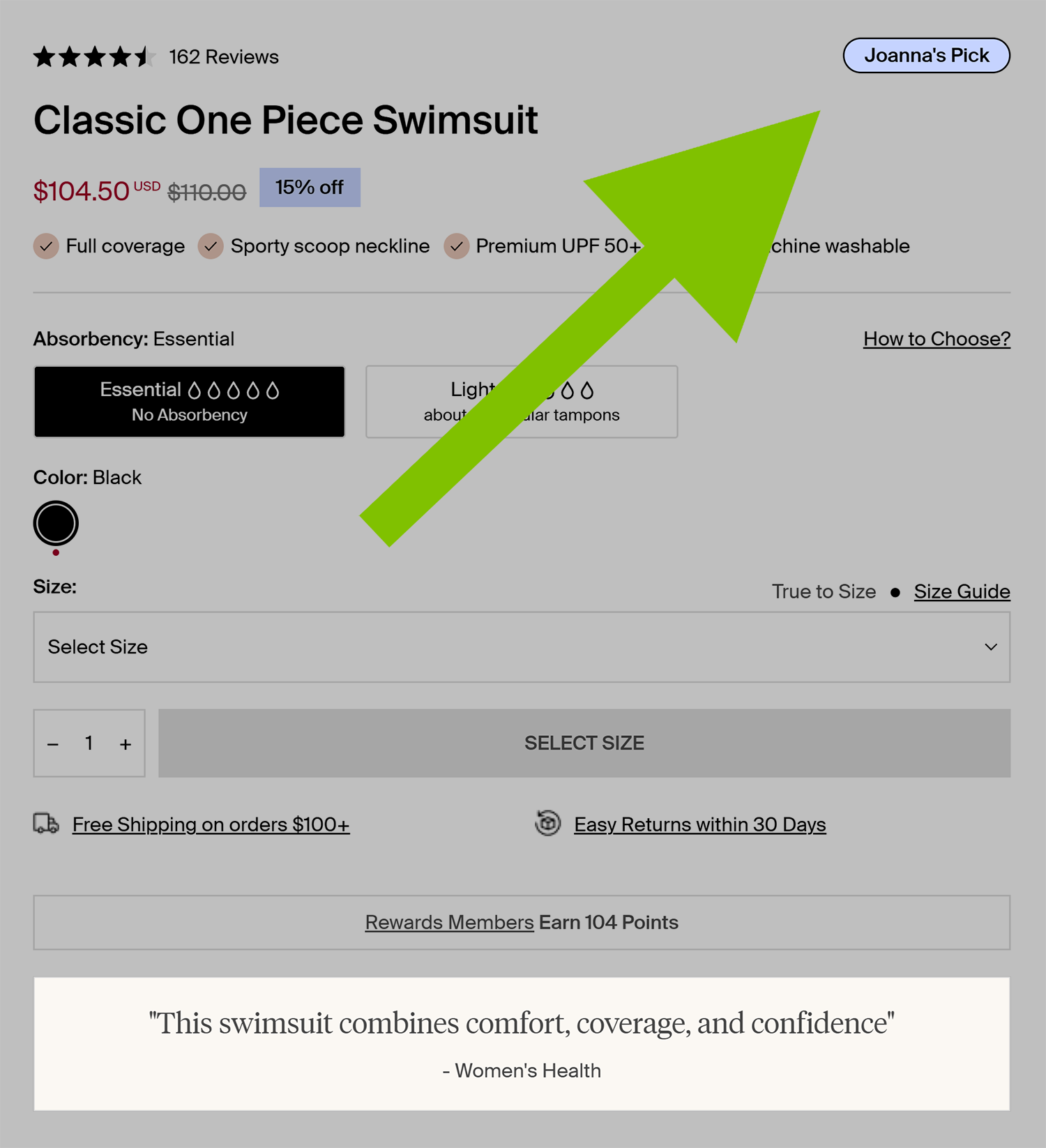
For example, some product pages include labels. This one piece swimsuit is labeled “Joanna’s Pick,” highlighting the founder’s approval. It also features a quote from a third-party review article.
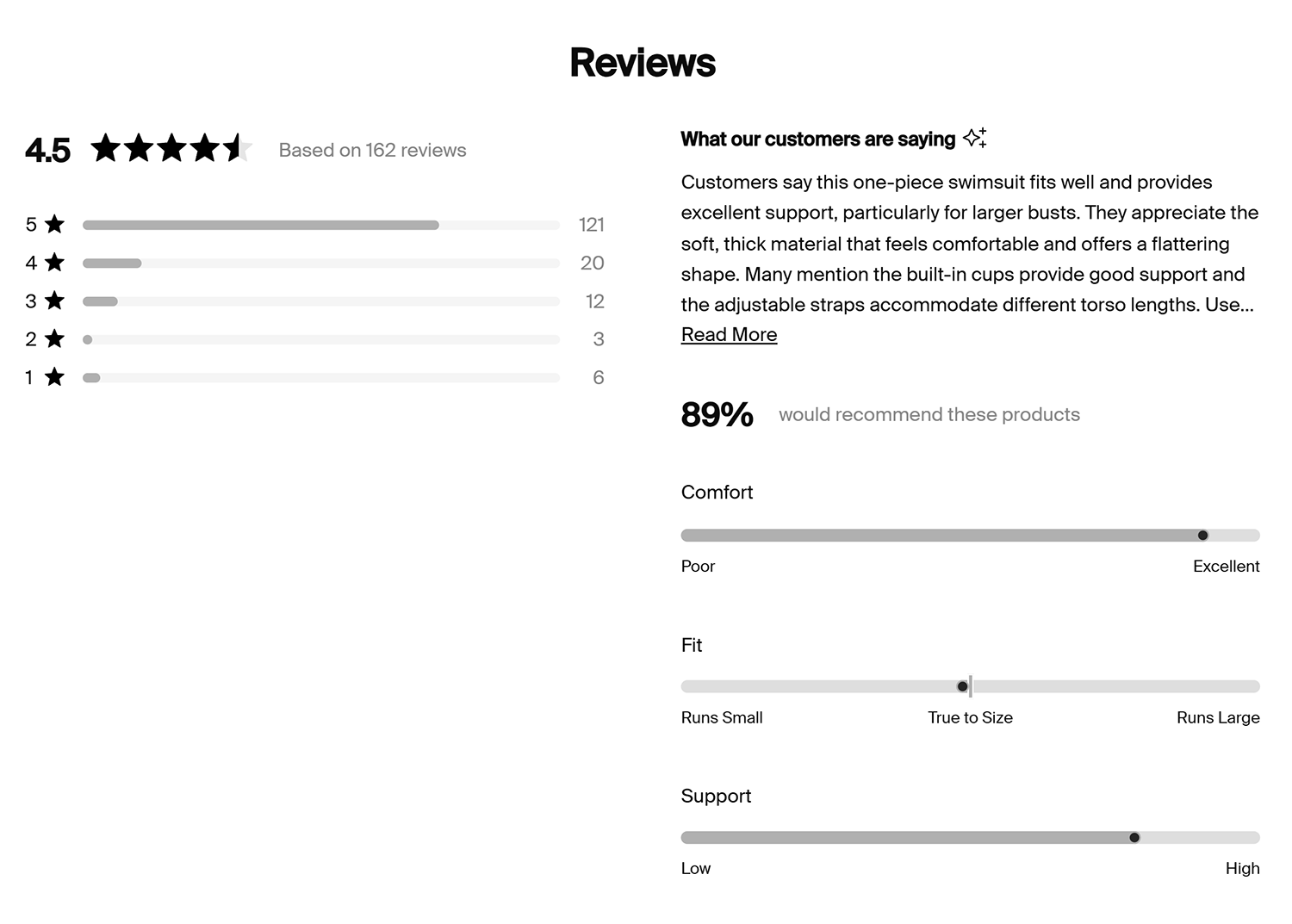
Reviews are also well-structured and easily searchable (for people and AI). You can see star ratings broken down by comfort, fit, and support.
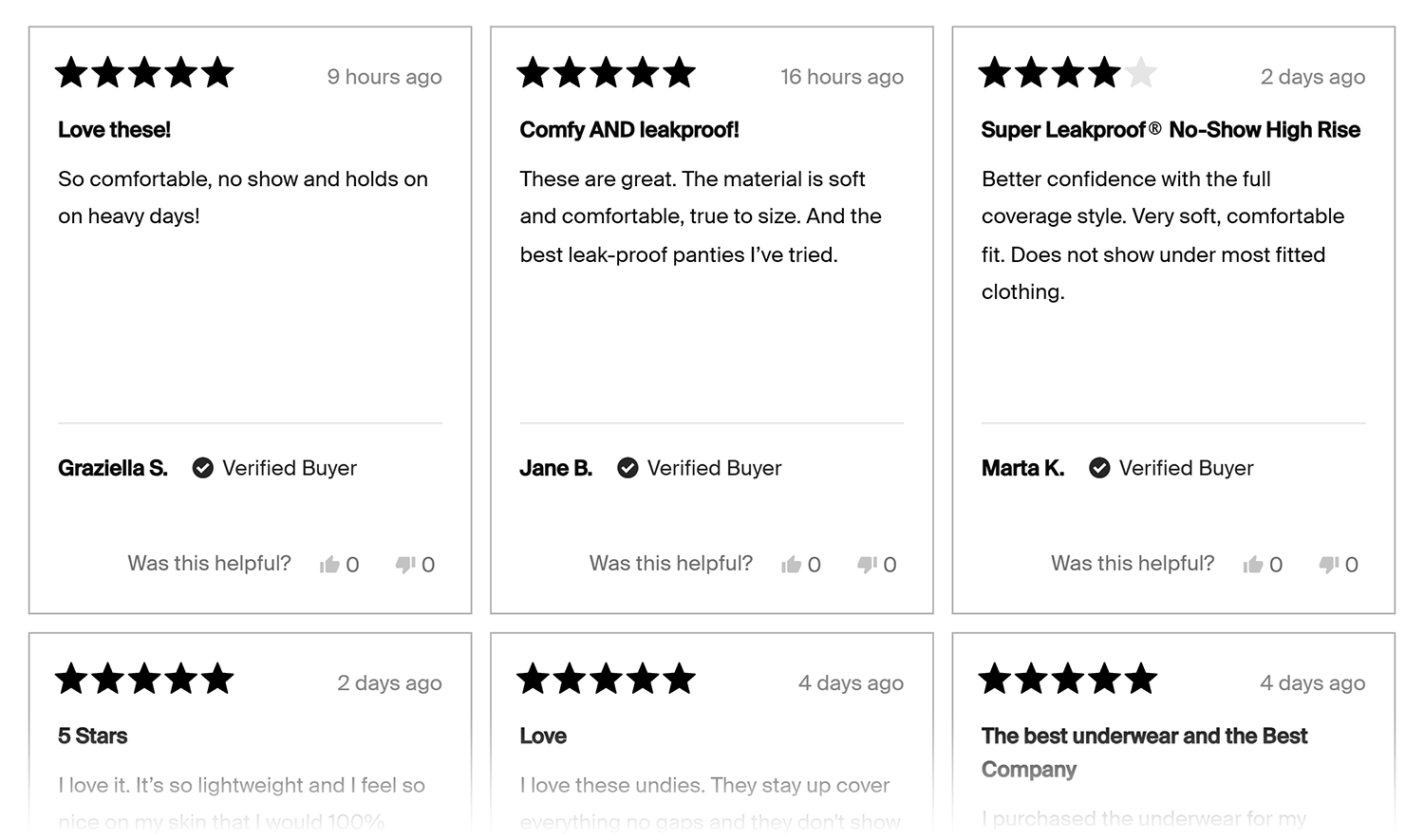
Review filters also allow you to see the size a reviewer purchased, or the way they planned to use the product.

In this case, multiple users who purchased the 3XL size talked about how comfortable this product is.
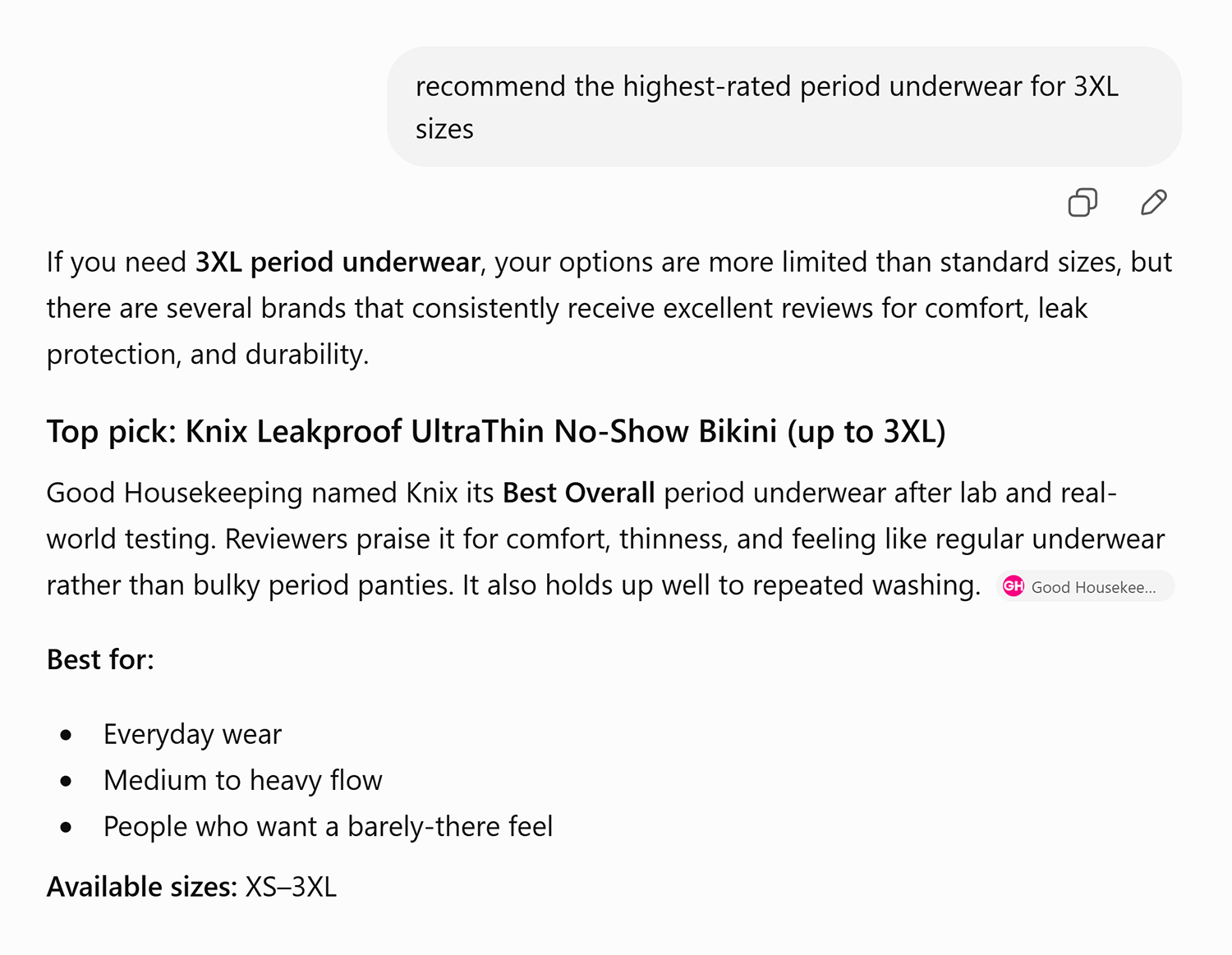
To test out how this affects AI search, we asked ChatGPT to recommend the highest-rated period underwear for 3XL sizes. And the top pick was Knix:
Pro tip: For DTC LLM visibility, reviews on retailer PDPs also matter. For example, Knix also sells their products on Amazon. And in this analysis, it appeared that LLMs also pull data from those PDPs and the reviews listed there. The point: monitor your reviews on all retailer sites. And if your owned domain has fewer reviews? Pull in direct quotes from reviews on Amazon or other retailers. This helps prove consensus and consistency to LLMs.
Action item: Turn social proof into structured signals
Start by auditing your product pages. A well-structured PDP should clearly display:
- Star ratings and review volume
- Category-specific ratings (comfort, fit, durability)
- Awards or certifications
- Quotes from reputable publications
Add as many of these as possible above the fold.
Pro tip: Labels aren’t necessary on every product page. But occasionally using something like “Best Seller” or “Founder’s Pick” can help elevate certain products.
Next, make reviews easier to generate. Post-purchase email flows, SMS reminders, and incentives can help increase review volume. That’s a strong signal for consensus.
Finally, if you’ve earned third-party recognition, don’t leave it on a press page. Surface it directly on your PDP. (We’ll talk more about how to earn third-party mentions below.)
Structured social proof compounds vertical authority. The more AI sees consistent validation of the same claims — across reviews, awards, and press — the stronger the association becomes.
Running always-on creator campaigns
We’ve seen what Knix does on their own domain with their homepage, blog posts, and product pages. But AI doesn’t just focus on your page. It gathers information about your brand and products from all over the web. Working with creators builds a network of repeated mentions across social channels. LLMs use those channels to source information.
How do we know?
Semrush data from June 2026 listed the top 10 sources of information in AI answers from Google’s AI Mode.
Instagram, TikTok, and YouTube were included.
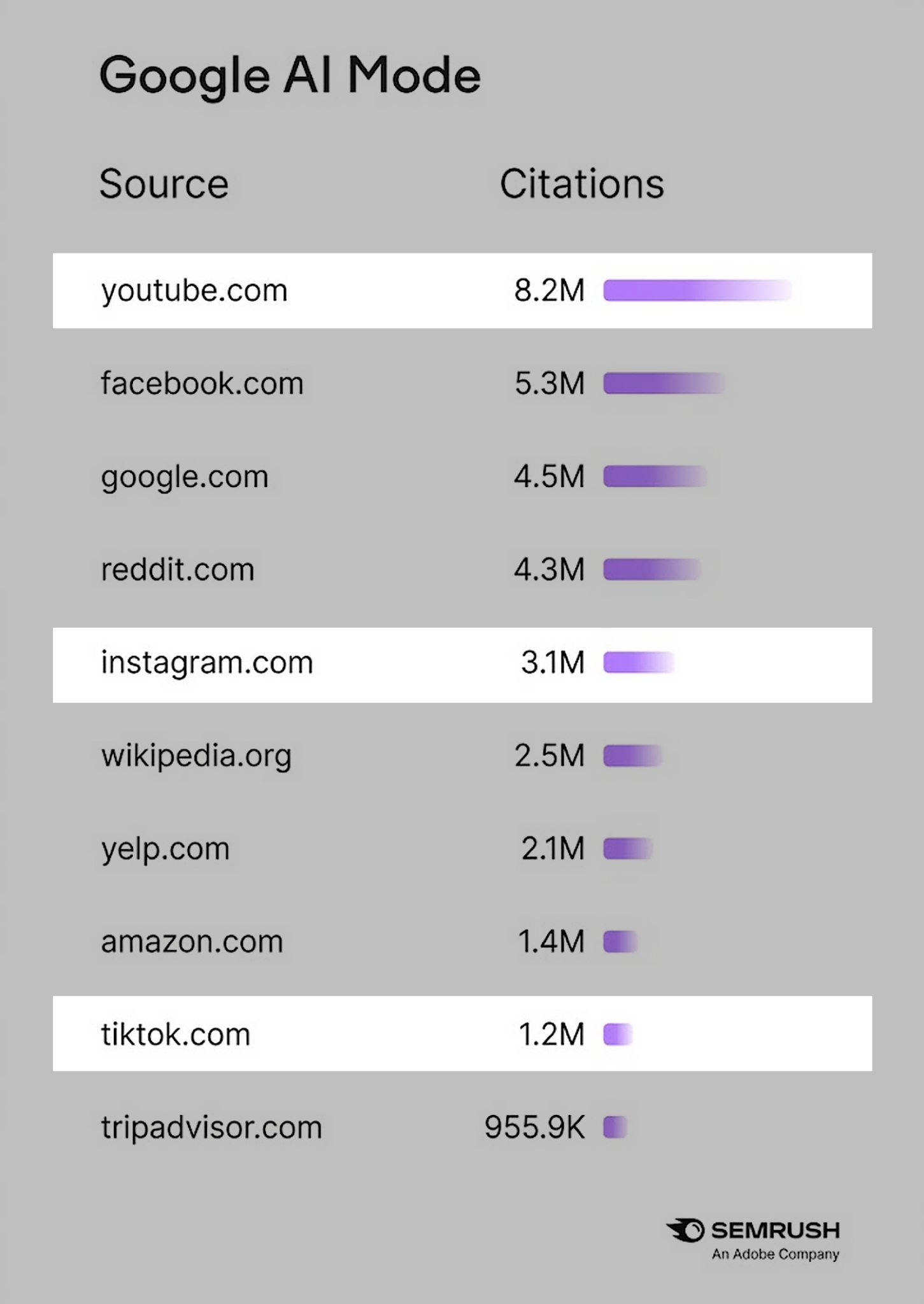
Here’s what that means: AI rewards you when independent sources mention your brand. But while one-off influencer posts can create spikes, an always-on approach creates patterns.
That’s another key to this LLM case study. Knix runs an ongoing ambassador program and long-term partnerships. That builds more distributed mentions over time.

For example:
- Their formal Campaign Ambassador Program recruits ongoing brand partners
- Creator partnerships generate recurring tagged content and product discussions
- Collaborations — like with body positivity advocate Ashley Graham — earn dedicated media coverage
These aren’t isolated posts. They generate a steady stream of branded mentions across platforms.

This leads to distributed repetition. Which then helps Knix show up more consistently as the first recommended option in relevant searches.
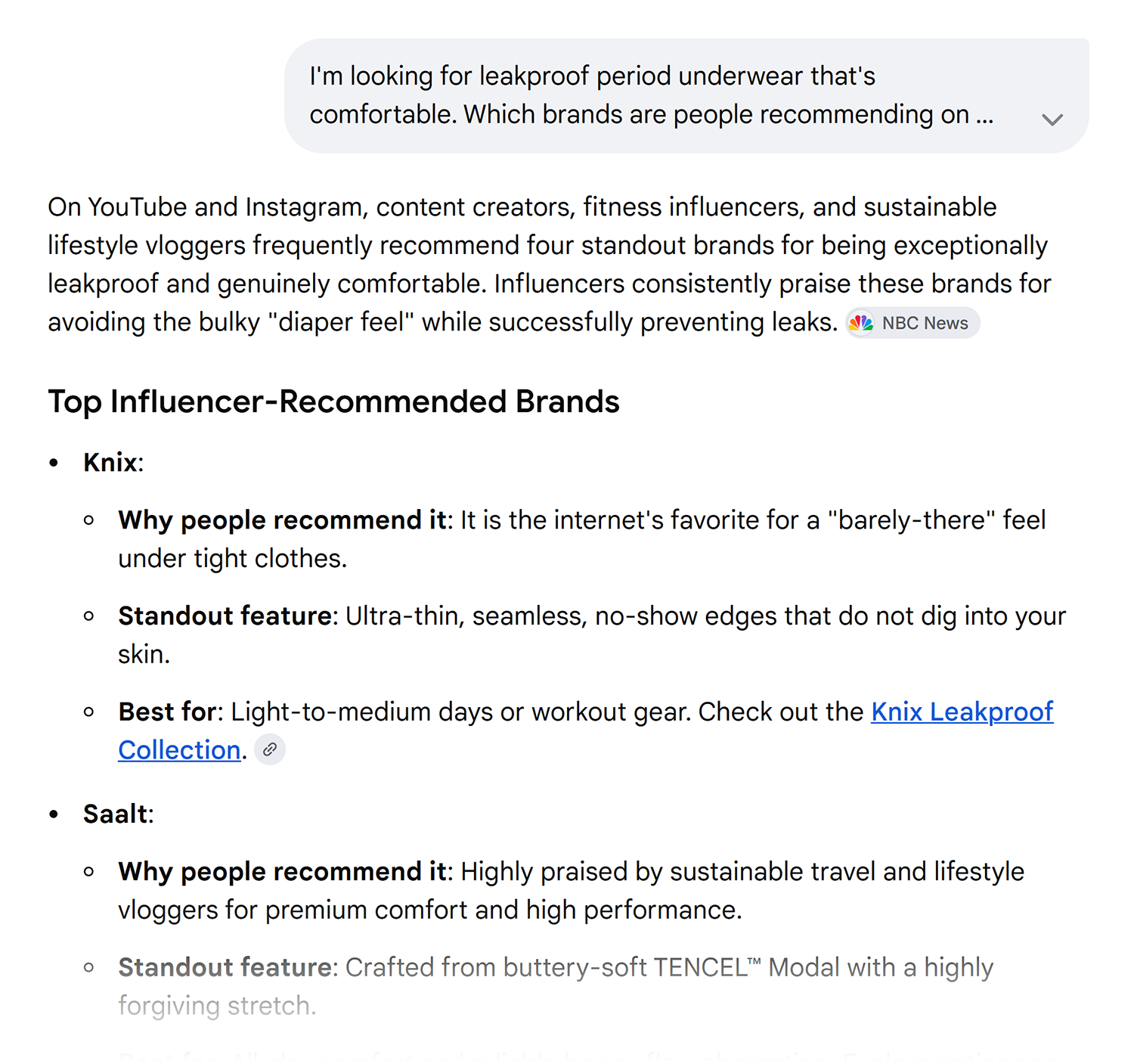
That consistent, cross-platform creator presence trains AI to see Knix as a recommended brand.
Action item: Work alongside creators in your niche
Want to build the right associations with your brand? Here’s a framework you can use to start working with creators:
- Find creators that align with your core associations. Above, you chose a few associations you want AI to find for your brand. Now, search for creators who reinforce those themes. Look beyond follower count. Analyze their comments sections, recurring topics, and audience trust. That alignment beats reach.
- Build ongoing partnerships: Prioritize long-term ambassador relationships over one-off sponsored posts. Repeated mentions strengthen brand associations far more than a single campaign spike.
- Encourage contextual storytelling: Brief creators to share real use cases. Things like how they use the product, what problem it solves, who it’s for. AI systems learn from natural language context.
- Measure association growth: Use a tool like Semrush to watch your AI visibility score. Look for an increase in AI mentions or brand sentiment in core themes.
To measure that growth, go to Semrush’s AI Visibility Toolkit, then head to “Visibility Overview.” On this dashboard, pay special attention to the number of mentions, and the graph that shows changes over time.

No Semrush? Try this instead. Run the same AI queries you’d normally track — things like “best [product] for [use case]” — in ChatGPT and Google AI Mode. Keep a running log in a spreadsheet. Note which queries mention your brand, and rerun them monthly.
It’s manual, but it gives you a directional sense of whether your creator activity is moving the needle. If you start showing up in queries where you previously didn’t, that’s a meaningful signal.
Building third-party signals with sponsored editorial articles
LLMs also love to gather data from editorials. Data from Semrush (February 2026) supports that. In ChatGPT, some of the top sources for fashion queries are editorial sites like Vogue or Glamour.
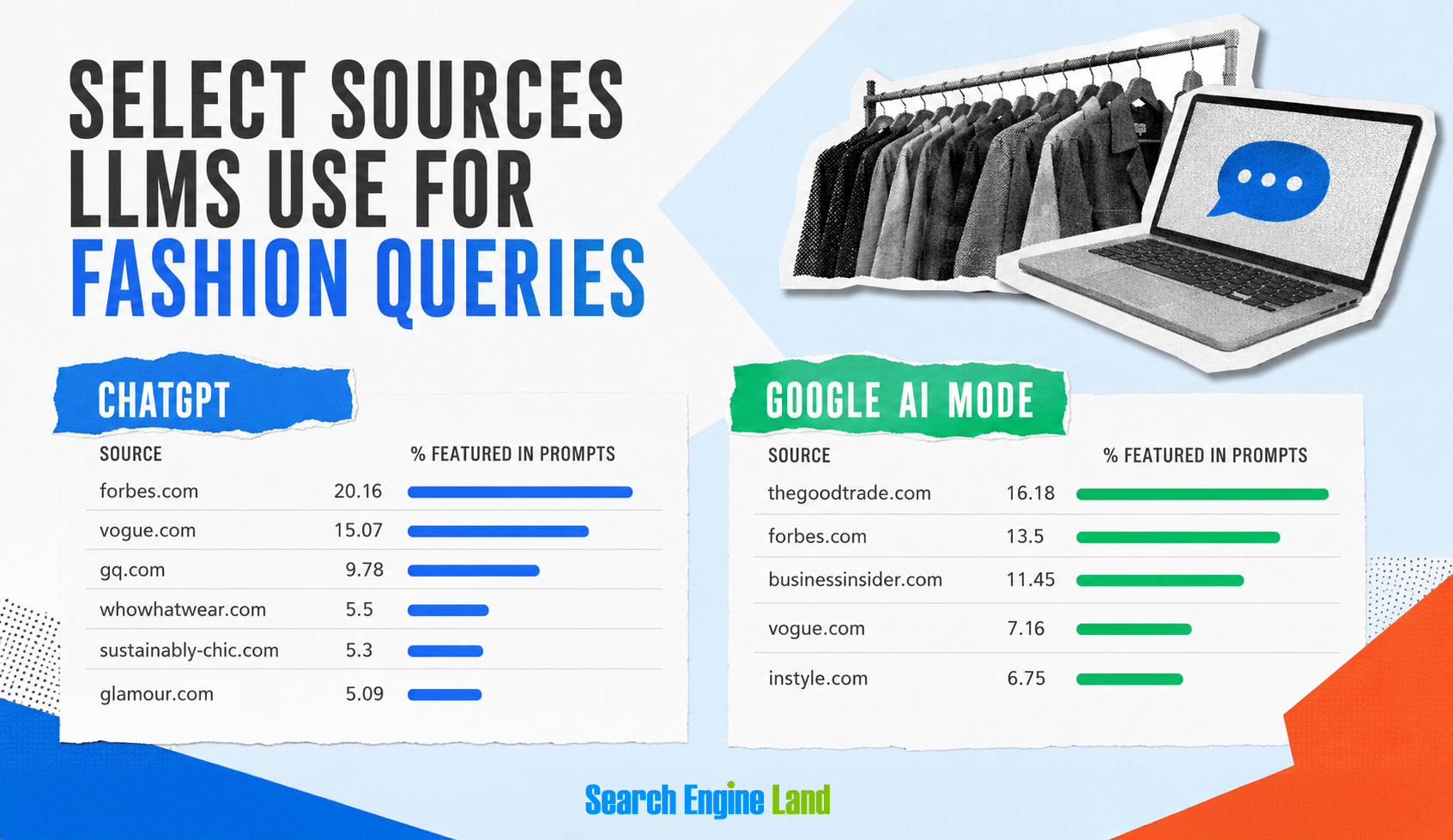
When reputable publications recommend your product, that’s a credibility signal. AI can then reference those in recommendation-style queries.
Here’s an example.
We asked Google’s AI Mode for recommendations for the best leakproof period underwear. Knix was the top recommendation.
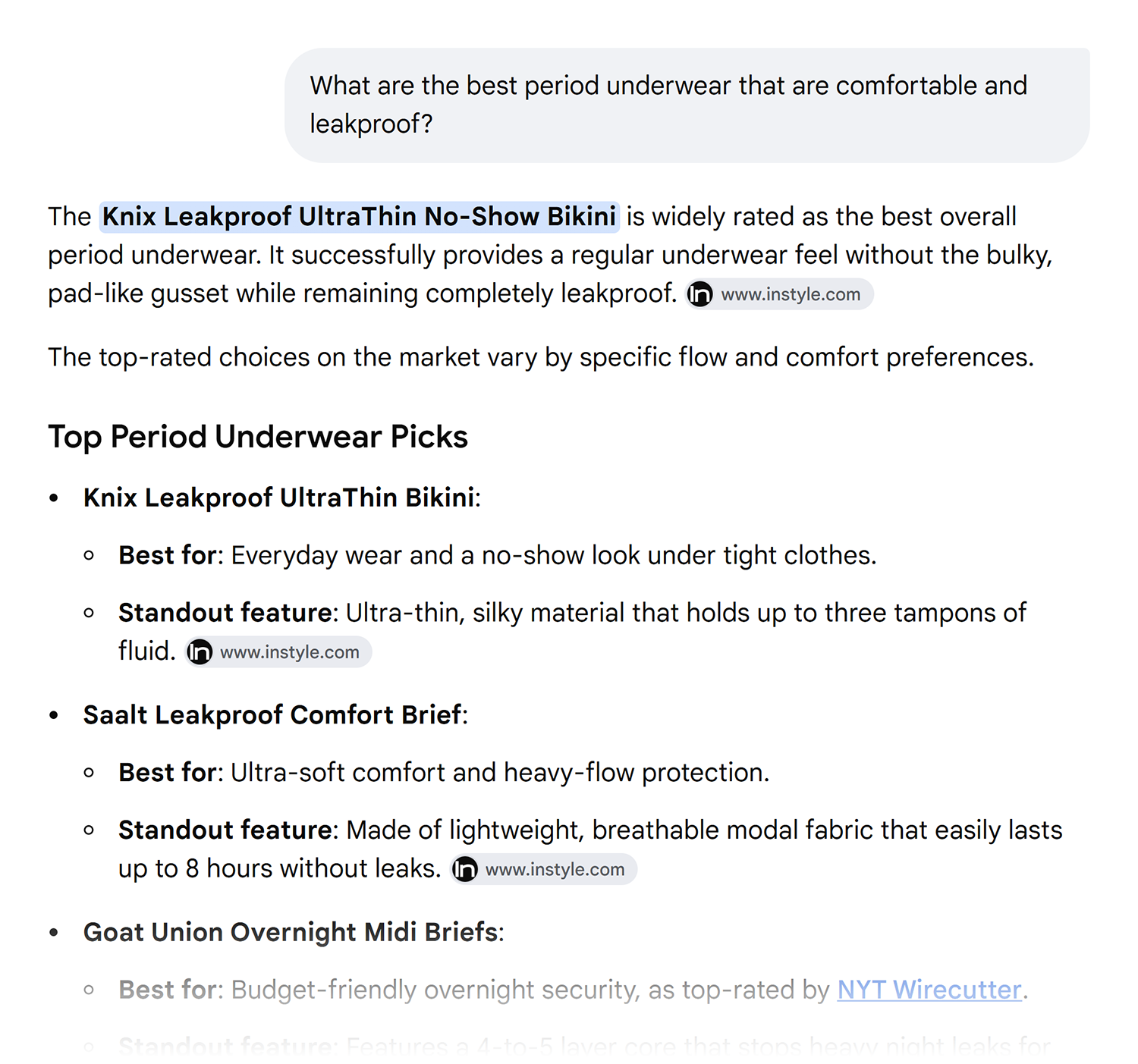
Google based its response on editorial content from big publishers like InStyle and Glamour.

The same thing happens when you search other related terms. Editorial pieces are the foundation for many AI responses.
This coverage creates authoritative, indexable third party content that:
- Describes the product in context
- Discusses specific use cases
- Makes comparisons
- Implies or states recommendations
That allows AI to understand Knix’s products in context. Then, it can give recommendations based on the right searches.
With these third-party mentions, Knix shows strong consensus across trusted websites. And AI rewards consensus.
Action item: Develop a strategy for third-party mentions
If only your website says you’re great, AI has limited evidence. When reputable publications say it too, your visibility compounds. Of course, how you approach this will depend on your resources. (Not every DTC brand can call up Vogue and ask for a feature.)
For established brands with a budget, start by finding publications that show up in AI responses for your category. You can do this manually by testing queries like “best ___ for ___” in ChatGPT or Google AI Mode.
Or, you can use Semrush’s AI Visibility Toolkit to see top sources that mention your competitors.
In the toolkit, head to “Competitor Research,” then scroll down to see “Sources.” In the filters, select “Missing” to see a list of sources that mention your competitors, but don’t mention your brand.
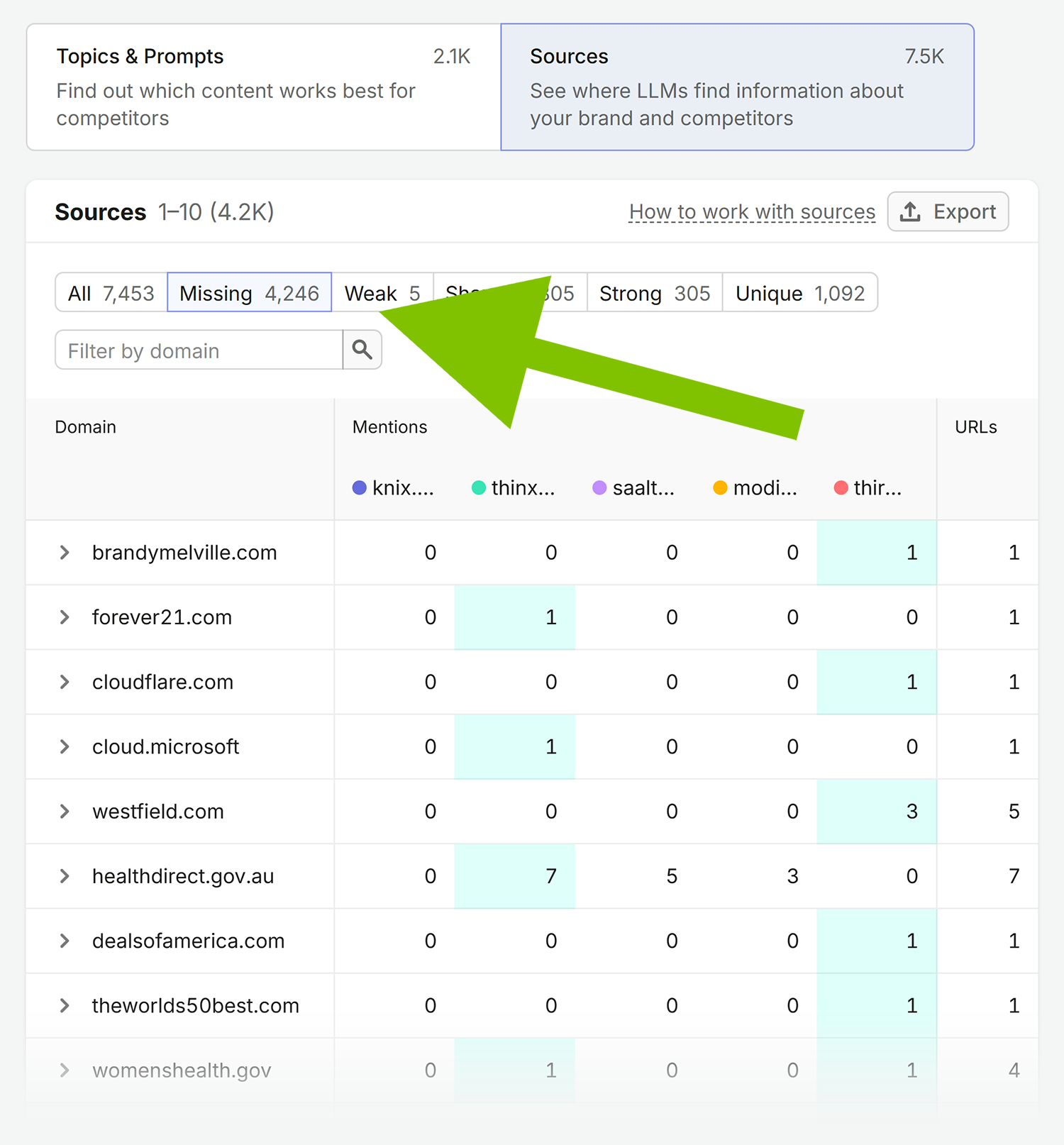
The goal: Build a shortlist of domains that show up repeatedly.
From there, prioritize structured product testing or roundup placements. Especially “best of” lists where your product is described with specific use cases.
But what if you’re a smaller DTC brand? You don’t need Vogue. All you need is relevance and consistency.
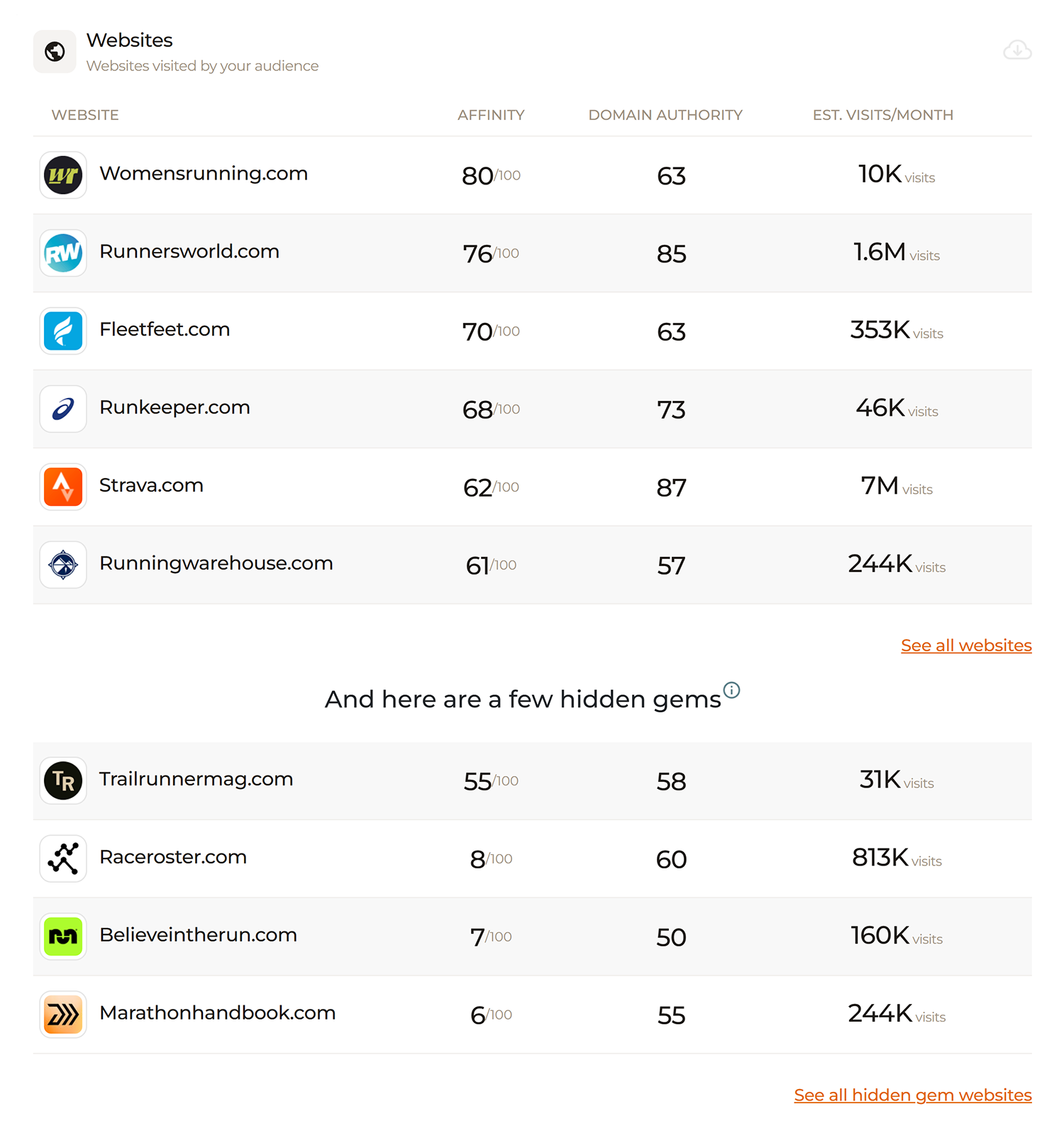
Start by finding niche publishers. For example, Substacks, YouTube reviewers, and bloggers who already rank for long-tail searches. These smaller sites often dominate specific use cases. And those use cases are exactly what AI pulls into recommendation-style answers.
To find these, use a tool like SparkToro. It shows websites your audience visits. But it also highlights hidden gems — smaller publishers your audience still loves.
Once you earn coverage, amplify it. Add quotes to your PDPs, link to the article from your blog, and reference it in email campaigns.
The more that third-party validation stands out, the stronger the consensus becomes.
Where Knix could improve: Topical authority and community presence
Knix is strong in brand clarity, helpful content, and third-party validation. But there are two areas where its AI visibility could go further.
Deeper topical authority
Knix’s blog content does well in AI search for product-adjacent questions. Articles about absorbency levels, washing, and comparisons are cited in AI search, and lead to direct mentions in answers.
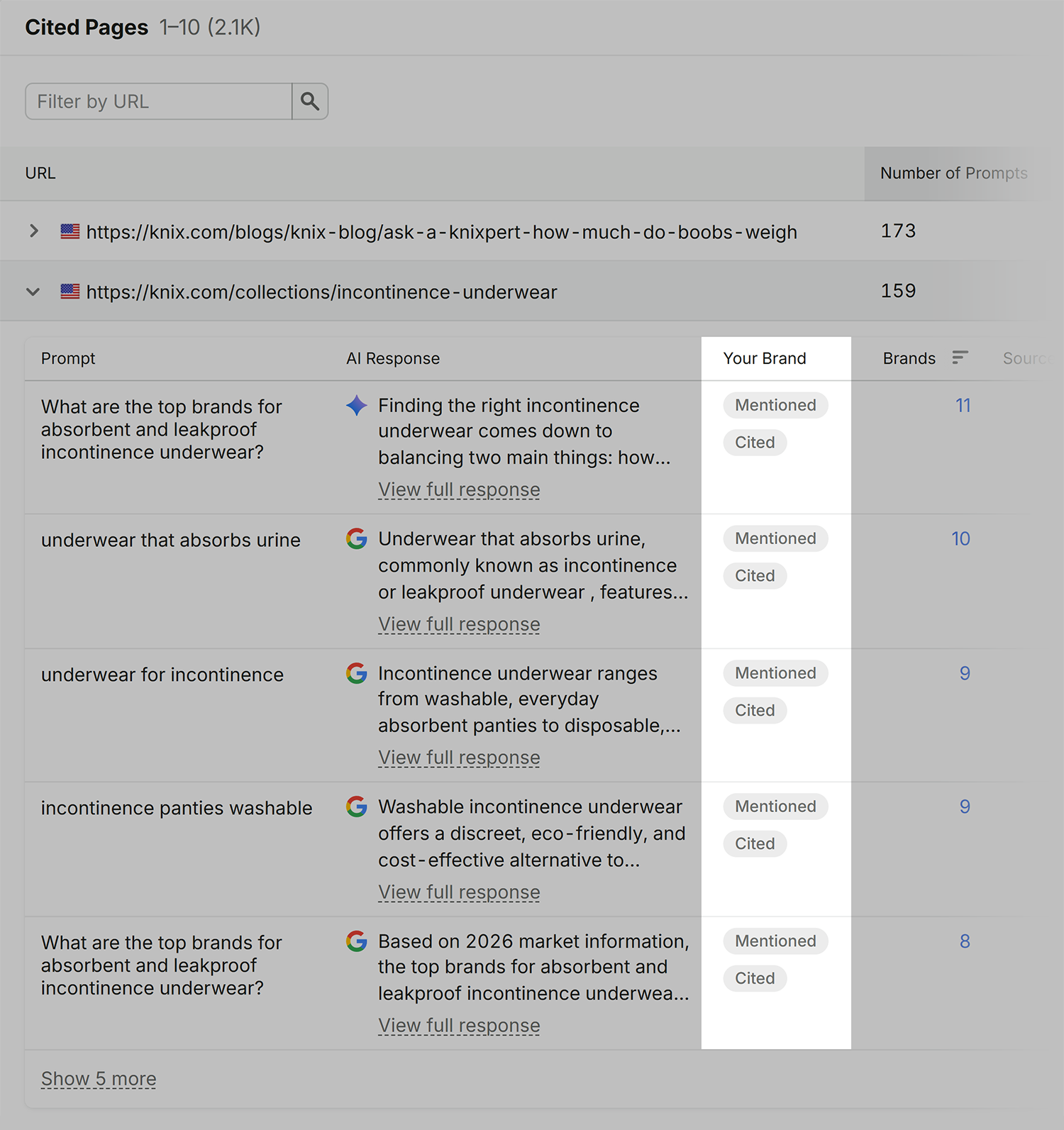
Where it’s weaker is broader menstrual or women’s health content.
For example, some health-focused posts feel like summaries of existing sources. There’s almost no original, expert-driven content.

In our research, we found one post that seemed to be doing the right things.
The article “Can sex change your period?” answers a real question, citing studies from known health organizations. It even says it was reviewed by a medical professional.
And it shows up in the right searches with Google AI Mode:
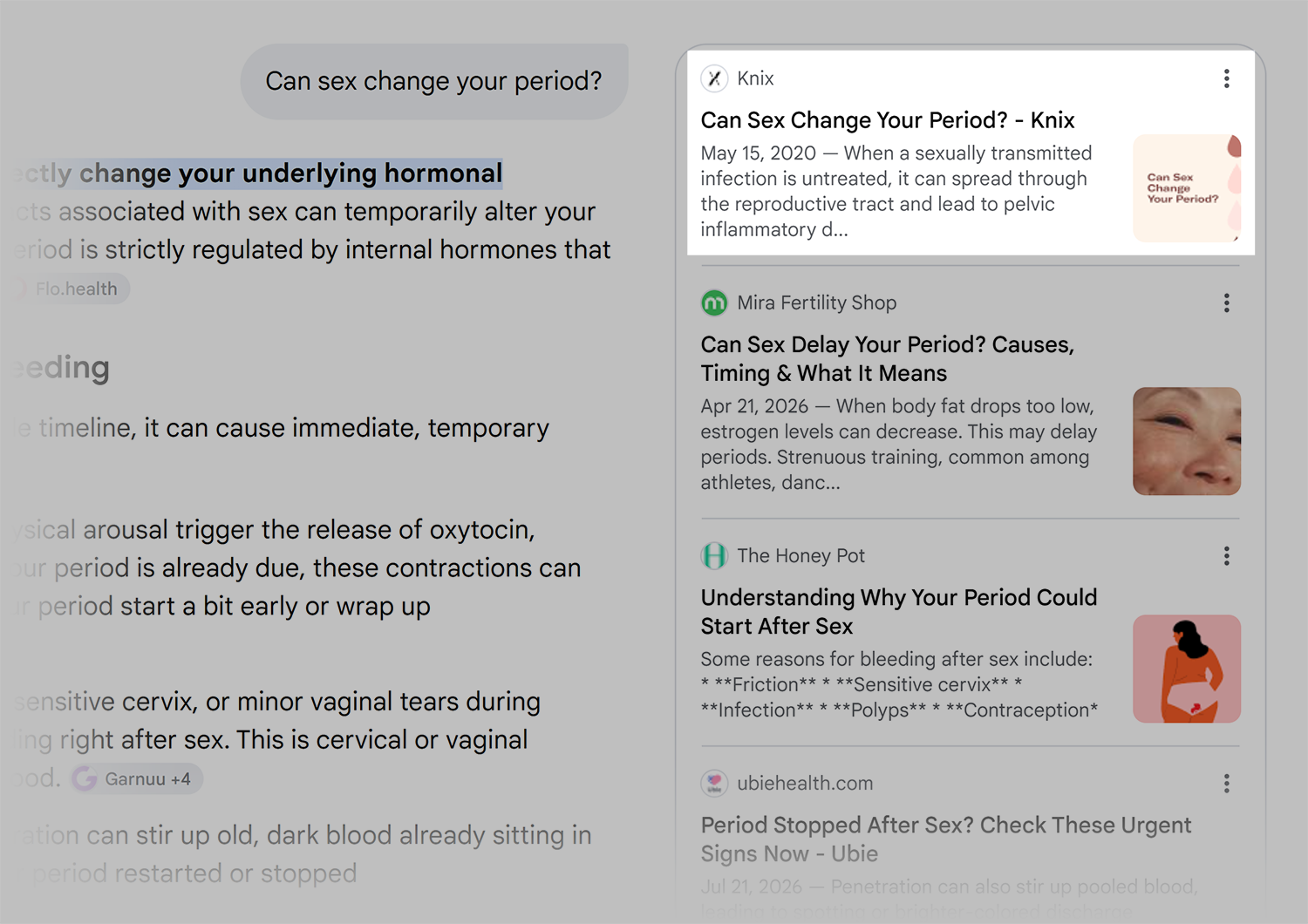
Obviously, expert-backed content works for Knix. But this article lingers here unchanged since 2023. That means there’s a huge opportunity to grow AI visibility with more authoritative content.
Here’s the suggestion: Build more authoritative content. Knix could expand its visibility into broader women’s health conversations. But to do so, it needs deeper expert integration.
The same way they work with influencers, Knix could work with OB-GYNs or pelvic floor therapists to co-create content. They could even sponsor small research studies or publish original survey data.
This would move their health-related content from “explaining” to “contributing.” That shift would strengthen their authority in health-related AI searches.
Community presence
There are active discussions about Knix across Reddit — including subreddits like r/PeriodUnderwear. And the tone is…mixed.

But there’s little visible brand participation. That’s a missed opportunity.
Reddit is still an important source for AI search. According to Semrush data from February 2026, it’s in the top 10 sources for both ChatGPT and Google AI Mode. AI systems use community platforms to understand sentiment, objections, and brand reputation.
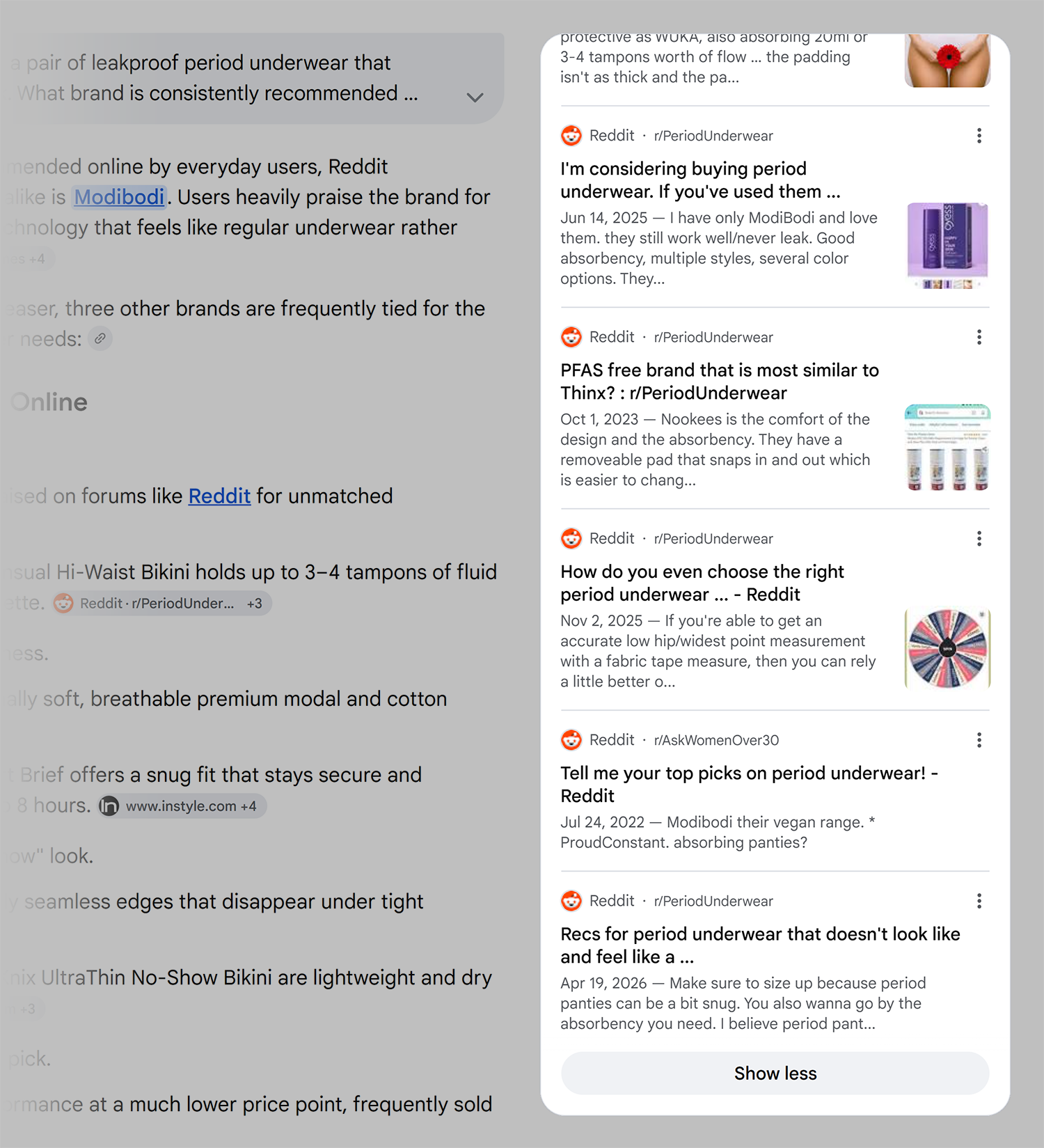
By not taking the time to engage here, the brand has limited influence over how it’s represented.
Here’s the suggestion: Develop a transparent Reddit strategy. Not covert brand promotion disguised as organic mentions, but thoughtful participation. Answer questions. Share helpful resources. Address criticism.
The brands that win long-term in AI search aren’t just visible. They’re present in the conversations shaping their category.
Further reading: Get our guide to Reddit Marketing.
The takeaway: Engineer your vertical authority
LLMs learn from repetition, clarity, and consistency.
That’s vertical authority.
If you want your DTC brand to surface in AI answers, start by auditing your signal density:
- What themes are you associated with?
- Which buying-stage questions have you answered?
- Do your product pages reflect real-world use cases?
- Are your trust signals structured and reinforced across platforms?
From there, the simplest next step requires no tools: Run 10–15 buying-stage queries in ChatGPT and Google AI Mode — the kind of questions your customers are actually asking.
Use a simple spreadsheet to track which brands appear and how often. If your brand isn’t showing up, that gap tells you exactly where to focus. For a more systematic view, Semrush’s AI Visibility Toolkit lets you track brand mentions, monitor competitor positioning, and identify source gaps — useful once you’re ready to scale the effort.
Then, refine your signals.
AI visibility is engineered. To learn more about how it works, read our guide to measuring LLM Visibility.
Explore more on
Editorial disclosure
Search Engine Land is owned by Semrush. We remain committed to providing high-quality coverage of marketing topics. Unless otherwise noted, this page’s content was written by either an employee or a paid contractor of Semrush Inc.
About the author