What happens before search strongly shapes the decision
Search can confirm a decision that was shaped before the query. Here’s where that influence comes from and what you can do.

Search can confirm a decision that was shaped before the query. Here’s where that influence comes from and what you can do.

A single Google Careers listing sheds rare light on Discover's recommendation system, reinforcing research into candidate selection and user affinity.

The first decision is often emotional. Google increasingly becomes the place to validate it. Here's what that means for SEO.

Turning on search cut recommendation overlap to 19.8%, reshuffling product picks across 20,000 ChatGPT responses.

TripAdvisor, Google Business Profile, OTAs, and reviews help AI understand travel brands. Learn how to strengthen those signals.

Topic controls give users more say in what they see, pushing brands to create content tied to clear audience interests.

Ask Maps changes local visibility from ranking in a long list to being confidently recommended. Here’s what that shift means for local SEO.

Adapting to customer journeys that increasingly resemble competing AI systems interpreting trust, risk, intent, and identity in real time.

New tests show Ask Maps is guiding users with recommendations, shifting how businesses get surfaced and how local rankings are influenced.

Three months of feeds reveal how trends, news, video, and ads flow through pipelines — and why some content gets broadcast-level visibility.

Content gets brands found. AI decides who gets recommended — based on positioning, proof, and presence across the web.

The new feed system will analyze what users read, like, and discuss to connect related topics and push insightful posts to wider audiences.

Ask Maps, a new AI-powered conversational Google Map feature, lets users ask get personalized recommendations directly on the map.

AI recommendations vary widely, even when prompts are identical. New data shows intent is consistent, but position tracking is mostly noise.

Andromeda and GEM now determine how ads are selected, ranked, and sequenced across Meta. Here’s what changed and what drives results in 2026.
The new Instagram feature reveals what the algorithm thinks you like and lets you adjust it, reshaping how content gets recommended on Reels.

Daily Hub tried to merge embeddings, entities, and real-time context – and buckled under the system’s complexity.
Meta will soon use people’s AI interactions to refine content and ad targeting, giving advertisers richer intent signals for more relevant campaigns.

If LLMs don’t see you as a fit, your content gets ignored. Learn why perception is the new gatekeeper in AI-driven discovery.

Here's how to optimize for LLMs, knowledge graphs, and modern search engines and build a digital footprint recommendation engines trust.

This statistic was revealed in federal court as Google fights an antitrust lawsuit brought by video platform Rumble.
Learn how to leverage knowledge panels, E-E-A-T and niche notability to become a top recommended solution in Google search.

The EU wants more information on recommender systems and ad transparency, signaling potential shifts in ecommerce advertising landscape.
The platform warns that relying too heavily on engagement signals to rank content can result in a poor user experience.

The new feature could help brands boost viewer engagement and facilitate greater content discovery.
Here's everything we know about how Facebook ranking algorithms work to help you maximize your visibility and engagement.
New personalization controls include letting you customize what you want to see more or less of so the videos you see are more relevant to you.

This guide will help you get the most out of YouTube, understand the platform's algorithm and gain visibility for your best videos.

The outcome of a Supreme Court case could have significant implications for how internet companies operate, content curation and free speech.
We read TikTok’s creator guidelines and newsroom documentation, so you don’t have to. Learn the lowdown on TikTok and how brands can use it.

New Tweet recommendations can be a great tool for discovering and connecting with new acocunts. But sometimes they just get it wrong.
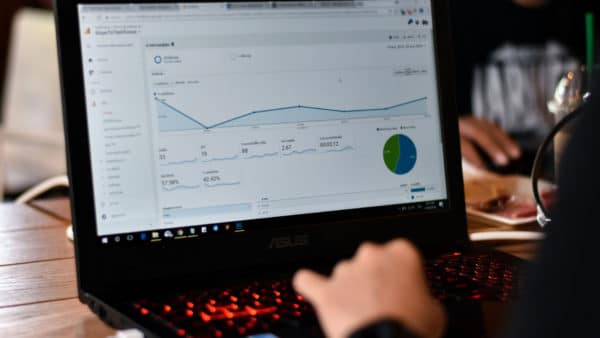
New properties may not show recommendations right away, as they need time to learn from your account's history.

The new update is intended to give advertisers bundled, customizable recommendations, but seems to be lacking finer optimization details.

A review of many of Twitter’s patents reveals some indications of criteria that are influential to rankings that are not readily apparent.

The new feed shows users Popular Dishes and Yelp Connect posts based on physical proximity to the business, the popularity of a dish in reviews and the recency of the content.

Many retailers would prefer their shoppers land on-site to discover the value of their products and drive value-based conversions. However, the buy now and checkout options could mean lower friction in the final buy. Either way, it’s worth participating in as the Shopping product continues to grow.

TikTok’s new advertiser hub TikTok debuted its new studio hub for brands and agencies Thursday. TikTok for Business is available globally across the app’s 20-odd markets and will host services and ad formats for advertisers. It also debuted Brand Scan, an AR ad format, with tech partners Bare Tree Media, Subvrsive and Tommy. Why we […]

Local Guides are part of the reason GMB and Maps are so successful.

Google is launching a new way to find tv shows and movies in search.

The new capabilities are the beginning of 'major product changes' according to the company.