Context engineering: How to prevent AI workflows from degrading
AI output can worsen even when your prompt stays the same. Learn what causes context rot and how to keep your workflows accurate and useful.

AI output can worsen even when your prompt stays the same. Learn what causes context rot and how to keep your workflows accurate and useful.

From hallucinated metrics to exposed customer data, here’s how to spot common AI risks and put practical guardrails in place.

Discover the best AI marketing tools for content, video, research, and automation. We tested top platforms to help you find the right fit for your strategy.

Learn how to use ChatGPT the right way. Skip beginner mistakes and start getting better, more useful answers with this step-by-step guide.

See how three AI models responded as business context became progressively richer for the same strategic challenge.

Today, prompt tracking works well but it doesn’t give you the full picture. Learn how to make your prompt monitoring work better for you.

Learn how to package your workflows, expertise, and business context into AI assistants that work the way you do.

From symptom-based questions to software comparisons, see how user prompts influence what AI systems choose to surface.

AI answers are variable, but measurable. Use repeated runs, confidence intervals, and journey tracking to separate signal from noise.

Survey data reveals how users combine short queries with personal context — and why that changes how brands earn visibility in AI search.

After 15 years of premature obituaries, the keyword may finally have a replacement. Here's why Google AI Brief matters.

Structured client memory helps AI-generated work stay grounded in brand guidance, campaign history, and technical limitations.

If Claude keeps writing beige, the problem is probably the brand rules you never gave it. Train AI on your voice, tone, visuals, and style.

The key isn’t arguing with AI outputs. It’s guiding stakeholders through what’s useful, generic, or simply incorrect.

Learn how to install, deploy, and brand AI skills to turn generic chatbots into your agency’s custom, scalable operating system.

Learn how to isolate variables, measure prompt-response inclusion, and build repeatable frameworks for testing LLM visibility.

Most AI SEO “skills” are just prompts. Learn the system behind reliable agents: tools, memory, templates, and a built-in review layer.

Turn AI into a strategic ad partner with prompts that help reveal buyer emotions, high-intent audiences, and objections.

Based on hands-on SEO work, these examples show where AI fits across content, technical tasks, and reporting.

An internal system guides Google Gemini to align responses with user tone, intent, and emotional context, according to an unverified report.

Most GPTs fail because they’re too broad and under-tested. Here’s how to build focused, high-ROI GPTs your team adopts and uses every week

From prompt engineering to data quality, here’s why SEO still depends on human input — even as AI capabilities expand.

As AI search becomes conversational, prompt patterns reveal how questions evolve and how content appears in search results and AI answers.

AI search expands the long tail into endless prompt variations. Here’s how fan-out queries, grounding, and task completion reshape SEO.

Learn how vibe coding help you build custom PPC tools in minutes using simple AI prompts instead of traditional coding.

See how long-tail Google Search Console queries reveal AI-style prompts, plus a regex trick and ways to turn raw data into tracking insights.

Learn vibe coding: Use AI tools to build apps without coding. This guide covers setup, limits, risks, and SEO tool examples to inspire your own projects.

How custom GPTs can be used in SEO, with example prompts for planning, analysis, reporting, and technical work.

Learn how to teach your in-house AI to write in your brand voice, with step-by-step guidance and free prompt templates to get started.

Prompts describe tasks. Rubrics define rules. Here’s how rubric-based prompting reduces hallucinations in search and content workflows.
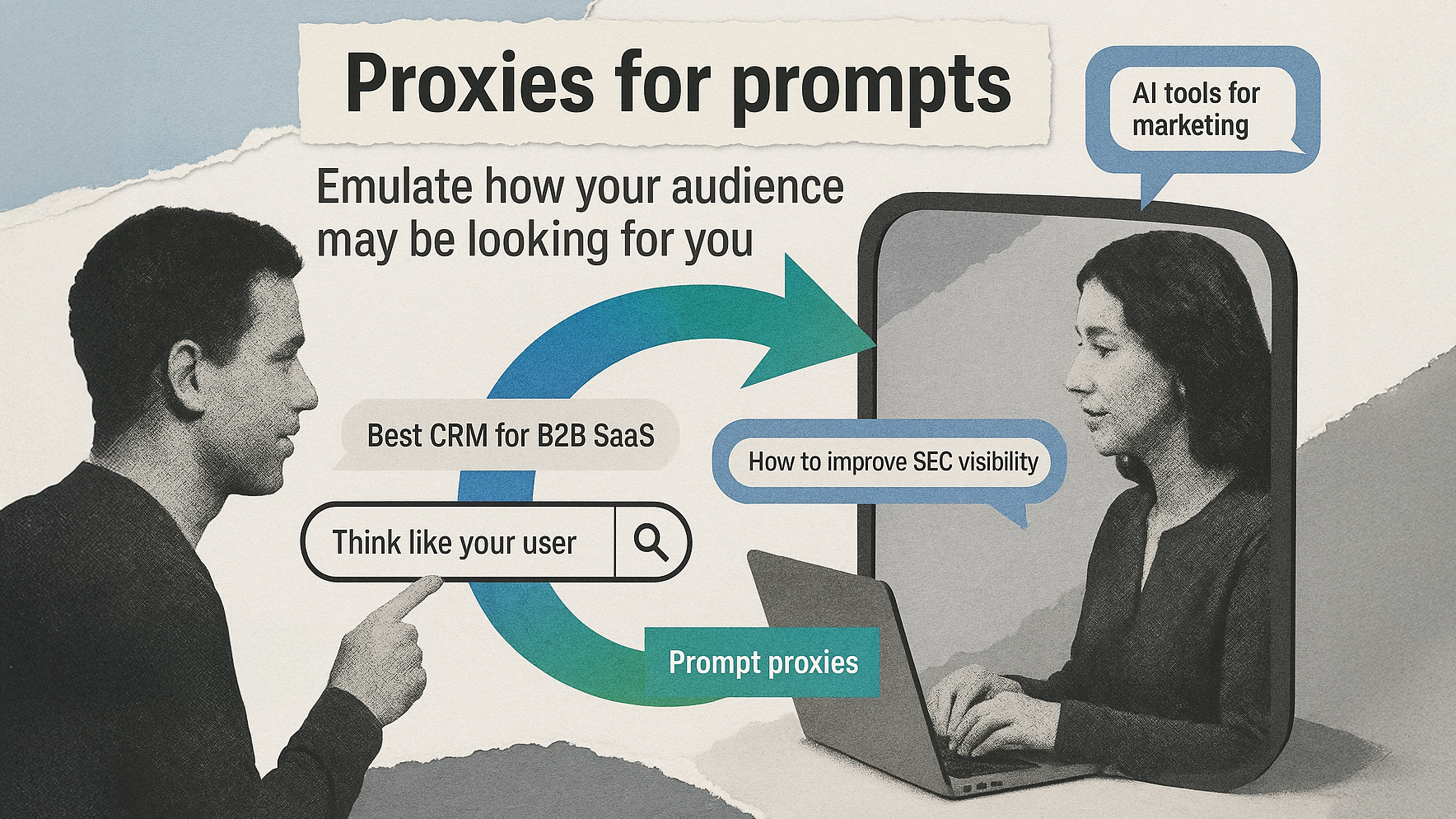
As search shifts from keywords to prompts, learn how SEOs can use data proxies to understand AI search behavior and track visibility across platforms.

See how working with LLMs can make your content more human by turning customer, expert, and competitor data into usable insights.

New AI models are underperforming on SEO tasks. Discover why accuracy is down and how to adapt before these regressions impact your results.

Learn how LLMs pick sources and how small content changes can influence ChatGPT and Google AI answers. See real tests, RAG insights, and practical steps to optimize your brand for AI search.

AI content is everywhere—but is it good for SEO? Learn how AI-generated content works, its pros and cons, and how to use it without hurting rankings.

AI-driven search has enabled large-scale manipulation. Here’s how it happens, what Google’s doing, and why best practices still win.

AI tools can streamline paid search campaigns – but only with the right prompts, privacy settings, and human oversight.

Great ad copy depends on the input. See how clear, structured prompts – from personas to constraints – lead to stronger AI-generated ads.

Invisible prompts once tricked AI like old SEO hacks. Here’s how LLMs filter hidden commands and protect against manipulation.

Most hiring checklists are stuck in 2017. Here’s how to spot marketers who can outpace algorithms and rivals alike.