The citation core method to appearing in AI search results

Your customers are making buying decisions based on what AI says, but AI platforms don’t randomly decide which brands to include in answers. They cite the same small group of trusted sites over and over in each industry.
We call this group the citation core, and getting mentioned by these sources increases your chances of appearing in AI-generated answers.
The SEO toolkit you know, plus the AI visibility data you need.

Get started by learning how to identify the citation core sites in your niche and build a targeted outreach strategy to get mentioned by the sources AI already trusts.
What is citation core? (and why it matters)
Citation core is a small group of sites that all AI platforms tend to trust, cite, and use as default sources in your industry. These are the sites AI relies on when it needs authoritative information in your niche.
For example, ChatGPT’s response to, “Which is the best accounting software in 2026?” cited a listicle from Pilot among others.

When Claude was asked the same question, it cited Pilot, too.

Google AI Mode? Same story.

All three AI platforms cited the same brand.
Testing more accounting-related queries — like “best accounting software for small business,” “cloud accounting software with invoicing,” “accounting software for freelancers,” and “easiest accounting software to learn” — Pilot appeared as one of the sources across these queries, too.

This pattern repeats across industries. In each niche, a small group of sites dominate AI citations.
Identifying which sites form the citation core in your industry helps you build a targeted strategy to get mentioned by the sources AI already trusts. This can improve your visibility in AI-generated answers. Specifically, you can:
- See which sites AI platforms cite most often in your niche
- Prioritize outreach to the sites that influence AI answers
- Track whether your brand appears in the sources AI relies on
How to find your citation core
Your citation core is specific to your niche and the questions your customers actually ask.
You’ll find it by checking AI platforms using a list of prompts your customers use, extracting citations from the results, and prioritizing sites based on how often they appear and how reachable they are.
If you’re doing this manually, expect two to four hours. With Semrush’s Prompt Research, it’s faster.
Either way, you should end up with a ranked list of the exact sites AI platforms cite in your space — sorted by citation frequency, reachability, and relevance to what you offer.
Step 1: Choose which LLMs to track
Citation core sites appear consistently across multiple AI platforms. To identify them accurately, you need to check more than one platform.
That said, not every platform matters equally for your business. Most people will want to start with Google AI Mode and ChatGPT. These two handle the majority of AI search traffic. Then, if you have time or data showing your audience uses other platforms heavily, add Claude, Gemini, or Perplexity to validate which sites appear across all of them.
Checking multiple platforms confirms a site is truly authoritative, not just cited by one AI tool.
To figure out which platforms matter most for your audience, talk to your customers directly. Ask them which AI tools they use for research. Even better, ask questions around how they search and what they’re trying to accomplish.
This qualitative research is manual, but it’s absolutely worth the effort. You’ll learn not just which platforms they use, but how they actually use them to make decisions.
Further reading: How to do audience research for SEO
You can also use SparkToro to see which platforms your audience engages with based on keywords or site behavior.

Additionally, you can check your SEO analytics for AI referral traffic. But this won’t give you a true picture of how your audience uses AI. Most AI interactions don’t show up in analytics at all. AI Overviews, especially, are completely invisible.
So treat this as a rough directional signal, not a complete picture.

Step 2: Build your prompt list
Create prompts based on the questions your customers ask throughout their buying journey.
You will likely notice that your customers ask different questions at different stages. Someone just learning about your product category asks broad questions. Someone ready to buy asks specific comparison questions.

AI platforms cite different sources depending on the question type.
Ask “What is accounting software?” and you’ll see educational sites like Wikipedia or Investopedia

Ask “best accounting software” and you’ll see review platforms like Capterra or G2.

This means you need prompts that cover all stages of the customer journey, from early research to final decision.
Start with keywords you’re already tracking.
If you use Google Search Console, check your top queries in the “Performance” tab.

If you run PPC, pull your keyword list from Google Ads.
Some queries are already conversational, like “how to reconcile bank statements in QuickBooks” or “what accounting software integrates with Stripe.”
Add those directly to your prompt list.
For short keywords like “accounting software” or “invoice templates,” turn them into the specific questions your customers ask. Think about what problem they’re trying to solve: “What’s the best accounting software for freelancers?” or “What’s the easiest accounting software to integrate with my bank?”
Do this for your top-performing keywords. This gives you prompts grounded in what’s already driving results.
Next, use Semrush’s Prompt Research report to find prompts you’re missing.
Go to the “AI Visibility Toolkit” > “Prompt Research” > enter a phrase related to your industry or product category > click “Analyze.”

This report shows you the actual prompts people are asking AI platforms. You’ll see details like the total AI search volume, number of topics and prompts, and intent breakdown (informational, navigational, commercial, transactional).

Scroll down and switch to the “Prompts” tab to see the full list of individual prompts.

Go through the list and select prompts that match what your customers actually ask. Here’s what to look for:
- Choose prompts that directly relate to your product or service
- Select questions across different stages (learning, comparing, deciding)
- Avoid overly broad or generic prompts that don’t match your specific audience
If you don’t have Semrush, pull questions directly from customer conversations. Check your sales calls, support tickets, and onboarding sessions. The questions customers ask before they buy are the exact prompts you need to test.
Aim to start with 10-15 prompts across all journey stages.
Make sure you have a mix: a few educational questions for early-stage researchers, comparison prompts for people evaluating options, and specific brand or product questions for buyers close to a decision.
Each stage pulls citations from different types of sources.
Download: Copy all your selected prompts and add them to a spreadsheet. We’ve created a free citation core tracker to help you organize your prompts and sources. View and copy the template here.
Step 3.1: Extract citations (manual method)
Run your prompts in each LLM and capture which sites they cite. This is manual work, but it gives you complete control over your data.
Note: AI responses vary based on personalization and search history. Run your prompts in an incognito/private browser window to see standard citation patterns. This ensures you’re identifying truly authoritative sources, not personalized results.
Start by documenting ChatGPT sources.
Paste your first prompt and look for the citations at the bottom of the response. Click “View sources” to see the full list.

Open the citation core tracker you downloaded in step 2. Add each specific prompt in column A.
For each prompt you run, add the citation data:
- Column B: Which LLM (ChatGPT, Claude, etc.)
- Column C: The cited site (just the domain, like “quickbooks.intuit.com”)
- Column D (optional): Full URL if you want to reference the specific page later

Run the same prompt in other AI platforms, adding each citation to your spreadsheet.
Move to your next prompt and repeat.
This takes time. Expect two to three hours if you have 10-15 prompts and you’re checking four to five LLMs. But once you’re done, you’ll have a spreadsheet full of citations.
Next, identify which sites appear most frequently. Sites showing up across multiple prompts AND multiple platforms. Those are your citation core.
Note: Many LLMs rely on their training data to respond and won’t show sources. Make sure the “Web search” feature is enabled in your LLM to see sources. For platforms without this feature (like Gemini), get creative with your prompt. Try adding “show sources” or making your question time-bound.

Step 3.2: Extract citations (Semrush method)
If you used Semrush’s Prompt Research report in step 2, the citations are already there.
Go back to the “Prompts” tab and look at the “Sources” column. This shows which sites AI platforms cite for each prompt.
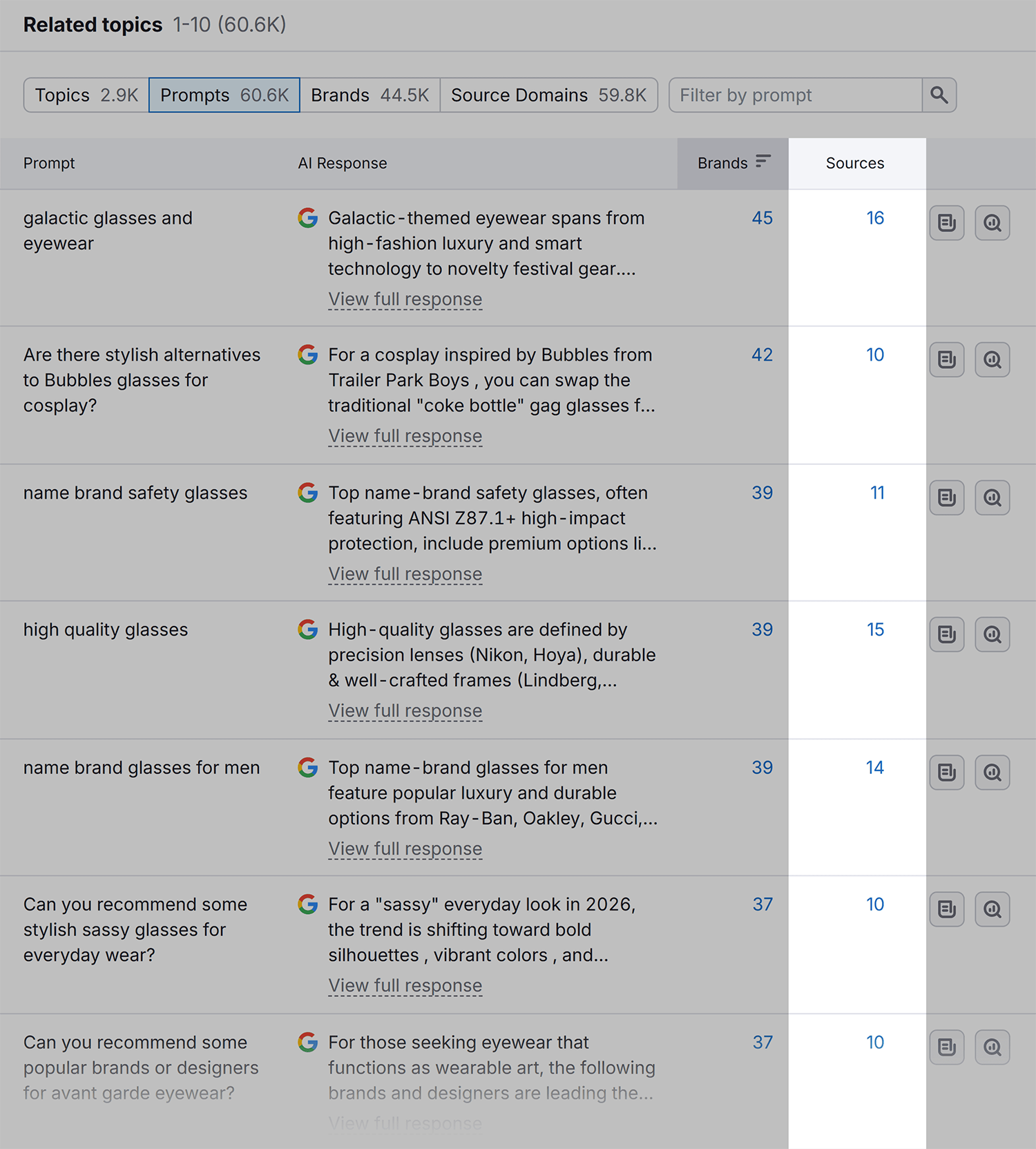
Click on any prompt to expand and see the full list of sources.

Export or copy this data and add it to your citation core tracker.
If you found prompts manually but have access to Semrush, you can still use this method. Go to Prompt Research and enter each of your prompts one by one.
This is faster than running prompts across multiple LLMs manually.
Prompt Research shows you citations across ChatGPT, Google AI Overview, Gemini, and other platforms in one place.
Step 4: Check competitor citations
You’ve built your prompt list and extracted citations. You have a solid starting point. But your prompts don’t cover every question customers ask.
Competitors might appear in AI answers for queries you didn’t think to test. Checking competitor citations helps you find sources you missed.
Use Semrush’s Competitor Research report to get a more full picture of your citation core.
Go to the AI Visibility Toolkit and navigate to the “Competitor Research” report.
Enter your domain. And add up to four competitor domains. (The tool will suggest competitors if you’re not sure which ones to add.)
Click “Run competitor analysis.”

Once the report loads, scroll down and switch to the “Sources” tab.
And click the “Missing” filter.

This shows external websites AI cites in its answers. These are sites that mention your competitors but not you.
Export this list and add it to your citation core tracker.
You may notice overlap with sources you already found. That confirms these are the dominant sources in your space. But you’ll also discover new sources (like review sites, comparison platforms, or industry blogs) that only appear when AI discusses specific brands.
These sources already cover your category and mention companies like yours. That makes them realistic outreach targets.
Check three to seven main competitors to get a complete view.
Step 5: Categorize and prioritize your results
Right now, your spreadsheet likely has 100+ sources mixed together — Wikipedia, G2, niche blogs, Reddit threads — all in one pile.
Different site types need different approaches. Pitching a guest post to a niche publisher is completely different from trying to get on Wikipedia or getting your product reviewed on an affiliate site.
Categorizing helps you group similar sites together and apply the right strategy to each group.
Go back to Column E in your spreadsheet. For each source, add a category tag:
- Niche publishers
- Major media
- Review sites
- Reference sites
- Affiliate sites
- Communities
- Social/video platforms
- Brand sites
(We’ll cover outreach strategies for each type in the next section.)

Now, prioritize which sites deserve your attention first.
Our tracker automatically calculates Priority Scores based on three factors:
- Citation frequency: How many times the domain appears across your prompts and platforms. Sites appearing only once are unlikely to be reliable citation core sites. Focus on domains that show up repeatedly.
- Reachability: Can you realistically get mentioned? Rate each citation as “High” (niche publishers, communities you can pitch), “Medium” (some barriers but achievable), or “Low” (Wikipedia, major media — nearly impossible).
- Topic relevance: Does the site regularly cover your space? Rate as “High” if your niche is a core focus of the site and they publish about it daily or weekly, “Medium” if they cover your topic occasionally, or “Low” if your niche is rarely featured.

The “Outreach Targets” section ranks all your sources by Priority Score — highest to lowest. This combines the three factors above.

The sites at the top are your best outreach targets. They score high on citation frequency, reachability, and topic relevance.
Focus on these first.
Note: Sites with the highest citation frequency are your citation core. The Priority Score also factors in reachability and topic relevance. So, you end up focusing on citation core sites that are actually reachable and relevant to you.
Citation core examples across industries
Semrush conducted a three-month study across ChatGPT, Google AI Mode, and Perplexity. Reddit, LinkedIn, Wikipedia, Medium, and YouTube were among the most-cited domains.

But citations generally vary across different industries.
According to Semrush’s AI Visibility Index (updated February 2026), here are the most common ChatGPT sources across industries:
| Industry | Top cited sources |
| Business & Professional Services | wikipedia.org, reddit.com, forbes.com, superlawyers.com, findlaw.com |
| Digital Technology & Software | wikipedia.org. reddit.com, medium.com, cotocus.com, techradar.com |
| Consumer Electronics | apple.com, tomsguide.com, techradar.com, rtings.com, theverge.com |
| Fashion & Apparel | wikipedia.org, forbes.com, reddit.com, vogue.com, gq.com |
| Financial Services | forbes.com, nerdwallet.com, wikipedia.org, bankrate.com, investopedia.com |
Check out the full AI Visibility Index study, which shows top sources in ChatGPT and Google AI Mode, along with other insights.
Now, should you focus on getting mentioned by these sites? Not necessarily. Some of these sites might be irrelevant to your niche or too difficult to reach.
You need to focus on citation core sites specific to what you offer.
Here’s an example: Let’s say you offer accounting software. You followed the process from this guide:
- Finalized 12 prompts covering different stages
- Ran them across ChatGPT, Claude, and Google AI Mode
- Extracted all cited sources
- Categorized them by site type
- Assigned reachability and topic relevance scores
And found:

Your top outreach targets are:
- nerdwallet.com
- webgility.com
- giddh.com
- accountingseed.com
- fitsmallbusiness.com
- technologyadvice.com
- runeleven.com
- cfohub.com
- aiaccountant.com
- irvinebookkeeping.com
You likely wouldn’t have known most of these sites mattered if you only looked at the “top cited websites” list, but they are clearly influencing AI results and getting mentioned by them would increase the chances of your accounting brand appearing in AI-generated answers.
This is why running this process for your specific niche is so important.
Note: Sometimes competitors may rank high in this list even with “Low” reachability scores. That’s simply because AI cites them so frequently. This isn’t a flaw. It’s a key insight. It tells you which competitors dominate AI’s perception of your category.
You can’t pitch them for coverage, but you can use tools like the AI Visibility Toolkit to analyze how they’re positioned in AI answers and reverse-engineer their strategy.
How to build your citation strategy
You’ve identified the sources AI platforms cite in your niche. You’ve also categorized them by type in your citation core tracker.
Now build your outreach strategy based on these categories, because different site types need different outreach tactics. Below, you’ll find strategies for each category. Jump to the one most relevant for you:
- Niche publishers
- Major media outlets
- Reference and authority sites
- Affiliate sites
- Communities and forums
- YouTube
- Social platforms
- Brand sites
- Owned media acquisitions
Note: The tactics below aren’t just about AI citations. You’re building brand reputation, earning audience relationships, and creating content that drives direct results, whether that’s traffic, conversions, or credibility in your industry. AI visibility is one benefit. The relationships and authority you build are valuable on their own.
When you focus on reaching your audience where they already are, AI citations become a natural byproduct.
Niche publishers
Niche publishers are industry blogs, trade publications, and specialized media sites that cover your space.
Start with them. These sites are reachable, they have authority in your niche, and AI platforms cite them regularly.
Here are three ways to get mentioned by niche publishers:
1. Pitch guest posts with original data
Generic topic pitches get ignored. Pitch something specific that their audience can’t find anywhere else.
So, instead of “I’d love to write about project management best practices,” try this:
“I tracked 200 remote teams for six months and found that teams using async standups completed 23% more tasks than those doing daily video calls. I’d like to share the breakdown for [Publication]’s readers.”
The difference is you’re offering exclusive insights backed by real data. Which increases the chances of a positive response.
2. Offer to be an expert source
Many writers need quotes from industry experts for their articles. Reach out directly and let them know you’re available.
Find writers on LinkedIn or X who cover your space on the niche publications you’re targeting. Send them a message like this:
“Hi [Name], I saw your recent article on [topic] in [Publication]. I work in [your space] and often have data/insights on [specific topics].
Happy to be a source if you ever need expert input for future pieces.”
3. Partner on original research
If you have proprietary data, pitch a co-branded study. They get exclusive content, you get mentioned as the data source.
One thing that always makes a difference with niche publications: Skip the generic contact forms. Instead, find the specific editor or writer who covers your beat on LinkedIn or X.
Your email is far more likely to get read (and responded to) when it lands in the right person’s inbox.
Tip: The AI PR Toolkit can help you find the right contacts. Enter your topic and it shows you media outlets AI platforms already cite, along with journalist profiles that match your niche. From there, you can build your media list and send pitches directly.

Major media outlets
Major media outlets (like TechCrunch, Wired, Wall Street Journal) are extremely difficult to crack on your own. These publications get hundreds of pitches every day and journalists are looking for newsworthy stories, not product pitches.
Unless you have newsworthy breakthrough research or you’re riding a major trend, your email will get ignored.
This is where public relations (PR) agencies help.
A PR agency specializes in getting media coverage for companies. They have established relationships with journalists, understand what makes a story newsworthy, and know how to pitch different publications effectively.
A good PR agency knows:
- Which content writers cover what beats
- What angles each publication is looking for
- How to frame your story to fit their editorial calendar
If you have a budget for PR, look for agencies that specialize in your industry. For example, a B2B SaaS PR firm like PRLab would understand how to pitch tech publications much better than an agency without that specialization.

Once you have a few agencies in mind, vet them carefully. Ask for case studies. See which publications they’ve secured coverage in. Check if those placements actually drove results.
According to Clutch listings, you can expect to pay $5,000-$50,000 per month for a retainer with a reputable agency. Smaller boutique firms might start lower.

If you don’t have a PR budget, focus on the other site types in this guide.
Niche publishers, communities, and affiliate sites are far more accessible. And they still get cited by AI platforms regularly.
Reference and authority sites
Reference and authority sites (like Wikipedia, .edu domains, government resources, and similar high-authority LLM sources) are the hardest to crack. These sites have strict editorial standards. You can’t pitch them the way you would a niche blog. Each type has specific criteria you need to meet first.
Wikipedia
For instance, Wikipedia requires notability. Most companies don’t come close to meeting the requirements to have a Wikipedia page. Your company needs significant coverage in independent, reliable sources before you even qualify.

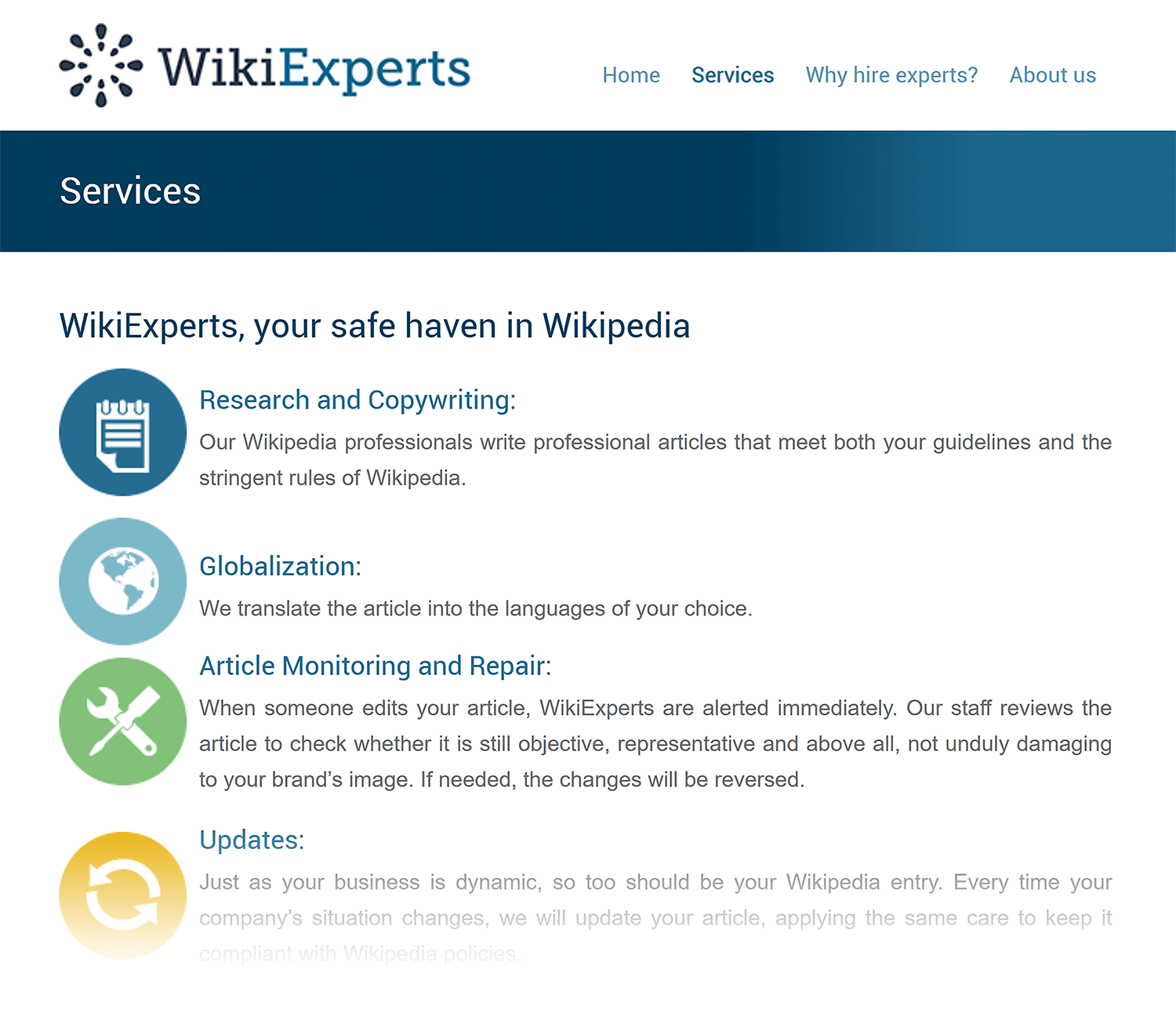
If you do qualify, don’t create your own page. Wikipedia editors remove promotional content. Instead, hire a Wikipedia editor through platforms like Upwork or WikiExperts who understands the guidelines and can create a neutral, sourced page.
Educational sites
Educational sites work differently. They don’t link to commercial sites unless there’s academic value.
Your best path is research partnerships. If you have proprietary data, reach out to professors studying your industry. Professors who publish research in your space. Check their university faculty pages for the email address. Look at their recent publications to see if they cite industry data. (If they do, they’re more likely to be interested in your dataset.)
If and when they publish findings that cite your data, you get the .edu citation.
Email template:
Subject: Research data for [their research topic]
Hi [Professor Name],
I came across your recent paper on [specific research topic] and noticed you cited industry data from [source they used].
I work at [Your Company] and we have proprietary data on [relevant topic] from [X number] of [customers/users/companies]. The dataset includes [brief description of what you have].
Would this be useful for your research? Happy to share anonymized data if it helps support your work.
Best,
[Your name]
Government sites and industry databases
Government sites and industry databases cite official data and established organizations.
If you run a trade association, publish industry reports, or manage public datasets, you can explore partnerships with relevant government departments. Reach out to the agencies overseeing your industry and offer your research or data for their public resources.
Government agencies (e.g., U.S. Department of Commerce) even maintain directories of trusted industry resources and databases.

If you meet their criteria, getting listed puts you alongside sources AI platforms cite regularly.
Yes, the barrier to entry is high. But the authority these citations carry makes them worth pursuing if you qualify.
Note: If you don’t have the internal resources, consider hiring a link-building agency with experience in government and .edu outreach.
Ask them directly: “Have you successfully secured citations from .gov or .edu sites for past clients?” and request case examples.
Affiliate sites
Affiliate sites review products and earn commission when readers buy through their links. Sites like Consumer Reports, Wirecutter, CNET, and niche review blogs get cited by AI platforms because they provide detailed, comparison-heavy content. And many of them earn commissions based on their recommendations.
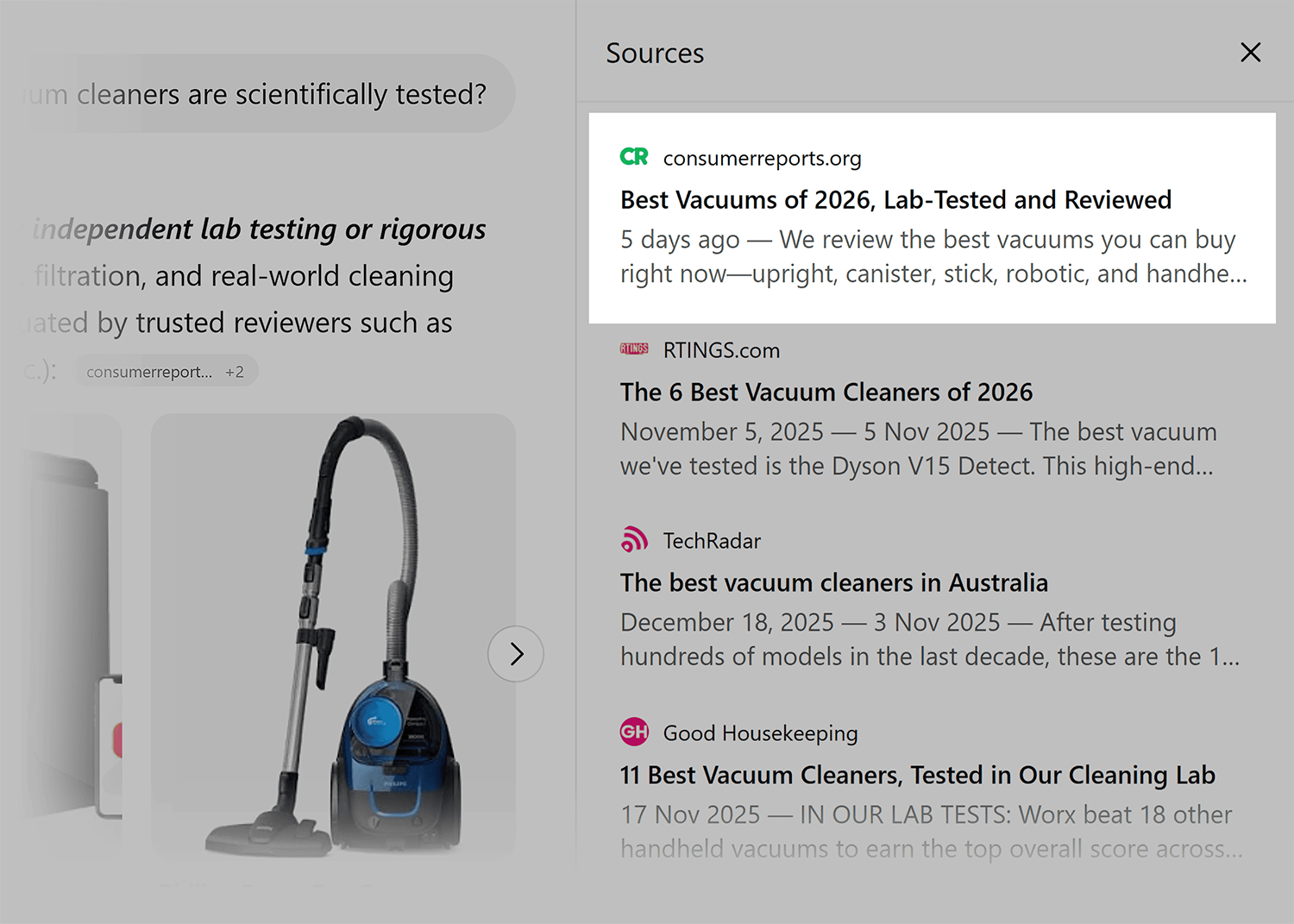
Getting reviewed by these sites is more accessible than major media outlets.
They want to review products. That’s how they make money.
But you need an affiliate program first. An affiliate program lets reviewers earn a commission when someone buys through their unique link.
Set up your program through platforms like Impact or PartnerStack.

These platforms handle tracking, payments, and provide affiliate links.
Once your program is live, find affiliate sites reviewing your product category.
You can Google “[your product category] reviews” or “[your product] alternatives” and look at the top results. These sites are already covering products like yours.

Some sites will have an “Advertise” or “Work with us” page listing their affiliate requirements. Or provide at least some details, like CNET here:

But even if they don’t, you can still reach out directly.
Focus your pitch on what’s in it for them, including commission rate, average order value, and conversion rate if you have data.
Email Template:
Subject: Affiliate partnership for [Your Product]
Hi [Name],
I noticed you review [product category] on [Site Name], particularly your article on [specific article title].
We recently launched our affiliate program and think [Your Product] would be a good fit for your readers.
Here are the details:
- Commission: [X]% per sale
- Average order value: $[X]
- Cookie duration: [X] days
- Affiliate platform: [Platform name]
We’re happy to provide a free account so you can test the product yourself, along with any assets or information you need for the review.
Would you be interested in covering [Your Product]?
Best,
[Your name]
Most affiliate sites have review queues. So, expect a few weeks for them to respond and publish.
Not every site will respond, and that’s normal. Keep pitching sites that actively review your category.
Communities and forums
Communities like Reddit, Quora, and industry forums get cited by AI platforms because they contain real user discussions and experiences.

But you can’t pitch these communities the way you pitch publishers. Instead, you want to participate authentically and provide value.
If communities showed up in your citation core, those are the specific threads and forums AI platforms trust in your niche.

Join these communities and observe first. See:
- What questions people ask
- What advice gets upvoted
- What tone the community uses
Create an account and start answering questions in your area of expertise.
For example, when someone asks “What’s the best way to manage remote teams,” share your actual experience without immediately mentioning your product.
If your product genuinely solves their specific problem, mention it after providing helpful context. “We built [Product] for exactly this use case” works better than leading with a pitch.
Here’s a good example:

Your answers become part of the thread. When AI platforms cite that thread, they might pull information from your answer.
Try to answer questions regularly over weeks and months. Share insights from your experience. Link to useful resources when relevant. If you have strong brand credibility, other community members may mention your brand in their answers too.
Both your own mentions and organic recommendations from others further strengthen your presence in the threads AI platforms cite. This compounds over time, helping you potentially gain more visibility in AI answers.
Further reading: A smarter Reddit strategy for organic and AI search visibility
YouTube
YouTube videos can appear in AI citations, especially for queries that benefit from visual explanations.
For example, when asking Google AI Mode, “How to automate invoicing” a YouTube tutorial appeared in the citations:

If YouTube showed up in your citation core, you have two options to leverage this channel:
1. Create your own content on YouTube
Go back to your citation core tracker and find exact videos that appeared in your results. Watch through this content. Pay attention to the topic, format, and style. For example, if a “How to set up QuickBooks for freelancers” YouTube video got cited, note what the creator covered and how they structured the video.
Publish your own version covering the same topic (and other related topics) from your unique angle or with your specific expertise.
The goal is to create content on subjects AI platforms already cite in your niche. But building a following on YouTube takes time. Only about one-third of creators reach 1,000 subscribers within their first 40 videos on YouTube.

You also need enough authority for AI platforms to trust your content.
This is where the second option comes in, which is much faster.
2. Partner with YouTube creators
Look at which YouTube channels appeared in your citation core results. These creators already have the audience and authority AI platforms trust.
So reach out with a collaboration proposal.
Tip: Here are some collaboration ideas:
- Guest appearance on their channel
- Co-create a video together
- Provide expert commentary for their content
- Share exclusive data or research for their audience
- Sponsor a video in exchange for a product feature
- Co-host a webinar or live stream
Focus your pitch on providing value for their audience. Something like “I have data on [topic] that would make great content for your audience” works better than “Can you feature my product?”
When they create content featuring you or your products, you’ll reach their audience directly. That content may also get referenced by AI platforms, bringing your brand into AI answers as well.
Social platforms
LinkedIn and Facebook posts can appear in AI citations when they provide expert insights or answer specific questions.
For example, when asking Google AI Mode: “Common accounting mistakes small businesses make,” a LinkedIn post appeared in the citations:

If social platforms showed up in your citation core, apply the same two-option strategy as YouTube:
1. Create your own content on these platforms
Go back to your citation core tracker and find the exact posts that appeared in your results. Look at what topics they covered and how they formatted the content. Then publish your own posts answering common questions in your niche, using a similar approach.
2. Collaborate with creators who already get cited
Identify which LinkedIn profiles or Facebook pages appeared in your results. Reach out to offer expert insights, share exclusive data, or co-create posts on topics their audience cares about.
If they publish content featuring your expertise, you’ll reach their audience and potentially appear in AI citations when that content gets referenced.
Brand sites
Other companies’ websites get cited by AI platforms when they have resource pages, partner directories, integration guides, or comparison content.
If brand sites appear in your citation core, look for partnership opportunities with those companies.
One of the most effective approaches is co-marketing partnerships. Propose joint content like webinars, research reports, or comparison guides. Both companies benefit from shared audiences and credibility.
Here’s an example of a joint webinar between Nextiva and Forrester:

Another approach is contributing to expert roundups. Many brands publish articles featuring multiple industry experts weighing in on a single topic. Like this TechRound article:

These posts get cited frequently because they aggregate insights from trusted sources.
If you find roundup posts from brands in your citation core, reach out to their content team and offer to contribute expert insights for future articles.
Email template:
Subject: Expert contribution for [their blog/topic]
Hi [Name],
I noticed [Company] publishes expert roundup posts like “[specific article title].”
I’m [your role] at [Your Company] and work extensively with [relevant topic]. I’d love to contribute insights to a future roundup if you’re planning similar content.
Happy to share perspectives on [2-3 specific topics relevant to their audience].
Best,
[Your name]
Here are other ways to get mentioned on brand sites:
- Resource pages: Many companies maintain pages listing recommended tools or solutions for their customers. If you serve a complementary audience, reach out about getting listed.
- Guest posts on their blog: Pitch original content that’s valuable for their audience. Focus on thought leadership or data-driven insights rather than promotional content.
- Customer case studies: If you’re their customer, offer to be featured in a success story. Reach out with specific results: “We increased [metric] by [X]% using [your product].”
- Integration directories: If your product integrates with theirs, get listed in their integration marketplace or partner directory. These pages get cited when users ask about compatible tools.
The benefit here is mutual. You’re helping their audience discover useful solutions while earning a mention on a site AI platforms already cite.
Owned media acquisitions
If a relevant media site or community in your niche is for sale, acquiring it can give you instant authority and audience access.
- HubSpot acquired The Hustle, a business newsletter
- Zapier bought Makerpad, a no-code education community
- Semrush bought Backlinko, a leading SEO blog
Each acquisition gave the company access to an established audience and built-in authority in their target market.

This strategy works best when you acquire:
- Niche blogs or publications that cover your industry
- Communities or forums where your target audience gathers
- YouTube channels or podcasts with established audiences
The acquired content can drive brand visibility, direct conversions, and potentially influence AI citations over time as you publish more content through these channels.
This isn’t realistic for most businesses, but if you spot a struggling niche site with an engaged audience, it’s worth considering. Marketplaces like Flippa list content sites and blogs for sale. They’re a great place to start.
Search for your industry (like “accounting” or “fashion”). You’ll see blogs, niche publications, and community sites with their traffic stats and asking prices. Use filters to narrow down the results.

Look for sites that already cover your industry and have consistent traffic, even if revenue has declined. The audience and SEO authority are what’s important here.
Identify and target your citation core
Most AI platforms consistently rely on a small group of trusted sources in every niche. This means you don’t need to optimize for each platform separately.
Focus on getting mentioned by the sources these platforms already trust.
Track, optimize, and win in Google and AI search from one platform.
When you do, you’re not just chasing AI visibility. You’re building credibility with real audiences who already read these sources. And when AI platforms cite those sources, your brand can appear in the answers people see.
So:
- Identify the citation core sites for your niche
- Categorize and prioritize them
- Build a targeted outreach strategy for each site type
Get a copy of our free citation core tracker and fill it with the sites AI cites in your niche. Then use Semrush’s Prompt Research to find these sites quickly so you can quickly get started building your strategy.
Explore more on
Editorial disclosure
Search Engine Land is owned by Semrush. We remain committed to providing high-quality coverage of marketing topics. Unless otherwise noted, this page’s content was written by either an employee or a paid contractor of Semrush Inc.
About the author