Entity-oriented search: The evolution of information retrieval, explained
Learn how modern search engines use entities, context and knowledge graphs to truly understand queries beyond just matching keywords.

Learn how modern search engines use entities, context and knowledge graphs to truly understand queries beyond just matching keywords.
Here's what information gain means for machine learning, Google patents and information foraging theory – and how to leverage it.

Learn about information satisfaction or IS, a key metric in Google organic search rankings, and how to apply it to your business.

Get insights into Google's latest search innovations by exploring key patents from 2023, covering query filters, user notebooks, and more.
Learn how indexing, algorithms, deep learning systems, human raters, click and query data, and more shape Google's Search results.

Plus, perspectives is coming to desktop, content creators get more visibility and more.
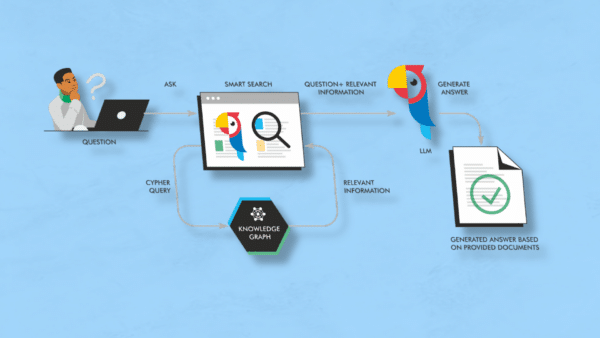
Gauge the potential threat level of SGE on your site traffic. Get insights into the likely changes to the search demand curve and CTR model.

Google confirmed the issue and said it delayed the indexing of newly published content between 1:30 pm and 7:20 p.m.

Learn the paradigm shift from keywords to entities, entity SEO's importance in modern search and ways to adapt and thrive in this new era.

Here are some early findings from a 30-query mini-study designed to push the limits of Google's generative AI search experience.
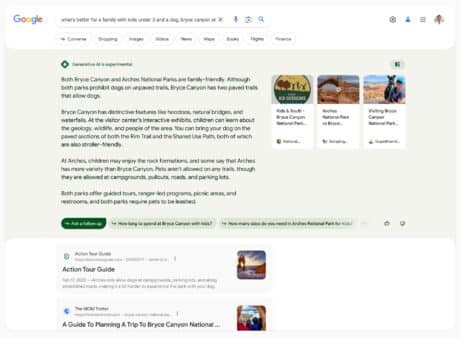
AI-generated answers will appear above Google's search results listings. Google will cite the websites it used to help generate the answer.
Learn key areas where traditional search engines like Google and AI chatbots like ChatGPT have the upper hand.
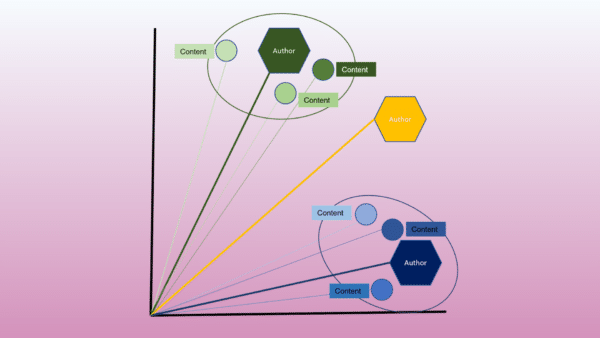
Learn how Google can potentially evaluate content pieces through their authors' experience, expertise, authoritativeness and trustworthiness.

Here's everything you need to know about entities – what they are, why they matter in SEO, and how to use entities to rank content.

Yandex isn't Google, but there is a lot SEOs can learn about how a modern search engine is built from reviewing this codebase.

Discover the original sources of expertise, authoritativeness, and trustworthiness in search and what they're actually based on.

Bill Slawski recently passed away but his hosting company will continue to ensure his website lives on.

Google is using general consensus for callouts, expanding content advisories and about this result in Google Search.

Learn how keyword-based ranking techniques have evolved – from the 'little old ladies' to the vector space model, to today.

A look back at the history of search and SEO and a preview of what the next iteration of the internet means for marketers.

Also, Google said they saw an 60% increase in natural language queries by searchers.

While the things to know and things to consider feature is not fully live yet.
Google has told us how search works. We know plenty about how it works. But a professor seems confused about search personalization.
The new features include sections for background information, estimated casualties and photos of the conflict.

MEB helps Bing get closer to search intent by understanding relationships beyond pure semantics.

Google now list several of the factors it used to rank a result in the about this result section.

Plus, how has your martech stack changed with COVID--a survey

Google said this can have a 7% impact on search queries - so this might feel like a big update.

Google subtopics ranking helps deliver search results with a greater diversity of content when you search for something broad.
How Google leverages BERT depends on the use of the term ‘Passage Indexing’ (although it’s identified as a ranking update).

Google will begin passage based indexing later this year for English languages. It is a ranking change, not an indexing change.

Your own site, Wikidata, third-party mentions and business databases can expand your Knowledge Graph entries in Google and Bing.

Some people may be unfamiliar with Prabhakar Raghavan's background.

You may see a new message in Google search that reads "it looks like there aren't any great matches for your search."

Initially launching in India and other regions where Google had content gaps, Google is now testing this in the US.

In less than a month, the SERP has shifted from brand results to one focused on the coronavirus outbreak.

Microsoft's Space Partition Tree and Graph algorithm enables developers to apply vector search to traditional, audio and visual queries.

The ranking algorithm changes for different types of queries done on search, the company confirms in its new report on how it fights disinformation.
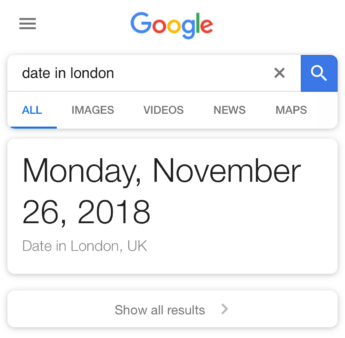
And it is back! Google may now show no search results for queries it's confident it can answer on its own.

Most of the new features were for mobile devices and focused on structured data and machine learning.