A PPC guide to privacy-focused audience targeting
Google granted more time before cookies retire, but advertisers still need to build audience frameworks for the future.

Google granted more time before cookies retire, but advertisers still need to build audience frameworks for the future.

The Privacy Sandbox proposal was created so that it can’t be used by third parties to track user browsing behavior across websites.

The three new updates and improvements enable more privacy, better measurement, and additional web functionality.

Google is moving quickly to a future of data modeling. Here's how paid search marketers need to approach the analytics shift.

The new API uses interest groups instead of cookie-based tracking for both audiences and remarketing.

Google began testing the sandbox earlier this year with plans to phase out cookies by 2023. Now those plans are delayed.

SEOs can influence important website elements that directly impact accessibility. Here are a few tips to help you get started.

Bots and fake users steal ad clicks, pollute audience targeting, and skew metrics. Paid marketers are learning to protect themselves.

What happens if you don't build new measurement frameworks? Decreased PPC performance, for starters. Let's avoid this.

Advertisers using Google AdSense to monetize their websites may soon see the initial trail go live, but can opt-out.

Instead of Google opening a new window, the Google Lens results will be on the right side of the page.

B2B search marketing is about to get even more challenging. What’s the solution? First-party audiences.

The deprecation of third-party cookies in Chrome is fast approaching. Here's a timeline to help you build a new measurement framework.

Developers will gain access to Privacy Sandbox’s newest measurement proposals: Topics, FLEDGE and Attribution Reporting.

From your phone is spying on you to Google manipulating ad auctions, here are some of the juiciest conspiracy theories.

Third-party cookies have never been a good way to demonstrate value – not value as most businesses define it, at least.
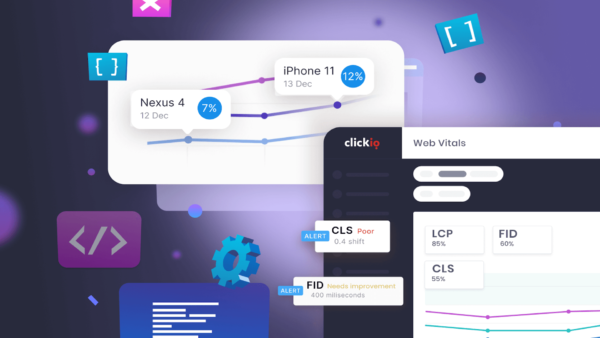
With Core Web Vitals now a key factor in search rankings for mobile and desktop, publishers must act now to safeguard traffic and revenue.

Want to resume searching for topics you did days or weeks ago? Google Chrome's new Journeys feature makes it easy to do.

While paid search marketers applaud Google’s proposed user privacy measures, they’re keen to highlight its shortcomings — particularly the number of topics in the initial design.

The new Privacy Sandbox proposal determines topics to share with sites and advertisers based on the user’s previous three weeks of browsing history.

Despite facing a still-raging pandemic and a slew of updates, SEOs rose to the challenge. Here’s our recap of the year’s most important SEO stories and news.

From the deprecation of broad match modified keywords to FLoC to RSAs becoming the default, PPC professionals dealt with a lot of change in 2021.

That’s one more Chrome alternative that won’t support FLoC.

Google also announced more Lens integrations for Chrome as well as the rollout of the “Your carts” card.

In Windows 11, Microsoft made switching default browsers a multi-step process. After feedback and criticism, it reinstated the ability to change defaults with a single button.

Check out the new features in the updated version of Lighthouse, which has been released with the new PageSpeed Insights tool.

Will this tweet trigger some change at Google? Probably not - but it might be wishful thinking.

Google announced these changes weeks ago but it is now rolling out under a new URL.
This not only will work in Chrome for Google Search but potentially can work for any default search provider.

But, UX remains crucial and Google has introduced Priority Hints to help site owners and browsers prioritize which resources to load first.

Gotta, gotta be down because I want it all
Also, Journeys is a new feature in Chrome that clusters your browsing history in a new way.
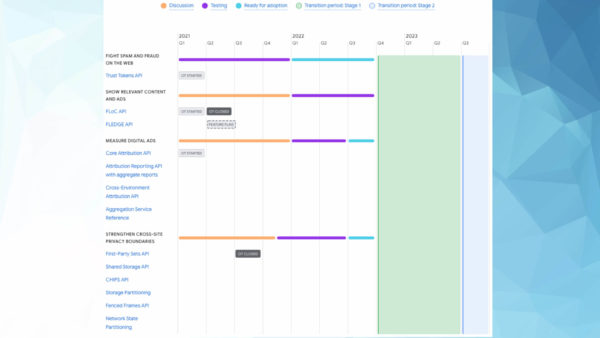
Google has updated its Privacy Sandbox timeline, delaying testing for several APIs, including FLoC and FLEDGE, to early next year.

Plus, the case for zero-party data as we approach the end of third-party cookies.

While MUM was the highlight of the Google Search On event, more search changes were announced — some might generate a lot of interest for search marketers.

Many SEOs often forego Bing optimization in favor of its higher traffic counterpart, but this is another reason to diversify your target search engines.

People want to go where somebody knows their name. Identity makes it happen for brands, and getting it right drives personalization and trust.

Plus, HTML success factors for SEO

APIs for each use case are projected to be available for adoption in Q4 2022.
Plus, a deep-dive into FLoC cohorts and opportunities for advertisers.