Most AI visibility gains are just technical debt repayment
AI search may be making long-standing problems with site architecture, content, internal linking, and rendering more costly.

AI search may be making long-standing problems with site architecture, content, internal linking, and rendering more costly.

Learn a proven five-phase framework for clearer navigation, stronger taxonomy, and content AI can access. Join us for the next SMX Now.

A review of 19 businesses found the same problem repeatedly: strong expertise buried in content AI systems can’t reliably interpret.

Turn Google and AI search signals into localized content structures that better match regional user behavior.

As AI reduces clicks to content pages, more users arrive via branded search. Here’s how to guide them from entry to conversion

Clear structure helps readers scan content and AI systems identify answers. Here’s how to organize ideas into clear, self-contained sections.

Creating pages only machines will see won’t improve AI search visibility. Data shows standard SEO fundamentals still drive AI citations.
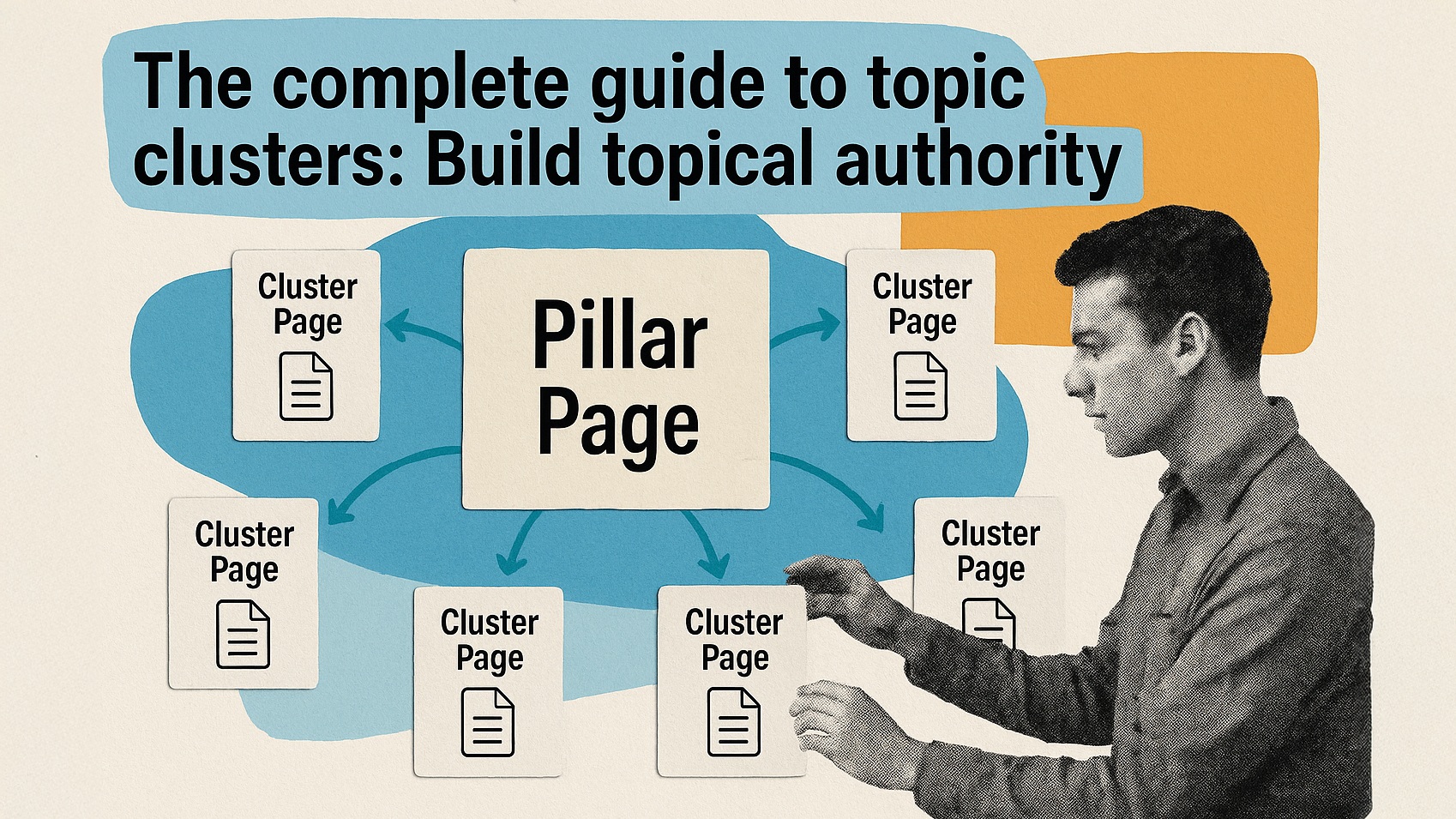
Learn how topic clusters outperform keywords—boost authority, engagement, and rankings with proven frameworks built for today’s AI-driven search.

Learn how to debug SEO issues fast—crawl errors, rendering problems, indexing blockers, ranking drops, and SERP shifts—using a structured diagnostic framework.

Are you wasting crawl budget on the wrong pages? Learn how to protect revenue with smarter crawl strategies.

Google's FastSearch and RankEmbed reveal why clarity drives AI visibility. Here's how to strengthen the signals that count.

Crawl waste cleanup boosted AI search visibility by up to 10% – with a small ChatGPT dip. Sitemap fixes and IA clarity drove results.

Boost your chances of being cited in AI answers with these four technical SEO tactics that power visibility in generative search.

Your SEO career depends on more than tool usage. Find out what it takes to become an AI-native SEO and lead the future of search.

Even in AI-driven search, clean URLs support better SEO. Explore how structure, keywords, and canonicalization influence visibility.

Confused about WordPress content types? Find out when to use Pages or Posts to create a site that's easy to manage and SEO-friendly.

Learn how to use Screaming Frog, ChatGPT, and Relume to create visualization charts and build a hierarchical navigation menu with wireframes.

Is SEO maximalism harming your strategy? Here’s how focusing on quality through strategic subtraction can deliver better results.

Make your knowledge base user- and SEO-friendly. Learn best practices for content strategy, information architecture, site search and more.

Launching a new website? Learn from hard-earned lessons on major pitfalls to avoid, like improper redirects, lack of UX testing and more.

Moving to a new domain, changing your CMS or merging sites? Learn best practices for a seamless site migration that boosts search visibility.

Here's what information gain means for machine learning, Google patents and information foraging theory – and how to leverage it.

Maximize your website's E-E-A-T signals through strategic internal linking within a well-structured pillar-cluster content model.

Learn how to safeguard your website's SEO performance during a platform migration with these tips for a smooth transition.

Gain clarity on the most commonly misunderstood elements of entity and semantic search and how they impact your SEO strategy.

Launching a new website takes more than just design and content. Infuse SEO into each stage of the process, from strategy to launch.

Unlock the "why" behind the "what" and build a cleaner, smarter SEO approach that sets your enterprise website apart.
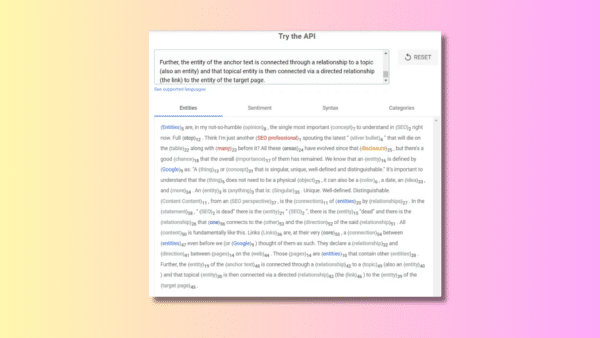
Optimizing for entities will help your content perform better in search engines. Learn how to get started.

Use these tips and examples to create useful guides that build trust with your audience and earn search traffic.

Is your site built on an architecture that restricts organic potential? Here's how to develop a fully optimized site structure that can scale.

Understanding the source types that Google displays in the SERPs helps SEOs know how viable it is to effectively rank for certain queries.

In this guide: learn why website taxonomy is fundamental to SEO success and how to optimize site taxonomies.

Learn how to handle unprofessional treatment at various online and offline SEO events, including conferences, webinars and social media.

Plus, how to adjust your expectations and campaigns for iOS 14

The next major on-page group in the Periodic Table of SEO Factors is site architecture. It plays a critical role in SEO effectiveness. These factors affect the findability and usability of your site. Good architecture makes content easier for search engines and users to access and navigate. Take the following architectural factors into account as […]

Without giving away specific details in a proposal, here are some key indicators to assess if a client's team will actually support your recommendations.

A thorough inventory to identify common and unique elements for businesses with multiple brands and locations will drive solutions for the long term.

Content silos negatively affect both the browsing and searching experience which often results in lost sales.

SMXpert Upasna Gautam continues the Q&A from SMX Advanced and discusses a number of topics including creating the right content, using homonyms, stressed words and quality metrics when optimizing for voice search.

Below is what happened in search today, as reported on Search Engine Land and from other places across the web. From Search Engine Land: Bing Visual Search lets you search specific objects within images Jun 1, 2017 by Matt McGee Bing joins Google, Pinterest and others in upgrading its image search capabilities. Microsoft expands its […]