Google expands its list of local advertising codes
Google is giving advertisers more guidance on regional advertising rules across six international markets.
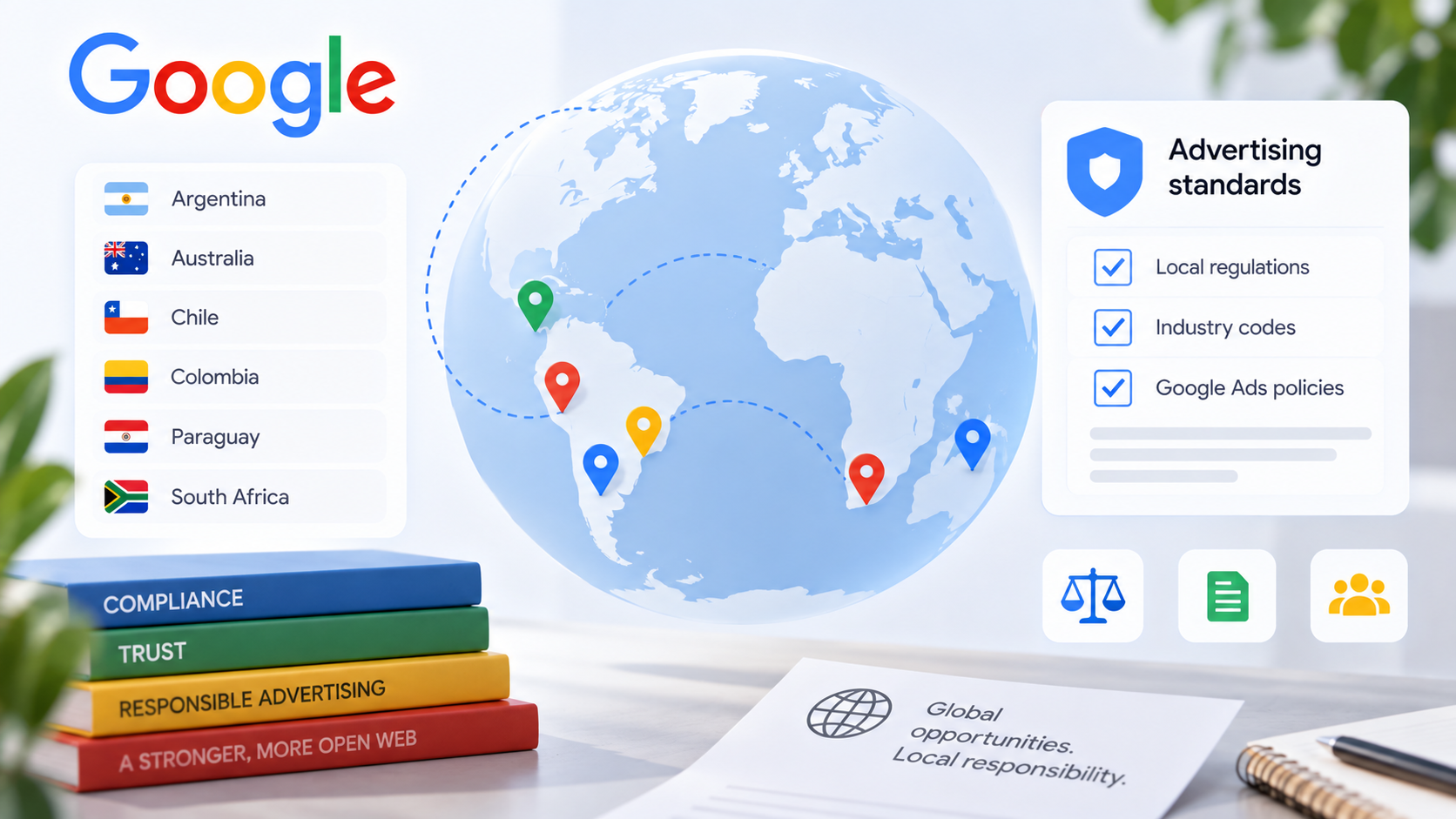
Google is giving advertisers more guidance on regional advertising rules across six international markets.

Google's AI content label helps advertisers disclose AI-generated or edited creatives as transparency requirements expand worldwide.

Google requires financial advertisers to complete new compliance checks or risk losing the ability to run some EU ads.

Google clarifies election ads are exempt from placement rules but still follow Google Ads policies.

Asset Studio speeds up ad creation, but limited control, workflow trade-offs, and shifting responsibilities complicate the picture.

Section 230 shields ad platforms from liability, while FTC enforcement holds advertisers strictly responsible for deceptive ad claims.
Google’s policy update expands pharmaceutical advertising access in programmatic channels and shifts greater compliance risk to advertisers.

See how to target the right searches, avoid policy violations, and improve landing pages to drive more patients and clients.

Search marketing built on deep user data is no longer sustainable. Here’s how to evolve before performance takes a hit.

When influencers fail to properly label paid content, both the influencer and the brands they are promoting may be violating the law.

Failure to comply with the updated policy could result in the suspension of your Google Ads account.

Monitor your Google Ads account for greenwashing claims and ensure your messaging aligns with your brand's environmental efforts.
If you work in sectors such as health and gambling, Microsoft has also announced updates that could impact you.

The restriction period was also implemented in 2020 for the week leading up to General Election Day.

Google is taking a stand in the UK to educate the general public and stop financial ad fraud.

The updated policies will make it easier for consumers in the US to identify where political ads originate.

The social media platform has made significant improvements to safety over the last year, but they still have a long way to go.

Results from last year's test in the UK market showed a promising decline in scam-related Google Ads
Google Ads has expanded the scope of its system to target clickbait, misleading ad design, and more.
Mobile or online sports bets can be placed in New York beginning Saturday morning and with that Google Ads is adapting.

The updated policy aligns the Microsoft Audience Network with other advertising platforms.

ensure you meet the verification requirements to distinguish yourself from spam financial service advertisers and to prevent suspension.

Similar to Google's certification program for online pharmacies, this is another layer of protection for consumers and another step for healthcare advertisers.

Snapchat puts the “Spotlight” on top Snaps, will pay creators Snapchat has launched Spotlight to feature the best Snaps in a new feed aimed squarely at countering rival TikTok. Creators whose videos are selected can “earn a share of more than $1 million that we’re distributing to creators every day!,” said the company. Creators can […]

To get ads approved in a timely manner, brands need to know what content is allowed, what’s restricted and what’s prohibited. we put together this cheat sheet to help.

Ticket resellers are now included among the list of restricted advertisers on AdWords and must be certified by Google before they can advertise.

Columnist Kevin Rowe shares tips on working with online influencers to boost your brand's link profile, its brand visibility and traffic to your site.

New rules protect public but tighten government control over search results.
A new survey of how the search engines treat ads from organic listings.
A gay Chinese man sued search engine Baidu in Bejing for allowing an undisclosed ad for an allegedly unlicensed psychological counseling center to appear at the top of search results. He underwent “gay conversion” therapy and was traumatized by the experience. Without the benefit of knowing Chinese law, the case appears to raise two issues: […]

In 2002, the US Federal Trade Commission issued landmark guidelines to search engines, to ensure they were make a clear distinction between their paid and unpaid listings. Now, the FTC has updated those guidelines, saying it has seen a “decline in compliance” since they were first issued. The FTC posted the news today on its […]
In 2002, the US Federal Trade Commission created guidelines on how search engines should disclose paid placement and paid inclusion listings. It’s become clear to me over the past two weeks that the search engine industry has either largely forgotten these guidelines or is ignoring them. That’s why I’ve written a letter today to the […]
Will celebrity “influencers” like Kim Kardashian or Chelsea Handler soon have to disclose when they’re being paid to promote a product or service on Twitter? This past weekend The Guardian reported that the UK Office of Fair Trading (OFT) “has begun a crackdown on Twitter users and bloggers using their online presence to endorse products […]
The Google AdWords blog announced they will be making a policy change to allow certain kinds of pharmaceutical ads to be shown on Google search results. The policy change will go into affect towards the end of this month. Here are some of the conditions: (1) Only VIPPS and CIPA certified pharmacies will be allowed […]
The US Food & Drug Administration (FDA) issued warning letters issued in late March, 2009 to a number of big pharmaceutical companies, saying that their search ads were misleading and didn’t contain the required disclosure information mandated by US federal regulations. As one might have expected this caused the companies to temporarily pull their SEM […]
It’s time for an online advertisers bill of rights. So says Harvard assistant professor Ben Edelman, who has spent years researching Internet advertising and compares the current landscape to a “wild west.” Edelman recognizes the “staggering” opportunity that online advertising provides, but says the current system has problems that “threaten to destabilize online advertising—wasting advertisers’ […]
The U.S. Food and Drug Administration (FDA) has sent letters to a number of pharmaceutical manufacturers to alert them that they were in violation of acceptable marketing practices in relation to their paid search marketing campaigns. The basic gist of the letter is that when these pharmaceutical companies advertise on Google they are a.) not […]
A week ago, I reported at the Search Engine Roundtable that Google is now requiring advertisers of ringtones to disclose the price of those ringtones in the actual ad copy. Supposedly, this will become a new policy required of advertisers in the upcoming weeks. We do not yet have confirmation on Google about this new […]
E-Consultancy reports Google has reintroduced the ability for UK AdWords advertisers to place search ads for gambling. In June 2007, Google placed a ban on all gambling ads in the UK, this decision seems to now have been reversed.
The UK PPC Blog tipped me off to Google announcing that the UK AdWords trademark policy has been changed to work like the US AdWords trademark policy. What this means is that UK advertisers can now bid on trademark terms. Earlier, those trademarked terms were blocked from bidding on within the AdWords network. The US […]